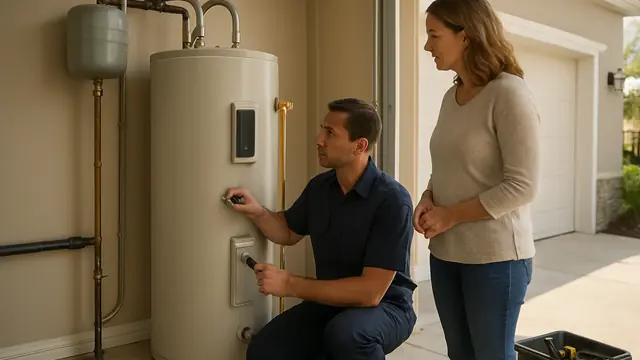
Stop and call for qualified help when plumbing water is near electrical equipment, sewage is entering occupied space, gas or burning odors are present, or a repair would require opening pressurized piping.
A leaking water heater in Destin, Florida, can begin with a small puddle, a damp area around the base of the tank, or a slow drip from a pipe. Although the leak may initially appear minor, it should not be ignored. Water heater leaks can damage flooring, drywall, cabinetry, electrical components, and nearby belongings. In condominiums, townhomes, vacation rentals, and multistory properties, leaking water can also reach neighboring units.
Destin's coastal environment adds another consideration. Salt-laden air and high humidity can contribute to corrosion around metal fittings, shutoff valves, vent components, and exposed plumbing connections. Water heaters installed in garages, exterior closets, utility rooms, and poorly ventilated spaces may experience deterioration faster when they are not regularly inspected.
The first step is determining where the water is coming from. Some leaks can be repaired with a new valve, fitting, or supply line. Other leaks indicate that the tank has corroded internally and must be replaced. A licensed plumber can identify the source and explain the available options before additional damage occurs.
Common Reasons a Water Heater Leaks
One of the most common causes is a loose or deteriorated plumbing connection. Water enters the heater through the cold-water inlet and exits through the hot-water outlet. The fittings and flexible connectors attached to these locations can loosen, corrode, or develop small cracks.
Another possible source is the temperature and pressure relief valve, commonly called the T&P valve. This safety valve is designed to release water when the temperature or pressure inside the tank becomes unsafe. A small discharge may occur because the valve is worn, but it can also indicate excessive water pressure, thermal expansion, or an overheating problem.
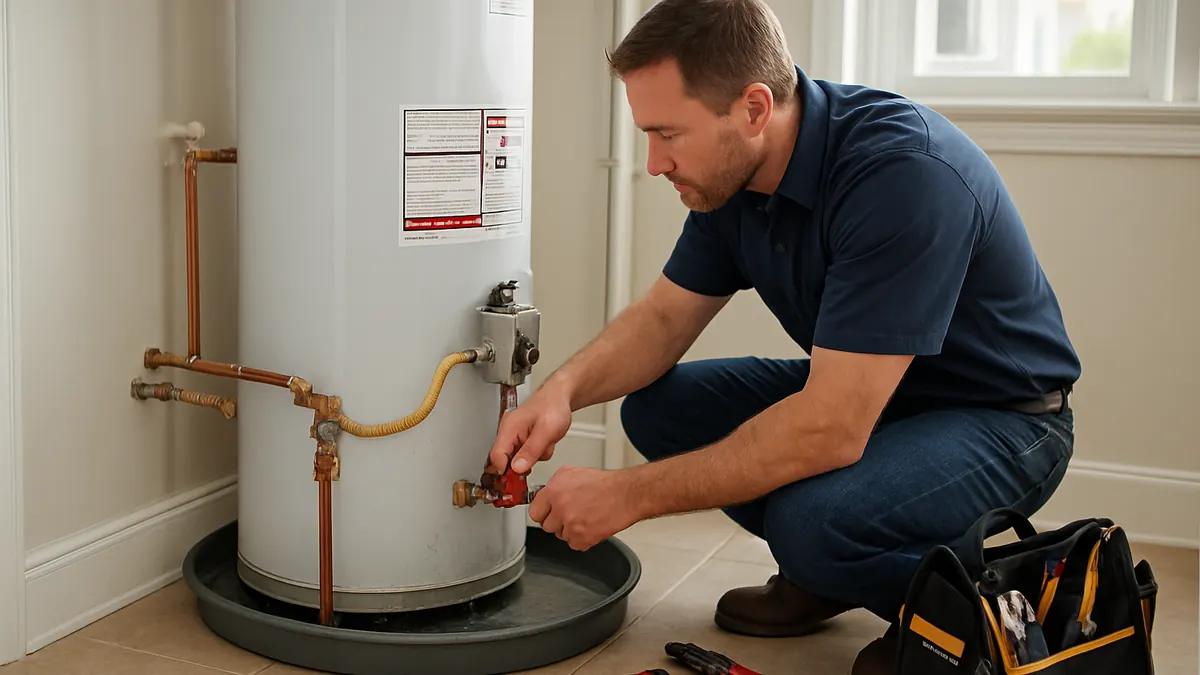
The drain valve near the bottom of the tank may also leak. Drain valves are used when flushing or servicing the water heater. Over time, the valve can become loose, cracked, or unable to close completely.
Condensation can sometimes be mistaken for a leak. This is more common when a large amount of cold water enters the tank or when the heater operates in a humid environment. However, continuing moisture should be professionally evaluated rather than automatically dismissed as condensation.
The most serious possibility is an internal tank leak. Traditional tank-style water heaters contain a metal storage tank protected by a lining and an anode rod. As the unit ages, corrosion can eventually penetrate the tank. Water appearing consistently around the lower seam or base of the heater often suggests tank failure.
Safe Checks a Destin Homeowner Can Perform
Begin by observing the water without touching electrical wiring, gas controls, or hot pipes. Use a flashlight to inspect the top connections, supply lines, shutoff valve, T&P valve, discharge pipe, drain valve, and base of the tank.
Dry the visible water with towels and place dry paper towels near suspected leak points. This may help reveal where new moisture first appears. Do not block the T&P discharge pipe or interfere with any safety device.
Check whether the moisture may be coming from another source. Air-conditioning condensate lines, washing machine hoses, nearby plumbing pipes, exterior rain intrusion, and drain backups can create water near a heater.
Homeowners may also look at the heater's age and maintenance history. A tank that is more than approximately 10 years old and leaking from the bottom is more likely to have internal corrosion than a newer system with a dripping connector.
When water is actively spreading, the cold-water supply valve may be turned clockwise to reduce incoming water, provided the valve operates easily. Never force a corroded or frozen valve. For an electric heater, power should be turned off at the correct breaker if it can be identified safely. For a gas heater, do not adjust gas components unless you are familiar with the manufacturer's emergency instructions.
What Homeowners Should Not Attempt
Do not place a cap or plug on the temperature and pressure relief valve discharge pipe. The T&P valve is an essential safety component, and disabling it can create a dangerous pressure condition.
Do not attempt to weld, patch, seal, or coat a leaking storage tank. A tank leaking through its metal shell has failed structurally. Surface sealants do not restore the tank's strength and may delay necessary replacement while water damage continues.
Avoid removing heating elements, gas controls, burner assemblies, vent connectors, or electrical access panels without appropriate training. Electric water heaters can contain dangerous voltage, while gas systems can create fire, combustion, or carbon monoxide hazards if repaired incorrectly.
Homeowners should also avoid repeatedly opening and closing an old drain valve. A brittle valve may begin leaking more severely and may not reseal.
When a Water Heater Leak Is Urgent
Immediate attention is needed when water is spreading rapidly, entering walls or ceilings, reaching electrical outlets, or leaking into another condominium unit. Turn off the water supply when it is safe and contact a licensed plumber.
Other urgent warning signs include:
- Water spraying from a fitting or valve
- Steam or extremely hot water near the heater
- A T&P valve releasing water continuously
- Burning smells or melted wiring
- Water near the electrical connections
- Gas odors
- Soot around a gas burner or vent
- Rumbling, popping, or banging accompanied by leaking
- A bulging or visibly distorted tank
- Water flowing from the bottom seam
Gas odors require special caution. Leave the immediate area, avoid operating electrical switches, and contact the gas utility or emergency services from a safe location.
How a Licensed Plumber Diagnoses the Leak
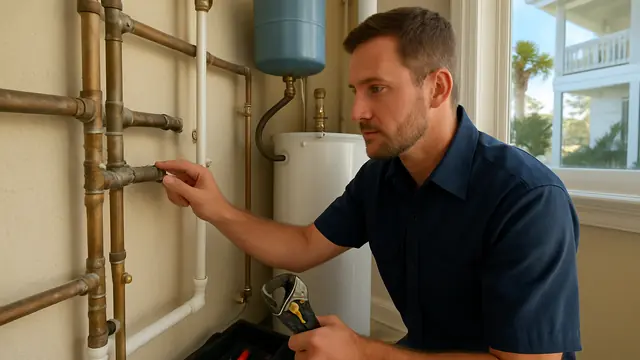
A licensed plumber begins by identifying the exact origin of the water. The plumber inspects supply connectors, threaded fittings, shutoff valves, the drain valve, T&P valve, discharge piping, tank seams, nearby plumbing, and the drain pan.
Water pressure may be measured because excessive pressure can damage valves, connectors, fixtures, and the water heater. The plumber may also evaluate whether a thermal expansion tank is installed and functioning correctly. In a closed plumbing system, heated water expands and can create pressure spikes when that expansion has nowhere to go.
For electric water heaters, the plumber can inspect heating element gaskets, thermostats, wiring compartments, and signs of overheating. For gas units, the inspection may include the burner, combustion chamber, venting, gas connections, and evidence of improper combustion.
The technician will also determine whether the tank itself is leaking. This distinction is important because external parts can often be repaired, while a leaking storage tank generally requires replacement.
Water Heater Repair and Replacement Options
The appropriate solution depends on the leak source, the heater's age, its overall condition, and the household's hot-water needs.
Possible repairs include tightening or replacing a supply connector, replacing a leaking shutoff valve, installing a new drain valve, replacing a defective T&P valve, correcting excessive water pressure, repairing a leaking heating element gasket, or installing a properly sized thermal expansion tank.
A plumber should investigate why a safety valve is leaking before simply replacing it. If excessive pressure or overheating caused the discharge, replacing only the valve may allow the problem to return.
When the internal tank has failed, replacement is usually necessary. Homeowners may choose a standard electric tank, standard gas tank, high-efficiency tank, heat pump water heater, or tankless water heater when the property and utilities support it.
Replacement does not automatically require the most expensive equipment. A properly sized conventional tank may be the best value for some Destin homes. A tankless system may make sense for properties needing more continuous hot water, additional usable space, or improved energy performance. A heat pump unit may be appropriate where installation clearances, ventilation, condensate management, and electrical capacity permit.
Factors Affecting Water Heater Repair Costs
Cost depends on the exact cause of the leak and the accessibility of the equipment. Replacing a connector or accessible valve usually costs less than replacing the complete heater.
Other cost factors include:
- Water heater type, size, and efficiency
- Gas versus electric installation
- Tank versus tankless equipment
- Condition of the shutoff valve and connecting pipes
- Water pressure or expansion-control problems
- Venting modifications
- Electrical circuit or gas-line requirements
- Drain pan and drain-line installation
- Permit and code requirements
- Access inside a condominium, attic, closet, or garage
- Water damage around the heater
- Emergency or after-hours service
- Manufacturer warranty coverage
In Destin condominiums, access procedures, association rules, elevator use, parking limitations, leak-protection requirements, and restricted working hours may also affect the project.
Preventing Future Water Heater Leaks
Have the water heater inspected periodically, especially when it is located in a finished area or vacation rental. Check around the base, valves, and supply connectors for rust, mineral deposits, or moisture.
A traditional tank should be flushed according to the manufacturer's recommendations and local water conditions. Sediment buildup can reduce efficiency, create noise, and contribute to overheating near the bottom of the tank.
The anode rod should also be inspected when appropriate. This component is designed to corrode before the steel tank does. Replacing a depleted anode rod may extend the life of a tank that is still structurally sound.
Maintain reasonable household water pressure and have a thermal expansion tank inspected if one is installed. Replace aging flexible connectors before they fail, and consider a drain pan with a properly routed drain line.
For Destin vacation rentals and second homes, a water-monitoring device or automatic shutoff valve can provide additional protection while the property is unoccupied. Owners should also arrange periodic visual inspections rather than relying entirely on guests to report problems.
A leaking water heater does not always require complete replacement, but the source should be identified promptly. Early diagnosis may allow a relatively small repair and can help prevent damage to the property.
About this guide: This resource provides general homeowner education, not a remote diagnosis. Actual conditions, code requirements, equipment, and safe repair options must be evaluated at the property.