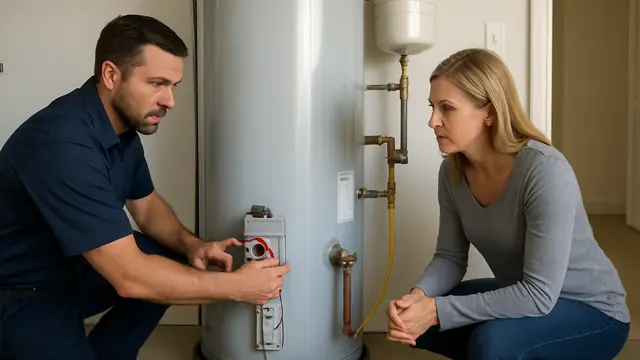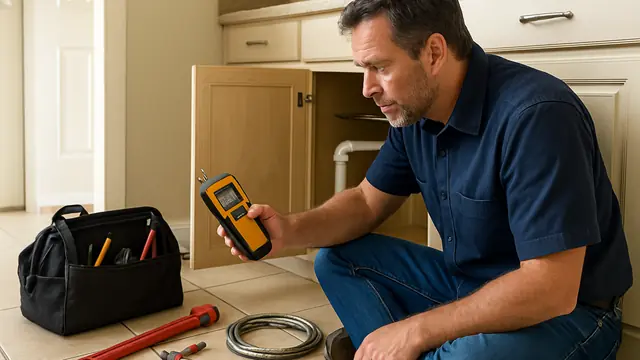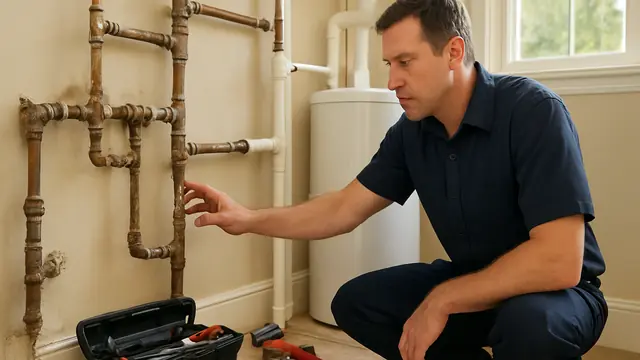
Stop and call for qualified help when plumbing water is near electrical equipment, sewage is entering occupied space, gas or burning odors are present, or a repair would require opening pressurized piping.
You flush a toilet and hear bubbling from the nearby shower. Later, the kitchen sink empties slowly even though you already tried a plunger. By the next morning, the lowest drain gives off a sewer odor. For a Bluewater Bay homeowner, that combination often means the trouble may be deeper in the drainage system than a single fixture clog.
The safest immediate step is to reduce water use. Avoid running the washing machine, dishwasher, or several showers until the cause is identified. If wastewater is rising through a tub, shower, toilet, or floor drain, stop using the plumbing system and keep people and pets away from the affected area.
A sewer camera inspection helps a licensed plumber see what is happening inside an accessible drain or sewer line. It can reveal a removable obstruction, accumulated debris, root intrusion, a separated joint, standing water, or structural damage.
What Happens During a Sewer Camera Inspection in Bluewater Bay?
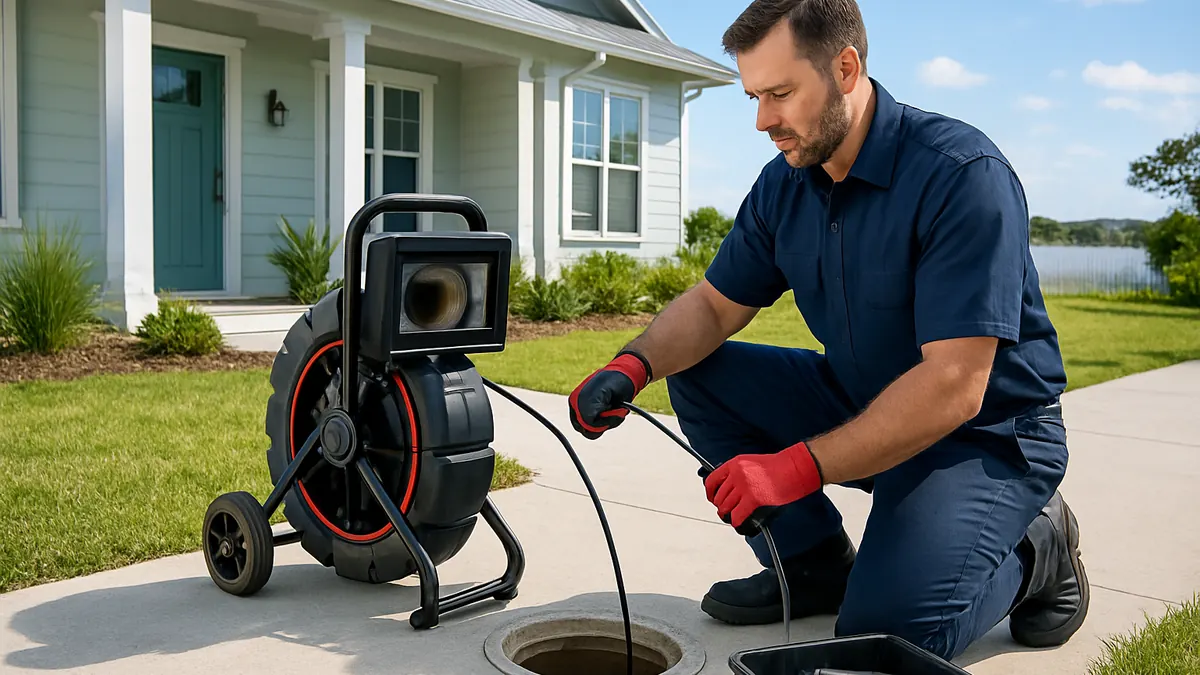
The plumber reviews the symptoms and identifies a suitable access point, often an exterior cleanout. A flexible cable with a waterproof camera and light is guided into the pipe.
Live video shows pipe walls, joints, bends, deposits, water levels, and visible defects. Many systems include a transmitter that can help estimate a finding's location and depth from above ground. The camera does not repair the pipe; it provides evidence for the next step.
Why a Camera Inspection May Be Recommended
Several Fixtures Are Slow
One slow sink can often be traced to a local trap or short branch line. When a toilet, tub, and sink are all affected, the restriction may be farther downstream in a shared pipe.
A Drain Keeps Clogging
A blockage that returns after plunging or cleaning may indicate that debris is catching on an offset joint, rough pipe surface, root intrusion, or damaged section.
Water Appears in a Low Drain
When the washing machine drains or a toilet flushes, wastewater may rise in a shower or tub. This usually means the flow is meeting resistance after those fixtures connect.
You Need Information Before a Major Repair
A camera inspection can help distinguish cleaning from localized repair, trenchless rehabilitation, or replacement and may prevent unnecessary excavation.
Common Findings Inside the Line
A camera may reveal grease, paper buildup, wipes, sludge, or another obstruction. It may also show a foreign object accidentally flushed into the system.
Roots can enter through a failed joint or crack. An offset joint, where pipe sections no longer align correctly, may catch solids and cause repeated stoppages.
The camera may also reveal cracks, corrosion, deformation, or collapse. Standing water can suggest a low section, poor slope, or downstream restriction. Video findings must be interpreted with symptoms and flow tests. Not every stain or rough area requires repair.
Safe Checks a Homeowner Can Perform
- Check whether the problem affects one fixture or several. Listen for gurgling when another fixture empties and note where the sound occurs.
- Observe the lowest shower or tub, but stop testing if wastewater begins to rise.
- Look for an exterior cleanout, but do not remove its cap during an active backup. Note whether symptoms appear only during heavy water use.
What the Homeowner Should Not Attempt
- Do not repeatedly pour chemical drain cleaner into a slow or blocked line. Chemicals may remain trapped behind the obstruction and expose anyone who later services the pipe.
- Do not combine drain-cleaning products. Mixing chemicals can create dangerous heat, fumes, or splashing.
- Do not force a rented cable machine into the sewer line without training. A cable can bind, break, damage weak pipe, or injure the operator.
- Do not dig based on where water or odor appears outside. The surface symptom may not be directly above the defect.
Signs That Make the Problem Urgent
An indoor sewage backup requires prompt attention. Stop water use and prevent contact with contaminated material.
The problem is also urgent when no toilet can flush normally, wastewater rises whenever another fixture is used, or sewage is approaching flooring, cabinets, drywall, or electrical equipment.
Repeated backups shortly after professional cleaning may indicate an unresolved structural defect. A sudden depression along the suspected sewer route, strong sewer odor with visible leakage, or evidence of collapse should also be evaluated quickly.
How a Licensed Plumber Diagnoses the Problem
The plumber studies the symptom pattern and may test selected fixtures. A blocked or heavily coated line may need professional cleaning before the camera can pass.
During the inspection, the plumber advances the camera slowly and records important findings. Cable distance gives a rough measurement, while a transmitter can help locate the camera above ground.
The plumber should explain what is confirmed, what is only suspected, and whether another test is needed. A camera may show an opening, for example, but additional testing may be required to determine whether it leaks.
Repair Options From Least Invasive Upward
- If the line is structurally sound and the problem is a simple obstruction, professional cabling may restore flow.
- Heavy grease, sludge, or attached buildup may require a more thorough cleaning method selected for the pipe material and condition.
- A foreign object may be retrieved through an existing access point. Root cutting can reopen the line, although the damaged joint or crack that allowed entry may still need repair.
- A localized defect may be repaired by replacing only the affected section. A trenchless method may be evaluated when the pipe layout and condition are suitable.
Larger replacement becomes reasonable when the camera shows widespread deterioration, multiple failed joints, severe deformation, or collapse. Complete replacement should be based on evidence, not recommended automatically.
Typical Factors Affecting Cost
Inspection cost depends on access, line length, blockage severity, and whether cleaning is required before the camera can travel.
Removing and resetting a toilet may add labor when no usable cleanout is available.
Repair cost is affected by the defect's location, depth, and length; pipe material; surface conditions; and repair method. Work beneath a slab or finished surface differs from work in an open area.
A written estimate should identify what is included, such as locating, cleanup, permits, restoration, or follow-up inspection.
Prevention and Maintenance Guidance
Flush only human waste and toilet paper. Wipes, paper towels, hygiene products, dental floss, and household trash belong in a waste container.
Keep fats, oils, and grease out of drains. Allow grease to cool and place it in the trash.
Use drain strainers where appropriate and address recurring slow drainage before it becomes a complete stoppage. If the inspection reveals a recurring condition, ask for maintenance guidance based on the actual findings.
Make the Next Decision With Clear Evidence
What happens during a sewer camera inspection in Bluewater Bay is a structured diagnostic process: the plumber reviews symptoms, establishes safe access, clears the line when necessary, records visible conditions, locates significant findings, and explains repair choices from the least invasive reasonable option upward. If several fixtures are backing up or the same clog keeps returning, reduce water use and schedule a professional evaluation before the problem causes a sewage overflow.
About this guide: This resource provides general homeowner education, not a remote diagnosis. Actual conditions, code requirements, equipment, and safe repair options must be evaluated at the property.