Stop and call for qualified help when plumbing water is near electrical equipment, sewage is entering occupied space, gas or burning odors are present, or a repair would require opening pressurized piping.
A toilet that bubbles when the washing machine drains, a shower that empties slowly, or a sewer odor that keeps returning can leave a Destin homeowner wondering what is happening inside the pipes. When several fixtures are affected or the same clog comes back after being cleared, the problem may be deeper than a sink trap or toilet.
The safe immediate response is to reduce water use. Avoid running the dishwasher, washing machine, or several showers while wastewater is backing up. If sewage enters the home, keep people and pets away from the affected area and call a licensed plumber promptly.
What Happens During a Sewer Camera Inspection?
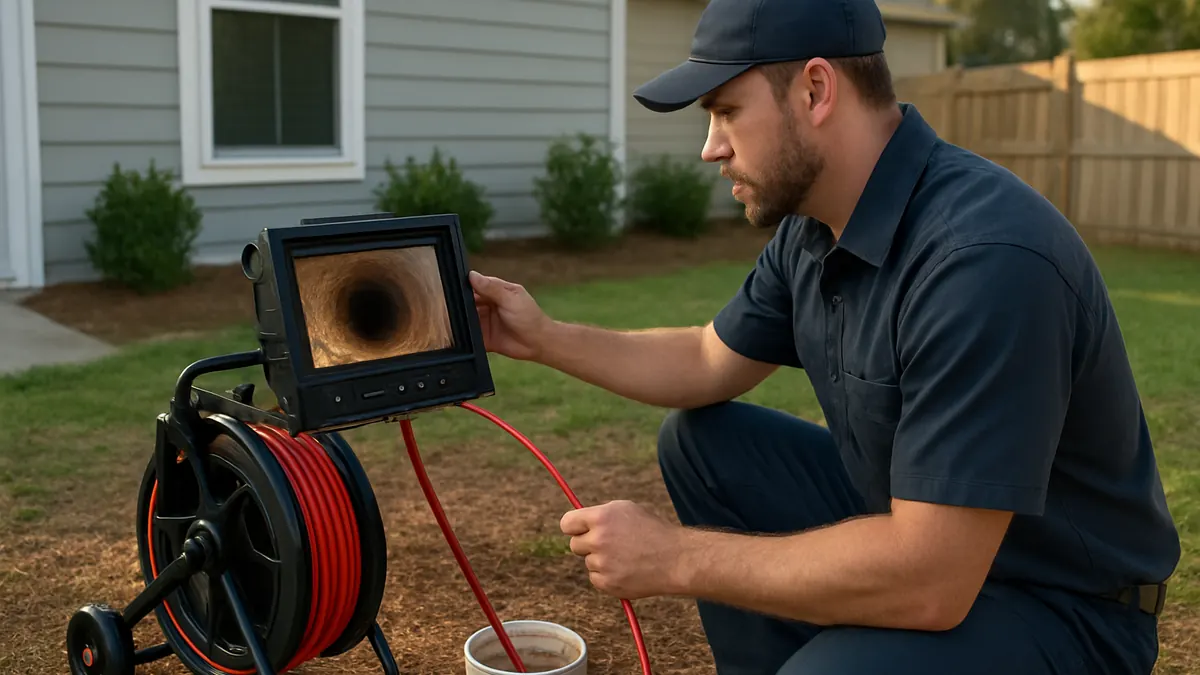
A licensed plumber feeds a flexible cable with a small waterproof camera into an accessible cleanout or approved drain opening. The camera sends live video to a monitor as it moves through the pipe. The plumber looks for blockages, buildup, standing water, roots, damaged joints, cracks, or collapsed sections.
The inspection does not repair the line by itself. It provides evidence about what is wrong, where the problem is located, and which repair method is reasonable. Many camera systems also have a transmitter that can be located from above ground, helping the plumber narrow the repair area without unnecessary excavation.
Why a Camera Inspection May Be Recommended
A Clog Keeps Returning
A line that clears temporarily and slows again may contain grease, wipes, paper, a foreign object, or a damaged area that catches debris. The camera can show whether the pipe is merely obstructed or structurally compromised.
Several Fixtures Drain Poorly
When a toilet, tub, and sink react at the same time, the problem may be in a shared branch or the main sewer line. The pattern helps the plumber decide where to inspect.
Fixtures Gurgle or Bubble
Gurgling can occur when air is displaced by wastewater moving around a restriction. It does not identify the exact cause, but it becomes more meaningful when accompanied by slow drainage, odors, or backups.
A Buyer Wants More Information
A general home inspection does not always include the inside of the sewer line. A camera inspection can document visible conditions before a property purchase, although it cannot guarantee future performance.
What the Camera May Reveal
The camera may show a soft blockage, grease or sludge, an object lodged in the pipe, roots entering through an opening, an offset joint, corrosion, cracking, or partial collapse. It may also show water sitting in a section that should drain.
Standing water can suggest a sag, poor slope, or a downstream restriction, but video findings must be interpreted with the home's symptoms. Not every stain or rough area requires replacement. A licensed plumber should explain whether the condition shown is actually causing the complaint.
Safe Checks a Homeowner Can Perform
- Determine whether the problem affects one fixture or several. One slow bathroom sink may have a local obstruction, while multiple affected fixtures suggest a shared line.
- Listen for gurgling after a toilet flush or tub drain. Note which fixture causes the sound and where the sound occurs.
- Watch the lowest drain in the home. A shower or tub may show backup first because it is near floor level.
- Locate the exterior cleanout if it is safely accessible, but do not remove the cap during an active backup. Wastewater under pressure can escape suddenly.
What You Should Not Attempt
Do not repeatedly pour chemical drain cleaner into a line that continues to clog. The product may remain trapped behind the obstruction, damage some plumbing materials, and expose the technician during service.
Do not force a rented cable machine into the main line without training. A cable can become stuck, damage weak pipe, or injure the operator.
Do not dig where water appears in the yard or where a drain backs up. Surface symptoms do not reliably identify the damaged pipe section.
Signs That Make the Problem Urgent
Call promptly when sewage backs up into a tub, shower, toilet, or floor drain. Wastewater contains contaminants and should not be treated as ordinary household water.
The problem is also urgent when every fixture stops draining, wastewater rises whenever another fixture is used, or sewage is close to overflowing onto finished surfaces.
Repeated backups soon after professional cleaning may indicate that an underlying defect was not corrected. A sudden sunken area near the sewer route, strong sewer odor with visible leakage, or suspected pipe collapse also deserves immediate evaluation.
How a Licensed Plumber Diagnoses the Line
The plumber begins by asking where the symptoms occur, when they started, and whether the line has been cleaned or repaired before. Selected fixtures may be tested to determine whether the issue is local or system-wide.
Next, the plumber chooses a suitable access point. If the line is blocked, professional cleaning may be necessary before the camera can pass.
As the camera advances, the plumber studies pipe walls, joints, bends, deposits, water levels, and visible damage. Important findings may be recorded and located above ground. The plumber should then explain what is confirmed, what remains uncertain, and whether additional testing is needed.
Repair Options From Least Invasive Upward
If the pipe is structurally sound, professional cabling may remove a simple blockage. Heavy grease or sludge may require a more thorough cleaning method selected for the pipe's condition.
A foreign object may sometimes be retrieved through an existing access point. Root cutting may restore flow, although the entry point may still need repair.
A localized crack, joint failure, or damaged fitting may be repaired by accessing only that section. A trenchless method may be considered when the pipe material, layout, and access make it appropriate.
Partial or complete replacement becomes reasonable when the line has widespread deterioration, multiple separations, severe deformation, or collapse. The plumber should explain why a smaller repair would not provide a dependable result.
Typical Factors Affecting Cost
Cost depends on access, line length, blockage severity, pipe configuration, and whether cleaning is required before inspection. Removing and resetting a toilet may add labor when no cleanout is available.
Repair cost is influenced by the defect's location, depth, and length; the pipe material; the chosen method; and any surface restoration. Work beneath a slab or hard surface is different from work in an open area.
A useful estimate separates diagnosis from repair and clearly states what is included.
Prevention and Maintenance Guidance
Flush only human waste and toilet paper. Wipes, paper towels, hygiene products, dental floss, and household trash belong in a waste container.
Keep cooking grease out of drains, use sink strainers, and address recurring slow drainage before it becomes a complete backup. For a vacation home or rental, simple guest instructions can reduce accidental misuse.
Take the Next Appropriate Step
What happens during a sewer camera inspection in Destin is straightforward: a licensed plumber gains visual information from inside the drainage line, identifies the likely cause and location, and recommends the least invasive reasonable solution. If several fixtures are backing up or the same clog keeps returning, reduce water use and arrange a professional evaluation before an overflow causes additional damage.
About this guide: This resource provides general homeowner education, not a remote diagnosis. Actual conditions, code requirements, equipment, and safe repair options must be evaluated at the property.