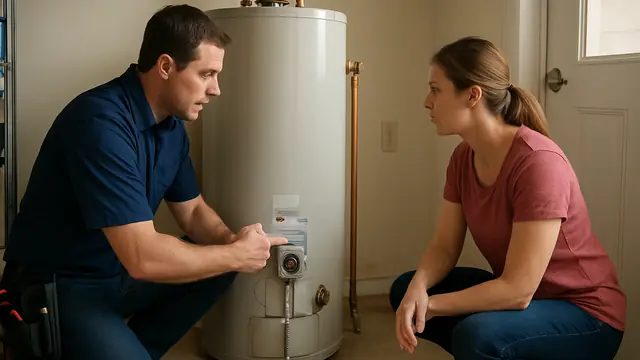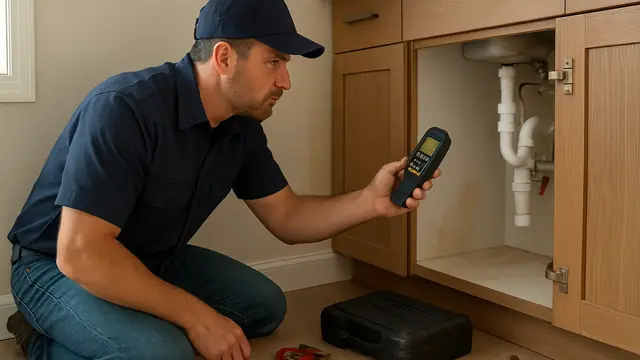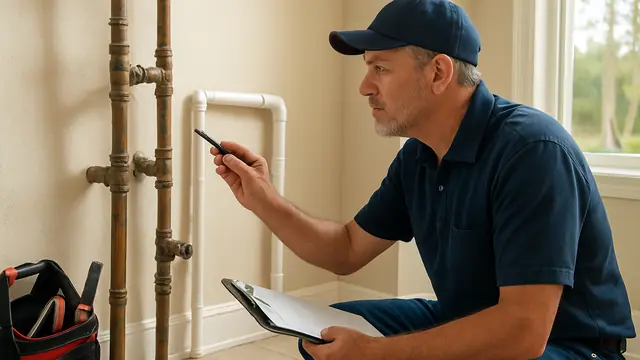
Stop and call for qualified help when plumbing water is near electrical equipment, sewage is entering occupied space, gas or burning odors are present, or a repair would require opening pressurized piping.
A Crestview homeowner may first notice a toilet that flushes slowly, a kitchen drain that makes a hollow gurgling sound, or water collecting in the bathtub when another fixture is used. The problem is frustrating because it is hidden. You can see the backup, but you cannot see the pipe carrying wastewater away from the home.
A sewer camera inspection is designed for that situation. It allows a licensed plumber to examine the inside of an accessible drain or sewer line and determine whether the problem is a removable blockage, accumulated buildup, a damaged joint, root intrusion, a sagging section, or another visible defect.
Until the line is evaluated, use as little water as possible when several fixtures are involved. Do not run laundry or dishwashing cycles during an active backup. If sewage enters the home, avoid contact and request prompt service.
What Happens During a Sewer Camera Inspection?
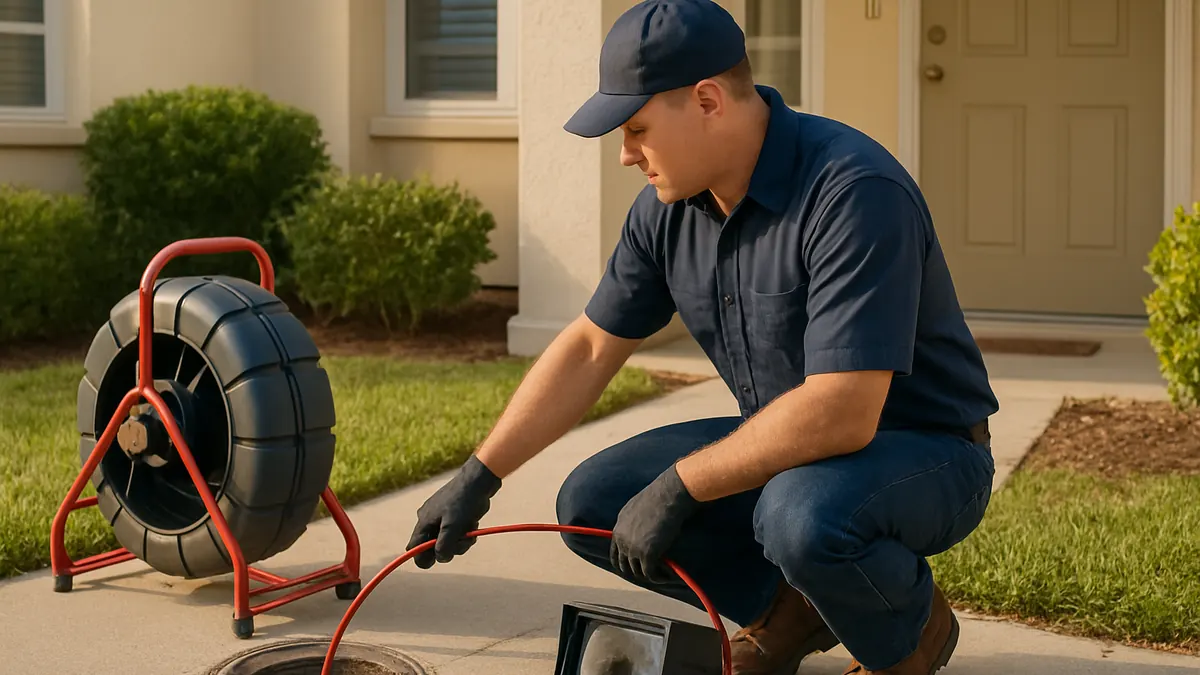
The plumber selects an access point, usually a cleanout or another approved opening, and feeds a flexible cable into the pipe. A small illuminated camera transmits live video to a monitor.
As the camera travels, the plumber studies the pipe's interior surface, joints, direction changes, deposits, water level, and visible damage. The camera may include a transmitter that can be detected above ground, allowing the plumber to mark the approximate location and depth of an obstruction or defect.
What the Symptoms May Mean
A single slow sink often points to a local trap or branch-line obstruction. When several fixtures are affected, the restriction may be farther downstream.
If a toilet bubbles when a tub drains, air may be struggling to move past a blockage. If water appears at a low drain when another fixture is used, wastewater may be meeting resistance in a shared line.
Common Conditions a Camera May Find
Accumulated Debris
Grease, soap residue, paper, sludge, and other material can reduce the pipe's usable diameter. Slow drainage may occur before a complete stoppage.
A Foreign Object
A toy, cleaning tool, excessive paper, wipes, or another item may lodge in the line. The camera can sometimes show its location and guide retrieval.
Root Intrusion
Roots can enter through an opening at a joint or damaged section. Cutting them may restore flow, but the opening can remain and allow regrowth.
Offset or Separated Joints
Pipe sections can lose alignment. Even a partial offset can catch solids and cause repeated clogs.
Cracks, Corrosion, or Collapse
Visible deterioration may range from one localized defect to major structural failure. The repair should match the actual extent of damage.
Standing Water
Water remaining in the line can indicate a low spot, poor slope, or downstream restriction. This finding must be interpreted with flow testing and the homeowner's symptoms.
Safe Steps a Homeowner Can Take
- Identify the lowest fixture showing symptoms. This helps the plumber understand where wastewater is surfacing first.
- Determine whether the issue occurs in one bathroom, one side of the home, or throughout the plumbing system. Do not perform repeated tests when an overflow is likely.
- Record what triggers the problem. Note whether the shower backs up after a toilet flush, the washer causes gurgling, or symptoms appear only after prolonged water use.
- Keep the area around accessible cleanouts clear, but do not open a cleanout cap during an active backup.
What You Should Not Do
- Do not keep plunging every fixture when the problem affects the whole home. Plunging may move water temporarily without removing a main-line obstruction.
- Do not pour repeated chemical treatments into the system. Chemicals may remain trapped behind the blockage and create a hazard when the line is opened.
- Do not insert improvised rods, hoses, or tools into a cleanout. They can become stuck, damage the pipe, or make the obstruction harder to remove.
Urgent Warning Signs
An active sewage overflow is urgent because it can damage materials and expose occupants to contamination. Stop water use and keep people and pets away from the area.
Call promptly when every toilet is unusable, wastewater rises in a tub or shower, or sewage escapes around a floor drain or cleanout.
A rapidly worsening backup, strong odor with visible wastewater, or suspected collapsed line also needs immediate attention. If there is no safe working toilet, delaying service can make the property difficult to occupy.
How a Licensed Plumber Completes the Diagnosis
The plumber first maps the symptoms. Questions about fixture location, timing, prior repairs, and what may have entered the drains can prevent unnecessary testing.
The next step is checking flow and access. The plumber may run selected fixtures, open a cleanout carefully, or use professional drain-cleaning equipment if the camera cannot pass.
During the inspection, the camera is advanced at a controlled speed. Important findings are paused, recorded, and located. The plumber may run water to observe flow through a questionable area when doing so is safe.
Afterward, the plumber explains what the video shows. Homeowners should be able to distinguish a clog from a structural defect and understand whether a visible condition is actually related to the complaint.
Repair Options in a Sensible Order
When the pipe is sound and only obstructed, professional cabling may remove the blockage. Heavier buildup may require a cleaning method chosen for the pipe's strength and material.
Roots may be cut to restore service, followed by repair if they entered through a damaged joint. Root removal alone may not prevent recurrence.
A short defective section may be exposed and replaced without replacing the entire line. A trenchless method may be considered when pipe condition, layout, and access make it suitable.
Larger-scale replacement becomes reasonable when damage is extensive, the pipe has collapsed, or multiple failures make repeated spot repairs impractical. The plumber should explain why lesser options would not provide a reliable result.
Typical Cost Factors
Diagnostic cost depends on access, whether cleaning is needed first, line length, and how much of the system must be inspected.
A long run, multiple bends, inaccessible cleanouts, or the need to remove and reset a fixture can add labor.
Repair cost is influenced by defect location and depth, pipe length, surface restoration, pipe material, and repair method. Work beneath a slab or finished surface differs from repair in an open area.
A written estimate should state whether locating, permits, cleanup, restoration, and follow-up inspection are included.
Prevention and Maintenance Guidance
- Flush only toilet paper and human waste. Wipes, paper towels, hygiene products, dental floss, and household trash belong in a waste container.
- Avoid sending fats, oils, and grease through the kitchen drain. Scrape plates into the trash and use a drain strainer.
- Pay attention to gradual changes. A toilet that begins flushing differently or a drain that repeatedly slows may provide an early warning.
Use the Inspection to Choose the Right Solution
What happens during a sewer camera inspection in Crestview is more than sending a camera into a pipe. The plumber evaluates symptoms, establishes access, clears the line when necessary, records visible conditions, locates important findings, and explains repair choices from the least invasive option upward. When several fixtures are affected or the same clog keeps returning, camera inspection can help you make a decision based on evidence instead of guesswork.
About this guide: This resource provides general homeowner education, not a remote diagnosis. Actual conditions, code requirements, equipment, and safe repair options must be evaluated at the property.