Stop and call for qualified help when plumbing water is near electrical equipment, sewage is entering occupied space, gas or burning odors are present, or a repair would require opening pressurized piping.
You clear a slow drain, everything works for a few days, and then the toilet starts gurgling again. Perhaps water rises in the shower when the washing machine empties, or a sewer odor returns even though the visible drains look clean. For a Fort Walton Beach homeowner, repeating symptoms often mean the problem cannot be diagnosed accurately from the fixture alone.
A sewer camera inspection gives a licensed plumber a live view inside an accessible drainage line. Before service, limit water use if multiple fixtures are affected. Do not keep flushing toilets or running appliances while wastewater is backing up. If sewage enters the home, avoid contact and arrange prompt professional help.
What Happens During a Sewer Camera Inspection in Fort Walton Beach?
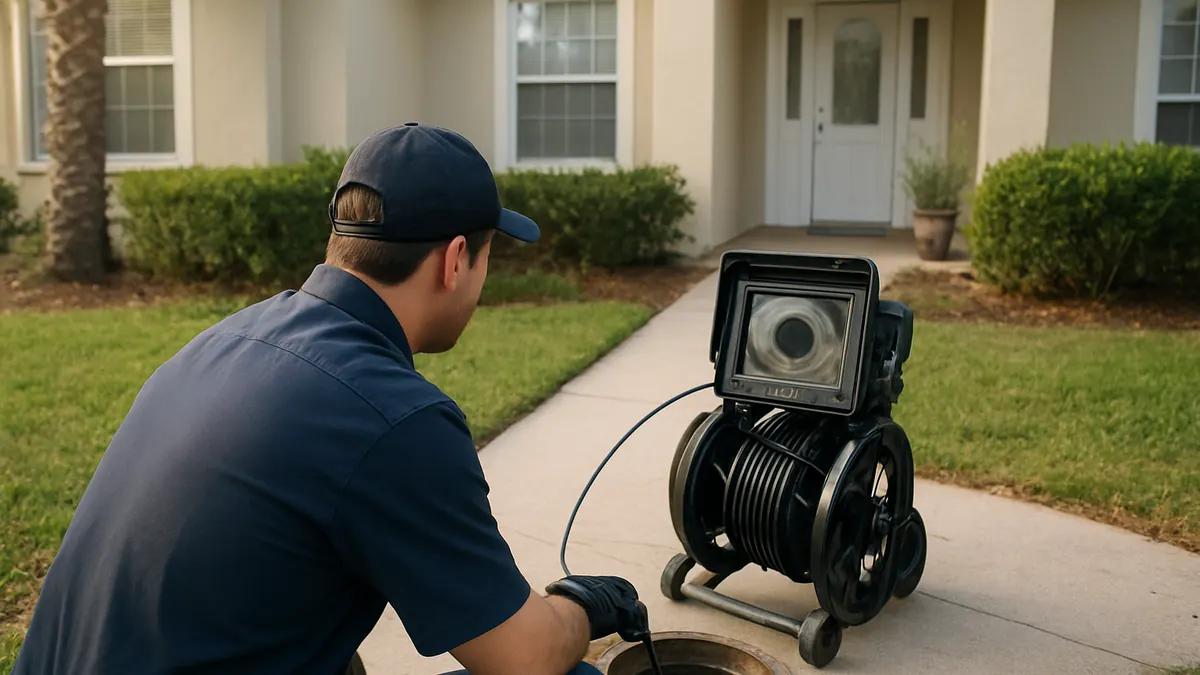
The plumber inserts a flexible cable through a cleanout or another suitable access point. A waterproof camera and light transmit video to a monitor. As the camera moves, the plumber evaluates pipe walls, joints, changes in direction, deposits, standing water, and visible damage.
The equipment may include a locating transmitter. When a defect is found, the plumber can use a receiver above ground to estimate the camera's position and depth. This helps limit unnecessary opening of floors, walls, or outdoor surfaces.
The inspection is diagnostic, not a repair. Its purpose is to replace assumptions with evidence and connect the homeowner's symptoms to a visible condition.
Symptoms That Commonly Lead to Inspection
A Stoppage That Returns
A one-time clog may sit near a fixture. A clog that returns after plunging or cleaning may involve buildup, a lodged object, root intrusion, a low section, or pipe damage that repeatedly catches waste.
Backups in More Than One Fixture
If a toilet and tub react together, or water appears in a shower when another fixture drains, the problem may be in a shared pipe. The symptom pattern guides the plumber to the correct section.
Slow Drainage Throughout the Home
Several slow drains can indicate narrowing in the building drain or sewer line. The camera may show grease, debris, scale, or structural damage.
An Unexplained Odor
Sewer odors may come from a dry trap, loose toilet seal, venting issue, or drainage-line defect. A camera is one diagnostic tool and is most useful when other symptoms point toward concealed piping.
What the Camera Can and Cannot Show
A camera may reveal grease deposits, paper buildup, a foreign object, roots entering a joint, cracked pipe, an offset connection, corrosion, or partial collapse. It may also show standing water where the line should normally drain.
Standing water can suggest a sag, inadequate slope, or restriction farther downstream. However, the plumber must interpret the image in context. A visible irregularity is not automatically the cause of the complaint.
Safe Checks Before the Appointment
- Observe which fixture showed the first symptom. This can help distinguish a local problem from a deeper obstruction.
- Note whether the issue occurs in one bathroom, on one level, or throughout the home. Stop testing if an overflow is likely.
- Watch the lowest tub or shower when another fixture drains. Wastewater often appears first at a low opening.
- Look for an exterior cleanout without opening it. Tell the plumber where it is and whether access is blocked by storage, fencing, or landscaping.
What Homeowners Should Avoid
- Do not mix drain-cleaning chemicals. Combining products can create dangerous fumes or heat, and chemicals trapped in the line can expose the technician.
- Do not remove a cleanout cap when the system appears completely backed up. The line may be full, and sewage can discharge rapidly.
- Do not operate a high-pressure cleaning machine or large drain cable without training. The wrong tool or setting can damage a weakened pipe or cause serious injury.
When the Situation Is Urgent
- Indoor sewage backup is urgent. Stop water use, keep occupants away from the contaminated area, and avoid spreading wastewater through the home.
- Seek prompt service when the lowest drains overflow each time water is used, no toilet will flush normally, or wastewater approaches flooring, cabinetry, or electrical equipment.
- Repeated backups shortly after recent cleaning also need attention. The line may not have been fully cleared, or a structural defect may be causing debris to collect again.
How a Licensed Plumber Diagnoses the Problem
The plumber starts with questions about fixture location, timing, frequency, previous repairs, and anything that may have entered the drains. Selected fixtures may be tested carefully.
Next, the plumber identifies the safest access point and determines whether the line must be cleaned before inspection. A camera needs enough open space and visibility to produce useful information.
The camera is advanced slowly while the plumber records significant conditions. Cable distance may provide a rough location, while a transmitter and receiver can improve above-ground locating.
Repair Choices From Least Invasive to Most Extensive
Professional cabling may solve the problem when the pipe is sound and the obstruction is removable. Heavy buildup may require a more thorough cleaning method chosen for the pipe's material and condition.
A foreign object near an access point may be retrieved without replacing pipe. Roots may be cut to restore flow, but the opening that allowed root entry may still require repair.
A small damaged section may be repaired directly. Depending on layout, access, and pipe condition, a trenchless method may also be evaluated.
Replacing a larger section becomes reasonable when the camera shows multiple failures, severe deformation, collapse, or widespread deterioration. Complete replacement should be supported by evidence, not recommended automatically.
Typical Factors Affecting Cost
Inspection cost varies with access, line length, pipe configuration, and whether a blockage must be cleared first. Removing and resetting a toilet can add labor when no cleanout is available.
Repair cost depends on defect location, depth, length, surface conditions, pipe material, and repair method. Work below a slab, driveway, or finished area requires a different scope than work in open ground.
Permits, cleanup, restoration, and follow-up inspection may also affect the total. A written estimate should explain what is included and what conditions could change the scope.
Prevention and Ongoing Maintenance
- Flush only human waste and toilet paper. Put wipes, paper towels, hygiene products, dental floss, and similar items in the trash.
- Keep fats, oils, and grease out of kitchen drains. Grease can cool, coat the pipe, and trap other debris.
- Address gradual slowing before the line becomes fully blocked. Early symptoms are useful diagnostic clues and may reduce the risk of an indoor overflow.
- If the camera identifies a recurring maintenance issue, ask for an interval based on the actual findings rather than a generic schedule.
Homeowner FAQs
Must the Line Be Cleaned Before Camera Inspection?
Not always. It must be open enough for the camera to travel and provide a useful view. A packed or heavily coated line may need cleaning first.
Can the Plumber Identify the Exact Location?
Cable distance gives an estimate, and a transmitter can often be located above ground to narrow the position and depth.
Will I Receive a Video?
Many companies can provide recordings or images, but ask what documentation is included before service.
Can the Camera Inspect Every Branch?
Not necessarily. Access, pipe diameter, bends, and equipment size determine which sections can be reached.
Does One Crack Mean the Entire Line Needs Replacement?
No. The decision depends on the crack's size, location, surrounding pipe condition, and whether other defects are present.
Make a Decision Based on Evidence
What happens during a sewer camera inspection in Fort Walton Beach is a careful visual evaluation often combined with fixture testing, drain cleaning, and above-ground locating. The goal is to find the cause, identify its location, and compare proportionate repair options. When backups keep returning or several fixtures are affected, limiting water use and arranging an inspection can help prevent a manageable drainage problem from becoming a damaging sewage overflow.
About this guide: This resource provides general homeowner education, not a remote diagnosis. Actual conditions, code requirements, equipment, and safe repair options must be evaluated at the property.