Stop and call for qualified help when plumbing water is near electrical equipment, sewage is entering occupied space, gas or burning odors are present, or a repair would require opening pressurized piping.
You flush the toilet, leave the bathroom, and still hear a steady hiss several minutes later. In another case, the toilet becomes quiet but unexpectedly refills every ten or fifteen minutes. Homeowners in Camp Creek may notice the problem in a primary bathroom, guest suite, or property used only part of the year. No matter where it happens, a running toilet means water is continuing to move when the toilet should be at rest.
The safest immediate step is to remove the tank lid carefully and watch what happens after one flush. If water is rising unusually high, gently turn the shutoff valve clockwise. Do not force a valve that will not move. Most running toilets are caused by worn or misadjusted tank components, and many can be repaired without replacing the fixture.
Why Does My Toilet Keep Running in Camp Creek?
A toilet should release water, refill to the proper level, and stop. Running means either water is escaping from the tank into the bowl or the fill valve is allowing too much water into the tank.
A constant hiss often indicates that the fill valve is not closing. A toilet that starts and stops by itself usually has a slow tank-to-bowl leak. Homeowners sometimes call this a "ghost flush," although the toilet is only replacing water that leaked away.
Common Reasons a Toilet Keeps Running
The flapper is worn or not seated correctly
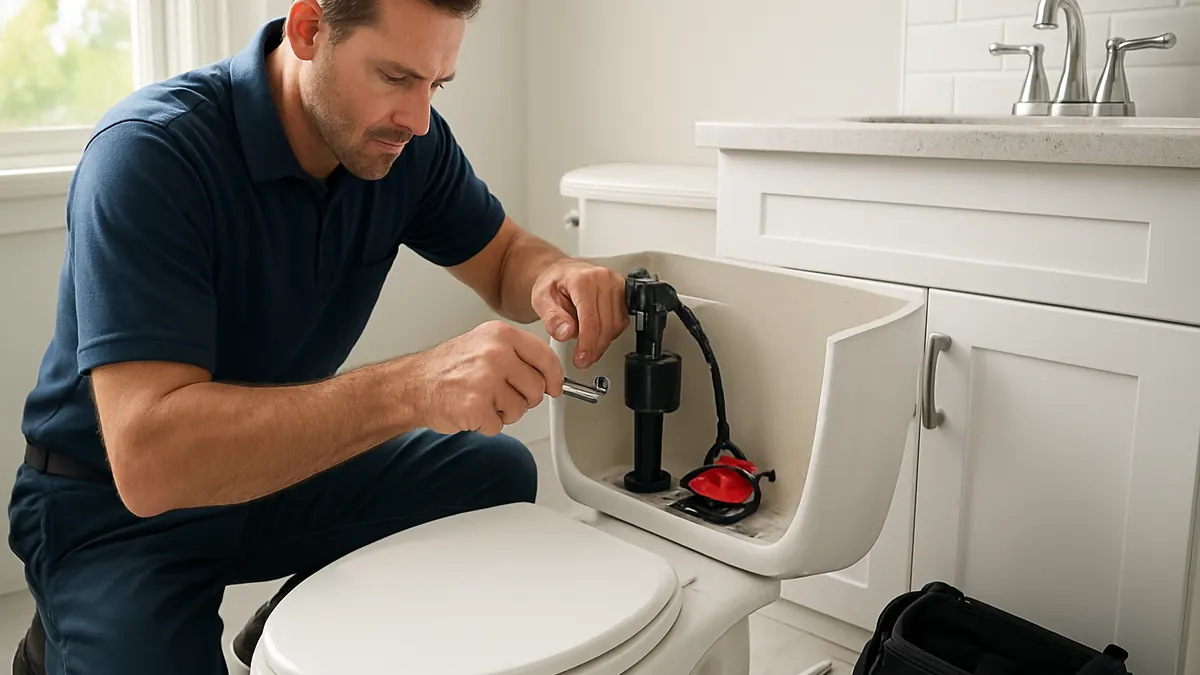
The flapper is a rubber or silicone seal at the bottom of many tanks. It lifts during a flush and should close tightly afterward. If it becomes warped, brittle, dirty, or misaligned, water can continue leaking into the bowl. It may also leak if it is the wrong size or style.
The chain is incorrectly adjusted
The handle connects to the flapper with a small chain. A chain that is too short can hold the flapper open. If it is too long, it can become trapped beneath the flapper or tangled around another component.
The fill valve is failing
The fill valve controls incoming water. A float rises with the water and tells the valve when to shut off. Internal wear, debris, or a damaged float can prevent complete closure.
The water level is too high
If the float is adjusted too high, water may continually spill into the overflow tube. The overflow tube is the open vertical pipe that prevents tank water from reaching the floor.
A canister seal is leaking
Some toilets use a vertical canister or tower instead of a flapper. A rubber seal at its base can wear out, swell, or move out of position.
The overflow tube or flush valve is damaged
A crack in the overflow tube or damage to the flush-valve assembly can cause leakage even when the flapper appears normal.
Safe Checks You Can Perform
- Set the tank lid on a towel. Flush once and watch the complete sequence.
- Confirm that the handle returns normally, the chain moves freely, and the flapper or canister closes evenly. Make sure the float rises without rubbing another part.
- After the tank fills, the water should stop near the manufacturer's fill line and below the overflow tube.
You can also perform a dye test. Add several drops of food coloring to the filled tank and do not flush. If colored water appears in the bowl within fifteen to twenty minutes, the tank seal is leaking.
Listen closely. Water spilling into the overflow tube points toward an incorrect water level or fill-valve problem. A faint trickle into the bowl more often indicates a leaking flapper or canister seal.
What Homeowners Should Not Attempt
- Do not pour drain cleaner into the toilet. A running toilet is normally a mechanical problem, not a blockage.
- Do not force a corroded shutoff valve with pliers. The valve or pipe can break and create a larger leak.
- Avoid overtightening tank bolts, plastic screws, or supply connections. Porcelain can crack, plastic can split, and rubber washers can deform.
- Do not install random replacement parts without identifying the toilet model and actual failure. A part that looks similar may not seal correctly.
Signs the Problem Needs Prompt Attention
Call promptly if water is close to the top of the tank, the fill valve sprays, or the shutoff valve cannot stop the flow.
Water on the floor requires immediate investigation. Possible sources include the supply line, shutoff valve, tank bolts, tank-to-bowl gasket, cracked porcelain, or the seal beneath the toilet.
A toilet that rocks, has a visible crack, repeatedly clogs, or causes water to appear around the base should not be treated as a simple tank repair.
In a home that may be vacant for stretches of time, do not leave a known running toilet unattended. A worsening valve or supply connection may cause damage before anyone notices.
How a Licensed Plumber Diagnoses the Problem
A licensed plumber watches the toilet through a complete flush and refill cycle. The technician determines whether the tank is overfilling or losing water into the bowl.
The inspection includes the handle, chain, flapper or canister seal, fill valve, float, refill tube, overflow tube, flush valve, tank bolts, supply line, and shutoff valve.
A dye test may confirm a slow leak. The plumber may also identify the toilet model so the correct seal or assembly can be installed. The goal is to find the specific cause rather than replace unrelated components.
Repair Options From Least Invasive to More Extensive
- A small chain, handle, float, or refill-tube adjustment may restore normal operation. Cleaning debris from a sealing surface can also help.
- If a part is worn, the plumber may replace the flapper, canister seal, handle, fill valve, or supply line individually.
- When several tank components are deteriorated, rebuilding the tank can be more reliable than making repeated repairs one part at a time.
Complete toilet replacement is generally considered when porcelain is cracked, the fixture is unstable, compatible parts are unavailable, or repeated failures make repair impractical.
Factors That Affect Repair Cost
Cost depends on the failed component, toilet design, part availability, and access. A simple adjustment requires less labor than replacing a specialty canister or rebuilding the tank.
A defective shutoff valve, corroded hardware, leaking supply line, or the need to remove the toilet can increase the scope. Flooring or surrounding damage would be addressed separately.
Prevention and Maintenance
- Listen after every flush. The toilet should refill, stop, and remain quiet.
- Investigate new hissing, trickling, or periodic refilling early. Do not ignore a handle that sticks or must be jiggled.
- Avoid in-tank bleach tablets and harsh cleaners unless the toilet manufacturer approves them. These products can shorten the life of seals and plastic components.
- Check infrequently used bathrooms regularly. Flush the toilet, wait for the tank to stop, and inspect the floor and supply connection for moisture.
Stop the Running Before It Becomes a Bigger Problem
If you are asking, "Why does my toilet keep running in Camp Creek?" the most likely causes are a leaking tank seal, chain or handle problem, incorrect water level, or fill valve that cannot shut off.
A visual check can help you describe the symptom, but persistent running should be diagnosed and repaired. Correcting the cause can restore quiet operation, reduce unnecessary water use, and lower the chance of an overflow or supply leak.
About this guide: This resource provides general homeowner education, not a remote diagnosis. Actual conditions, code requirements, equipment, and safe repair options must be evaluated at the property.