Stop and call for qualified help when plumbing water is near electrical equipment, sewage is entering occupied space, gas or burning odors are present, or a repair would require opening pressurized piping.
You may first notice a faint hiss from the guest bathroom, followed by the tank refilling even though nobody used the toilet. A property manager may hear the same sound during a check between occupants. Either way, the toilet is losing water or failing to shut off.
Lift the tank lid carefully and watch one flush cycle. If water is close to overflowing, turn the shutoff valve clockwise with gentle pressure. Do not force a stiff valve. Common causes include a worn seal, misadjusted float, tangled chain, or defective fill valve.
What a Running Toilet Is Telling You
A toilet tank should complete three steps: release water into the bowl, refill to the proper level, and stop. Running means one of those steps is not ending.
Constant sound often means the fill valve is staying open or water is spilling into the overflow tube. If the toilet becomes quiet and refills later, water is probably leaking from the tank into the bowl.
Why Does My Toilet Keep Running in Alys Beach?
The flapper is not sealing
Traditional toilets use a rubber flapper over the flush opening. Age, distortion, debris, or an incorrect replacement part can keep it from sealing, often causing periodic refilling.
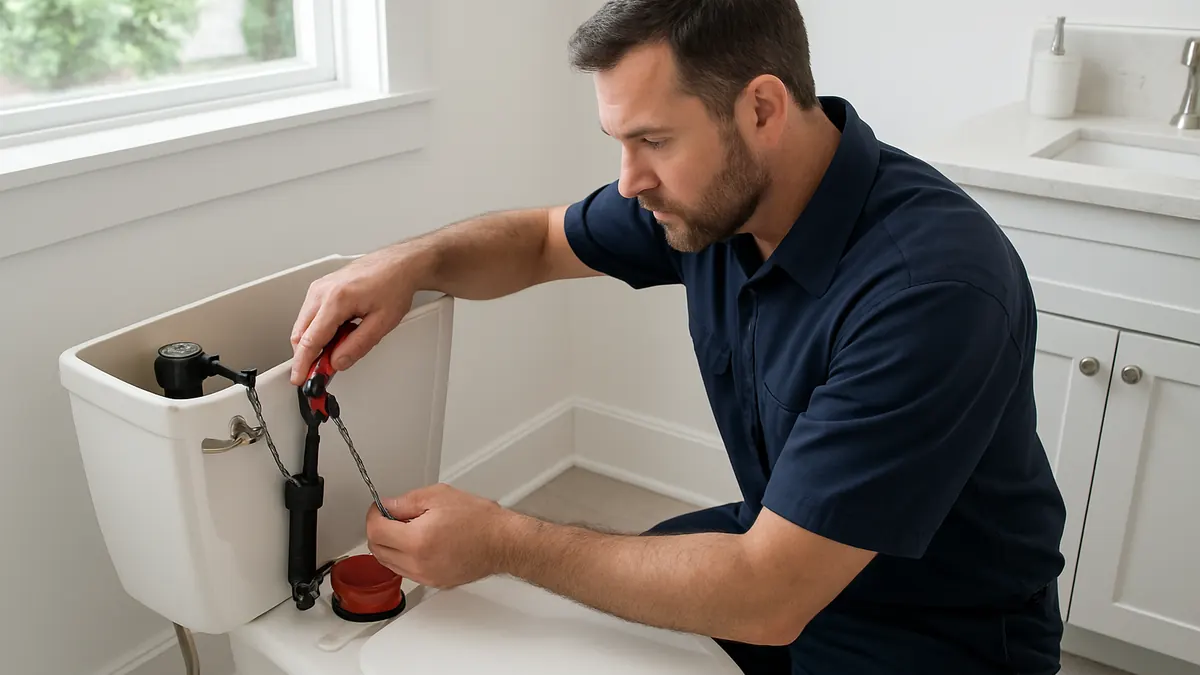
The lift chain is interfering
A chain that is too tight can keep the flapper slightly raised. A chain that is too loose can fold under the flapper. Either condition creates an opening that allows water to escape.
The float is set too high
If the float is set too high, the tank may keep filling until water spills into the overflow tube and the fill valve runs continuously.
The fill valve is worn or obstructed
A fill valve can become noisy or unable to close because of internal wear or debris. It may need adjustment, cleaning, or replacement.
A canister seal has failed
Many newer toilets use a vertical canister or tower instead of a hinged flapper. A rubber seal at its base performs the same job. If that seal is warped, swollen, or out of position, the tank can leak into the bowl.
The flush valve or overflow tube is damaged
The flush valve is the larger assembly through which tank water enters the bowl. A damaged gasket or cracked overflow tube can cause a leak that is not corrected by replacing the flapper alone.
Safe Checks Before Calling a Plumber
Place the tank lid on a soft surface. Flush and watch the chain, flapper or canister, float, and water level. The chain should move freely, and the seal should not look folded or distorted. Water should stop below the overflow tube and near the manufacturer's fill mark.
For a dye test, add food coloring to the filled tank and wait 15 to 20 minutes without flushing. Color in the bowl confirms an internal leak. Gently lifting the float may also show whether the valve can close.
Repairs Homeowners Should Avoid
Do not force float parts or overtighten tank bolts; plastic and porcelain can crack. Avoid universal parts when the toilet requires a specific seal or canister. Do not use chemical drain opener because running is a mechanical problem, not a clog.
If the shutoff valve is seized, leaking, or heavily corroded, do not use pliers to force it. A plumber can isolate the water safely and replace the valve if needed.
Signs That Require Prompt Attention
A running toilet becomes urgent when water is near the top of the tank, the fill valve is spraying, or the shutoff valve cannot stop the flow.
Water on the floor is also urgent. It may come from the supply line, valve, tank bolts, gasket, cracked porcelain, or seal beneath the toilet. Act promptly if the toilet rocks, repeatedly clogs, or overflows.
For a property that may be unoccupied between visits, do not leave a known running toilet operating. The inability to monitor it increases the consequence of a worsening leak.
How a Licensed Plumber Finds the Exact Cause
The plumber determines whether water is entering too long or escaping after the tank fills. The technician checks the handle, chain, seal, fill valve, float, overflow tube, flush valve, tank bolts, shutoff valve, and supply line. A dye test may confirm a tank-to-bowl leak. Model identification is important for canister-style toilets and specialty seals.
Repair Options From Smallest to Largest
The least invasive solution may be repositioning the chain, correcting the float, or cleaning the sealing surface. A worn flapper, canister seal, handle, or fill valve can usually be replaced individually. When several parts are worn, rebuilding the tank may be more reliable than making repeated small repairs.
Replacement of the entire toilet is generally reserved for cracked porcelain, unavailable parts, significant damage, poor fixture condition, or repeated failures that make continued repair impractical.
What Determines the Cost?
The main cost factors are the failed part, the toilet's design, access, and part availability. A chain adjustment or standard flapper replacement involves less work than a tank rebuild or specialty canister repair.
A defective shutoff valve, leaking supply line, corroded bolts, difficult access, or the need to remove the toilet can increase labor. The plumber should explain which work is necessary.
Preventing Another Running Toilet
Listen until the tank stops after flushing. Periodic refilling, hissing, or trickling should be investigated early.
Keep in-tank cleaners out unless the manufacturer specifically approves them. Some chemicals shorten the life of rubber seals.
Operate the shutoff valve occasionally only if it is in good condition and moves easily. Never force it. Routine plumbing inspections can identify aging valves and supply lines before an emergency.
For guest bathrooms or toilets used infrequently, flush and inspect them regularly. Lack of daily use does not prevent seals from aging.
Get a Definite Answer and the Right Repair
When you ask, "Why does my toilet keep running in Alys Beach?" focus on whether the tank is overfilling or leaking into the bowl. That distinction helps a plumber identify the least invasive effective repair.
Do not ignore a toilet that repeatedly refills, cannot be shut off, or leaves water on the floor. Correcting the failed component now can prevent continued water loss and reduce the chance of a more disruptive problem.
About this guide: This resource provides general homeowner education, not a remote diagnosis. Actual conditions, code requirements, equipment, and safe repair options must be evaluated at the property.