Stop and call for qualified help when plumbing water is near electrical equipment, sewage is entering occupied space, gas or burning odors are present, or a repair would require opening pressurized piping.
You flush, but the handle has to be jiggled before the water stops. Later, the tank refills even though no one used the bathroom. The toilet may also hiss continuously while water moves into the bowl. These symptoms mean the refill cycle is not ending correctly.
Remove the tank lid and watch one flush. If water is rising near the top, gently turn the shutoff valve clockwise. Do not force a stuck valve. Most causes involve replaceable tank parts, but the problem should be repaired promptly.
Why Does My Toilet Keep Running in Blue Mountain Beach?
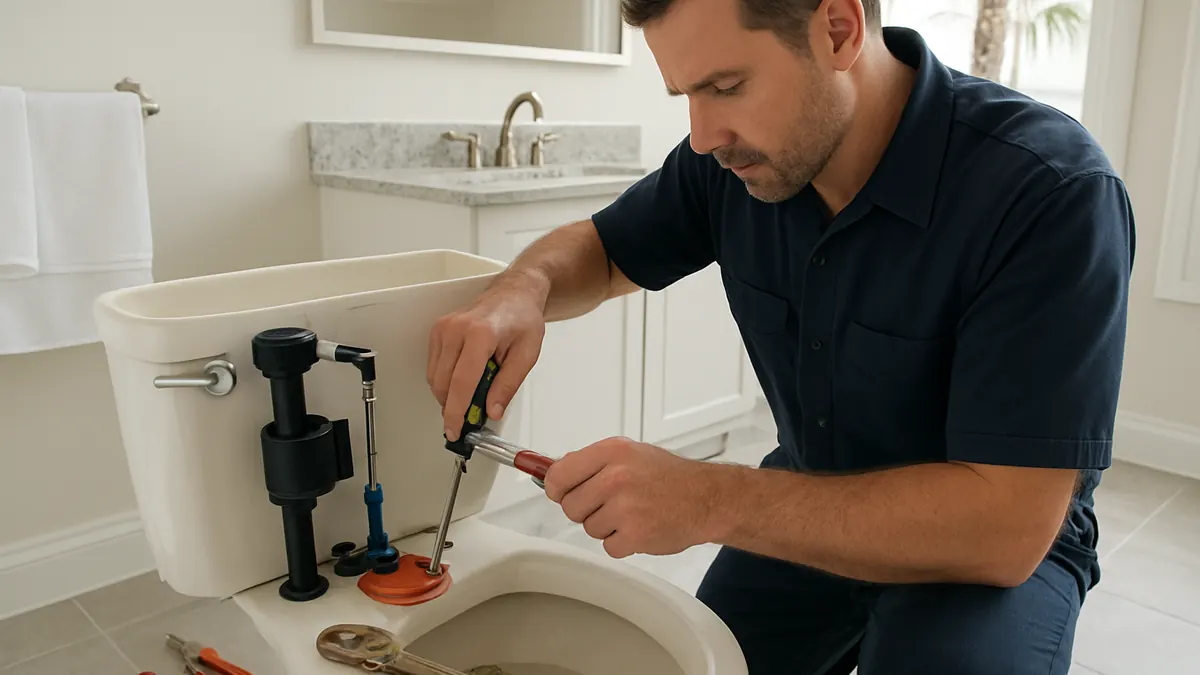
Pressing the handle lifts a seal and releases tank water into the bowl. The seal should close, the tank should refill to a set level, and the fill valve should stop. If the seal leaks, water escapes into the bowl. If the float or valve fails, water keeps entering. Continuous hissing usually points to the fill system; periodic refilling suggests a slow tank-to-bowl leak.
Start With the Handle, Chain, and Flapper
A chain connects the handle arm to the flapper or another seal. A sticking handle, tight chain, or chain trapped beneath the flapper can hold the opening ajar. Jiggling the handle may let it settle temporarily.
The flapper may also be worn, dirty, misshapen, or incompatible. Toilets with a canister or tower use a rubber ring that can deteriorate or shift in the same way.
Check the Water Level and Fill Valve
The fill valve brings water into the tank, and its float should close the valve at the correct level. If the float is set too high or rubs another part, water may spill into the overflow tube. A worn valve or internal debris can also prevent closure. The small refill tube should be positioned correctly rather than pushed deeply into the overflow tube.
Other Possible Causes
A cracked overflow tube, damaged flush-valve seat, or deteriorated tank component may also cause leakage. Several aging parts can fail together, so replacing one item may not correct the entire problem.
Safe Checks You Can Make
Set the lid on a towel. Flush once and confirm the handle returns, the chain does not bind, the seal drops evenly, and the float rises freely. Water should stop below the overflow tube and near the fill mark.
For a dye test, add food coloring to the filled tank and wait 15 to 20 minutes without flushing. Color in the bowl confirms an internal leak. Gently lifting the float may show whether the valve can close. Also check the floor, supply line, bolts, and toilet base for moisture.
What Not to Do
Do not force the shutoff valve with pliers or overtighten tank bolts and fittings. Porcelain can crack, threads can strip, and washers can deform. Do not use drain cleaner because the problem is mechanical, not a clog. Avoid aggressive chain or float modifications, and do not keep installing random universal parts when the toilet may require a model-specific seal.
Urgent Warning Signs
Request prompt help if the tank is nearly overflowing, the fill valve sprays, or water appears around the base or behind the toilet. Possible sources include the supply line, valve, tank hardware, cracked porcelain, or floor seal.
Do not use a toilet that rocks, has a visible crack, repeatedly overflows, or is accompanied by wastewater backing up elsewhere. Correct a running toilet before leaving the home vacant.
How a Licensed Plumber Diagnoses the Running
A plumber watches the handle, seal, refill, and shutoff sequence to determine whether the tank is losing water or overfilling. The inspection covers the flapper or canister, chain, float, fill valve, refill tube, overflow tube, flush valve, tank hardware, supply line, and shutoff valve. Dye testing can confirm an internal leak, and model identification ensures correct parts.
Repair Options From Simple to More Involved
A chain, handle, float, or refill-tube adjustment may solve the problem without new parts. Next comes cleaning or replacing the worn flapper or canister seal. A defective fill valve, shutoff valve, or supply line can be replaced as needed.
When several tank parts are deteriorated, a tank rebuild may be more efficient. Complete toilet replacement is generally reserved for cracked porcelain, significant damage, unavailable parts, or recurring failures.
Factors That Influence Cost
Cost depends on the exact failed part, toilet design, compatibility of replacement parts, and ease of access. A simple adjustment differs from a specialty seal replacement or full tank rebuild.
A defective supply valve, corroded bolts, concealed leakage, or removal of the toilet can expand the scope. Diagnosis allows comparison of a focused repair with a rebuild or replacement.
Prevention and Ongoing Maintenance
- Pay attention to new sounds after flushing. The tank should stop filling and remain quiet. Test guest or seldom-used toilets regularly.
- Avoid harsh in-tank cleaning tablets unless approved by the manufacturer. Chemicals can weaken rubber seals and plastic parts.
- Do not ignore a handle that sticks or must be held down. Correcting the handle or chain early may prevent premature seal wear.
- Periodically look for moisture at the supply line and base. A plumber can also inspect shutoff valves, tank parts, and toilet stability during routine service.
Correct the Cause, Not Just the Noise
When you ask, "Why does my toilet keep running in Blue Mountain Beach?" the answer usually involves the handle and chain, the tank seal, the water level, or the fill valve. The sound may seem minor, but it shows that the toilet is not controlling water as designed.
Observe the tank safely, shut off the supply if water is rising, and arrange professional diagnosis when the running persists. The right repair may be a small adjustment, one replacement part, a tank rebuild, or-only when justified-a new toilet.
About this guide: This resource provides general homeowner education, not a remote diagnosis. Actual conditions, code requirements, equipment, and safe repair options must be evaluated at the property.