Stop and call for qualified help when plumbing water is near electrical equipment, sewage is entering occupied space, gas or burning odors are present, or a repair would require opening pressurized piping.
A toilet that runs after every flush can become background noise in a busy household. You may hear water trickling into the bowl, notice the tank refilling without anyone using it, or discover that the handle must be moved before the sound stops. In a DeFuniak Springs home, the problem may affect the main bathroom or a less-used bathroom where the leak continues unnoticed.
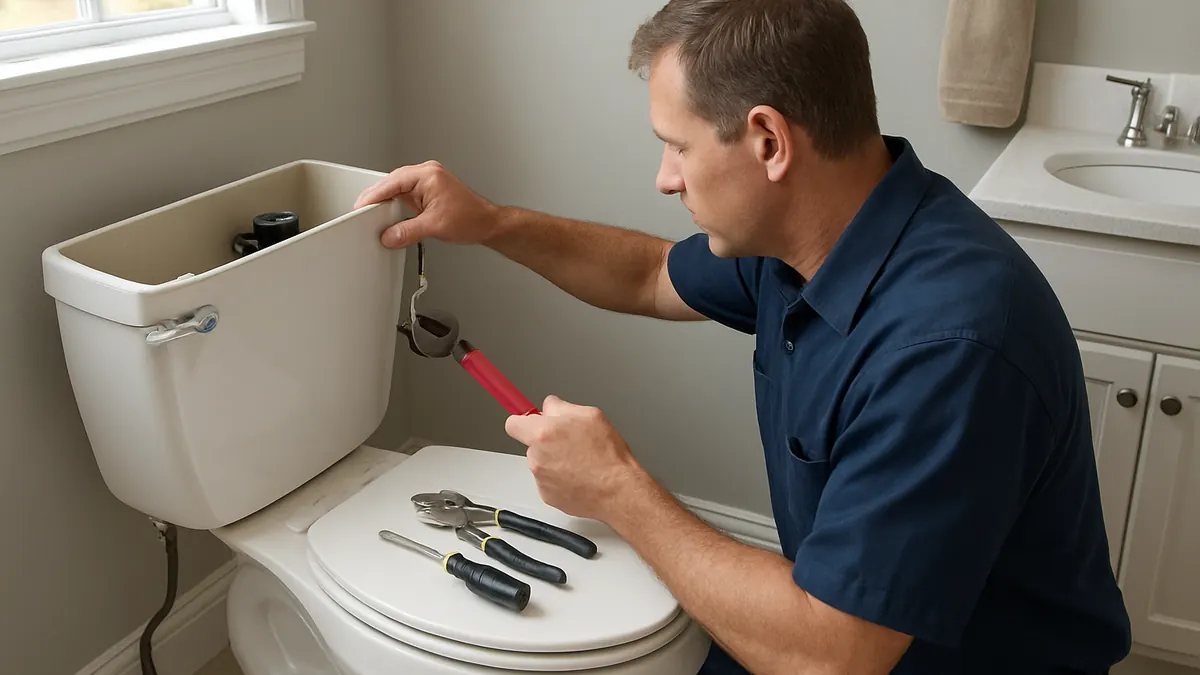
Start with a safe observation. Remove the tank lid carefully, place it on a towel, and watch one complete flush. If water continues rising toward the top, gently turn the shutoff valve clockwise. Never force a valve that feels stuck. A running toilet usually has a problem inside the tank, and the correct repair is often much smaller than replacing the entire toilet.
What Is Happening Inside the Tank?
During a normal flush, the handle lifts a seal and releases tank water into the bowl. The seal closes, the fill valve brings water into the tank, and a float shuts the valve off at the proper level.
If the seal does not close, water leaks into the bowl and the tank keeps replacing it. If the fill valve does not close, water may flow into the overflow tube. This upright pipe directs excess water into the bowl instead of onto the floor.
Why Does My Toilet Keep Running in DeFuniak Springs?
A deteriorated flapper
The flapper is the flexible seal found in many tanks. It can become stiff, warped, dirty, or unable to sit flat. Even a small gap allows water to pass into the bowl.
A new flapper can also leak if it does not match the flush valve. Shape, diameter, and weight affect how it seals.
A chain or handle problem
The lift chain needs enough slack to let the flapper close without becoming tangled. A short chain holds it open, while an excessively long chain may slip underneath it.
A loose, bent, or sticking handle can create the same symptom. If moving the handle stops the running, the handle-and-chain assembly deserves attention.
A worn fill valve
The fill valve controls incoming water. Internal wear can make it hiss, vibrate, refill slowly, or fail to stop. Debris can also interfere with its moving parts.
A float set incorrectly
The float tells the fill valve when the tank is full. If it is set too high, water reaches the overflow tube before the valve shuts off. If the float rubs the tank wall, it may not move normally.
A leaking canister seal
Some toilets use a canister, tower, or disc rather than a hinged flapper. A rubber ring seals the opening at the bottom. When that ring wears or shifts, water leaks into the bowl.
Damage to the flush-valve assembly
A cracked overflow tube, damaged flush-valve seat, or deteriorated gasket can create a persistent leak that a flapper replacement will not solve.
Safe Checks for a Homeowner
Flush and watch the moving parts. The handle should return freely. The chain should lift the seal and then allow it to settle completely. The float should rise without catching on another component.
Observe where the water stops. Most tanks have a fill mark. The final level should be near that mark and below the top of the overflow tube.
For a slow-leak test, add a few drops of food coloring to the filled tank. Wait fifteen to twenty minutes without flushing. If color appears in the bowl, water is passing through the tank seal.
You can also press lightly on the flapper or canister after the tank fills. If the running stops, the seal or seating surface is probably involved. This is a clue, not a permanent repair.
What You Should Not Try
- Do not use drain-opening chemicals. A running toilet is generally not caused by a clogged drain, and chemicals can damage components or create a hazard.
- Do not tighten tank bolts aggressively. Porcelain can crack when hardware is tightened unevenly.
- Do not force a shutoff valve that will not turn. A broken valve can release water rapidly.
- Avoid bending float arms sharply, shortening chains excessively, or modifying parts to fit. Correctly matched parts provide a more dependable seal.
When a Running Toilet Becomes Urgent
Prompt attention is needed when water rises close to the tank rim, the fill valve sprays, or the toilet cannot be isolated with the shutoff valve.
Water around the base or behind the toilet is also urgent. Floor moisture may indicate a supply-line leak, defective shutoff valve, leaking tank bolts, failed gasket, cracked porcelain, or floor-seal problem.
Stop using the toilet if it rocks, has a visible crack, repeatedly overflows, or is associated with wastewater backing up elsewhere.
How a Licensed Plumber Diagnoses It
A plumber first determines whether the tank is overfilling or leaking into the bowl.
The technician observes the flush cycle and checks the handle, chain, flapper or canister, fill valve, float, refill tube, overflow tube, flush valve, tank hardware, supply line, and shutoff valve. Dye testing may confirm a quiet leak.
The plumber also looks for multiple worn components. Replacing only the flapper will not help if the fill valve is failing or the flush-valve seat is damaged.
Repair Options in a Practical Order
The least invasive repair may be adjusting the chain, handle, float, or refill tube. Cleaning the sealing surface may help when debris prevents closure.
A worn flapper, canister seal, handle, or fill valve can usually be replaced separately. A leaking supply line or defective shutoff valve can also be replaced without changing the toilet.
If several tank parts are worn, a tank rebuild may be more dependable. This replaces the working components while keeping the bowl and tank when they remain serviceable.
Toilet replacement is considered when porcelain is cracked, the fixture is unstable, correct parts are unavailable, or repeated repairs no longer make practical sense.
What Affects the Cost of Repair?
Cost depends on the failed component, toilet model, part availability, and condition of the surrounding connections. An adjustment differs from replacing a specialty flush assembly.
Corroded bolts, a leaking shutoff valve, difficult access, or the need to remove the toilet can add labor. Water damage to flooring is separate from repairing the tank mechanism.
Preventing Future Running Problems
- Wait after flushing and make sure the tank stops filling. A healthy toilet should become quiet and stay quiet.
- Address handles that stick, feel loose, or require repeated movement. A small handle problem can interfere with the chain and seal.
- Avoid harsh chemical tablets unless the manufacturer approves them. Some products deteriorate rubber and plastic.
- Check less-used toilets periodically. Seals age even when a toilet is not flushed often, and a slow leak may continue unnoticed.
Restore a Quiet, Reliable Flush Cycle
If you are wondering, "Why does my toilet keep running in DeFuniak Springs?" look first at the tank seal, chain, water level, float, and fill valve. Constant running versus occasional refilling helps identify the likely cause.
Do not accept the sound as normal. A licensed diagnosis can identify the least invasive effective repair and confirm that no supply or floor leak is developing.
About this guide: This resource provides general homeowner education, not a remote diagnosis. Actual conditions, code requirements, equipment, and safe repair options must be evaluated at the property.