Stop and call for qualified help when plumbing water is near electrical equipment, sewage is entering occupied space, gas or burning odors are present, or a repair would require opening pressurized piping.
You rinse a glass at the kitchen sink in your Camp Creek home and notice spots after it dries. In the shower, soap does not seem to lather well, and a white film keeps returning on the fixtures. At the same time, the water may have a taste or odor you do not like. These symptoms often lead homeowners to ask whether they need a water softener, whole-house filtration, or a system that provides both.
The safest immediate step is to identify where the problem occurs. Compare hot and cold water, check several faucets, and note whether the issue affects the entire property or only one fixture. Do not purchase treatment equipment based on appearance alone. If the water suddenly becomes discolored, develops a strong chemical or sewage-like odor, or contains oily-looking material, avoid using it for drinking or cooking until it has been evaluated.
Water softeners and whole-house filters serve different purposes. The right choice depends on the cause, water demand, and plumbing condition.
Water Softener Versus Whole-House Filtration in Camp Creek
A water softener is designed mainly to reduce hardness minerals, especially calcium and magnesium. These dissolved minerals can create scale on faucets, shower doors, water-heating equipment, and appliance components.
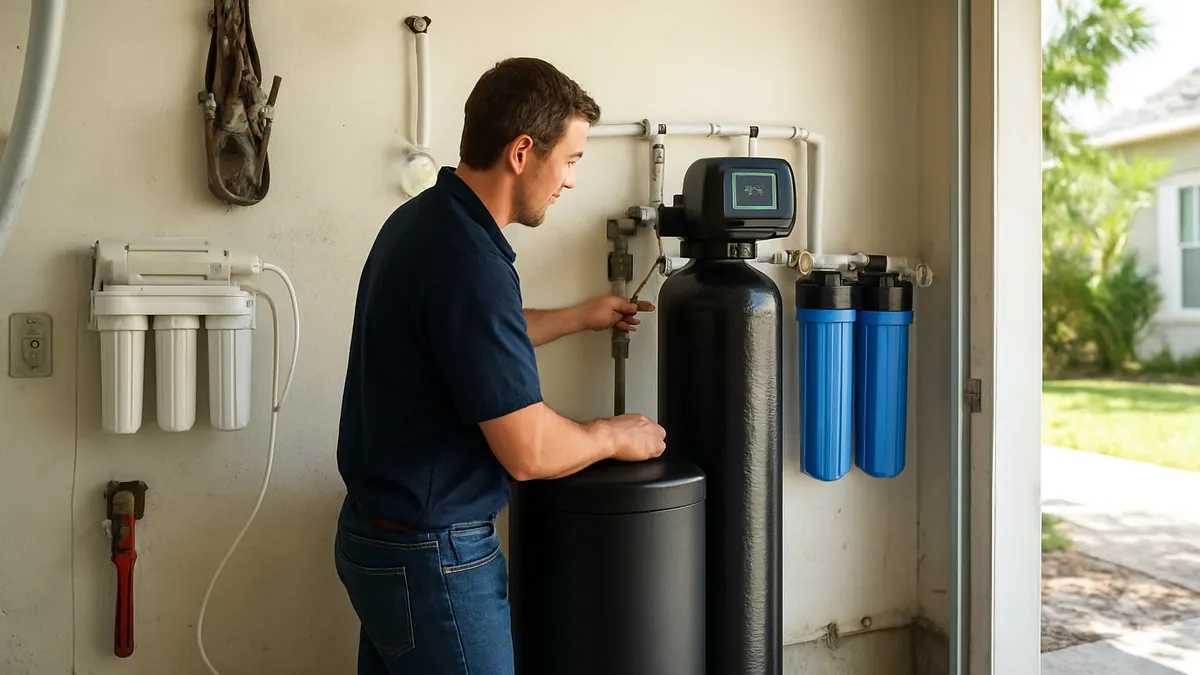
Most conventional softeners use a process called ion exchange. The system captures calcium and magnesium and replaces them with sodium or potassium ions. The result is water that produces less scale and allows soap to work more effectively.
Whole-house filtration is a broader category. A sediment filter may capture particles. Activated carbon may reduce certain tastes and odors. Specialized media may be selected for other substances that testing confirms.
A filter does not automatically soften water, and a softener does not remove every possible contaminant.
Symptoms That Suggest Hard Water
Hardness usually shows up as buildup and cleaning difficulty. Common signs include white crust around aerators, cloudy film on shower glass, spots on dishes, stiff-feeling laundry, and soap that rinses poorly.
You may also notice that a showerhead sprays unevenly because mineral deposits block small openings. These symptoms make hardness testing reasonable, but visible white residue does not prove that every water concern will be corrected by a softener.
Symptoms That Suggest Filtration
Filtration is more likely to be appropriate when the complaint involves visible particles, unpleasant taste, discoloration, or odor. The exact filter depends on the cause.
A sediment cartridge may help when suspended material enters the plumbing. Activated carbon may help with a verified chlorine-related taste or odor. Other complaints may require different treatment or laboratory testing.
If the problem appears at only one sink, the cause may be a faucet aerator, flexible supply line, drain odor, or localized plumbing component rather than the incoming water supply.
Safe Checks a Homeowner Can Perform
Fill one clear glass with cold water and another with hot water. Allow both to sit briefly, then compare their color, odor, and visible particles. Do not taste water that appears suspicious.
Check faucets in different parts of the home. If the condition occurs everywhere, the incoming supply or whole-house plumbing deserves attention. If only hot water is affected, the water heater may be contributing to the problem.
Remove and inspect faucet aerators for grit, scale, or flakes. Review the date on any existing filter cartridge. Look at the softener control panel for an error code and confirm that the unit has not been placed in bypass.
A basic hardness test provides direction but is not a complete water analysis.
What You Should Not Attempt
Do not increase a softener's salt setting in an effort to remove taste, odor, or particles. More salt will not turn a softener into a filtration system.
Do not install the finest filter cartridge you can find without considering flow. A filter that is too restrictive can reduce shower pressure and slow appliance filling.
Avoid opening a pressurized filter housing before shutting off the water and relieving pressure. Do not disconnect control valves, drain lines, or electrical components unless you are trained to service that system.
Never add bleach, acids, or other chemicals to the plumbing based on an online suggestion. Chemical treatment should be based on verified water conditions and a safe procedure.
Signs the Water Problem Is Urgent
Hard water is generally a gradual maintenance problem rather than an emergency. Sudden water changes need quicker attention.
Call for prompt evaluation if water throughout the home turns brown, black, red, or oily-looking; develops a strong chemical, fuel, or sewage-like odor; contains persistent particles; or causes unexplained irritation.
A major pressure drop may indicate a clogged filter, failed valve, supply restriction, or plumbing problem. Water leaking from a treatment tank, cartridge housing, bypass valve, or drain connection also requires immediate attention.
If a leak is substantial, shut off the main water supply when it can be done safely.
How a Licensed Plumber Diagnoses the Correct System
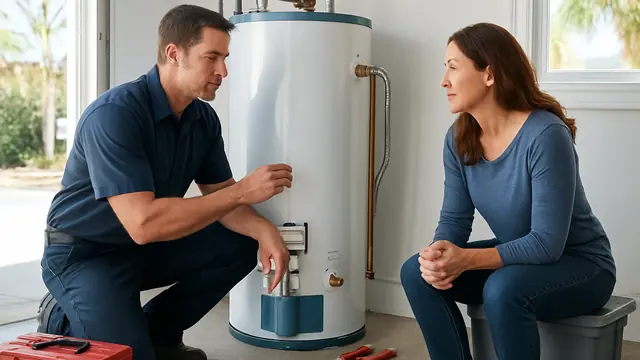
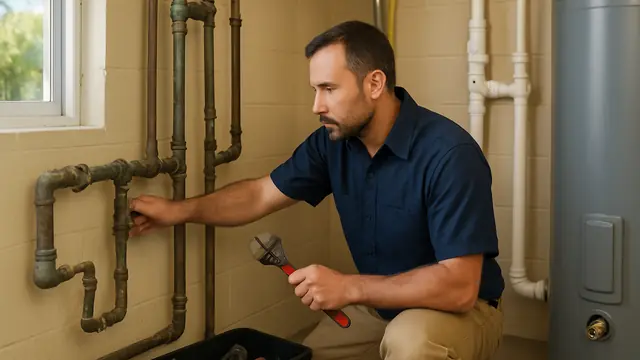
A licensed plumber begins by asking about the water source, symptoms, occupancy, fixture count, and maintenance history. The inspection may include the main shutoff, pressure, flow, water heater, accessible piping, and existing treatment equipment.
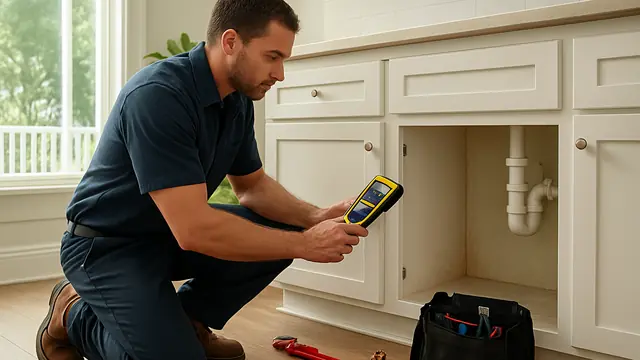
The plumber may test hardness, chlorine, pH, iron, total dissolved solids, or other factors related to the complaint. These tests answer different questions and should not be treated as interchangeable.
Private-well concerns or possible health-related contaminants may require certified laboratory analysis. The plumber also calculates peak flow so the equipment can support simultaneous fixture use.
Treatment Options From Least Invasive to Most Extensive
The least invasive solution may be cleaning aerators, replacing an overdue cartridge, correcting a bypass setting, flushing a water heater, or repairing an existing control valve.
If the problem is limited to drinking water at one faucet, a point-of-use filter may be sufficient. If testing confirms sediment throughout the property, a properly sized main-line sediment filter may be considered.
Activated carbon may be recommended for a verified taste or odor complaint. An ion-exchange softener is the direct treatment when hardness is confirmed.
When both hardness and filtration concerns are present, staged equipment may be installed in the correct order. Repiping is considered only when the plumbing itself is causing recurring corrosion, contamination, or flow restriction.
Factors That Affect Cost
Cost depends on testing, treatment type, system capacity, plumbing access, number of stages, drain routing, electrical availability, and required modifications to the main water line.
A property with several bathrooms or frequent simultaneous use needs greater flow capacity than a smaller home. Ongoing expenses may include salt, filter cartridges, replacement media, regeneration water, and maintenance.
The most affordable system is the one that solves the verified problem without adding unnecessary equipment or creating pressure loss.
Prevention and Maintenance
Keep a written record of water tests, filter changes, salt additions, repairs, and programming adjustments. Label cartridges with the installation date.
Inspect the equipment area regularly for moisture, salt bridging, loose drain tubing, or unusual sounds. Replace filters before severe pressure loss occurs.
After extended vacancy, check for leaks and confirm that the system is operating correctly before normal use resumes. Retest the water when symptoms return, plumbing work is completed, or the water source changes.
Choosing Water Softener Versus Whole-House Filtration in Camp Creek
Choose a softener when testing confirms hardness and scale is the main problem. Choose whole-house filtration when a specific issue such as sediment, taste, or odor has been identified. When symptoms overlap, professional testing can determine whether you need one system, both systems, or a simpler repair.
About this guide: This resource provides general homeowner education, not a remote diagnosis. Actual conditions, code requirements, equipment, and safe repair options must be evaluated at the property.