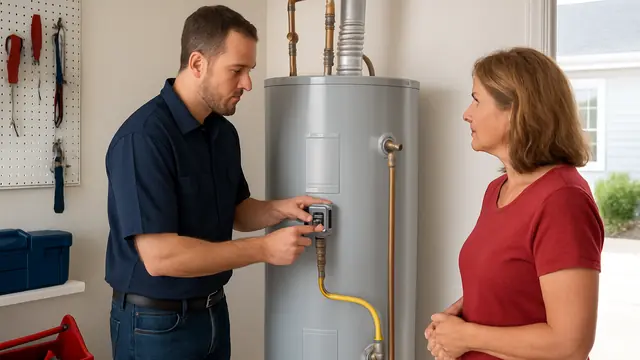
Stop and call for qualified help when plumbing water is near electrical equipment, sewage is entering occupied space, gas or burning odors are present, or a repair would require opening pressurized piping.
You clean the shower glass in your Alys Beach home, but the cloudy film returns. At the same time, someone in the household complains that the tap water tastes unpleasant. It is tempting to assume one treatment system will solve both complaints, yet mineral scale and taste problems usually have different causes.
For now, check whether the issue affects every fixture and whether it appears in hot water, cold water, or both. Do not install a softener or filter based only on a sales description. If the water has changed suddenly, contains visible material, or has a strong chemical, fuel, or sewage-like odor, avoid drinking or cooking with it until the source is evaluated.
The practical decision between a water softener and whole-house filtration begins with one question: what specific condition are you trying to remove?
Why Water Symptoms Can Be Confusing
Several water problems can look similar. White residue may be hardness scale, but particles in an aerator may come from a deteriorating water-heater component, pipe corrosion, or work on the water system. An odor noticed near a sink may come from the drain rather than the water.
That is why treatment should follow diagnosis. A water softener is designed primarily for calcium and magnesium. A whole-house filter is selected for a specific target, such as sediment, chlorine taste and odor, or another substance identified by testing.
Neither category describes one universal machine. Filter media vary, and softeners must be sized and programmed for the property's water conditions and demand.
When a Water Softener Is the Better Match
A softener is most appropriate when testing confirms hard water and the homeowner wants to reduce scale. Typical clues include crust around showerheads, spots on dishes, repeated film on glass, and soap that does not lather well.
Hardness minerals can collect on heating elements, inside water heaters, and in small fixture passages. The effect is gradual. You may first notice that an aerator needs frequent cleaning or that a showerhead no longer sprays evenly.
When Whole-House Filtration Is the Better Match
Whole-house filtration is appropriate when the verified concern involves something other than hardness. A sediment filter can capture certain suspended particles. Activated carbon can reduce chlorine taste and odor, provided the system is sized correctly and maintained.
Different media target different substances. A carbon tank does not automatically remove hardness, and a sediment cartridge does not address dissolved minerals.
Filtration may also be unnecessary when the problem is limited to one fixture. A localized repair or point-of-use filter can sometimes solve the complaint with less equipment and maintenance.
Safe Checks Before Scheduling Service
Fill one clear glass from the cold tap and another from the hot tap. Let both sit for several minutes. Compare color, odor, and visible particles without tasting suspicious water.
Test faucets in different parts of the home. If the issue appears only in one bathroom, inspect the aerator and note whether the nearby drain smells. If only hot water is affected, the water heater should be inspected.
Look for white scale around fixtures and check whether soap lathers easily. Review the maintenance date on any existing cartridge, carbon tank, ultraviolet unit, or softener. Confirm that a softener has salt and that it is not stuck in bypass.
These observations help a plumber narrow the problem, but they do not replace water testing.
What Homeowners Should Not Do
Do not keep increasing a softener's salt setting to correct taste, odor, or particles. More salt does not turn a softener into a filter and may increase operating waste.
Do not place a fine cartridge on the main line without confirming flow requirements. A restrictive or dirty filter can cause weak showers and slow appliance filling.
Avoid dismantling pressurized tanks, altering control valves, or disconnecting drain lines. Treatment systems can release water rapidly when opened incorrectly. Do not use bleach or other disinfectants in the plumbing unless a qualified professional has provided a procedure based on the system design.
Urgent Water-Quality Warning Signs
A slow buildup of scale is usually a maintenance concern rather than an emergency. Sudden changes deserve faster attention.
Contact a professional promptly if water throughout the home becomes dark, oily, or unusually cloudy; if there is a persistent chemical, fuel, rotten-egg, or sewage-like odor; if particles continue after flushing; or if family members become ill and the water is a possible factor.
Leaks from treatment equipment require immediate control. Move belongings away from the area, use the bypass if it can be operated safely, and close the main shutoff for an uncontrolled leak.
How a Licensed Plumber Determines What You Need
Diagnosis starts with the property's water source, occupancy, fixture count, and complaint history. The plumber compares pressure before and after existing equipment and checks whether the problem is present at the point where water enters the home.
Field testing may include hardness, chlorine, pH, iron, and total dissolved solids. These measurements are not interchangeable and do not identify every substance present.
When health-related contaminants are suspected, a certified laboratory analysis may be needed. The plumber then reviews flow requirements and installation conditions, including drainage, power, clearance, and a safe location for equipment.
Reasonable Treatment Options
The least invasive option may be cleaning an aerator, replacing an overdue refrigerator or under-sink cartridge, flushing the water heater, or repairing existing treatment equipment.
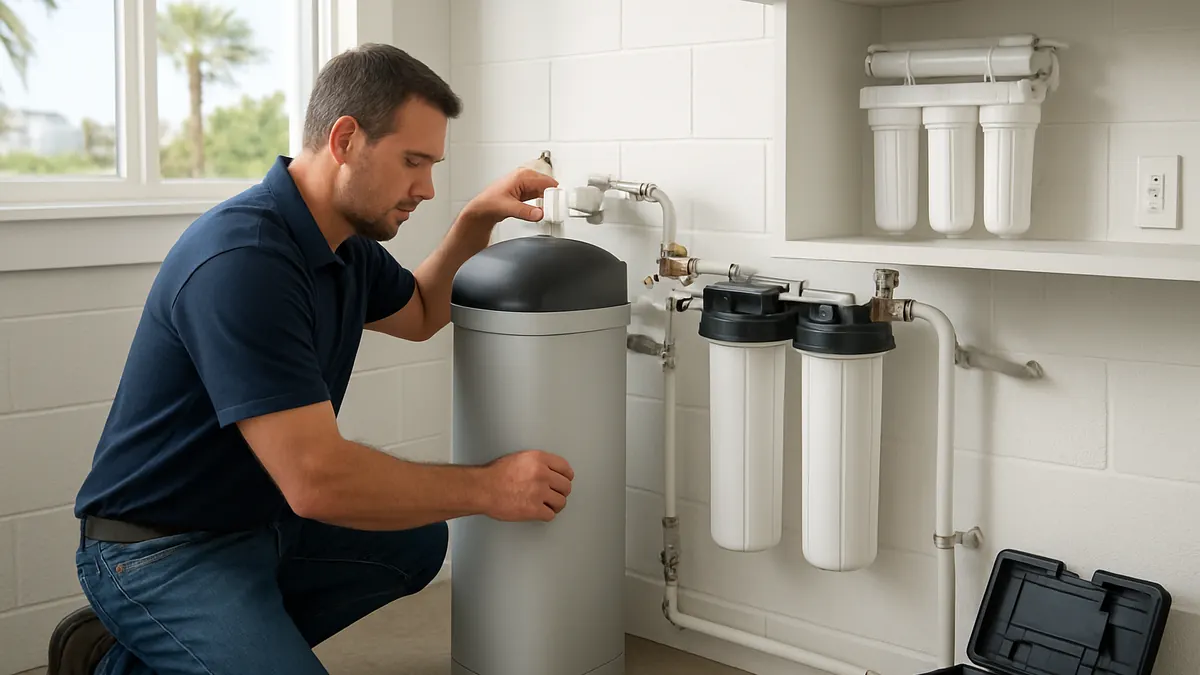
For confirmed sediment, a washable prefilter or replaceable cartridge may be suitable, depending on particle size and quantity. For chlorine-related taste or odor, activated carbon may be recommended. For verified hardness, an ion-exchange softener is the direct treatment.
A home with both hardness and taste concerns may need staged filtration followed by softening. The sequence matters because one stage may protect another from fouling.
More extensive work, such as repiping, should be reserved for situations where the plumbing itself is causing recurring corrosion, contamination, or restricted flow.
What Affects Installation and Ownership Cost?
- System price is influenced by capacity, flow rate, treatment media, controls, installation access, drain routing, electrical availability, and modifications to the main water line.
- Ownership cost includes salt, cartridges, media replacement, water used during cleaning or regeneration, and professional maintenance.
- Proper sizing matters more than buying the largest unit. The goal is reliable treatment during peak use without unnecessary waste.
Maintaining Reliable Water Treatment
Follow the manufacturer's service schedule and keep a record of filter changes, salt additions, and testing. Inspect around the equipment monthly for moisture, unusual sounds, or loose drain tubing.
Do not wait for water pressure to collapse before changing a cartridge. Check softener salt for a hardened bridge, which can make the tank look full even though the system cannot draw brine.
After a long vacancy, flush fixtures safely and confirm that treatment equipment is operating before normal use resumes. Retest the water when the source, plumbing, or symptoms change.
Deciding Between a Water Softener and Whole-House Filtration in Alys Beach
A water softener is the right tool for confirmed hardness and scale. Whole-house filtration is selected for a verified issue such as sediment or chlorine-related taste and odor. When symptoms overlap, testing can show whether a staged system or a simpler repair is the better decision.
About this guide: This resource provides general homeowner education, not a remote diagnosis. Actual conditions, code requirements, equipment, and safe repair options must be evaluated at the property.