Stop and call for qualified help when plumbing water is near electrical equipment, sewage is entering occupied space, gas or burning odors are present, or a repair would require opening pressurized piping.
The morning shower starts hot, then turns cold before the shampoo is rinsed out. At the water heater, there is no obvious flood, but the unit is making a rumbling sound and the hot-water recovery seems slower than it used to be. The safe immediate step is to reduce hot-water use, look for visible leakage without removing covers, and stop operating the heater if water is spreading from the tank or electrical area.
The question is whether to repair or replace a water heater in Fort Walton Beach, FL. A short shower does not automatically mean total failure. The cause may be a heating component, sediment, or demand problem. Replacement becomes more likely when the tank leaks, corrosion is extensive, or failures repeat.
Start With the Type of Failure
Begin by separating insufficient hot water, no hot water, leakage, and unsafe operation. Limited hot water may involve a failed element, thermostat, sediment, or undersizing. No hot water may involve power, ignition, or control problems. Leakage can come from a connection, valve, fitting, or the tank itself.
Common Causes That May Be Repairable
Failed Electric Heating Element
If one electric element fails, the heater may produce some hot water but run out quickly. The element may be replaceable when the tank is sound.
Thermostat or Control Problem
A failed thermostat may cause lukewarm, inconsistent, or excessively hot water and should be tested.
Burner or Ignition Failure
Ignition, burner, gas-control, or venting problems can stop a gas heater from working and require safe evaluation.
Valve or Connection Leak
A valve, connector, or threaded connection may leak while the tank remains intact. Water can travel down the tank and appear to come from the base.
Sediment and Reduced Capacity
Sediment can collect in a storage tank, create rumbling or popping, and reduce the volume available for hot water. Whether maintenance or replacement is appropriate depends on tank condition, valve condition, and the severity of buildup.
Conditions That Often Point Toward Replacement
A leak through the tank body, welded seam, or base usually indicates internal tank failure. The inner tank is not a practical field repair.
Replacement also becomes more reasonable when corrosion affects several areas, the heater has required repeated repairs, needed parts are unavailable, or the existing capacity no longer serves the household.
Age matters, but condition and the nature of the failure matter more.
Safe Checks a Homeowner Can Perform
- Check whether every hot-water fixture has the same problem. If only one shower is affected, the issue may be the shower valve or fixture rather than the heater.
- Look at the floor, drain pan, visible piping, and top connections. Dry any minor moisture and use a paper towel around accessible fittings to see where it returns.
- For an electric unit, check the labeled breaker. Reset it only once. If it trips again, leave it off and arrange professional service.
- For a gas unit, use only normal viewing areas and controls. If you smell gas, leave and follow emergency utility guidance.
- Record the model, approximate age, symptoms, and how long hot water lasts. Note whether the problem started suddenly or worsened gradually.
What the Homeowner Should Not Attempt
- Do not open electrical access panels, test energized components, bypass thermostats, or replace elements without proper electrical and plumbing knowledge.
- Do not adjust gas controls, modify venting, block combustion-air openings, or relight a unit when a gas odor is present.
- Never plug or cap the temperature-and-pressure relief valve. Continuous discharge is a warning that requires diagnosis, not a valve to be disabled.
- Do not continue operating a heater that leaks from the tank body. Avoid applying patching material to the tank or relying on a drain pan as a repair.
- Do not flush an older heater casually if the drain valve is corroded or the maintenance history is unknown. The valve may fail to reseal.
Urgent Signs That Require Prompt Action
Stop and call for help when water is spreading, the tank is visibly leaking, the breaker trips repeatedly, or the relief valve discharges continuously.
Gas odor, soot, unusual flame appearance, scorching, or suspected venting problems require immediate caution. Leave the area and contact the proper emergency resource before using the heater again.
Water that is excessively hot creates a scald risk. Severe corrosion, loud banging, or water near electrical wiring also requires timely attention.
How a Licensed Plumber Determines Repair Versus Replacement
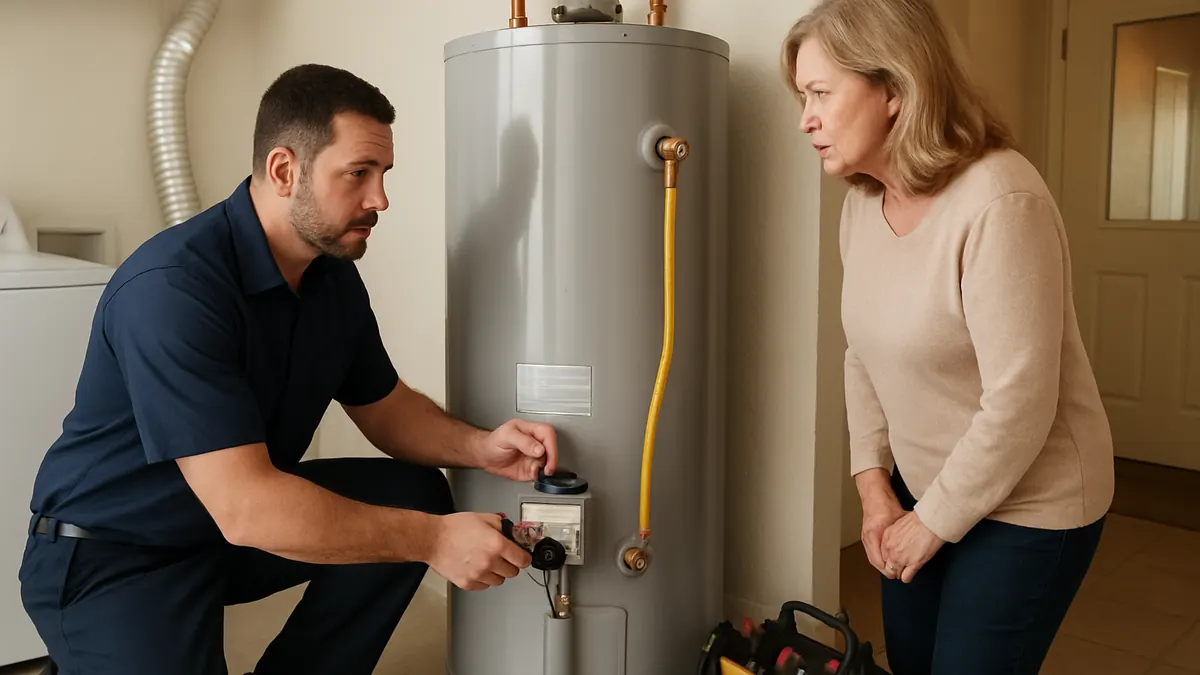
The plumber identifies the heater type, capacity, symptoms, and maintenance history, then inspects the tank, valves, piping, energy supply, drain pan, and safety components. Electric testing may include thermostats, elements, voltage, wiring, and current draw. Gas diagnosis may include ignition, burner operation, gas control, combustion, and venting.
The plumber also checks whether the unit can meet actual hot-water demand. A heater that operates correctly but is undersized may need a capacity solution rather than repeated component repairs.
Repair Options Beginning With the Least Invasive
- The least invasive repair may be correcting a loose connection, replacing a valve, adjusting an approved control, or repairing an accessible pipe.
- A failed thermostat, electric element, igniter, burner component, or gas control may be replaceable when the tank and installation remain serviceable.
- Sediment-related performance may sometimes be improved through appropriate maintenance, but the tank and drain valve should be evaluated first.
If the inner tank leaks, replacement is the dependable option. A like-for-like storage heater may minimize changes. A different tank size may better match current demand. Tankless may be considered when the property and household can support its flow, energy, venting, drainage, and maintenance requirements.
Typical Factors Affecting Cost
Repair cost depends on the failed component, accessibility, parts availability, heater type, and whether related plumbing, gas, electrical, or venting work is required.
Replacement cost depends on capacity, fuel type, installation location, access, removal, disposal, permits when applicable, venting, piping, drain-pan needs, shutoff condition, and required installation upgrades.
Water damage, corroded connections, or a difficult location can increase the scope.
Prevention and Maintenance Guidance
Inspect the area around the heater for moisture, rust, and changes in sound. Keep stored items away from the unit so leakage can be noticed early.
Follow the manufacturer's maintenance instructions. Depending on the system, this may include sediment flushing, anode-rod evaluation, relief-valve inspection, burner service, or tankless descaling.
Have changing temperature, slow recovery, or repeated breaker trips diagnosed early. Waiting until the tank leaks can remove the repair option entirely.
Choose Repair or Replacement From the Evidence
To repair or replace a water heater in Fort Walton Beach, FL, first identify whether the problem is a replaceable component, a demand issue, or a failed tank. A sound tank with one failed part may be a good repair candidate. A leaking inner tank, repeated failures, extensive corrosion, or inadequate capacity may justify replacement.
A clear diagnosis should compare the smallest reliable repair with appropriate replacement choices so the homeowner can make an informed decision.
About this guide: This resource provides general homeowner education, not a remote diagnosis. Actual conditions, code requirements, equipment, and safe repair options must be evaluated at the property.