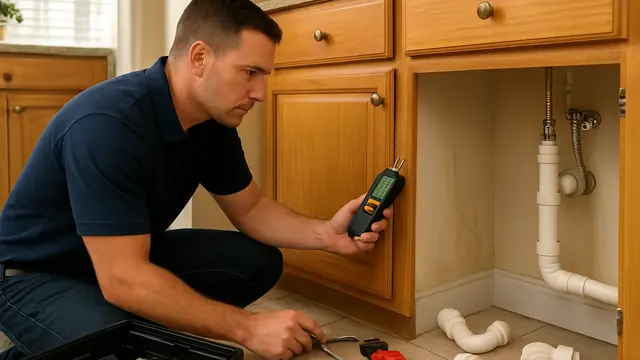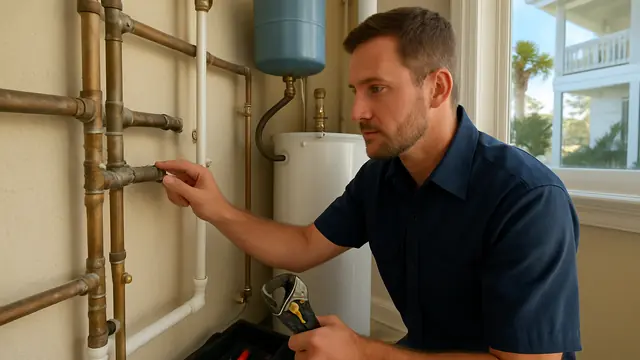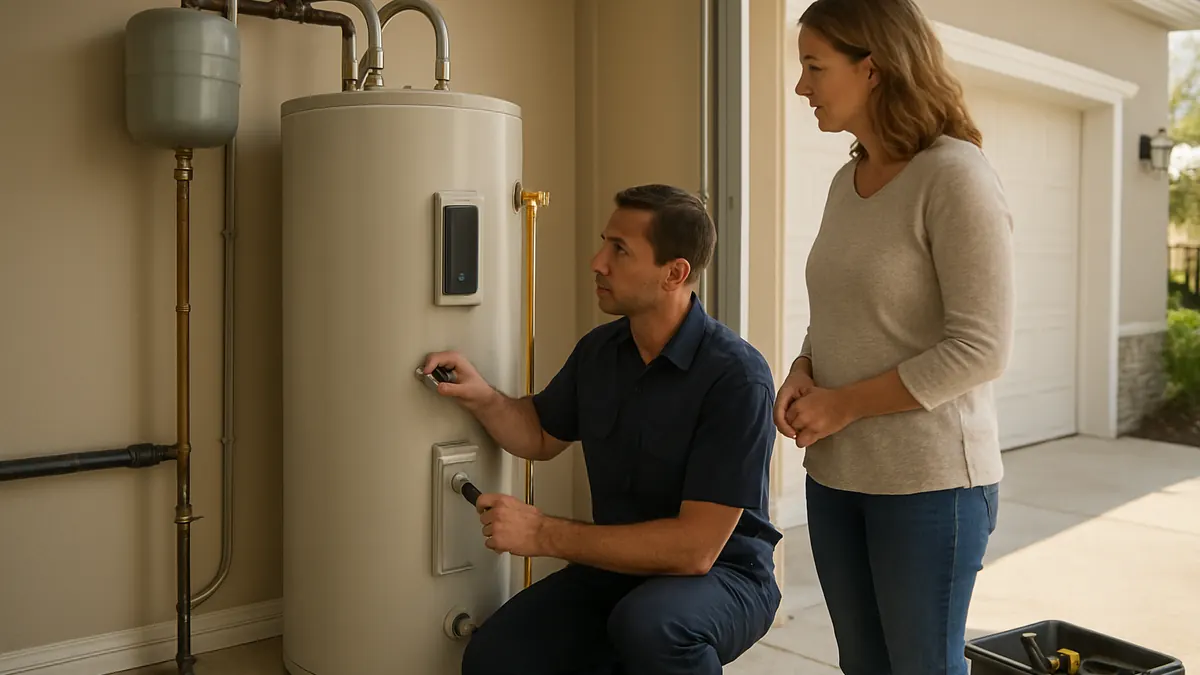
Stop and call for qualified help when plumbing water is near electrical equipment, sewage is entering occupied space, gas or burning odors are present, or a repair would require opening pressurized piping.
You turn on the shower expecting hot water, but it runs lukewarm after only a few minutes. Later, you notice moisture near the water heater and hear a popping sound while the unit is heating. The immediate safe step is to stop using hot water if the tank is actively leaking, keep people away from the wet area, and turn off the water heater's energy source only if you can do so safely. For an electric unit, use the labeled breaker. For a gas unit, do not adjust gas controls unless you know exactly what you are doing.
For many homeowners, the real question is not simply what failed. It is whether it makes more sense to repair or replace a water heater in Destin, FL. The correct decision depends on the source of the problem, the age and condition of the unit, the cost and reliability of the repair, and whether the current heater still meets the household's needs.
What the Symptoms May Mean
Lukewarm water may point to a thermostat, heating element, burner, dip tube, or sediment issue. Water around the unit may come from a connection, valve, condensation, or the tank itself. Popping or rumbling often suggests sediment near the bottom of the tank.
Common Reasons a Water Heater Needs Attention
Failed Heating Components
Electric heaters use elements and thermostats; gas models depend on a burner, ignition, gas control, and proper venting. Failure of one of these components can stop or reduce heating even when the tank remains sound.
Sediment Buildup
Sediment can reduce usable capacity, create noise, and make the heater run longer.
Leaking Connections or Valves
Moisture from a connection, drain valve, relief valve, or nearby pipe may be repairable when the tank is intact.
Internal Tank Failure
An inner tank is generally not repairable once it leaks through the body, base, or seam.
Incorrect Sizing or Changing Household Demand
A heater may also be too small for current household demand.
Safe Checks a Homeowner Can Perform
Look for the source of visible moisture without removing covers. Dry the floor and use a paper towel around accessible pipe connections to see whether water returns.
Check whether the problem affects every hot-water fixture. If only one faucet or shower has poor temperature, the issue may be local to that fixture rather than the water heater.
For an electric heater, check whether the labeled breaker has tripped. Reset it only once; another trip requires professional diagnosis. Use only normal user controls and avoid excessively hot settings.
Note the unit's age, model, symptoms, and whether the problem is constant or intermittent. That information helps a plumber compare repair and replacement options.
What the Homeowner Should Not Attempt
- Do not open electrical panels, test live wiring, bypass safety devices, disassemble gas controls, alter venting, or repeatedly reset a tripping breaker.
- Do not cap, plug, or disable the temperature-and-pressure relief valve. It is a critical safety device designed to release unsafe pressure or temperature.
- Do not continue operating a tank that is leaking from its body or base. Do not place sealant on a tank seam and treat it as a permanent repair.
- Avoid draining or flushing the heater unless you understand the procedure and know the drain valve is serviceable. An old or corroded valve may not reseal after it is opened.
Signs That Make the Problem Urgent
Call for prompt service when water is spreading across the floor, the tank is leaking from the body, the relief valve is discharging continuously, or the breaker repeatedly trips.
Shut off the water supply when a leak cannot be controlled at an individual connection. Keep water away from electrical equipment.
A gas odor, soot, abnormal flame, combustion smell, or venting concern requires immediate caution. Leave the area and contact the appropriate emergency resource or utility before operating the heater.
Discolored water, severe corrosion, loud banging, or rapid loss of hot water also deserves timely evaluation.
How a Licensed Plumber Diagnoses the Water Heater
A plumber determines whether the problem involves heating, capacity, leakage, controls, or installation. Electric testing may include voltage, thermostats, elements, wiring, and current draw. Gas diagnosis may include the burner, ignition, gas control, combustion, venting, and safety devices. The tank, valves, connected piping, capacity, and recovery rate are also evaluated.
Repair or Replace a Water Heater in Destin: How to Decide
Repair is usually the first reasonable option when the tank is sound and the failed component is accessible and replaceable. A thermostat, heating element, igniter, valve, supply connection, or certain controls may be repaired without replacing the entire heater.
Replacement becomes more reasonable when the tank itself leaks, corrosion is extensive, failures are recurring, repair parts are unavailable, or the unit no longer meets the household's needs.
Age matters, but it should not be the only factor. A newer heater with a repairable component may be worth fixing. An older unit with a tank leak is generally not repairable. A plumber should explain both the immediate repair cost and the likely remaining service life.
Replacement Options to Consider
A like-for-like tank replacement may be least disruptive. A different capacity may fit changed demand. Tankless can be considered when the property supports its gas or electrical, venting, drainage, and flow requirements. The choice should reflect space, fuel type, hot-water demand, maintenance, and long-term goals.
Typical Factors Affecting Cost
Repair cost depends on the failed component, accessibility, parts availability, unit type, and whether additional electrical, gas, venting, or plumbing work is needed.
Replacement cost is affected by heater capacity, fuel type, location, access, code-related installation components, drain-pan or piping needs, venting, permits when applicable, disposal, and any required upgrades.
A difficult installation location, damaged shutoff valve, corroded connections, or water damage can increase the scope.
Prevention and Maintenance Guidance
Have the heater inspected when you notice noise, temperature changes, rust, or moisture. Keep the area clear and inspect visible connections. Follow the manufacturer's guidance for sediment flushing, anode inspection, relief-valve checks, or tankless service. Early diagnosis preserves repair choices and reduces water-damage risk.
Make the Decision Based on Condition, Not Guesswork
When deciding whether to repair or replace a water heater in Destin, FL, begin with the actual failure. A replaceable element, thermostat, valve, or connection may justify repair. A leaking tank, widespread corrosion, repeated failures, or inadequate capacity may make replacement the more dependable choice.
The right next step is a professional diagnosis that explains the cause, the least invasive reasonable repair, and the replacement options only when they are truly justified.
About this guide: This resource provides general homeowner education, not a remote diagnosis. Actual conditions, code requirements, equipment, and safe repair options must be evaluated at the property.