Stop and call for qualified help when plumbing water is near electrical equipment, sewage is entering occupied space, gas or burning odors are present, or a repair would require opening pressurized piping.
You may notice the warning during an ordinary morning routine. Someone flushes a toilet, another person starts a shower, and the tub begins to hold water. Later, the laundry drains and a toilet bowl bubbles. When fixtures in different parts of the home react to one another, the plumbing system is usually dealing with a shared restriction rather than several unrelated clogs.
If multiple drains are backing up in your Hammock Bay home, stop sending water into the system. Pause the washing machine and dishwasher, avoid showers, and do not repeatedly flush toilets. Continued use can turn a partial blockage into a wastewater overflow.
The cause may be a clogged bathroom branch, an obstruction in the main drain, grease buildup, a foreign object, root entry, damaged piping, or a septic-related condition. The pattern of affected fixtures is the first clue.
What the Symptoms Usually Mean
Fixture drains eventually join larger branches and the main building drain. A single slow sink may have buildup near its trap. A toilet, shower, and vanity that act up together likely share a restricted branch. Problems throughout the home suggest the main drain.
Water often appears in the lowest fixture because the blocked system forces wastewater backward. That fixture is not always where the clog is located.
The Most Common Possible Causes
A Partial Main-Line Blockage
A main drain can remain partly open while larger discharges from laundry, bathing, or several toilets overwhelm the restricted opening. Toilet paper, wipes, grease, soap residue, and foreign material may contribute.
A Clog in One Shared Branch
When one bathroom group is affected but another works normally, the clog may be between that group and the main drain. Hair, soap, paper, and waste can collect where several smaller drains connect.
Kitchen Grease and Food Material
Grease cools after it enters a drain and sticks to the inside of the pipe. Food particles and detergent residue build on that coating.
Garbage disposals reduce some food into smaller pieces, but they do not prevent grease, coffee grounds, fibrous scraps, or starches from causing trouble.
Wipes, Hygiene Products, or Foreign Objects
Wipes, paper towels, hygiene items, cotton products, and cleaning cloths may remain intact and catch inside the pipe.
Roots, Misalignment, or a Damaged Line
Roots can enter through a crack or separated joint in a buried line. They then catch normal waste and create repeated blockages.
A shifted joint, collapse, or sagging area can hold waste and cause recurring clogs.
A Septic-System Limitation
For properties using septic, the indoor symptoms may be caused by a full tank, blocked connection, or downstream component that is not accepting wastewater. Clearing an indoor drain alone will not solve that type of problem.
Safe Checks You Can Make Without Worsening the Backup
Stop using all plumbing and identify every affected fixture. Write down whether the problem is limited to one bathroom, one end of the home, or the entire building.
Look at the lowest shower, bathtub, or floor drain. If wastewater is present, close off the area and keep people and pets away.
Notice what triggers the problem. A backup when the washer drains suggests the line cannot handle a larger discharge. A tub that fills after a toilet flushes suggests those fixtures connect before the blockage.
If you can see an exterior cleanout, look for dampness or leakage around the cap. Do not remove it when the line may be holding wastewater.
What a Homeowner Should Not Attempt
Do not pour chemical cleaner down several drains. A chemical cannot repair a broken pipe or remove roots effectively, and it may remain trapped where a technician later has to work.
- Do not operate multiple fixtures to determine whether the system has cleared. A partial clog may drain slowly between tests and then overflow when another large volume arrives.
- Avoid inserting a rented cable machine into a toilet or cleanout unless you have proper training. The cable can recoil, become stuck, damage porcelain, or catch in damaged pipe.
- Do not open a septic tank, remove a toilet, or clean sewage without proper protective equipment. Never mix drain chemicals.
Signs That Make the Backup Urgent
Treat the problem as urgent when sewage enters a shower, tub, floor drain, or finished room. Stop all water use immediately.
Prompt service is also important when no toilet can be used, an outdoor cleanout is overflowing, wastewater is close to electrical equipment, or the backup is moving into additional areas.
A line that was recently cleared but has backed up again deserves further investigation. Repeated failures may point to heavy buildup, roots, pipe damage, or a septic issue.
How a Licensed Plumber Diagnoses Multiple Drain Backups
Diagnosis begins with the symptom pattern. The plumber determines which fixtures share piping and which fixture reacted first.
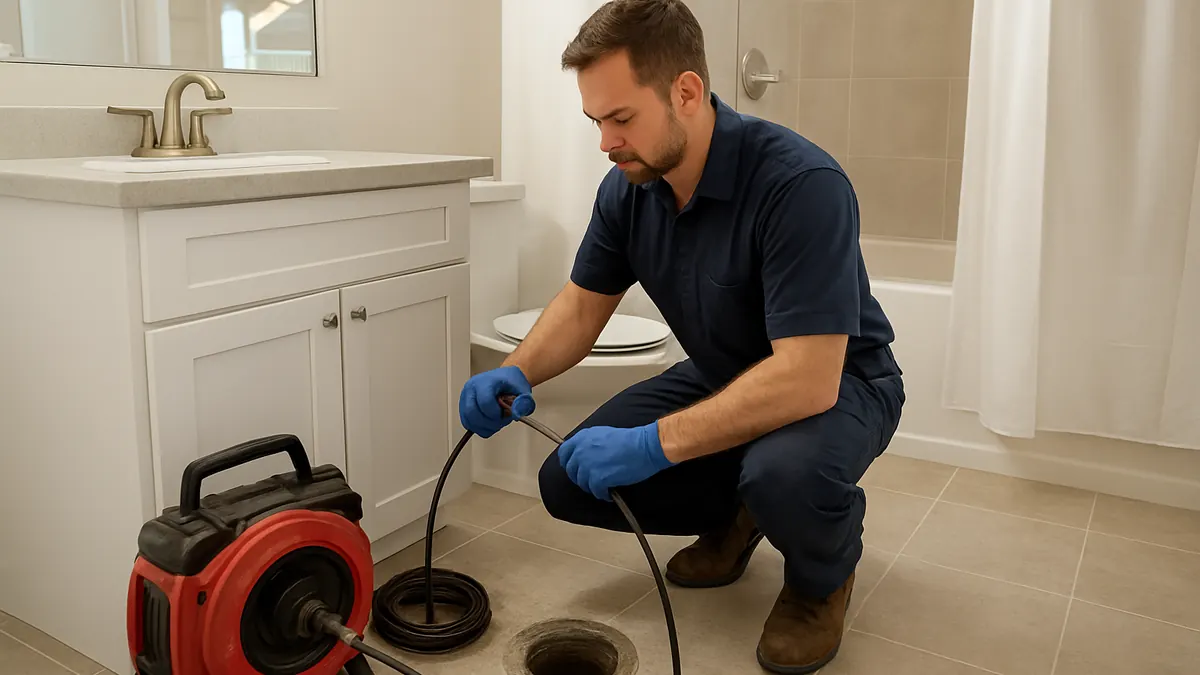
A cleanout may allow direct access to a branch or main line. Professional equipment can remove or break apart the obstruction with a cable and attachment chosen for the pipe.
After flow is restored, a sewer camera can show grease, roots, separated joints, standing water, foreign objects, or collapse. Locating equipment can identify a defect before excavation.
Repair Options, Beginning With the Least Invasive
- A clog near one fixture may require trap cleaning or short-line cabling. A deeper clog may be cleared through a cleanout.
- Hydro jetting may be appropriate when grease or buildup coats suitable piping. It uses high-pressure water to clean the interior.
- Roots may be mechanically cut to restore flow. Because roots entered through an opening, a localized repair may be needed to reduce recurrence.
Some damaged lines may qualify for a trenchless repair. Excavation and replacement are generally considered when a section is collapsed, badly offset, extensively deteriorated, or unable to support another reliable method.
For septic-related problems, the proper action may involve pumping, clearing a connection, repairing a component, or evaluating the downstream system.
Factors That Affect Cost
Cost depends on the blockage's location, access, pipe size, and required equipment. Camera inspection, locating, hydro jetting, root removal, excavation, septic service, restoration, emergency timing, and sewage cleanup can change the scope. The findings and repair choices should be explained before larger work proceeds.
Prevention and Maintenance Guidance
Only toilet paper and normal human waste should be flushed. Put wipes, paper towels, hygiene products, cotton items, floss, and cleaning cloths in the trash.
Keep cooking grease and food debris out of sinks. Use strainers, scrape dishes before washing, and dispose of cooled grease in a container.
Pay attention when more than one drain becomes slow. Gurgling toilets, recurring odors, and water appearing in a lower fixture are warning signs worth addressing before a complete backup.
If the property has a confirmed history of roots, grease, or recurring stoppages, ask about a maintenance plan based on the actual cause.
What to Do When Multiple Drains Back Up in Hammock Bay
When multiple drains are backing up in Hammock Bay, stop using water and arrange a licensed diagnosis. Several fixtures reacting together usually point to a shared branch, main drain, sewer, or septic restriction. Professional evaluation can identify the cause and begin with a focused repair before another discharge creates a larger overflow.
About this guide: This resource provides general homeowner education, not a remote diagnosis. Actual conditions, code requirements, equipment, and safe repair options must be evaluated at the property.