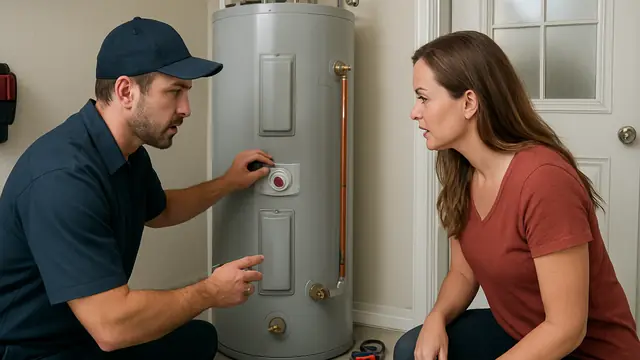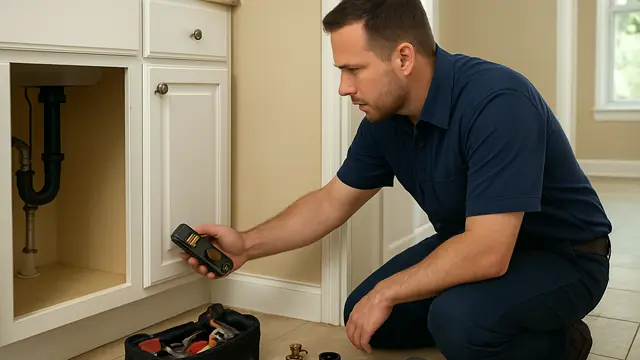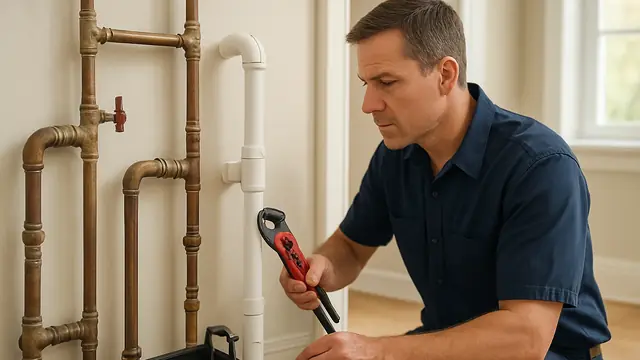
Stop and call for qualified help when plumbing water is near electrical equipment, sewage is entering occupied space, gas or burning odors are present, or a repair would require opening pressurized piping.
The plumbing problem may not look serious at first. One toilet flushes a little slower than usual, a nearby shower makes a bubbling sound, and the kitchen drain seems normal. Then a laundry cycle sends water into the lowest tub. For a homeowner in Hammock Bay, that sequence often points to a partial blockage in a shared drain or main sewer line.
The safest immediate action is to stop high-volume water use. Do not run the washing machine or dishwasher, and avoid multiple showers or repeated flushing. If wastewater appears in a tub, shower, floor drain, or around an exterior cleanout, stop using the plumbing entirely until the line is evaluated.
A sewer camera inspection allows a licensed plumber to examine the inside of the accessible pipe. It can reveal whether the line is obstructed by debris, affected by roots, holding standing water, or damaged at a joint. The goal is to identify the actual cause and choose a repair that matches the condition.
Symptoms That May Justify a Camera Inspection
A camera is most helpful when the problem involves more than one fixture, returns after cleaning, or cannot be located through ordinary troubleshooting.
Typical signs include several slow drains, toilets that gurgle when another fixture empties, sewage odors, water appearing in the lowest bathtub or shower, and repeated stoppages at the same property.
What May Be Wrong Inside the Line
A Localized Blockage
Toilet paper, wipes, hygiene products, food debris, or another object may be lodged in one location. A camera may show the blockage directly or identify the point where the line stops.
Root Intrusion
Roots can enter through a cracked section or separated joint. Even fine roots can trap paper and create recurring clogs.
A Shifted Connection
When two pipe sections no longer align, an edge forms inside the line. That edge may catch waste and can sometimes allow roots or soil into the pipe.
Improper Slope or a Low Section
A sewer line should allow wastewater to flow by gravity. If a section settles or loses proper slope, water and solids may remain there. The plumber evaluates whether standing water comes from a belly or from a blockage farther downstream.
Safe Checks the Homeowner Can Perform
- List every fixture that is slow, noisy, or backing up. Note which fixture was used immediately before the symptom appeared.
- Check the lowest tub or shower for rising water. Do not remove the drain cover or touch sewage.
- Listen for gurgling near toilets and sinks. Air movement often occurs when water is trying to pass a restriction.
- Look for moisture around a visible cleanout, but do not loosen the cap. A pressurized or full line can release wastewater.
What You Should Not Attempt
- Do not mix chemical drain cleaners. They can create hazardous fumes and may remain trapped behind the obstruction.
- Do not insert a garden hose, pressure washer hose, or improvised tool into the sewer line.
- Do not rent a large cable machine unless you are trained to use it. Sewer cables can bind, twist, and cause serious injury.
- Do not assume that every recurring clog requires full replacement. Cleaning, object removal, root cutting, or a localized repair may be sufficient.
What Happens During a Sewer Camera Inspection in Hammock Bay?
The plumber begins with a conversation about the symptoms. Previous cleaning, repair history, and the order in which fixtures reacted help narrow the likely location.
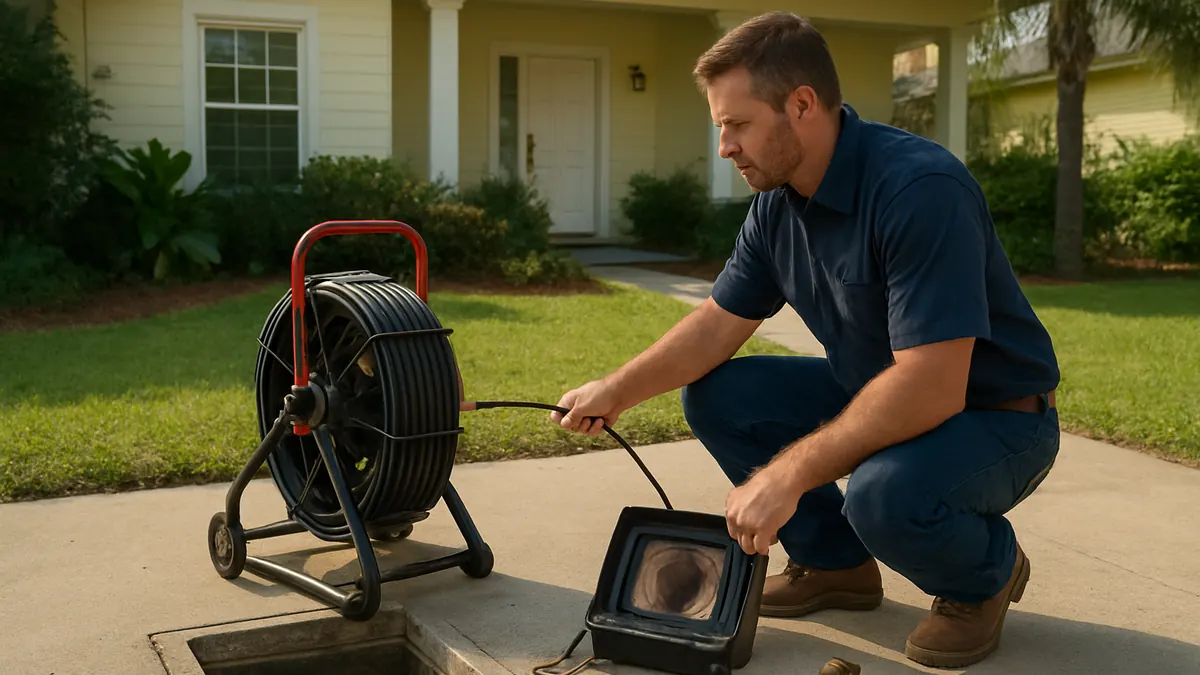
Next, the plumber selects an approved access point. An exterior cleanout often provides the most direct route into the main line. If no cleanout is accessible, another approved opening may be used.
A waterproof camera with its own light is attached to a flexible cable. The plumber slowly advances it through the pipe while watching live video on a monitor.
The camera may reveal buildup, wipes, roots, standing water, a foreign object, cracked pipe, an offset joint, or a collapsed section. The plumber also watches how the camera moves. A sudden drop, repeated underwater view, or obstruction at a specific distance can provide important clues.
Distance markings help estimate how far the camera has traveled. A transmitter in the camera head may allow the plumber to locate the problem from above ground and estimate its depth.
When the line is blocked completely, the camera may not travel beyond the obstruction. In that case, the plumber may clear the line first and then repeat the inspection.
Why the Footage Needs Professional Interpretation
A dark mark is not automatically a crack. Standing water may come from a low spot or from a clog farther ahead. Debris on the lens can also distort the view.
A licensed plumber compares the footage with the pipe layout, symptoms, flow behavior, and service history. The final explanation should identify what is confirmed, what remains uncertain, and what additional work may be needed.
When the Situation Is Urgent
Sewage entering the home requires prompt attention. Stop using all fixtures connected to the affected line and keep people and pets away from the area.
Other urgent signs include unusable toilets, wastewater leaking from a cleanout, a blockage that returns soon after professional cleaning, or several fixtures failing at once.
Repair Options in Practical Order
A simple obstruction may be removed with professional cable cleaning. A foreign object may sometimes be retrieved.
If the pipe is structurally sound but heavily coated, hydro jetting may be considered. High-pressure water cleans the interior wall, but the line should be inspected first to confirm that it can tolerate the process.
Roots may be cut to restore flow. The opening that allowed root entry should then be repaired or monitored.
A single cracked, offset, or broken section may qualify for a targeted spot repair. Trenchless repair may be possible in some situations depending on material, layout, access, and overall pipe condition.
Full replacement is generally reserved for widespread deterioration, repeated collapse, or multiple severe defects.
What Affects the Cost
Inspection cost is influenced by access, pipe length and diameter, cleaning requirements, locating, and recorded footage.
Repair cost depends on the type, depth, location, and length of the damage.
Prevention and Maintenance
- Flush only human waste and toilet paper. Keep wipes, paper towels, hygiene products, and cleaning cloths out of toilets.
- Do not pour fats, oils, grease, or food scraps down drains. Use sink strainers.
- Schedule service when several drains begin gurgling or slowing instead of waiting for a complete backup. Keep inspection footage and repair records for future reference.
Schedule a Sewer Camera Inspection in Hammock Bay
What happens during a sewer camera inspection in Hammock Bay is a step-by-step evaluation of the accessible line. The plumber reviews the symptoms, inserts a lighted camera, documents visible conditions, locates important findings when possible, and explains the least invasive reasonable repair. When several drains are reacting together or a blockage keeps returning, the inspection provides evidence for the next decision.
About this guide: This resource provides general homeowner education, not a remote diagnosis. Actual conditions, code requirements, equipment, and safe repair options must be evaluated at the property.