Stop and call for qualified help when plumbing water is near electrical equipment, sewage is entering occupied space, gas or burning odors are present, or a repair would require opening pressurized piping.
What Fixture Shutoff Valves Do
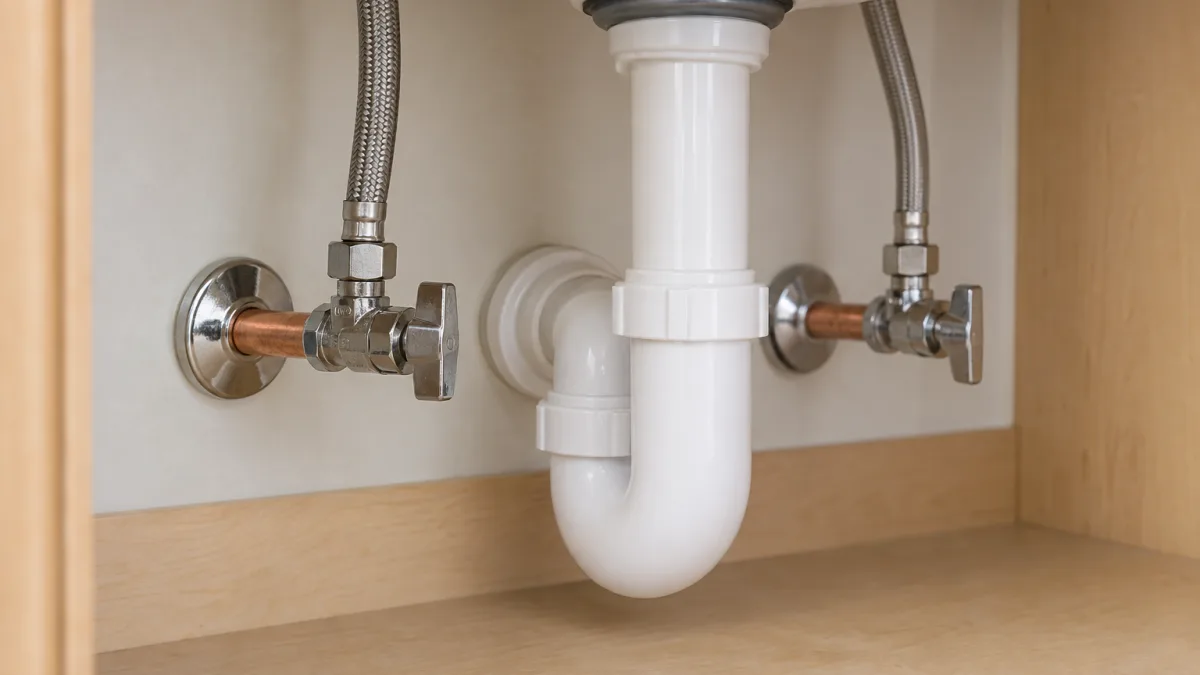
Fixture shutoff valves control the water entering an individual sink, toilet, or appliance. A sink usually has separate hot- and cold-water valves, while a toilet generally has one cold-water valve near the wall or floor. These small components make it possible to service a fixture without interrupting water throughout the property. They are easy to overlook until a faucet needs replacement or a supply connection begins leaking.
For Laguna Beach homeowners and property managers, dependable local shutoffs make routine plumbing work easier to schedule. They are especially useful when a home is occupied by guests or several people share the property. However, an old valve should not be assumed reliable simply because it looks intact. Its handle may move while the internal sealing parts fail to stop water, or the valve may begin leaking when disturbed.
Know Which Valve Serves Which Connection
Start with a visual inventory rather than turning every handle. Look beneath sinks, behind toilets, and in accessible appliance connection areas. Note whether each valve serves one fixture or has more than one outlet. A kitchen sink cabinet may contain connections for the faucet, dishwasher, or refrigerator water supply. Closing one valve does not necessarily isolate everything in the cabinet, and the direction a tube runs may not establish its destination.
Some homes have plumbing manifolds with individual controls located away from the fixtures. Others have older installations with limited local isolation. If a connection is unclear, ask a plumber to identify it and document the arrangement. Keep that information with the property’s maintenance records. Do not pull out a refrigerator, dishwasher, or stacked laundry unit just to search for a valve if doing so could stretch tubing, damage flooring, or disturb electrical connections.
Understand Valve Styles Without Assuming Their Condition
Common fixture valves include angle stops, which change the direction of water flow, and straight stops, which carry water through in a straight path. Multi-turn valves usually require several handle rotations to close. Quarter-turn valves typically move through a short arc between open and closed. Handle shape alone is not a dependable way to identify every design, particularly when older replacement parts or unusual fittings are present.
Quarter-turn valves are often selected during replacement because they offer simple operation, but no style is immune to wear or installation problems. The valve must be suitable for potable water, the existing pipe material, the connection size, and its intended service. A valve that fits the available space may still be wrong for the piping. A plumber should evaluate those details rather than choosing a replacement solely by matching its appearance.
Recognize Wear Before the Next Repair
Inspect accessible valves for dampness, mineral crust, rust on steel components, green or white deposits, and deteriorated handles. Look at the cabinet floor and the area directly beneath each connection. Deposits can remain from an old leak, but they can also indicate continuing seepage. A dry appearance at one visit does not prove that a valve stays dry during use or after its handle moves.
In Northwest Florida, warm, humid air can contribute to condensation on cool plumbing. Salt exposure can also affect metal components in exposed coastal locations. Neither condition should be used to dismiss moisture as harmless. Note where wetness appears and whether it returns, then arrange an evaluation if the cause is uncertain. Avoid scraping deposits or tightening fittings as an experiment. Disturbing a corroded connection can turn a minor maintenance issue into an active leak.
Know When Not to Turn a Valve
A valve that is heavily corroded, visibly damaged, already leaking, or attached to piping that moves easily should be assessed before operation. Stop if a handle resists normal hand pressure. Pliers and extra leverage can break the handle, damage the stem, or transfer force into the supply pipe. Aging plastic piping and unsupported connections need particular care because damage may occur beyond the visible valve.
For a valve that appears sound, follow its manufacturer’s operating guidance and any maintenance plan recommended by your plumber. Do not test an unfamiliar valve shortly before leaving the property or while a rental is occupied without a response plan. Know where the property’s accessible main shutoff is located beforehand. If that control is missing, inaccessible, or unreliable, address it professionally before depending on fixture valves for planned work.
What Stiffness, Dripping, and Incomplete Shutoff Mean
Different symptoms point to different problems. A drip near the handle can involve the stem seal or packing. Moisture where the valve joins the pipe may involve the inlet connection. A leak at the flexible supply connector can come from the connector or its sealing surface rather than the valve body. Water can travel along tubing, so the lowest wet spot is not always the source.
A valve can also fail internally without leaking onto the floor. When a plumber isolates a fixture, a brief release of water left in the line is different from continuing flow through a closed valve. Worn sealing parts, debris, or internal damage may prevent complete closure. If water continues flowing, the valve is not dependable isolation. Never disconnect a supply line on the assumption that turning the handle has made the connection safe.
How a Plumber Evaluates Repair Versus Replacement
A professional evaluation starts with the valve, its connections, and the piping supporting it. The plumber identifies the pipe material, checks for corrosion or damage, confirms access to a working upstream shutoff, and determines whether the valve actually isolates the fixture. Nearby supply connectors also deserve inspection. A new valve does not correct a kinked connector, a deteriorated hose, or damaged pipe immediately behind the wall.
Some serviceable valves can be repaired when the correct parts are available and the body and connections remain sound. Replacement may be the more practical choice when the valve is seized, extensively corroded, internally unreliable, or no longer readily serviceable. Ask what failed and what the proposed work includes. The decision should reflect condition and compatibility, not a blanket assumption that every older valve must be replaced or every drip only needs tightening.
Plan Replacement Around Access and Water Interruptions
Before the appointment, clear cleaning products and stored items from accessible sink cabinets. Tell the plumber about previous piping repairs, unusual shutoff arrangements, and any valve that has leaked after being touched. Ask whether water must be shut off to the entire property and whether related fixtures or appliances need special handling. In a condominium or other shared building, coordinate any shared water interruption with the appropriate building representative.
Schedule replacement when someone can provide access and remain available for the return-to-service checks. A vacation rental’s turnover window can be useful, but leave room for complications such as deteriorated pipe or an inaccessible connection. Bundling questionable valve replacement with a planned faucet or toilet project may avoid a separate interruption. Obtain a clear scope that distinguishes valve work, supply connector replacement, piping repairs, and any necessary cabinet or wall access.
Maintain Access Without Overhandling the Plumbing
Good valve care starts with keeping the area visible and unobstructed. Do not pack storage bins against handles or hang items from supply tubing. Store cleaners so spills do not remain on metal components, and address cabinet moisture rather than allowing it to accumulate. During routine cleaning or property inspections, look for new deposits, damaged connectors, or changes in the surface beneath the valve. A dated photograph can make later comparisons easier.
There is no single exercise schedule appropriate for every valve and installation. Ask your plumber whether periodic operation is advisable for your specific valves and how to do it safely. For seasonally occupied Laguna Beach properties, include a visual check when the home is reopened and during regular caretaker visits. A water alarm near vulnerable connections can provide an additional warning, but it cannot restore a failed valve or replace a response plan.
Respond Safely to a Valve Leak
If a valve begins leaking, stop manipulating it and assess whether water is threatening electrical equipment or entering a concealed area. Do not touch wet outlets, cords, or appliances, and keep others away from the affected area. If you can safely reach and operate the property’s known main shutoff, use it to limit additional water flow. Do not operate utility-owned controls or enter standing water to reach a shutoff.
Call a licensed plumber promptly when the leak cannot be safely isolated, the piping moves, or the valve fails to stop flow. A container or towels may limit damage from a small drip while help is arranged, but they are not a repair. After service, have the plumber demonstrate the replacement valve, verify shutoff and restored flow, and check the connections for leakage. Keep the work details in the property’s maintenance record.
About this guide: This resource provides general homeowner education, not a remote diagnosis. Actual conditions, code requirements, equipment, and safe repair options must be evaluated at the property.