Stop and call for qualified help when plumbing water is near electrical equipment, sewage is entering occupied space, gas or burning odors are present, or a repair would require opening pressurized piping.
You notice rusty hot water, then find a damp ring in the drain pan. The unit still produces hot water, so it is tempting to postpone the decision. For a Laguna Beach homeowner, these symptoms need prompt attention because an external leak may be repairable, while internal corrosion can worsen.
Keep the area clear and watch whether the moisture increases. Do not touch wet electrical components, open panels, or tighten fittings while the heater operates. If water is spreading, close the cold-water supply only when the valve is safely accessible.
Repair or Replace a Water Heater in Laguna Beach: Find the Leak Source
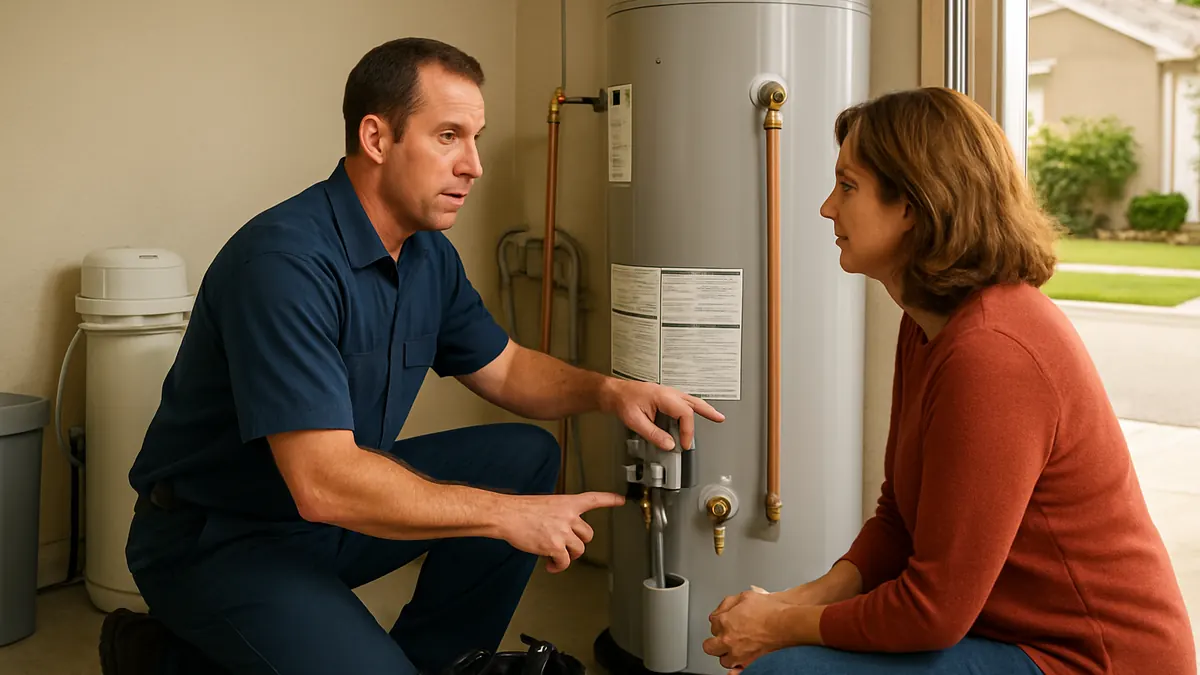
Water on the floor does not always reveal where the leak began. A top connection can drip down the jacket, a relief valve may discharge from pressure, and a drain valve may seep.
A leak through the tank shell is different. The steel tank is protected internally, but corrosion can eventually create a weak point. Once the pressure vessel leaks, replacing a valve or applying sealant cannot restore it. Confirmed tank leakage normally means replacement.
What Rusty Hot Water May Mean
Rust-colored water from both hot and cold fixtures may originate outside the water heater. Discoloration appearing only on the hot side makes the heater or hot-water piping more likely.
Tank-style heaters contain an anode rod designed to corrode before the tank steel. Replacing a depleted rod may extend service life, but it cannot repair a leaking tank.
A plumber will consider where the discoloration appears, how long it lasts, and whether the tank shows corrosion.
Problems That Can Often Be Repaired
A water heater may remain a good repair candidate when the tank is dry and structurally sound.
Repairable conditions include leaking connections, a worn supply connector, defective drain valve, failed element, thermostat problem, ignition failure, burner issue, or damaged expansion tank.
A dripping temperature-and-pressure relief valve requires diagnosis. It may be defective, but it may also be responding to high temperature, excessive household pressure, or thermal expansion. Thermal expansion means water increases in volume as it heats. In a closed plumbing system, that extra volume must be controlled.
Sediment may cause noise and slow recovery. Flushing may help when tank condition supports it, but aggressive service on a corroded heater can expose a weak area.
Conditions That Point Toward Replacement
Replacement is appropriate when water escapes through the tank, corrosion is extensive, or reliability is poor despite prior repairs.
It may also be the better decision when a major repair would provide poor value, several components are deteriorated, correct parts are unavailable, or the existing heater cannot meet household demand.
Venting, electrical connections, piping, drainage protection, shutoff access, pressure control, or expansion control may also require correction. Some can be repaired while preserving the heater; others make replacement more practical.
Tank condition and expected repair reliability matter more than age alone.
Safe Information You Can Gather
Check whether discoloration appears at every hot-water fixture or only one. Compare cold and hot water unless the tank is actively leaking. Note whether moisture appears only during operation, and look without touching for water at connections, valves, or the base.
Listen for new sounds. Popping or rumbling can suggest sediment. Hissing near electrical panels, loud boiling sounds, or steam should be treated as urgent.
Photograph the equipment label, leak area, and rust streaks to help with scheduling.
What Not to Do
- Do not patch a tank leak. Epoxy, tape, putty, clamps, and screws cannot safely repair a corroded pressure vessel.
- Do not plug the relief-valve pipe because it drips. Blocking that safety path can allow dangerous pressure or temperature to build.
- Do not remove electric access covers, touch terminals, or continue resetting a breaker that trips.
- On a gas unit, do not alter the burner, gas valve, pilot assembly, draft hood, or vent. If you smell gas, leave the area and seek emergency assistance from a safe location.
- Do not drain or flush an aging heater merely to see whether noise improves. The tank condition should be considered first.
Warning Signs That Require Prompt Service
A growing puddle, water under the jacket, or moisture near electrical components requires immediate attention. Steam, scalding water, a bulging tank, or repeated relief-valve discharge may indicate a temperature or pressure problem.
For gas equipment, soot, scorch marks, delayed ignition, an unstable flame, a disconnected vent, or a gas odor are urgent warning signs.
A small drip can damage flooring, walls, or nearby equipment. Control water only when it can be done without exposure to electricity, gas, or steam.
How a Licensed Plumber Diagnoses the Heater
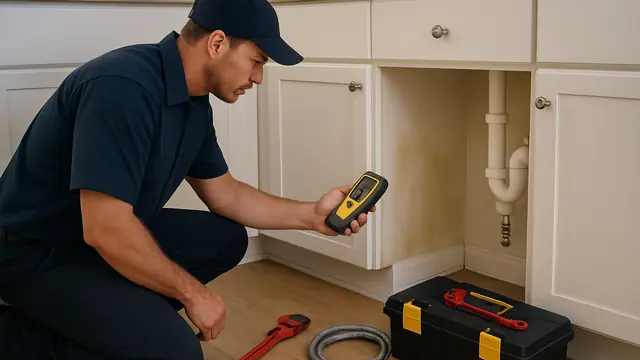
The plumber first dries and traces the leak. Connections, valves, piping, jacket seams, and the tank base are examined.
For an electric unit, testing may include voltage, element resistance, thermostats, high-limit controls, and wiring. For a gas unit, the plumber may evaluate ignition, burner operation, gas control, combustion air, and venting.
Water temperature, pressure, the relief valve, and thermal expansion system may be checked. If capacity is limited, tank size and recovery are compared with usage.
The recommendation should identify the failed item, overall heater condition, safety corrections, and expected value of repair versus replacement.
Repair Options From Smallest to Largest
The least invasive repair may be replacing an external connection, supply connector, or nearby piping section. Further repairs may include a drain valve, relief valve, thermostat, heating element, ignition part, burner component, anode rod, or expansion tank. The cause of any failed safety component should also be corrected.
Maintenance such as flushing may be recommended when sediment is confirmed and the tank remains suitable for service.
Larger work may involve pressure regulation, expansion control, venting, drainage protection, gas piping, electrical connections, or hot-water piping.
If replacement is required, a properly sized tank model may be the most direct solution. Tankless may also be evaluated, but it can require gas, electrical, venting, drainage, or maintenance changes.
Cost Factors to Consider
- Repair cost depends on the failed part, diagnosis, access, fuel type, parts availability, and related corrections.
- Replacement cost varies with capacity, efficiency, fuel source, location, removal, permits, venting, drainage protection, expansion control, and connection changes.
- Compare whether repair addresses one isolated fault, whether the tank is likely to remain reliable, and whether replacement solves capacity or installation problems.
Maintenance and Prevention
Look around the heater periodically for dampness, rust streaks, corroded fittings, and changes in sound. Keep the drain pan and visible discharge routes unobstructed.
Ask about anode-rod inspection and whether flushing is suitable for the specific tank. Have pressure and thermal expansion checked when valves drip or fixtures show pressure symptoms.
Keep gas-heater combustion and vent areas clear. Report ignition problems, soot, or unusual odors instead of repeatedly restarting the heater.
Making the Final Decision in Laguna Beach
When deciding whether to repair or replace a water heater in Laguna Beach, do not judge the unit only by whether it still produces hot water. Identify the leak source, tank condition, safety issues, repair reliability, and household demand.
Repair is reasonable when the tank is sound and one serviceable component or external connection has failed. Replacement is safer when the tank leaks, corrosion is advanced, repairs keep recurring, or the installation requires major correction. Prompt diagnosis provides the information needed to choose without guessing.
About this guide: This resource provides general homeowner education, not a remote diagnosis. Actual conditions, code requirements, equipment, and safe repair options must be evaluated at the property.