Stop and call for qualified help when plumbing water is near electrical equipment, sewage is entering occupied space, gas or burning odors are present, or a repair would require opening pressurized piping.
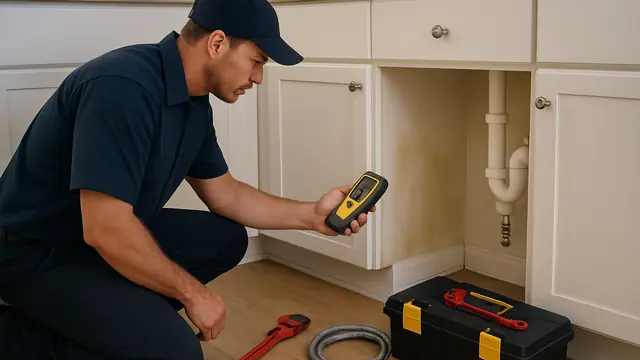
A faint stain appears inside a bathroom cabinet, and behind the shutoff valve you see flexible gray tubing entering the wall. The area may be dry, or a small bead of water may appear around a fitting. This is when many homeowners ask how to identify polybutylene plumbing in a Laguna Beach property.
Polybutylene, often marked PB, was installed as pressurized water piping from the late 1970s through the mid-1990s. Do not twist, bend, or scrape it. Dry the surface, take photographs, and watch for renewed moisture. For active leakage, shut off the fixture valve or main supply when safe and call a licensed plumber.
What Polybutylene Pipe Usually Looks Like
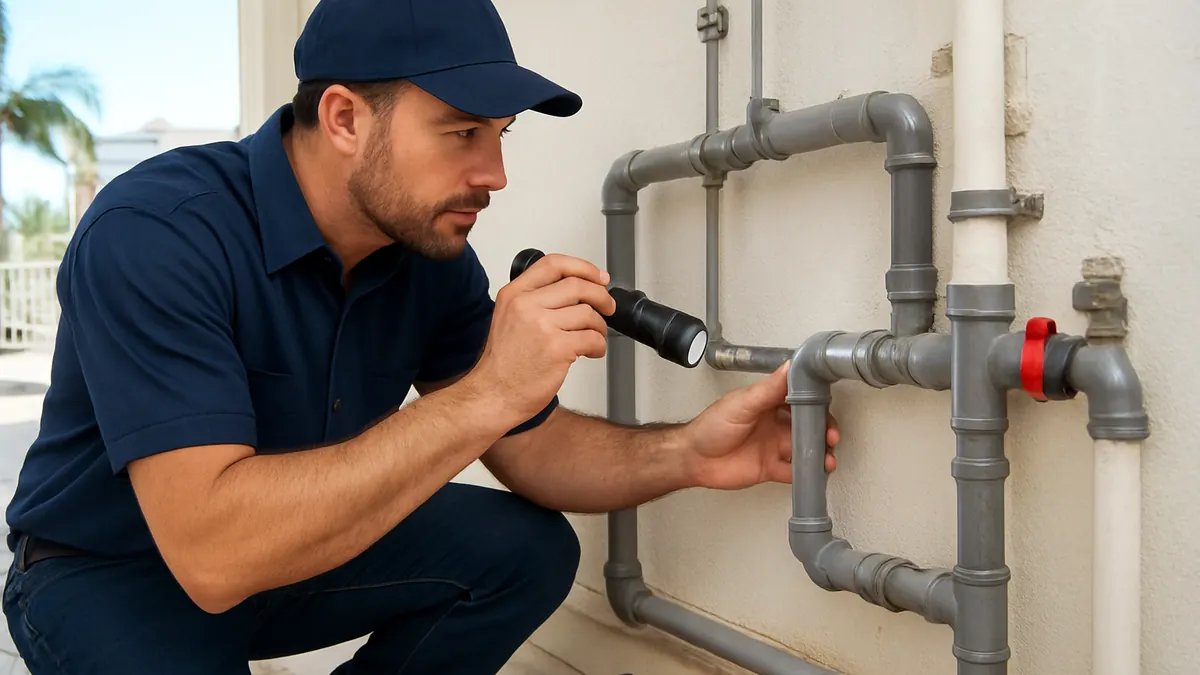
PB is commonly flexible gray tubing, often about one-half inch or three-quarters inch in diameter. It may also appear blue-gray, black, silver, or white. Because other products share similar colors, gray pipe is a clue rather than a final diagnosis.
Look for "PB" or "PB2110" on an exposed section. A manufacturer's name or pipe size may appear nearby. Use a flashlight or mirror if printing faces the wall; do not rotate the pipe. Many PB systems use plastic or metal fittings with copper-colored or aluminum crimp rings. A plumber considers all these clues together.
Confirm That You Are Looking at a Supply Line
Polybutylene was generally used for water-supply piping, not the larger drain lines that carry wastewater away. Beneath a sink, the drain is the larger pipe connected to the basin. The smaller lines leading to the hot and cold shutoff valves are the supply lines.
Do not confuse permanent piping with braided faucet connectors, toilet tubes, washing-machine hoses, or water-heater connectors. A home may contain several materials, and newer visible sections may connect to older concealed PB. One updated sink does not prove the entire house was repiped.
Where to Inspect Without Causing Damage
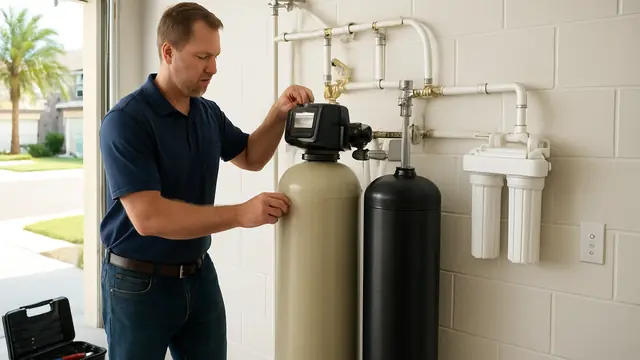
Check beneath each accessible sink and behind toilets. Look near the water heater, washing-machine box, and any exposed plumbing in a garage, utility closet, crawlspace, or safely accessible attic area.
Follow the pipe visually but do not pull appliances, remove cabinets, or open walls. In an attic, stay on proper walking surfaces and do not move insulation or electrical wiring to expose more pipe.
Photograph several locations and note the room, markings, fittings, moisture, and staining. If a wall is already open, have suspicious pipe evaluated before it is closed again.
Why an Apparently Sound PB Pipe Still Deserves Attention
Polybutylene can deteriorate internally, so outside appearance does not always reveal its condition. Age, heat, installation stress, movement, crimping quality, and exposure to substances in the water can contribute to weakening.
Leaks may develop at fittings, bends, or along the tubing. They may begin as occasional dampness or release pressurized water more quickly. PB does not guarantee an immediate failure, but the system should be confirmed and evaluated rather than judged by appearance alone.
Safe Checks for Moisture and Hidden Water Use
Use a dry paper towel around an accessible fitting without moving the pipe. Moisture transferred to the towel can help confirm active seepage. Do not wrap the fitting and leave the paper in place as a repair.
Inspect cabinet bottoms, baseboards, drywall, and ceilings below plumbing areas. Look for discoloration, swelling, peeling finishes, musty odors, or dried residue around a connection.
With all fixtures and automatic equipment off, observe the water meter. Continued movement may indicate leakage, but it will not identify the source. Keep the route to the main shutoff clear, and do not force a stuck or corroded valve.
What Not to Attempt
Do not squeeze the pipe to judge whether it is brittle. Do not cut off a sample, sand the surface, heat the tubing, or bend it away from framing. Physical disturbance can damage an aging line.
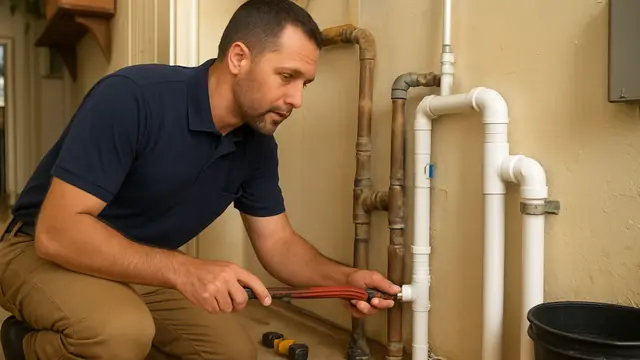
Avoid general-purpose clamps, tape, glue, epoxy, or mismatched push-to-connect fittings. A pressurized repair must use materials and methods approved for the existing pipe and the replacement connection.
Do not repeatedly tighten a fitting that seeps. Crimp connections are not adjusted like a threaded garden-hose connection. Improper force can worsen the leak.
Warning Signs That Require Faster Action
An active spray, steady drip, spreading stain, soft drywall, wet flooring, sudden pressure loss, or repeated supply leaks calls for prompt service.
A bulging ceiling can release water or collapse. Keep people away, turn off the water if safe, and do not pierce it from below. Avoid water near electrical equipment. Prompt evaluation is also appropriate before closing renovation walls or leaving the property unoccupied.
How a Licensed Plumber Identifies the Full System
A licensed plumber starts with visible markings and fittings, then checks multiple fixture groups. They trace hot- and cold-water routes and identify transitions between PB and newer materials.
The plumber looks for previous repairs, stressed bends, corrosion, and evidence of leakage. Moisture meters or other tools may be used when water is suspected behind finishes. A useful diagnosis determines whether PB is isolated, widespread, partially replaced, or actively leaking.
Repair Options in a Sensible Order
If inspection shows that the pipe is not PB and no leak exists, the appropriate action may be documentation and ordinary monitoring.
For a single accessible failure, a licensed plumber may remove the damaged section and install an approved transition and replacement. This can be a reasonable immediate repair, although it leaves the remaining PB in service.
A partial repipe replaces a defined branch or group of fixtures. It may fit a home where PB is limited to one section or where remodeling already provides access.
A whole-home repipe replaces remaining PB and may be practical when the material is widespread, leaks have repeated, or concealed sections are difficult to monitor. Ask what each option solves and what remains afterward.
What Influences the Cost
The amount of pipe, number of fixtures, home layout, replacement material, and access routes are major cost factors. A one-story layout with open access differs from piping hidden behind tile, cabinets, or finished ceilings.
The scope may also include shutoffs, fixture connections, wall openings, permits when required, and cleanup. Finish repair and water-damage restoration may be separate. A clear estimate should state what is replaced, what remains, and who handles restoration.
Prevention and Maintenance After Identification
Keep the main shutoff visible and accessible. Water alarms near sinks, the washing machine, and water heater can provide early warning. An automatic whole-home shutoff may be worth discussing for a property that is sometimes vacant.
Inspect exposed plumbing periodically and investigate stains rather than covering them. Maintain appliance hoses and fixture connectors, but remember that replacing them does not replace PB inside walls. Keep photographs and the plumber's findings for future planning.
Homeowner FAQs
Is gray pipe enough to prove I have PB?
No. Gray color is a useful clue, but markings, fittings, and installation details are needed to confirm the material.
Can polybutylene be hidden behind newer valves?
Yes. A newer shutoff valve or short PEX section may connect to older PB inside the wall.
Is a dry PB fitting safe to ignore?
Dryness means there is no visible leak at that moment. It does not establish the condition of the pipe's interior or concealed sections.
Can one leaking branch be replaced without repiping everything?
Sometimes. A partial repipe may be reasonable when the branch is clearly defined and compatible transitions can be installed.
Will leak alarms prevent a pipe failure?
No. They do not strengthen pipe, but they can warn you sooner and reduce the amount of unnoticed water damage.
What information should I ask the plumber to provide?
Ask for confirmation of the material, locations inspected, estimated extent of PB, evidence of leakage, repair options, and what each option leaves in place.
Take the Next Step Based on Evidence
How to identify polybutylene plumbing in a Laguna Beach home starts with the pipe's color, "PB" or "PB2110" markings, crimped fittings, and location in the water-supply system. The safest approach is to inspect without disturbing the tubing and have the full system evaluated. Once you know whether PB is isolated, widespread, leaking, or previously modified, you can choose the least invasive reasonable repair or plan a comprehensive repipe.
About this guide: This resource provides general homeowner education, not a remote diagnosis. Actual conditions, code requirements, equipment, and safe repair options must be evaluated at the property.