Stop and call for qualified help when plumbing water is near electrical equipment, sewage is entering occupied space, gas or burning odors are present, or a repair would require opening pressurized piping.
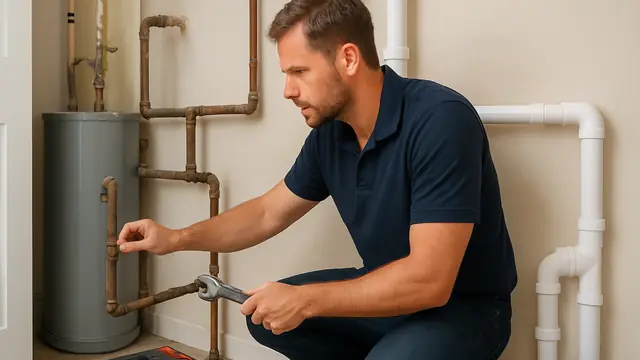
You open the water-heater closet after noticing a damp smell and see flexible gray tubing connected to newer-looking valves. The pipe is not dripping, but you wonder whether it is polybutylene. Do not disturb the tubing or test the fittings. Photograph it, locate the main shutoff, and ask a licensed plumber to identify the material.
Knowing how to identify polybutylene plumbing in Lake Lorraine means gathering several clues. Markings, fittings, routing, transitions, and repair history provide a more reliable answer than color alone.
Begin With the Pipe's Function
Polybutylene was used as flexible water-supply tubing. It carries pressurized hot or cold water toward fixtures and appliances. It is generally smaller than the drain and vent pipes that carry wastewater or air.
The tubing may be gray, blue, or black. A strong clue is "PB," often shown as "PB2110." Printing can be hidden by paint or the pipe's position. Connections may use plastic or metal fittings with copper-colored rings or aluminum bands. Identification should combine several clues.
A Safe Identification Sequence for Homeowners
Start With an Undisturbed Visible Section
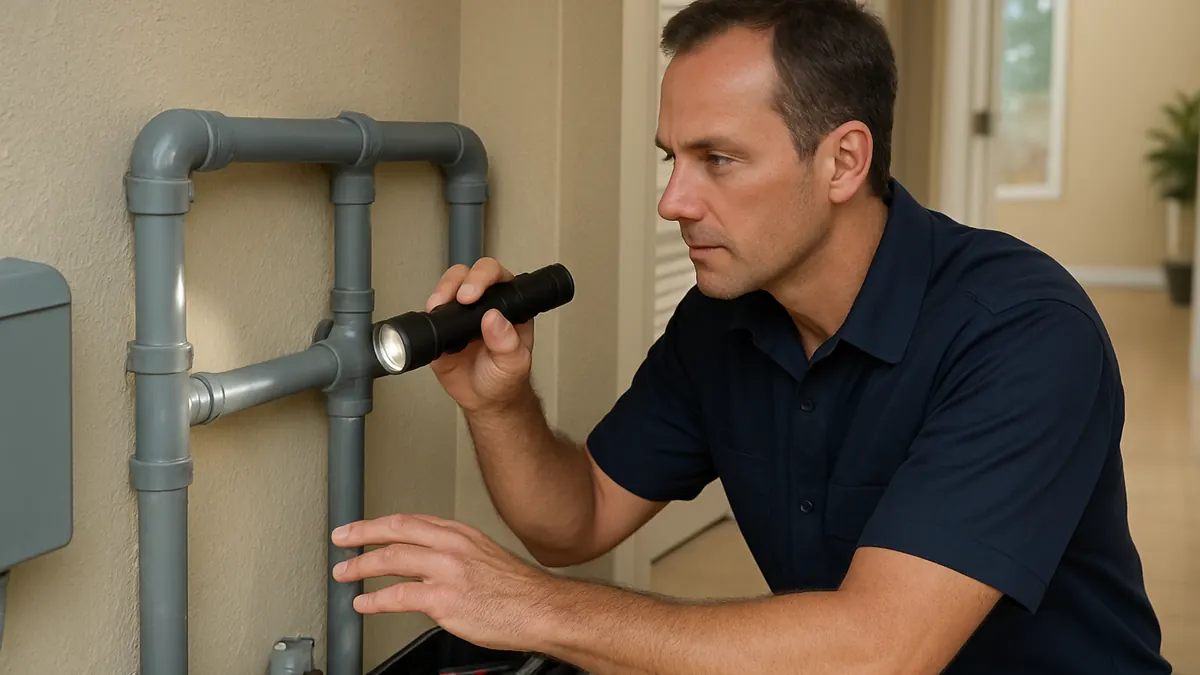
Choose a pipe that is already exposed beneath a sink, near the water heater, at a washing-machine connection, or behind an existing access panel. Use a flashlight rather than moving the line toward you.
Photograph Markings and Connections
Photograph the location, printed code, fitting, crimp ring, valve, and any material change. Enlarge the image if needed; do not scrape or clean the tubing.
Follow the Pipe Visually
Without pulling it, note whether the tubing feeds a faucet, toilet, water heater, washing machine, or other fixture.
Check More Than One Area
Compare visible plumbing in several rooms. Similar tubing in multiple locations suggests a broader installation.
Common Reasons the System Looks Mixed or Uncertain
Original installation is one possibility. A home may have modern valves or short sections of PEX while older tubing remains behind walls. Previous leaks may have been repaired one at a time.
Look for transitions, patched drywall, replacement valves, or repair records. Mixed materials do not prove improper work, but they do mean the older piping's extent must be determined.
Safe Checks You Can Perform Without Stressing the Pipe
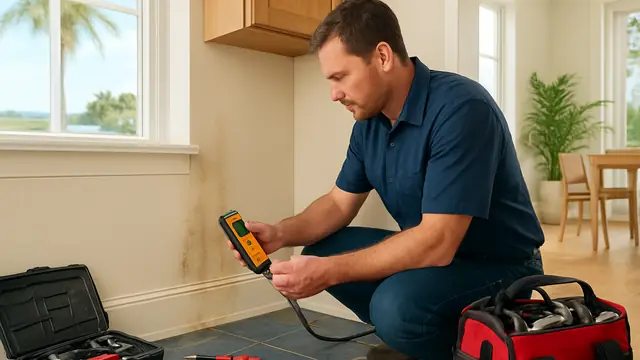
- Look for stains, swollen cabinets, soft drywall, peeling paint, or musty odors. Moisture may appear away from the failure because water can travel along framing.
- Place a dry paper towel beneath a suspicious connection to detect a slow drip. Do not tie or press it against the pipe.
- Make sure the main water shutoff is accessible. If it is difficult to turn, corroded, or damaged, do not force it.
When no fixtures or water-using appliances are operating, observe the water meter. Unexpected movement may indicate water use or leakage, but further diagnosis is needed to locate the source.
Note when symptoms occur because timing can help distinguish fixture-use leaks from continuous supply leaks.
What the Homeowner Should Not Attempt
- Do not bend, squeeze, pull, or twist suspected polybutylene to test its strength. An older fitting may leak after being disturbed even when it was dry beforehand.
- Do not tighten a crimp ring, remove a fitting, cut out a sample, or use a universal adapter. The repair must be compatible with both the existing material and the replacement pipe.
- Do not rely on tape, epoxy, putty, or a clamp as a permanent solution for a pressurized water line.
- Do not increase the home's water pressure or perform a homemade pressure test. This cannot determine the pipe's remaining service life and may create unnecessary stress.
- Avoid opening walls simply to search for gray tubing. A plumber should first use accessible piping, fixture locations, and moisture evidence to select any necessary access point.
Signs That Require Prompt Plumbing Service
Active spraying, steady dripping, sudden pressure loss, or rapid meter movement with no known water use requires prompt attention.
A damp ceiling, sagging drywall, lifting flooring, soft wall surface, or water emerging near trim can indicate a concealed leak.
Water near electrical outlets, appliances, wiring, or the electrical panel creates an additional hazard. Do not touch nearby electrical equipment or enter standing water where electricity may be present.
If water is escaping quickly, close the main shutoff only when it is safe to reach and operate. Keep people away from a bulging ceiling.
Several repairs in different parts of the home should also prompt a wider evaluation rather than another isolated assumption.
How a Licensed Plumber Confirms Polybutylene
A licensed plumber reads visible markings and examines pipe size, flexibility, fitting materials, crimp style, valves, and transitions. Multiple locations are compared to avoid identifying the entire home from one short section.
The plumber then maps the likely extent through fixture openings, utility spaces, the water-heater area, and access panels. Repair history may show whether failures were isolated or recurring.
When hidden moisture is suspected, diagnostic tools may guide targeted access. They can locate present concerns but cannot guarantee how long dry piping will last.
Repair Options From the Smallest Reasonable Step
Confirm and Document the System
When no active leak exists, identification, photographs, mapped locations, and written recommendations may be the appropriate first step.
Repair One Failed Connection or Section
A plumber may remove a localized failure and transition to modern pipe with compatible fittings. The repair restores that section but does not renew the remaining system.
Replace an Accessible Branch
If polybutylene is limited to a defined branch, that run may be replaced while modern piping elsewhere remains undisturbed.
Plan a Phased Repiping Project
Replacement may be divided into logical stages based on access, priority, or planned remodeling. Every completed and remaining section should be documented.
Complete the Water-Supply Repipe
When the material is widespread, has leaked repeatedly, or cannot be isolated reliably, complete repiping may be the clearest long-term option. A written scope should identify the new material, routing, fixture reconnections, testing, access openings, permits when applicable, and finish restoration.
Typical Factors Affecting Cost
Cost is influenced by the quantity of piping, fixture count, layout, number of levels, accessibility, routing, replacement material, valve condition, and number of transitions.
Surface restoration, permits, and limited access may add labor. Ask what is included. An on-site evaluation is necessary for a useful scope.
Prevention and Maintenance Guidance
Keep the main shutoff labeled and unobstructed. Consider water alarms near the water heater, washing machine, and sinks where leaks may go unnoticed.
Inspect visible areas periodically without touching the fittings. Investigate stains, odors, pressure changes, or unexplained meter activity early.
Save photographs and repair records. During remodeling, document open walls. If polybutylene is confirmed but dry, establish a monitoring or replacement plan before another leak chooses the schedule.
Identify the Whole Pattern, Not Just One Gray Pipe
Knowing how to identify polybutylene plumbing in Lake Lorraine requires looking beyond one visible tube. PB markings, fitting styles, pipe routing, transitions, and previous repair locations together reveal the most useful picture.
A licensed plumber can confirm the material, determine whether it is isolated or widespread, investigate hidden moisture, and explain options in a sensible order. Options may range from documentation to localized repair, phased work, or complete repiping.
About this guide: This resource provides general homeowner education, not a remote diagnosis. Actual conditions, code requirements, equipment, and safe repair options must be evaluated at the property.