Stop and call for qualified help when plumbing water is near electrical equipment, sewage is entering occupied space, gas or burning odors are present, or a repair would require opening pressurized piping.
The toilet seems to finish flushing, but a thin stream keeps moving into the bowl. You lift the tank lid and notice water flowing into the open overflow tube long after the tank should be full. If you are asking, "Why does my toilet keep running in Lake Lorraine, FL?" the float may be set too high, the fill valve may be sticking, or the tank may be losing water through another failed component.
The safe first step is to observe the tank without forcing the float, valve, chain, or handle. If water is leaking outside the fixture or will not stop entering the tank, gently close the toilet shutoff valve. Do not force a valve that resists normal hand pressure. Use the home's main shutoff if active leakage cannot be controlled locally.
Why Does My Toilet Keep Running in Lake Lorraine?
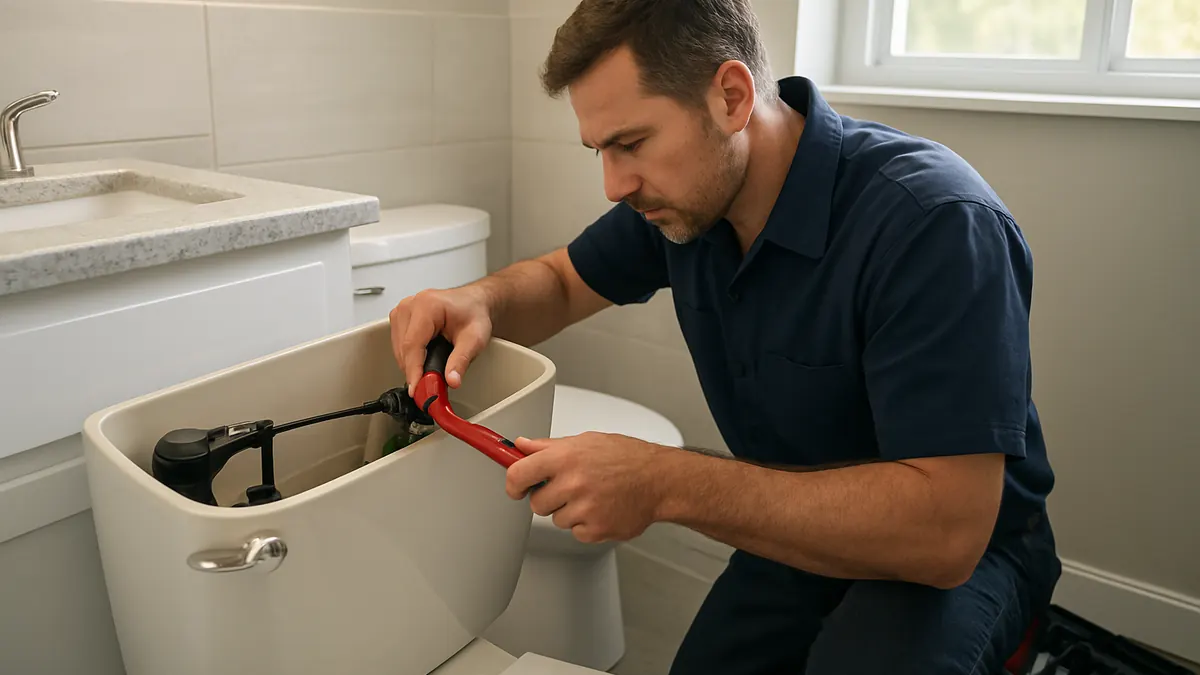
A toilet tank has a fill side and a sealing side. The fill valve and float control incoming water. The flapper and flush valve keep water in the tank until the next flush.
When the fill side fails, water may run into the overflow tube. When the sealing side fails, water leaks into the bowl and causes the fill valve to turn on repeatedly.
Start by Watching Where the Water Goes
Remove the tank lid carefully and place it on a towel. If water reaches the overflow tube, focus on the float and fill valve. If the water level slowly falls below the fill line, focus on the flapper, flush valve, or overflow tube.
If moving the handle changes the sound, the handle, chain, or flapper alignment may be involved. If water appears outside the toilet, stop treating the problem as an ordinary internal running issue.
Most Common Possible Causes
The Float Is Set Too High
The float rises with the tank water and signals the fill valve to close. If the setting is too high, water reaches the overflow tube before the valve shuts off.
The Fill Valve Is Worn or Contaminated
A fill valve contains internal seals and moving parts. Wear or debris may cause hissing, slow filling, inconsistent shutoff, or continuous flow.
The Flapper Is Leaking
The flapper covers the flush-valve opening. Warping, hardness, tears, residue, or an incorrect replacement can prevent it from forming a complete seal.
Water then moves quietly into the bowl, lowering the tank level and triggering another refill.
The Lift Chain Interferes With the Seal
A chain that is too tight can hold the flapper partly open. Excess slack may allow the chain to become tangled or trapped beneath the flapper.
The Handle Does Not Return Fully
A loose, sticking, or misaligned trip lever can keep tension on the chain. The running may stop temporarily when the handle is moved.
The Overflow Tube or Flush Valve Is Damaged
A cracked overflow tube or damaged flush-valve surface may leak even when the flapper appears to be seated. Repair may require removing the tank.
Safe Checks a Homeowner Can Perform
Watch one complete flush with the tank open. The flapper should rise and settle flat. The chain should retain slight slack. The float should move freely, and the fill valve should stop before water reaches the top of the overflow tube.
For a toilet that refills at random, add several drops of food coloring to the tank and wait 15 to 20 minutes without flushing. Color in the bowl confirms that tank water is passing into the bowl.
You may gently free an obvious chain tangle or verify that the float is not rubbing another component. Do not make aggressive adjustments to unfamiliar parts.
If the toilet continues to run, close the local shutoff only if it turns normally.
What the Homeowner Should Not Attempt
Do not use drain cleaner. It will not repair a fill valve, flapper, float, or chain problem.
Do not force the shutoff valve or overtighten tank bolts, supply fittings, plastic nuts, or fill-valve connections. Porcelain can crack, threads can strip, and an old valve can begin leaking.
Do not bend plastic parts sharply or modify an incompatible replacement component.
Do not attempt to make cracked porcelain dependable with glue or sealant. A cracked tank or bowl can release water without warning.
Signs That Make the Problem Urgent
A running toilet needs prompt service when water is leaking onto the floor, the supply connector is dripping or bulging, the tank or bowl is cracked, or the local shutoff valve cannot control active flow.
Stop using the toilet if it rocks, water appears around the base after flushing, the floor feels soft, or sewage odor is present.
If active water cannot be controlled at the toilet, close the main supply. Keep water away from nearby electrical equipment and adjoining rooms.
How a Licensed Plumber Diagnoses the Problem
A plumber observes the tank during flushing, filling, and idle periods. The water level, float travel, fill-valve shutoff, overflow tube, flapper, chain, handle, and flush-valve surface are checked.
A dye test can confirm tank-to-bowl leakage.
When water is outside the fixture, the inspection includes the supply line, shutoff valve, tank bolts, tank-to-bowl gasket, porcelain, base seal, flange, and floor.
Repair Options Beginning With the Least Invasive
The simplest repair may be lowering the float, correcting chain slack, or repositioning a sticking handle.
A worn flapper or defective fill valve can often be replaced without removing the toilet. A damaged overflow tube, flush valve, tank-bolt seal, or tank-to-bowl gasket may require tank removal and rebuilding.
A leak at the base may require lifting the toilet, checking the flange and flooring, and installing a new seal.
Replacement may be appropriate when the porcelain is cracked, the fixture is unstable, compatible parts are unavailable, repairs are recurring, or several major components need work. A high float setting or worn flapper does not automatically require a new toilet.
Typical Factors Affecting Cost
Cost depends on the failed component, toilet design, parts availability, accessibility, and the condition of the shutoff valve, supply connector, bolts, and seals.
Tank removal, corroded hardware, flange repair, flooring damage, emergency scheduling, or toilet replacement and disposal can increase the work involved.
Prevention and Maintenance Guidance
Pay attention to continuous hissing, water entering the overflow tube, slow filling, or short refill cycles.
Inspect the supply line and shutoff valve for moisture, corrosion, cracking, or bulging. Avoid harsh in-tank cleaners unless approved by the toilet manufacturer because some chemicals damage flappers and gaskets.
Do not lean against the tank, force a sticky handle, or continue using a toilet that moves at the floor. Keep both the fixture shutoff and main water shutoff accessible.
Correct the Water Path and Restore Normal Operation
If you are asking, "Why does my toilet keep running in Lake Lorraine, FL?" watch whether water is entering the overflow tube or leaking from the tank into the bowl. That observation helps distinguish an overfilling problem from a sealing problem.
A float adjustment, flapper, or fill valve may restore normal operation. Water on the floor, cracked porcelain, an unstable fixture, or a failed shutoff valve requires prompt professional attention.
About this guide: This resource provides general homeowner education, not a remote diagnosis. Actual conditions, code requirements, equipment, and safe repair options must be evaluated at the property.