Stop and call for qualified help when plumbing water is near electrical equipment, sewage is entering occupied space, gas or burning odors are present, or a repair would require opening pressurized piping.
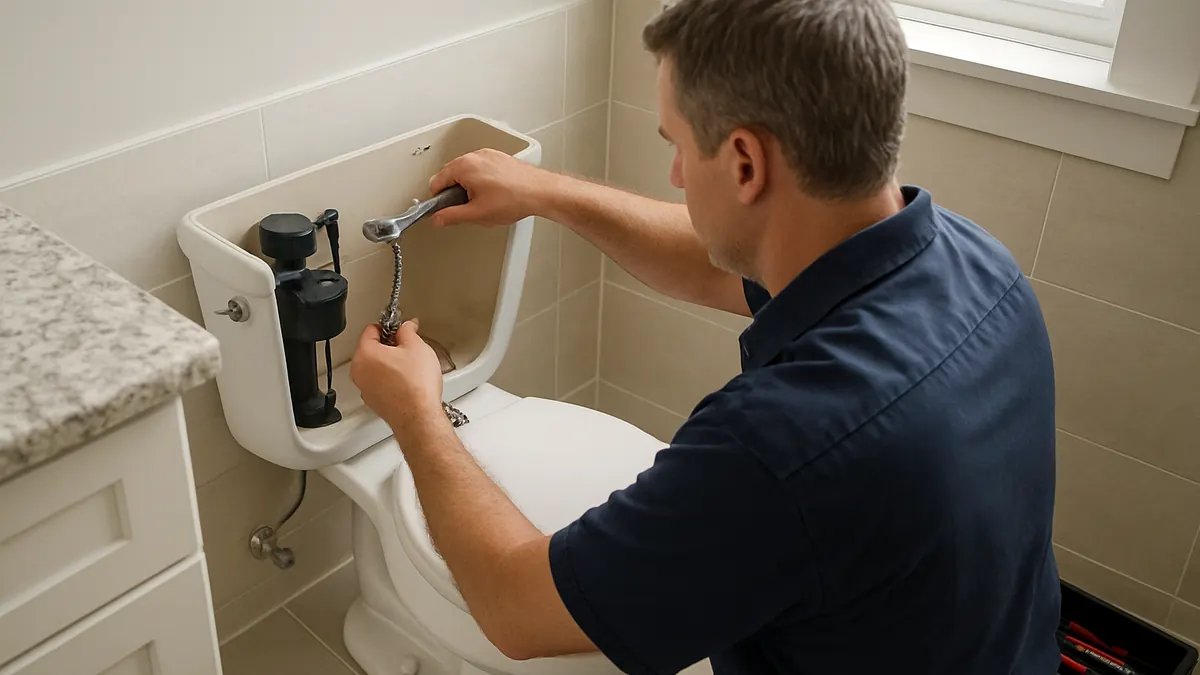
You flush the toilet, walk away, and hear water still moving several minutes later. Sometimes the sound stops, then starts again without anyone touching the handle. That usually means water is escaping from the tank into the bowl or the fill valve is not shutting off correctly. The immediate safe step is to remove the tank lid, look without reaching into moving parts, and turn the toilet's shutoff valve clockwise if water is continuously overflowing into the tube or spilling onto the floor. If the valve is stuck, do not force it.
A running toilet is easy to ignore because water disappears down the drain instead of creating a puddle. It can still waste water, increase utility use, and wear out internal parts.
Why Does My Toilet Keep Running in Destin?
A toilet keeps running when the tank cannot complete its normal fill-and-stop cycle. After a flush, the tank should refill to a set level, and the fill valve should shut off. If water continues entering the tank or leaking into the bowl, the toilet will run continuously or refill in short bursts.
Common causes include a worn flapper, misadjusted chain, failing fill valve, high float setting, damaged flush-valve seal, cracked overflow tube, or sticking handle.
The Most Common Causes of a Running Toilet
A Worn or Misaligned Flapper
The flapper is the rubber or silicone seal that lifts when you flush. After the flush, it should settle evenly over the flush-valve opening. If it is warped, hardened, covered with debris, or no longer centered, water can leak from the tank into the bowl.
The tank level then drops slowly and triggers an unexpected refill.
A Chain That Is Too Tight or Too Loose
The chain connects the handle to the flapper. Too little slack can hold the flapper open; too much can let the chain tangle beneath it.
A Fill Valve That Will Not Shut Off
The fill valve controls incoming water. Wear, debris, or a damaged seal can cause hissing, slow filling, or continuous flow into the overflow tube.
A Float Set Too High
The float tells the fill valve when to stop. If set too high, water enters the open vertical overflow tube and runs into the bowl.
A Damaged Flush Valve or Overflow Tube
A damaged sealing surface, cracked overflow tube, or worn flush-valve assembly can also leak. Repair may require removing the tank.
Safe Checks a Homeowner Can Perform
Place the tank lid safely on a towel and watch one flush cycle. The flapper should settle flat, the chain should retain slight slack, and the water should stop below the overflow tube.
You can also perform a food-coloring test. Add several drops of food coloring to the tank and wait 15 to 20 minutes without flushing. If color appears in the bowl, water is leaking from the tank into the bowl.
If the toilet is running continuously and you cannot correct an obvious chain tangle, close the shutoff valve behind or beside the toilet. Turn it gently clockwise. Do not force a corroded or stuck valve.
What the Homeowner Should Not Attempt
Do not force a shutoff valve, handle, float, or plastic component. Do not use drain cleaner; a running toilet is normally a tank-mechanism problem. Confirm that any replacement flapper matches the toilet.
Do not overtighten tank bolts, supply-line connections, or plastic fill-valve nuts. Excess force can crack porcelain or damage fittings. A cracked toilet tank or bowl generally cannot be safely repaired with sealant.
When a Running Toilet Becomes Urgent
A running toilet is urgent when water is leaking onto the floor, the shutoff valve will not stop the flow, the tank is cracked, or the toilet is close to overflowing. Shut off the main water supply if the local valve cannot control active leakage.
Prompt service is also appropriate when the toilet rocks, the floor around it feels soft, sewage odors are present, or water appears around the base. Those symptoms may involve the supply line, wax seal, drain connection, or damaged flooring rather than only the tank parts.
How a Licensed Plumber Diagnoses the Problem
A plumber observes the fill and flush cycle, checks the tank water level, and tests whether water is entering the overflow tube. The flapper, chain, handle, float, fill valve, flush valve, tank bolts, and supply connection are inspected.
A dye test can confirm tank-to-bowl leakage. Water at the base requires inspection of the seal, mounting, flange, and floor.
Repair Options From Least to Most Invasive
The least invasive solution may be untangling or adjusting the flapper chain, lowering the float, or correcting a handle that is sticking.
A worn flapper or fill valve can usually be replaced from inside the tank. Damage to the flush valve, overflow tube, or tank-to-bowl components may require tank removal or an internal rebuild.
Toilet replacement is considered when the porcelain is cracked, repair parts are unavailable, the toilet has repeated failures, or the cost and condition make replacement the more practical choice. Replacement should not be the automatic recommendation for a simple flapper or fill-valve problem.
Typical Factors Affecting Cost
Cost depends on which part has failed, whether the shutoff valve and supply line are serviceable, and whether the tank must be removed. The toilet's design, parts availability, accessibility, and the condition of tank bolts can affect labor.
A leaking base seal, damaged flange, unstable flooring, emergency timing, or corroded shutoff valve can add work. Ask what diagnosis, parts, testing, and disposal are included.
Prevention and Maintenance Guidance
Listen for unexpected refill cycles and address them early. Inspect the supply line and shutoff valve for corrosion, dampness, or bulging. Keep cleaning tablets and harsh chemicals out of the tank unless the toilet manufacturer specifically allows them, because some products can damage rubber seals.
Repair a sticking handle instead of forcing it. For an unoccupied property, arrange periodic checks and make sure the responsible person knows the main shutoff location.
Stop the Running Cycle Before It Wastes More Water
If you are asking, "Why does my toilet keep running in Destin, FL?" the answer is usually a flapper, chain, fill valve, float, or flush-valve problem. Start with a careful visual check, use the dye test if needed, and shut off the toilet valve when water will not stop.
Do not ignore water around the base, cracked porcelain, an inoperative shutoff valve, or unstable flooring. Those conditions require prompt professional attention.
About this guide: This resource provides general homeowner education, not a remote diagnosis. Actual conditions, code requirements, equipment, and safe repair options must be evaluated at the property.