Stop and call for qualified help when plumbing water is near electrical equipment, sewage is entering occupied space, gas or burning odors are present, or a repair would require opening pressurized piping.
You flush before leaving for work, but the toilet is still hissing when you return to the bathroom. Another time, the tank becomes quiet and then refills for a few seconds even though no one used it. These symptoms usually mean the toilet is losing water from the tank or the fill mechanism cannot reach its proper stopping point.
The safe immediate response is to look inside the tank without forcing the parts. If water is spilling into the overflow tube, running onto the floor, or escaping from a supply connection, gently turn the toilet shutoff valve clockwise. If the valve is stuck or begins leaking when touched, stop and use the main water shutoff if active flow must be controlled.
Why Does My Toilet Keep Running in Crestview?
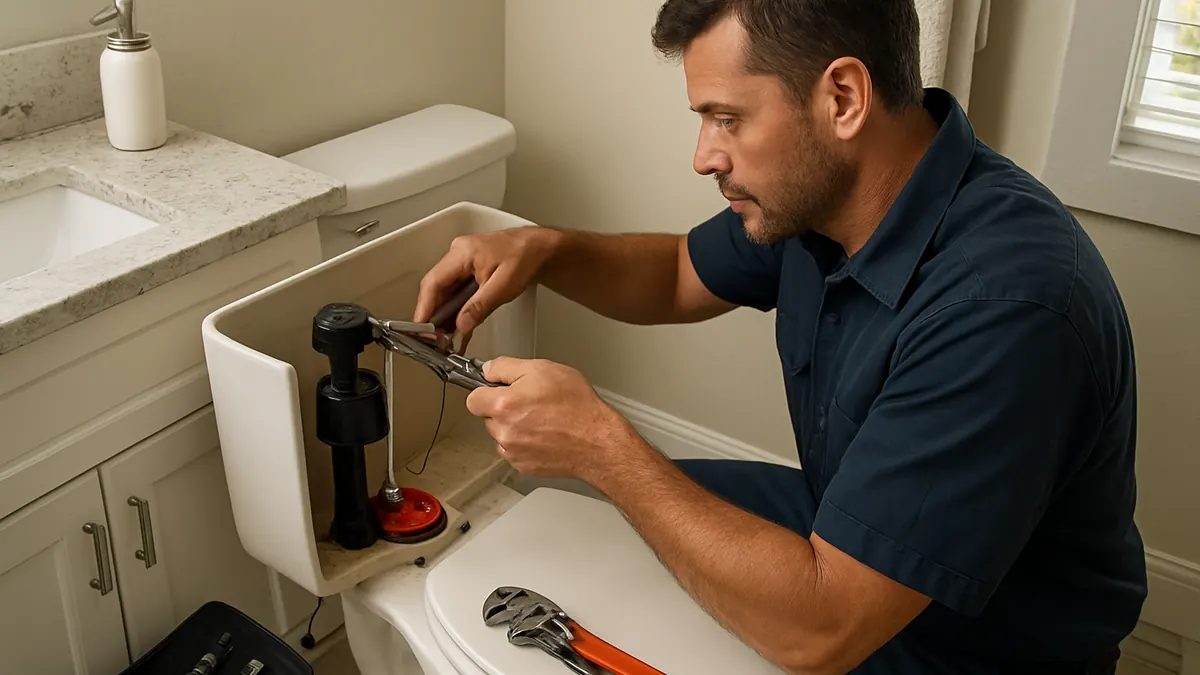
A toilet must release water, reseal the tank, and refill to the correct level. It keeps running when the flapper, fill valve, float, handle, or chain prevents that cycle from finishing. Continuous running and brief refill bursts both indicate ongoing water use.
Follow the Water to Understand the Problem
Water usually follows one of two paths: over the overflow tube because the tank is overfilling, or beneath the flapper because the tank is leaking into the bowl. Watching the tank helps distinguish them.
Common Causes of a Toilet That Will Not Stop Running
The Flapper Does Not Seal
The flapper can harden, warp, tear, collect residue, or be the wrong design. A poor seal lets water leak quietly into the bowl.
The Lift Chain Interferes With the Flapper
A tight chain can hold the flapper open; a loose chain can become trapped beneath it. Slight slack is needed.
The Fill Valve Continues Supplying Water
A worn, dirty, or binding fill valve may hiss, fill slowly, or cycle repeatedly.
The Float Is Set Incorrectly
A high or sticking float may keep water flowing into the overflow tube.
The Handle or Lever Sticks
A loose, corroded, or misaligned handle may keep tension on the chain.
The Flush Valve or Overflow Tube Is Damaged
A damaged flush-valve seat or cracked overflow tube can leak and may require tank removal.
Safe Checks the Homeowner Can Perform
Place the tank lid on a towel and watch one flush. The flapper should reseal, the chain should remain free, and the water should stop below the overflow tube. Overflow points toward the float or fill valve; a falling tank level points toward the flapper or flush valve.
For a slow leak, place several drops of food coloring in the tank and wait 15 to 20 minutes without flushing. Color in the bowl means tank water is passing through.
You may gently untangle an obvious chain problem. Turn off the local valve if continuous running remains.
What the Homeowner Should Not Attempt
Do not use drain cleaner, force an old shutoff valve, or overtighten nuts and bolts. Porcelain can crack and plastic can strip. Confirm that replacement parts fit the toilet instead of relying on appearance.
Never attempt to glue cracked toilet porcelain. A cracked tank or bowl can fail suddenly and release a significant amount of water.
Signs That Make the Problem Urgent
A running toilet needs faster attention when water is leaking onto the floor, the tank or bowl is cracked, the supply line is bulging or dripping, or the shutoff valve cannot control the flow.
Stop using the toilet if it rocks, water appears around the base after flushing, the floor feels soft, or sewage odor is present. These symptoms may involve the toilet seal, drain flange, or flooring rather than only the tank mechanism.
Use the main shutoff when active water cannot be stopped at the toilet. Keep water away from nearby electrical equipment.
How a Licensed Plumber Diagnoses the Running Toilet
A plumber watches the complete cycle and checks the flapper, chain, handle, float, fill valve, overflow tube, sealing surface, supply line, and shutoff. A dye test or marked tank level separates a sealing leak from a fill-valve problem.
When water is present outside the toilet, the plumber checks the supply connection, tank-to-bowl seals, porcelain, base seal, mounting bolts, flange, and floor condition.
Repair Options Beginning With the Smallest Reasonable Fix
The first repair may be adjusting the chain, handle, or float. A matched flapper or fill valve can usually be replaced without removing the toilet. Damage to the flush valve, overflow tube, tank bolts, or tank-to-bowl seals may require tank removal. Base leakage may require resetting the toilet after the flange and floor are inspected.
Complete replacement may make sense when the porcelain is cracked, the toilet has repeated failures, parts are unavailable, or several major repairs are needed. A running toilet caused by one worn component does not automatically require a new fixture.
Typical Factors Affecting Cost
Cost depends on the failed part, toilet design, parts availability, accessibility, and condition of the valve, connector, and fasteners. Tank removal, resetting, a damaged flange, unstable flooring, emergency timing, or disposal can add work. Ask what diagnosis, parts, testing, and related repairs are included.
Prevention and Maintenance Guidance
Investigate short refill cycles early. Check the supply connector and shutoff for moisture, corrosion, or bulging. Avoid harsh in-tank cleaners unless approved by the manufacturer. Do not force a sticking handle or use a rocking toilet, and keep both shutoffs accessible.
Stop the Leak at the Tank, Not at the Symptom
If you are asking, "Why does my toilet keep running in Crestview, FL?" determine whether water is flowing over the overflow tube or leaking beneath the flapper. That distinction helps separate a fill problem from a sealing problem.
A chain adjustment or matched replacement part may be enough. Water on the floor, cracked porcelain, a failed shutoff, rocking, or soft flooring requires prompt professional evaluation. Correcting the cause stops unnecessary water use and helps prevent a minor tank problem from becoming property damage.
About this guide: This resource provides general homeowner education, not a remote diagnosis. Actual conditions, code requirements, equipment, and safe repair options must be evaluated at the property.