Stop and call for qualified help when plumbing water is near electrical equipment, sewage is entering occupied space, gas or burning odors are present, or a repair would require opening pressurized piping.
Start by Identifying Where the Water Collects
Water rising around your feet during a shower deserves attention, but not every puddle means the drainpipe is clogged. For homeowners in Latitude Margaritaville Watersound in Bay County, the first useful distinction is whether water cannot enter the drain fast enough or cannot reach it. Water that builds over the drain opening suggests restricted drainage. Water left in an isolated corner after the rest of the floor clears may point to the shower floor's slope, an uneven surface, or an obstruction along its path.
Watch what happens during normal use without deliberately filling the shower. Note when pooling begins, whether it covers the drain, and how quickly it recedes after the water stops. Stop using the shower if water approaches the threshold or escapes onto the bathroom floor. These observations help a plumber decide whether to investigate the grate, drain connection, trap, or piping, or recommend an evaluation of the shower floor.
Why Hair and Shower Products Slow the Drain
Hair rarely travels through a shower drain as separate, clean strands. It catches on strainers and internal surfaces, then combines with soap residue, skin oils, and grooming products. Over time, that material can form a dense restriction near the drain opening or farther into the trap. A shower may drain normally for the first minute before water begins to collect because the remaining opening cannot keep up with the shower's flow.
Body scrubs, loose packaging, pieces of soap, and small grooming items can create different problems. A solid object may lodge in a bend or become a snag point for additional buildup. Tell the plumber if anything fell into the drain before the trouble began. Do not push an object deeper with a screwdriver or improvised hook. Knowing whether the restriction is soft buildup or a foreign object helps determine the safest way to remove it.
Read the Pattern Before Choosing a Fix
A shower that has gradually slowed over several months often needs a different investigation than one that has drained poorly since installation. Gradual deterioration commonly points toward accumulated material. Poor performance from the beginning raises questions about the drain assembly, grate, pipe arrangement, or original installation. A sudden change can follow a dropped object or a mass of hair shifting into a tighter location. None of these patterns proves the cause, but each gives the plumber a useful starting point.
Also notice whether the problem is limited to the shower. If nearby fixtures drain normally, a local shower restriction becomes more likely, although it is not certain. If another fixture's use causes water to rise in the shower, stop using the affected fixtures and contact a licensed plumber promptly. That pattern calls for a broader drainage investigation rather than repeated cleaning at the shower opening. Mention any recent plumbing work, new drain accessories, or changes to the showerhead.
Safe Cleaning Stops at Accessible Components
Homeowner care should focus on parts designed for routine removal and cleaning. With the shower off, collect visible hair from an accessible strainer using gloves or a paper towel. Clean a removable hair catcher according to its instructions and put debris in the trash rather than rinsing it down another drain. If a grate requires tools, first confirm that its fasteners are intended for maintenance. Some visible parts belong to the drain assembly itself and should not be loosened.
Do not pry up a resistant cover, loosen the drain flange, remove sealant, or disturb the connection between the drain and shower base. Those actions can turn a drainage complaint into a leak. Stop if a component is corroded, cracked, sharp, or unclear in function. After ordinary surface cleaning, check drainage during brief, attended use. If pooling remains, repeated probing is unlikely to answer whether the restriction is in the trap or beyond it.
Avoid Chemicals and Forceful Clearing Methods
Chemical drain cleaners are not a dependable substitute for finding the cause of a recurring shower blockage. Depending on the product, concentrated cleaners can cause serious burns, damage finishes, or be incompatible with plumbing components. A blocked drain can also retain the chemical, creating an exposure hazard for whoever works on it next. Never mix drain cleaners with each other, bleach, acids, or other household products. If a product has already been used, tell the plumber exactly what it was and when it was added.
Avoid pouring boiling water into the shower or using compressed-air devices, pressure-washer attachments, or improvised drain-clearing equipment. Excessive heat and force can damage vulnerable materials or connections, and pressurized methods can splash contaminated water. Powered drain cables also require the right equipment and handling to avoid injury and plumbing damage. For a drain that remains slow after accessible hair removal, professional cleaning is a safer next step than escalating through stronger chemicals or more aggressive tools.
What a Professional Drain-Cleaning Visit Should Establish
A useful service visit begins with the drainage history and an inspection of accessible components. The plumber may check the grate, evaluate how water enters the drain, compare nearby fixture performance, and determine available access to the affected piping. The goal is to locate the likely restriction before choosing equipment. Shower drain geometry and pipe condition matter because an approach suitable for a larger drain may not be appropriate through a small shower opening.
Mechanical cleaning can remove hair and buildup when performed with equipment suited to the line. Other methods may be appropriate depending on the obstruction, access, and condition of the piping. A camera is not necessary for every slow shower, and access through a shower trap can limit its usefulness. After cleaning, the plumber should check drainage under normal operating conditions and explain what was found. Ask whether the result suggests ordinary maintenance or a reason for further investigation.
When Repeated Cleaning Is Not the Whole Answer
A blockage that returns shortly after service deserves a review of the original findings. The first cleaning may have opened a passage without removing all the material, or a retained object may still be catching hair. Other possibilities include a rough or damaged section of piping, an unsuitable fitting arrangement, or a drain line with inadequate slope. Repeated slowdowns do not automatically mean the drain needs replacement, but they should prompt more than an unexplained cycle of identical treatments.
Ask the plumber what evidence supports the proposed next step. Further inspection may help distinguish residual buildup from a physical defect, but not every section is accessible without additional work. Before approving a repair, clarify where access is needed, what materials must be opened, and who will restore finishes. If the work affects the shower base or waterproofing, the repair plan should address those systems specifically. Clearing a pipe and preserving a watertight shower are separate responsibilities.
Recognize Shower Floor and Drain Assembly Problems
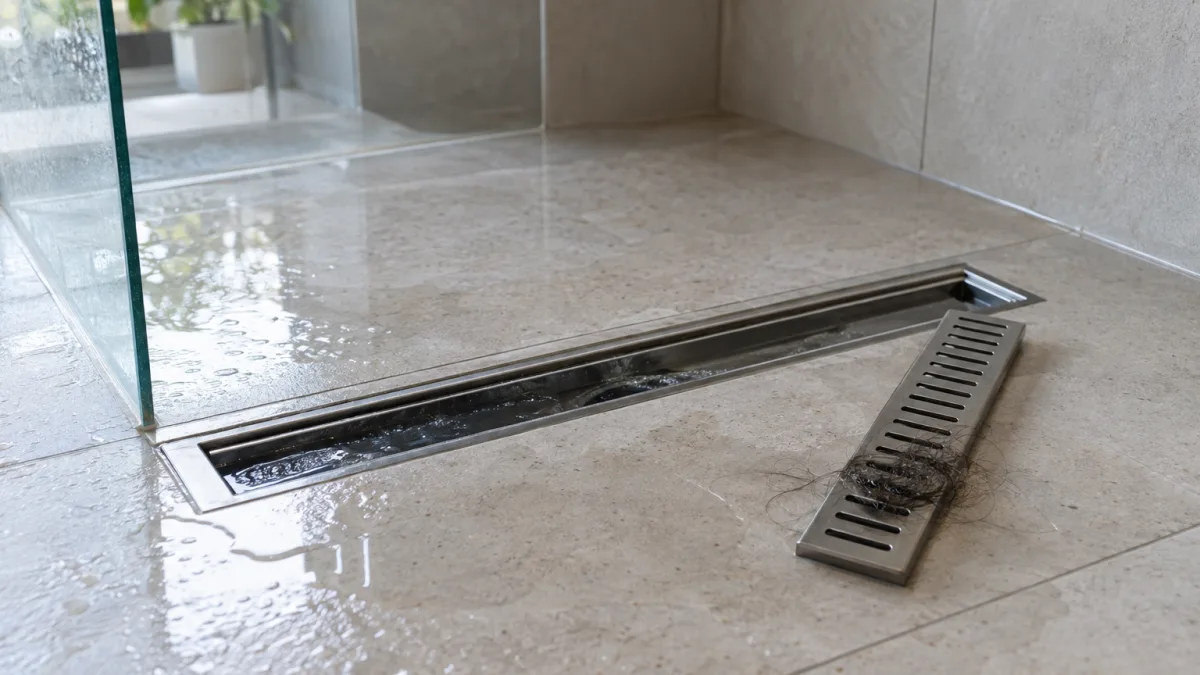
If water enters the drain freely but puddles remain elsewhere, more drain cleaning may not solve the complaint. Tile lippage, depressions in the floor, or insufficient slope can leave water behind. Linear drains can also collect hair and residue along a channel even when the pipe below is clear. Follow the manufacturer's maintenance instructions for accessible channel components. Do not assume that adding a different grate or applying caulk will correct a drainage or slope problem.
Loose drain trim, cracked grout near the drain, staining outside the shower, or dampness in an adjacent area warrants professional evaluation. These signs do not identify the exact failed component, but they expand the concern beyond a simple clog. Avoid using the shower if water is escaping the enclosure or a leak is suspected. A plumber may need to coordinate with a qualified shower or tile contractor when the drain connection, base, and waterproofing must be evaluated together.
Build Maintenance Around Use, Not a Fixed Calendar
The right cleaning interval depends on how many people use the shower, hair shedding, grooming habits, and the strainer design. Start by checking the accessible hair catcher regularly and adjust the interval based on how quickly it fills. A compatible catcher should intercept debris without covering too much of the drain opening. If pooling starts immediately after installing one, check its fit and cleanliness before assuming the piping has developed a blockage.
In Northwest Florida's humid climate, a shower can remain damp between uses. Ventilation and routine surface cleaning support general shower care, but neither clears a restriction inside the drain. For a home that sits unoccupied part of the year, inspect the shower when returning and observe its first use rather than leaving it running unattended. Property managers can keep brief maintenance notes recording cleaning dates, recurring symptoms, and service findings. Those records help identify whether a problem is truly recurring or simply overdue surface maintenance.
Prepare for Service and Know When to Stop Using the Shower
Before the appointment, clear toiletries and loose mats from the work area. Share when the problem started, whether it occurs every time, which other fixtures are affected, and what cleaning products or tools have already been used. A photo of pooling during ordinary use can help, but do not recreate an overflow for documentation. If the home has prior drain repair records or a shower manufacturer's care guide, make those available so the plumber can account for the installed materials.
Arrange prompt service when water no longer recedes, a foreign object is suspected, or the problem returns soon after cleaning. Stop using the shower if wastewater comes up through the drain, water crosses the threshold, or leakage appears outside the enclosure. Keep children and pets away from contaminated standing water. When discussing the service plan with a licensed plumber, ask what will be inspected, how successful drainage will be verified, and which findings would justify a separate repair estimate.
About this guide: This resource provides general homeowner education, not a remote diagnosis. Actual conditions, code requirements, equipment, and safe repair options must be evaluated at the property.