Stop and call for qualified help when plumbing water is near electrical equipment, sewage is entering occupied space, gas or burning odors are present, or a repair would require opening pressurized piping.
You open a cabinet, notice a smooth gray water line, and wonder whether your home contains polybutylene plumbing. That concern often begins after a home inspection, plumbing repair, or online search showing photographs of gray plastic pipe. The first step is not to assume that every gray line is polybutylene.
Polybutylene, commonly shortened to PB, was used in residential water-supply systems primarily from the late 1970s through the mid-1990s. Newer materials can look similar at a glance. Do not cut, twist, scrape, or bend the pipe. Photograph the tubing, fittings, and printed markings, and check for moisture. If you find active leaking, shut off the nearest fixture valve or main water supply when safe.
How to Identify Polybutylene Plumbing in Latitude Margaritaville Watersound
The strongest visual clue is printed identification. Look for "PB," "PB2110," or a manufacturer's name along the side of the pipe. The marking may be faint, painted over, dusty, or turned toward the wall.
Polybutylene is often gray, blue-gray, silver, black, or occasionally white. Color alone is unreliable because PEX, flexible connectors, and other plastic products may look similar.
PB was normally used for pressurized hot- and cold-water supply lines, not the larger drainpipe beneath a sink. Many PB systems use plastic or metal fittings secured by copper-colored or aluminum crimp rings. A plumber confirms the material by considering the marking, fitting style, and connection method together.
Why Gray Plastic Pipe May Not Be PB
PEX is flexible, may be gray or another color, and is common in residential water systems. Short faucet and toilet connectors can also resemble plastic pipe but are not the permanent piping inside walls.
The printed code is more useful than color. PEX carries its own markings, while polybutylene is often marked PB2110. A home may contain several materials, so checking one sink is not enough to determine what runs throughout the property.
Safe Places to Look
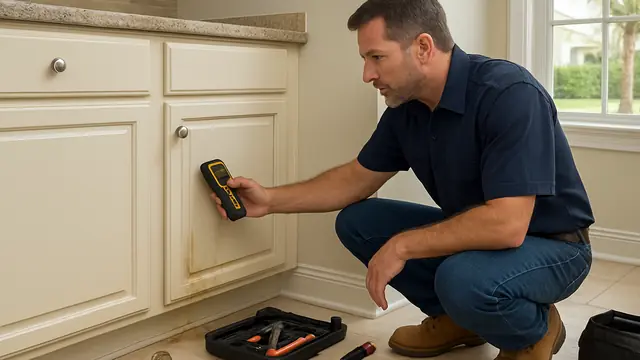
Start beneath kitchen and bathroom sinks. Follow the permanent pipe entering the shutoff valve rather than the short connector leading from the valve to the faucet.
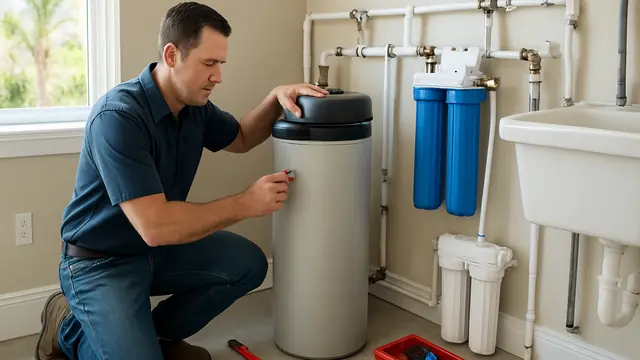
Look behind toilets without disconnecting anything. Check visible piping near the water heater, washing-machine box, utility room, garage, or accessible plumbing manifold.
If you have safe access to an unfinished area, use a flashlight to inspect visible runs. Do not step between attic framing members, move electrical wiring, or pull insulation away from concealed piping.
Take close-up and wide-angle photographs so a plumber can see both the lettering and the pipe's location.
Safe Checks for Leaks or Moisture
Run a dry paper towel around an accessible fitting without moving the pipe. Moisture on the towel may reveal slow seepage.
Look for swollen cabinet material, peeling finish, yellow or brown staining, soft drywall, musty odors, corrosion, or dried mineral residue. These symptoms do not prove a PB leak, but they justify evaluation.
You can also observe the water meter after turning off faucets, toilets, irrigation, ice makers, washing machines, and other water-using equipment. Continued movement can indicate hidden water use or leakage. The meter cannot identify the pipe material or exact leak location.
Keep the main shutoff accessible. If the valve is corroded, damaged, or difficult to turn, do not force it.
What You Should Not Attempt
Do not cut out a pipe sample, bend tubing to expose printing, or squeeze it to test brittleness. Avoid scraping paint or residue with a knife or abrasive tool. Physical disturbance can damage aging plastic or loosen a connection.
Do not tighten crimp rings with pliers, add an unapproved clamp, or treat tape, glue, or epoxy as a permanent repair. Pressurized piping requires compatible materials, approved fittings, and proper tools.
Do not open walls solely to identify the material unless a plumber first determines where controlled access would be useful.
When the Situation Becomes Urgent
- Call promptly for active dripping, a spraying pipe, wet flooring, spreading stains, soft wall material, sudden pressure loss, or repeated leaks in different rooms.
- A swollen or sagging ceiling may contain water and can collapse. Keep people and pets away, shut off the water if safe, and do not stand beneath the damaged area.
- Water near electrical outlets, light fixtures, panels, or appliances creates another hazard. Do not touch wet electrical equipment.
Even without an active leak, identification should not be delayed before a home sale, insurance review, renovation, or extended vacancy. Early confirmation gives you time to compare options instead of making a rushed emergency decision.
How a Licensed Plumber Confirms the Material
A licensed plumber checks several exposed locations, reads available markings, and examines fittings and crimp rings. The plumber traces likely hot- and cold-water routes and looks for transitions between materials.
If leakage is suspected, moisture meters or other appropriate detection methods may be used. The goal is to determine whether the pipe is PB, how much remains, whether the system was partially repiped, and whether there is evidence of current leakage.
The plumber should explain what was found, what remains uncertain, and which choices match the actual condition.
Repair Options From Least Invasive to Most Comprehensive
If the pipe is another acceptable material and no defect is present, no PB-specific repair is needed. Documentation may be enough.
For one accessible leak, a localized repair may restore service. The damaged portion is removed and replaced using an approved transition. This addresses the immediate failure but does not change other PB lines.
A partial repipe can replace one branch, bathroom group, or accessible section. It may be reasonable when PB is limited and the layout allows clear separation.
A whole-home repipe is the most comprehensive choice when PB is widespread, failures have repeated, or the homeowner wants to reduce uncertainty. The proposal should explain routing, fixture connections, shutoff work, access openings, permits when required, and responsibility for finish repairs.
Typical Factors That Affect Cost
Cost depends on the amount of pipe, number of fixtures, home layout, accessibility, replacement material, and number of wall or ceiling openings.
Mixed piping, cabinetry, tile, and difficult routing can increase labor. Ask for a written estimate showing what will be replaced, what will remain, and who handles finish repairs.
Prevention and Maintenance Guidance
Keep the main shutoff identified and unobstructed. Make sure responsible household members know how to stop the water.
Place leak alarms near the water heater, washing machine, under sinks, and in other vulnerable areas. A professionally selected automatic shutoff system may provide added protection during travel.
Inspect exposed piping periodically for dampness, residue, corrosion, or new staining. Maintain appliance hoses and fixture connectors, remembering that replacing them does not replace concealed supply piping.
If PB is confirmed, create a planned repair or replacement strategy before repeated failures force emergency work.
Homeowner FAQs
Is every gray plastic pipe polybutylene?
No. PEX and other products can also be gray. Printed markings, fitting styles, and professional inspection provide better confirmation.
What does PB2110 mean?
PB2110 is a common identification marking for polybutylene tubing and is one of the clearest visual clues.
Can a plumber confirm PB from photographs?
Clear photographs may strongly suggest the material, especially when markings and fittings are visible. An on-site inspection is more reliable for determining how much remains.
Does one PB leak mean all piping must be replaced?
Not automatically. A localized repair may be reasonable, but the system's extent, accessibility, and leak history should guide the decision.
Can a dry pipe still have internal deterioration?
Yes. The exterior can look normal while deterioration develops internally. A dry appearance does not prove long-term condition.
Take the Next Step Based on Positive Identification
How to identify polybutylene plumbing in a Latitude Margaritaville Watersound home begins with printed markings, fitting design, pipe location, and confirmation that you are looking at a permanent water-supply line. Do not rely on color alone or disturb the tubing. Once a licensed plumber confirms the material and determines how much remains, you can choose a targeted repair, partial repipe, or comprehensive replacement based on evidence rather than assumption.
About this guide: This resource provides general homeowner education, not a remote diagnosis. Actual conditions, code requirements, equipment, and safe repair options must be evaluated at the property.