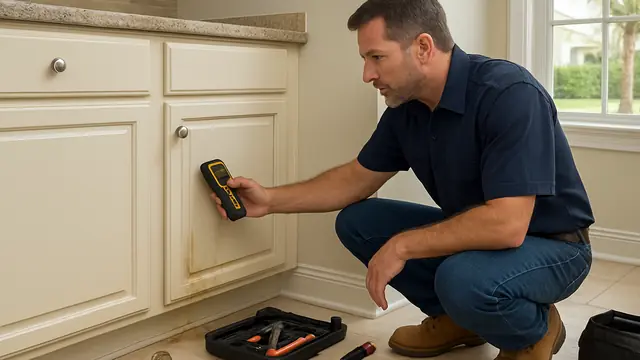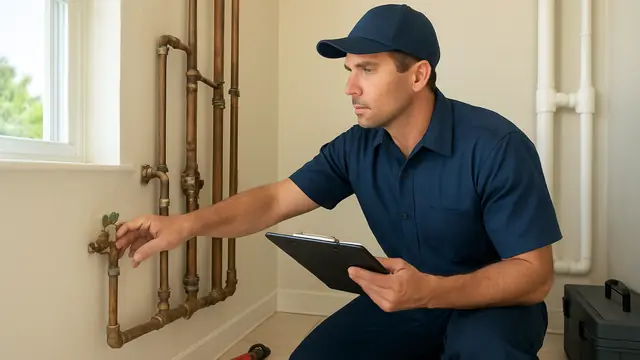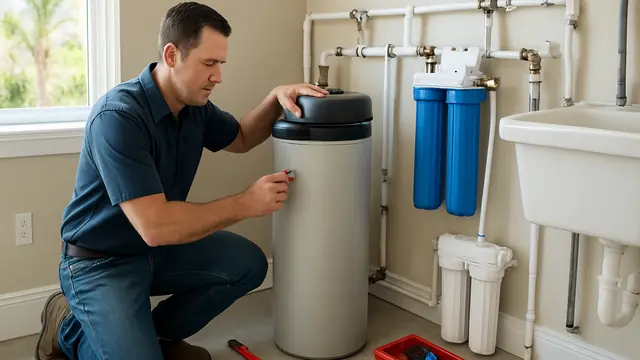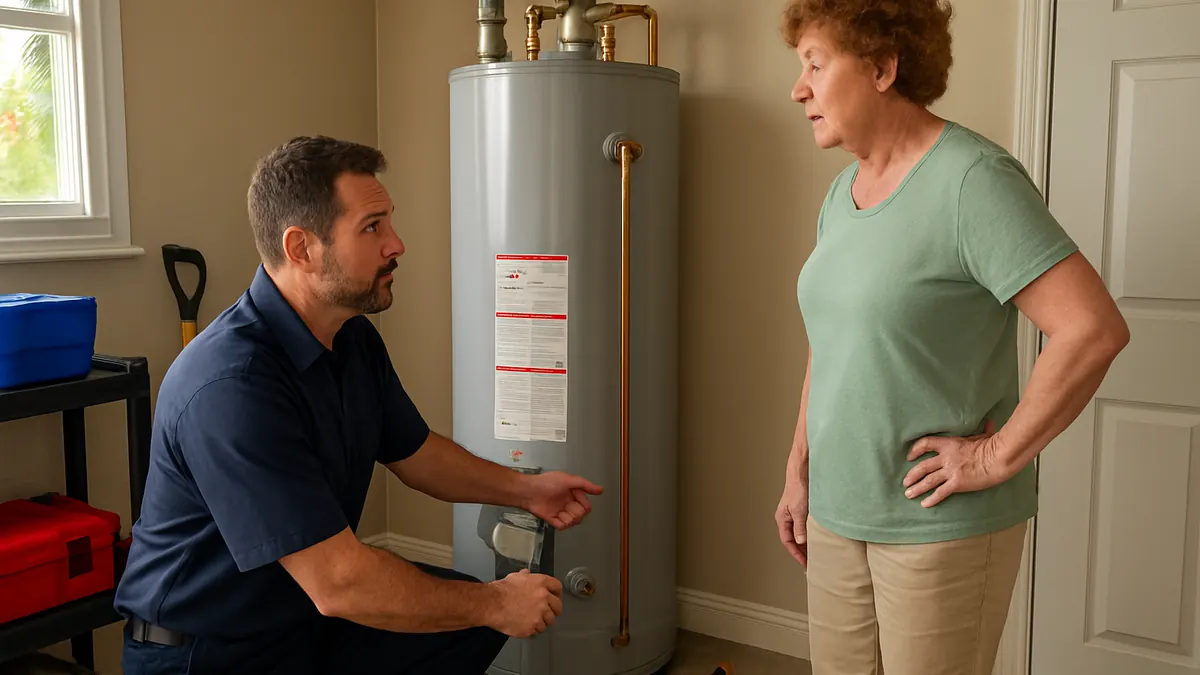
Stop and call for qualified help when plumbing water is near electrical equipment, sewage is entering occupied space, gas or burning odors are present, or a repair would require opening pressurized piping.
You step into the shower expecting steady hot water, but the temperature fades after only a few minutes. Later, you hear the water heater cycling more often than usual or notice moisture near the base. For a homeowner in Latitude Margaritaville Watersound, the question is whether a practical repair will restore dependable service or replacement will prevent another interruption.
Keep the area around the heater clear. If water is spreading, you smell gas, the unit is producing steam, or moisture is near electrical components, stop using it and call for help. Do not remove access panels or patch the tank. A failed thermostat, element, valve, or connector may be repairable, while a leaking tank or severely deteriorated unit usually calls for replacement.
Start With the Symptom, Not the Age
Age is useful information, but it should not decide the issue by itself. A plumber also considers the source of the problem, tank condition, parts availability, repair history, and whether the heater still meets household demand.
A relatively young heater with a failed element may be a good repair candidate. An older unit may also be worth repairing if the tank is sound and the problem is limited to one serviceable part. A heater of any age may need replacement if the tank itself is leaking.
What Common Symptoms Usually Suggest
Hot water runs out faster than before
Shortened hot-water time may be caused by a failed lower heating element, sediment, a damaged dip tube, or increased demand. The dip tube directs incoming cold water toward the tank bottom. If it breaks, cold water can mix near the hot-water outlet.
Water is only lukewarm
Lukewarm water may point to a thermostat problem, one failed electric element, a burner or ignition issue, or an incorrect setting. If only one fixture has the problem, a shower cartridge or mixing valve may be responsible instead.
The heater makes popping or rumbling sounds
These sounds commonly occur when sediment settles at the bottom of the tank. Water trapped beneath the buildup can boil and create noise. Sediment can reduce efficiency and usable capacity, but noise alone does not prove replacement is necessary.
Water is collecting near the unit
Moisture may come from a supply connection, drain valve, relief valve, nearby pipe, or the tank body. External components may be repairable. A leak through the tank shell generally is not.
Safe Checks You Can Make
Confirm whether the problem affects every hot-water fixture. Note how long hot water lasts, when the problem began, and whether it appears during heavier use.
Look for visible water around top connections, valves, and the base without touching equipment or removing covers. Record the model and serial number to help determine age, capacity, and part availability.
You may observe whether a breaker has tripped, but do not keep resetting it. If the heater is leaking and the shutoff valve is dry and easy to reach, close the cold-water supply. Do not enter standing water or reach near energized equipment.
What Homeowners Should Not Attempt
Do not open electrical access panels, test live terminals, replace elements, or bypass safety controls unless qualified. Water heaters use high voltage, and moisture increases the danger.
- Never cap the temperature-and-pressure relief valve. It releases dangerous pressure or temperature.
- Do not use tape, epoxy, screws, sealants, or clamps on a tank leak. These materials cannot restore a corroded pressure vessel.
- For a gas heater, do not alter the gas valve, burner, vent, draft hood, or combustion-air opening. A unit that appears to operate may still be venting improperly.
Signs That Make the Problem Urgent
Call promptly if water is spreading, the tank is bulging, steam is present, or the hot water is dangerously hot. Repeated relief-valve discharge can indicate high pressure, thermal expansion, excessive temperature, or a faulty valve.
A gas odor, soot, scorch marks, delayed ignition, or disconnected vent also requires immediate attention. Leave the area if you smell gas and contact the appropriate emergency or gas service from a safe location.
Water touching wiring, panels, or outlets is urgent. Do not walk through wet areas to reach a shutoff.
How a Licensed Plumber Diagnoses the Problem
A plumber identifies the heater type, capacity, fuel source, age, and installation condition. The leak source is traced rather than assumed.
For an electric heater, testing may include voltage, element resistance, thermostats, high-limit controls, and wiring. For a gas heater, the inspection may include ignition, burner operation, gas control, combustion air, and venting.
The plumber may also measure temperature and pressure and inspect the relief valve. In a closed plumbing system, heated water expands. If the expansion tank or pressure controls are missing or failing, valves may drip and the heater may experience unnecessary stress.
The recommendation should explain both the immediate failure and the overall condition of the system.
Repair Options From Least Invasive to Most Extensive
The least invasive repair may be correcting a setting, replacing a supply connector, repairing a nearby pipe, or addressing a fixture-specific problem.
Next may come replacement of a thermostat, heating element, ignition part, burner component, drain valve, relief valve, anode rod, or expansion tank. The cause of a failed safety valve should be corrected, not just the valve itself.
Professional flushing may help when sediment affects performance and the tank remains suitable for service. Larger work can include venting changes, electrical repairs, pressure regulation, expansion control, drain-pan improvements, or piping modifications.
Complete replacement is usually recommended when the tank leaks, corrosion is widespread, repeated failures have reduced reliability, or the heater no longer meets demand. A conventional tank may be the most direct replacement. Tankless equipment may also be considered when fuel supply, electrical capacity, venting, demand, and maintenance expectations support it.
Factors That Affect Cost
Repair cost depends on the failed component, heater type, access, diagnostic time, part availability, and whether plumbing, gas, electrical, or venting work is required.
Replacement cost is influenced by capacity, efficiency, fuel type, location, removal, connection changes, drainage protection, expansion control, venting, permits, and required upgrades.
The lowest immediate cost is not always the lowest long-term cost. Repair is valuable when it restores a sound unit. Replacement is better when repair would leave a leaking, severely corroded, or unreliable system in place.
Maintenance That Helps Prevent Early Failure
Inspect around the heater periodically for moisture, rust streaks, or changes in sound. Keep stored items away and keep combustion openings clear around gas units.
Ask whether flushing is suitable for the specific heater and its condition. Anode-rod inspection may help protect the tank. Water pressure and thermal expansion should also be checked if relief valves drip repeatedly.
Changes in recovery time, noise, temperature, or moisture are worth addressing early.
Repair or Replace a Water Heater in Latitude Margaritaville Watersound: The Right Next Step
When deciding whether to repair or replace a water heater in Latitude Margaritaville Watersound, begin with diagnosis rather than age or guesswork. A sound tank with one failed component may deserve repair. A leaking tank, serious corrosion, repeated breakdowns, or inadequate capacity usually makes replacement the more responsible choice.
The right decision restores safe, dependable hot water without paying for a temporary fix that cannot solve the underlying problem.
About this guide: This resource provides general homeowner education, not a remote diagnosis. Actual conditions, code requirements, equipment, and safe repair options must be evaluated at the property.