Stop and call for qualified help when plumbing water is near electrical equipment, sewage is entering occupied space, gas or burning odors are present, or a repair would require opening pressurized piping.
A Lynn Haven homeowner may notice a ceiling stain after an upstairs shower, a cabinet that smells damp, or the sound of water moving when every faucet is closed. The source may be a hidden supply pipe, drain connection, toilet seal, appliance hose, or valve. Stop using the fixture nearest the symptom, move belongings away from the affected area, and determine whether moisture is still spreading. If active water cannot be controlled at a fixture valve, turn off the main water supply when it is safe.
What Causes Water to Leak Out of Sight?
Supply lines may leak continuously, while drain lines usually leak only during fixture use.
Common causes include worn seals, loose joints, cracked hoses, corroded fittings, damaged pipe, and excessive pressure.
Seven Warning Signs of a Hidden Plumbing Leak in Lynn Haven
1. A Ceiling or Wall Stain Changes After Water Use
A stain that darkens after a shower, toilet flush, or sink use may be connected to a drain, supply connection, or fixture seal.
Water may travel several feet before becoming visible. The pipe failure is not necessarily directly behind the center of the stain.
2. Your Water Meter Shows Unexplained Movement
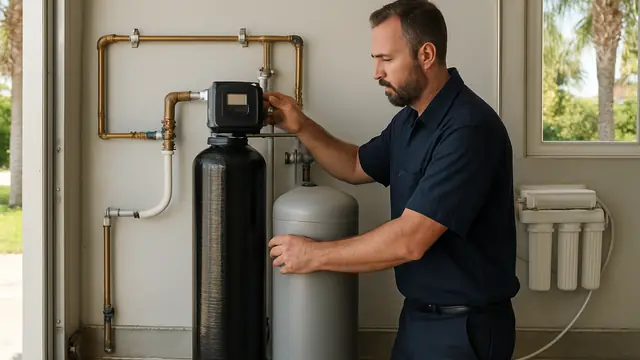
Turn off faucets, irrigation, appliances, ice makers, and water-treatment equipment. Make sure toilets have finished filling. Record the meter reading and use no water for 20 to 30 minutes.
If the reading changes, check toilets and automatic equipment first. Continued movement after those sources are isolated may indicate a concealed supply leak.
3. Baseboards, Cabinets, or Flooring Begin to Swell
Water absorbed into trim, cabinet panels, underlayment, laminate, or wood flooring can cause swelling and separation. Vinyl may loosen, tile may sound hollow, and carpet may feel cool or damp.
Inspect around accessible valves, supply lines, and drain traps. A dry tissue can reveal a slow seep.
4. A Musty Smell Keeps Returning
A recurring musty odor may mean moisture remains inside drywall, insulation, flooring, or cabinetry.
Notice whether the odor becomes stronger after plumbing use or when a cabinet or room has been closed. That timing can help distinguish an intermittent drain leak from a continuously damp area.
5. You Hear Dripping or Hissing With Fixtures Off
Listen when the home is quiet. A faint drip, hiss, spray, or rushing noise near a wall, vanity, toilet, water heater, or appliance connection may indicate escaping water.
A running toilet is a common explanation. Add a few drops of food coloring to the toilet tank and wait without flushing. If color reaches the bowl, the toilet is leaking internally. If the sound continues after fixtures are isolated, hidden piping may require testing.
6. Hot Water Runs Out Faster or the Heater Cycles Frequently
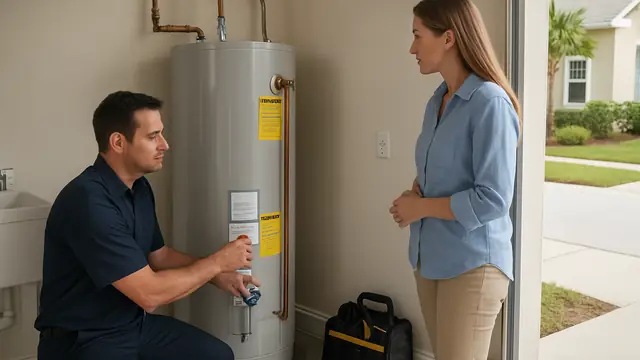
A concealed hot-water leak may cause the water heater to operate more often and reduce available hot water. A nearby floor or wall may also feel unusually warm.
Inspect visible water-heater connections without removing service panels. Water near energized equipment requires professional attention.
7. Water Pressure Drops Across Several Fixtures
The shower may weaken, a tub may fill slowly, or faucets may lose flow when another fixture operates.
Clogged aerators, partially closed valves, and pressure regulators can also reduce pressure. Note how much of the home is affected.
Safe Checks You Can Complete Without Opening the Home
Look under sinks, around toilet bases, behind accessible appliances, near the water heater, and around exposed valves.
Record when moisture appears and which fixture was used. Mark stains and take photographs. Conduct a meter test only after automatic equipment is off.
Close the nearest fixture valve if you find an active connection leak. Use the main shutoff when water is spreading and cannot otherwise be controlled. Stay away from wet electrical outlets, panels, appliances, or ceiling fixtures.
What Homeowners Should Not Attempt
- Do not cut a ceiling, wall, cabinet, or floor based only on the visible damage. Water can travel, and blind demolition may miss the source or damage wiring and other plumbing.
- Do not pour chemical drain cleaner into a fixture because moisture appears nearby. It cannot repair a failed joint and may remain in the line when a plumber opens it.
- Avoid forcing stiff, corroded shutoff valves or overtightening old fittings. Do not treat tape, caulk, or surface epoxy as a permanent repair for a pressurized leak.
Warning Signs That Require Urgent Service
Shut off the water and seek prompt help if a ceiling bulges, water spreads rapidly, flooring lifts, drywall becomes soft, or cabinets begin separating. Keep people away from a sagging ceiling because saturated material can fall.
Moisture near electricity requires immediate caution. Continuous meter movement, sudden pressure loss, repeated water-heater cycling, or an active leak that will be left unattended should also be addressed promptly.
How a Licensed Plumber Pinpoints the Leak
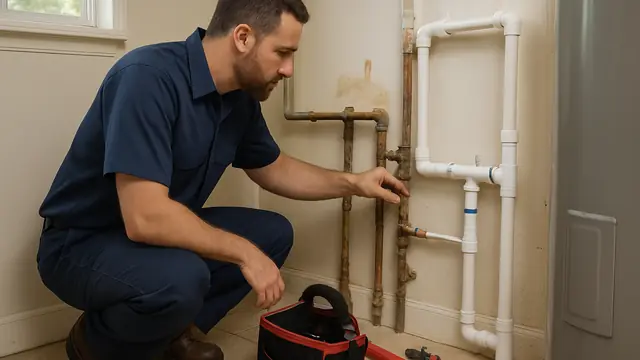
Diagnosis begins with questions about timing, fixture use, water pressure, and meter movement. The plumber may isolate fixtures, test toilets, inspect exposed connections, and compare hot- and cold-water behavior.
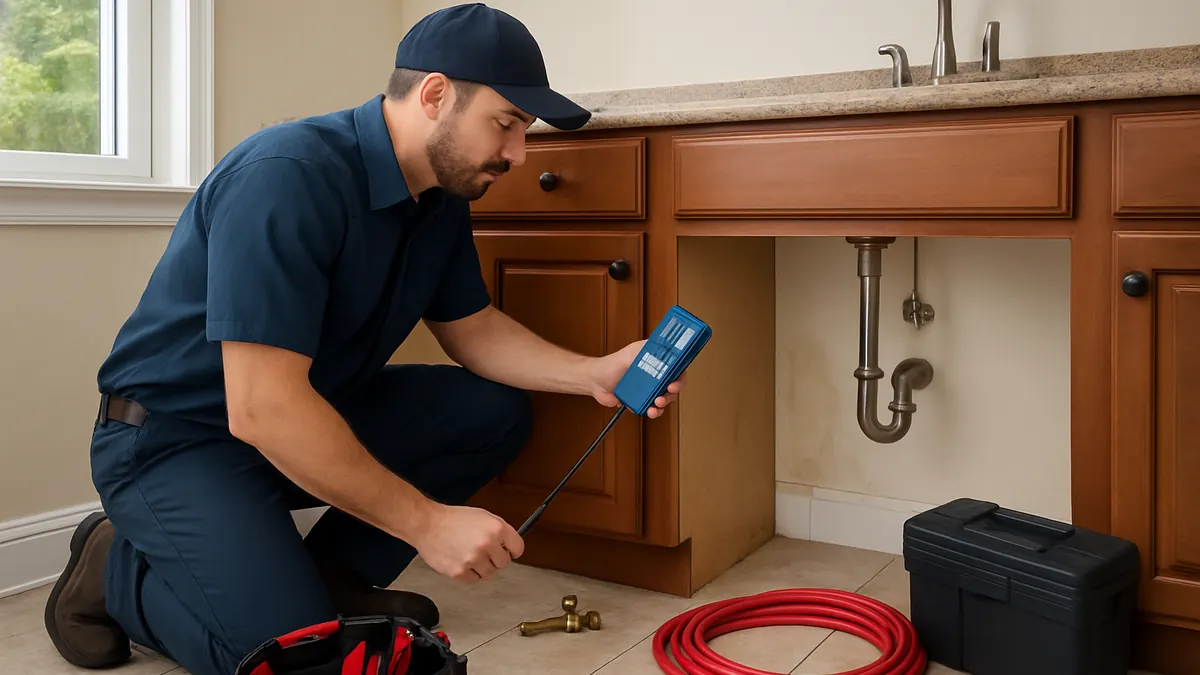
Moisture meters identify damp building materials. Thermal imaging may reveal temperature patterns from hot water or evaporation. Acoustic equipment can help locate pressurized leaks, while a drain camera may be appropriate when moisture appears after wastewater flows.
Repair Options, Starting With the Simplest Solution
A loose connector, appliance hose, sink trap, valve, toilet seal, or water-heater fitting may only require replacement of that component. A failed joint or short damaged pipe section may be repaired through a limited opening.
When a pipe is difficult to reach, rerouting may avoid extensive floor or wall removal. A longer branch can be replaced if damage is not limited to one spot. Partial or whole-home repiping may be recommended when leaks repeat or the piping system shows widespread deterioration.
Factors That Influence Cost
Repair cost depends on the leak's location, pipe material, accessibility, diagnostic work, repair method, and extent of water damage. A visible hose or valve is generally simpler to repair than piping beneath concrete or behind finished surfaces.
Preventing Future Hidden Leaks
Inspect sink cabinets, toilet connections, appliance hoses, and the water heater several times a year. Replace damaged or damp connectors.
Monitor water bills for unexplained changes and perform a meter test when usage seems abnormal. Have excessive water pressure evaluated because it can stress valves and fittings. Keep the main shutoff accessible, label it clearly, and make sure household members know how to use it.
Homeowner FAQs
Can a hidden leak cause damage before I see water?
Yes. Moisture may remain behind finishes or beneath flooring for a significant period before a stain or puddle appears.
Why does the stain only appear after a shower?
That pattern may point to a shower drain, enclosure, seal, supply connection, or nearby piping that leaks only during use.
Can I keep using other plumbing fixtures?
Possibly, but only after the suspected system is isolated. If the source is unknown or the meter moves continuously, limiting all water use is safer.
Does thermal imaging prove where the pipe is broken?
No. It identifies temperature differences that guide further testing. The plumber combines several findings before recommending access.
Is every low-pressure problem caused by a leak?
No. Valves, regulators, aerators, and utility conditions can also reduce pressure. Multiple symptoms provide stronger evidence.
Should wet drywall always be replaced?
That depends on saturation, contamination, damage, and drying time. A qualified restoration professional can evaluate affected materials after the leak is stopped.
Respond to the Warning Signs Before Damage Expands
Seven warning signs of a hidden plumbing leak in Lynn Haven include changing stains, unexplained meter movement, swollen finishes, recurring odors, water sounds, hot-water changes, and pressure loss. Stop using the suspected fixture, document the symptoms, control active water safely, and have a licensed plumber confirm the source before opening walls or floors.
About this guide: This resource provides general homeowner education, not a remote diagnosis. Actual conditions, code requirements, equipment, and safe repair options must be evaluated at the property.