Stop and call for qualified help when plumbing water is near electrical equipment, sewage is entering occupied space, gas or burning odors are present, or a repair would require opening pressurized piping.
You may notice the problem after returning from a trip, preparing a rental for new guests, or walking into the garage and finding water around the heater. Sometimes the leak is obvious. Other times, the only clues are a damp drain pan, a rusty streak, or a puddle that disappears before anyone finds its source.
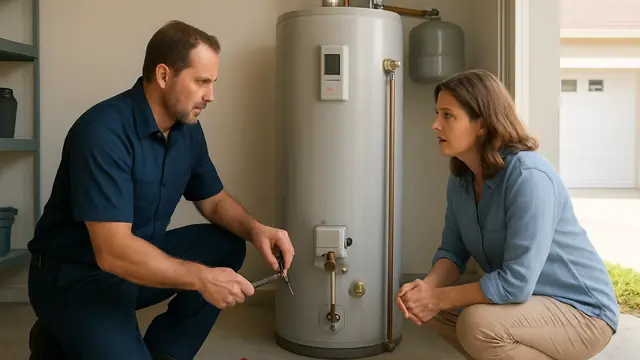
If your water heater is leaking in Miramar Beach, stop using hot water until you know whether the leak is controlled. Move belongings away. If water is spreading and the cold-water shutoff can be reached safely from a dry surface, close it. Do not touch electrical controls or breakers while standing near water. If the heater uses gas and you smell gas, leave the property and contact the gas utility or emergency services from a safe location.
A leak does not always mean the entire heater must be replaced. A connector, valve, gasket, or nearby pipe may be repairable. Water escaping through the internal storage tank, however, usually means replacement is necessary.
Why Is My Water Heater Leaking in Miramar Beach?
Because water travels along pipes and surfaces, the puddle may not be directly beneath the failed component.
Loose or Corroded Top Connections
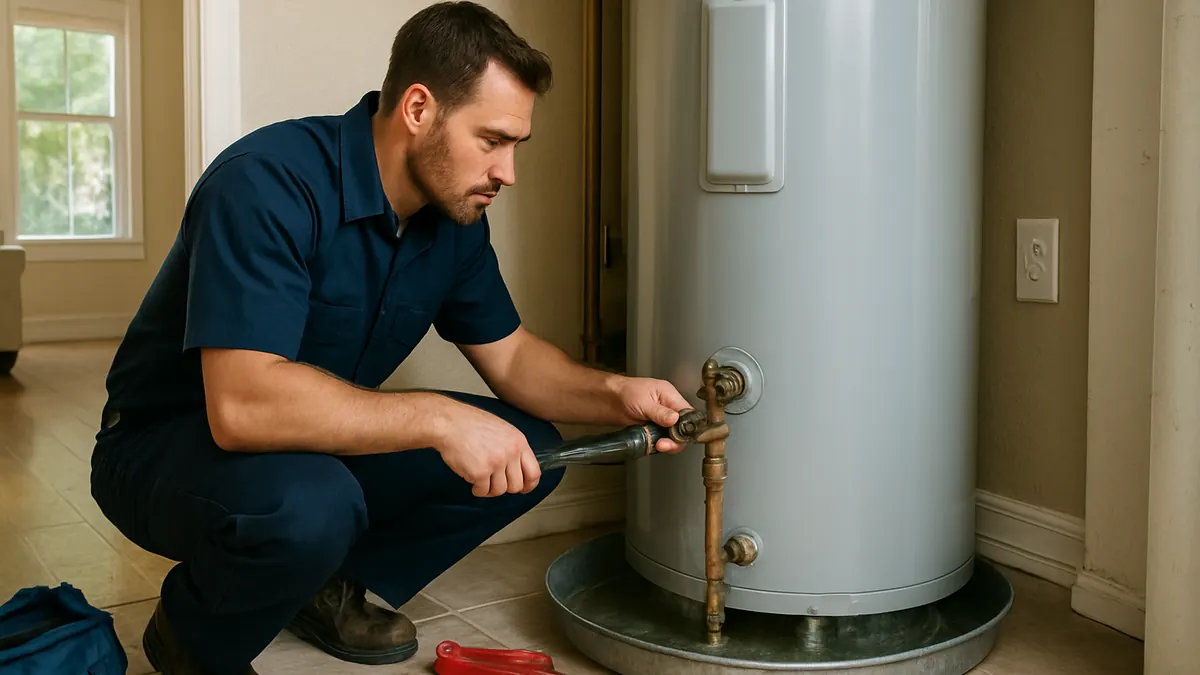
The cold-water inlet and hot-water outlet are usually located at the top of a tank-style heater. Connectors, threaded fittings, unions, and shutoff valves can begin leaking when seals wear or metal deteriorates.
A slow leak may leave white mineral deposits, rust, or a narrow water trail. Moisture can run down the tank jacket and collect underneath, creating the appearance of a bottom leak.
Temperature and Pressure Relief Valve Discharge
The temperature and pressure relief valve, commonly called the T&P valve, is a safety device. It releases water if pressure or temperature inside the tank becomes unsafe.
The valve may drip because its internal seal is worn. It may also be responding to high water pressure, overheating, or thermal expansion. Thermal expansion means water increases in volume as it heats. If the plumbing system cannot absorb that increase, pressure may force water through the relief valve.
Drain Valve Leakage
The drain valve near the bottom of the tank is used when the heater is flushed or emptied for service. Water may leak from the outlet, around the handle, or where the valve connects to the tank.
A drain valve can sometimes be repaired or replaced if the surrounding connection remains sound.
Internal Tank Corrosion
A storage heater has a steel tank protected by an internal lining and an anode rod. The anode rod corrodes before the tank does, but it cannot protect the steel forever.
When the inner tank develops a hole, water may emerge from beneath the outer jacket or around a seam. This type of leak generally requires replacement.
Safe Checks You Can Perform
Use a flashlight and inspect the heater without taking anything apart.
Look at the top connections, cold-water shutoff, visible piping, T&P discharge pipe, drain valve, and drain pan. Check for droplets, rust trails, wet insulation, or crusty deposits.
If the area is safe, dry the visible water and place a paper towel beneath a suspected connection. Watch where moisture returns first. Note whether the leak is constant, occurs after several showers, or appears only while the heater is reheating.
What You Should Not Attempt
- Do not cap or plug the T&P discharge pipe. Preventing a safety valve from releasing pressure can create a dangerous condition.
- Do not remove a drain valve, relief valve, heating element, or gas control from a full and pressurized tank.
- Do not open electric access panels while the circuit is energized or repeatedly reset a breaker that trips while the heater is leaking.
- Do not force a corroded shutoff valve. It can break and release a much larger volume of water.
- Do not apply tape, epoxy, or sealant to the outside of a leaking tank as a permanent repair. These materials cannot restore corroded steel.
Signs That Make the Leak Urgent
Arrange prompt service when the leak is increasing, the shutoff will not stop the flow, or water is reaching walls, cabinets, flooring, ceilings, or electrical equipment.
Repeated discharge of very hot water from the relief pipe is urgent. Other warning signs include steam, scalding tap water, a bulging tank, loud banging with leakage, electrical sizzling, or a burning odor.
If you smell gas, leave the building immediately. Do not operate switches or attempt to locate the source yourself.
A small leak also becomes urgent when the property will be vacant because a slow drip can become a major leak without anyone present.
How a Licensed Plumber Diagnoses the Problem
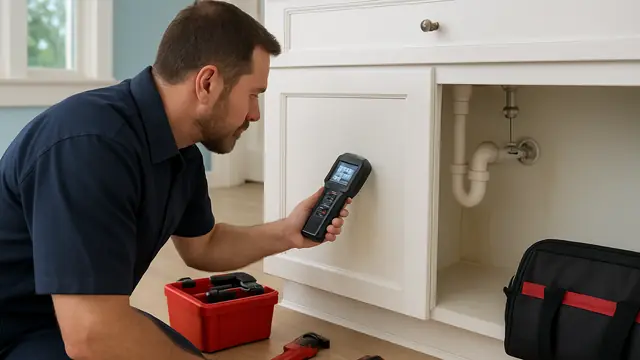
- A licensed plumber controls the water and energy source when necessary, dries the area, and traces fresh moisture to the highest wet point.
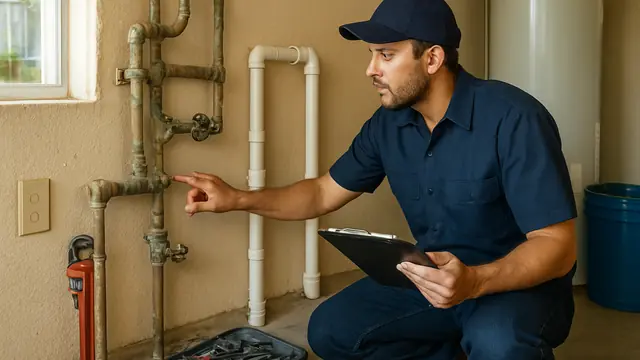
- The plumber inspects each fitting, valve, connector, and nearby pipe. Water pressure may be measured, and the pressure regulator and expansion tank may be evaluated where present.
- For an electric heater, element gaskets and controls may be inspected after power is disconnected. For a gas heater, the burner, gas control, and venting may be checked.
- Rust patterns, water beneath the jacket, and the tank's condition help determine whether repair is dependable or replacement is safer.
Repair Options From Least Invasive to Most Extensive
A loose threaded fitting may need tightening or resealing. A worn connector, union, or shutoff valve can often be replaced without changing the heater.
A leaking drain valve or electric-element gasket may be serviceable when the tank connection is sound.
A defective T&P valve can be replaced after pressure and temperature are tested. If excessive pressure or failed expansion control caused the discharge, the pressure regulator or expansion equipment may need correction.
When the internal tank has corroded through, replacement is usually necessary. Homeowners may compare a conventional storage heater, a higher-efficiency tank, a heat-pump water heater where appropriate, or a properly sized tankless system. The choice depends on hot-water demand, utilities, available space, and maintenance expectations.
Typical Factors Affecting Cost
Cost depends on the failed component, heater type, fuel source, capacity, and accessibility.
Replacing an exposed connector is less involved than removing a failed tank from a tight closet. Venting changes, gas or electrical work, drain-pan replacement, pressure-control repairs, shutoff replacement, and piping corrections can affect the scope. Repairing water-damaged finishes is separate from fixing the heater.
Preventing Future Water Heater Leaks
Inspect the heater area several times a year. Look for rust, mineral buildup, dampness, and water in the drain pan. Keep access to the shutoff clear.
Have household water pressure checked if connectors, valves, or appliance hoses fail repeatedly. Ask a licensed plumber whether flushing, anode-rod evaluation, or expansion-tank service is appropriate for the heater's type and condition.
A leak alarm or automatic shutoff device can provide added protection when the property may sit unoccupied.
Take the Next Step Before Damage Spreads
If you are asking, "Why is my water heater leaking in Miramar Beach?" have the water traced to its true source before deciding between repair and replacement. A fitting, valve, gasket, or pressure problem may be corrected without replacing the entire unit. A corroded internal tank requires a different plan. Prompt diagnosis helps protect the heater and the materials around it.
About this guide: This resource provides general homeowner education, not a remote diagnosis. Actual conditions, code requirements, equipment, and safe repair options must be evaluated at the property.