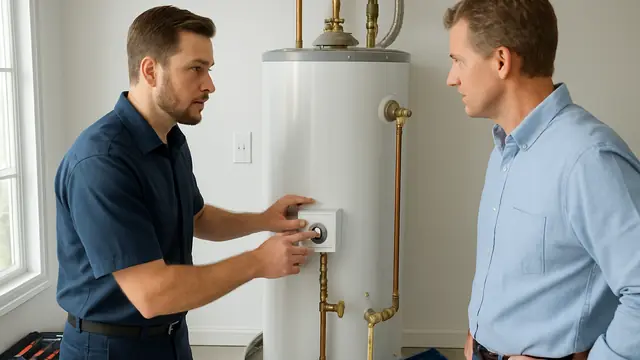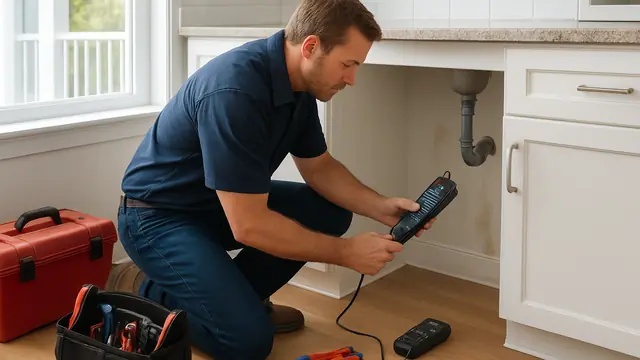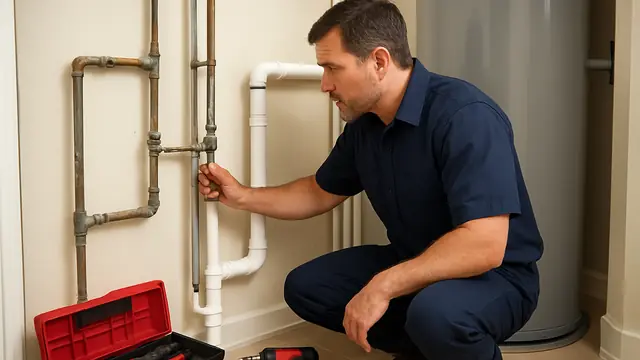
Stop and call for qualified help when plumbing water is near electrical equipment, sewage is entering occupied space, gas or burning odors are present, or a repair would require opening pressurized piping.
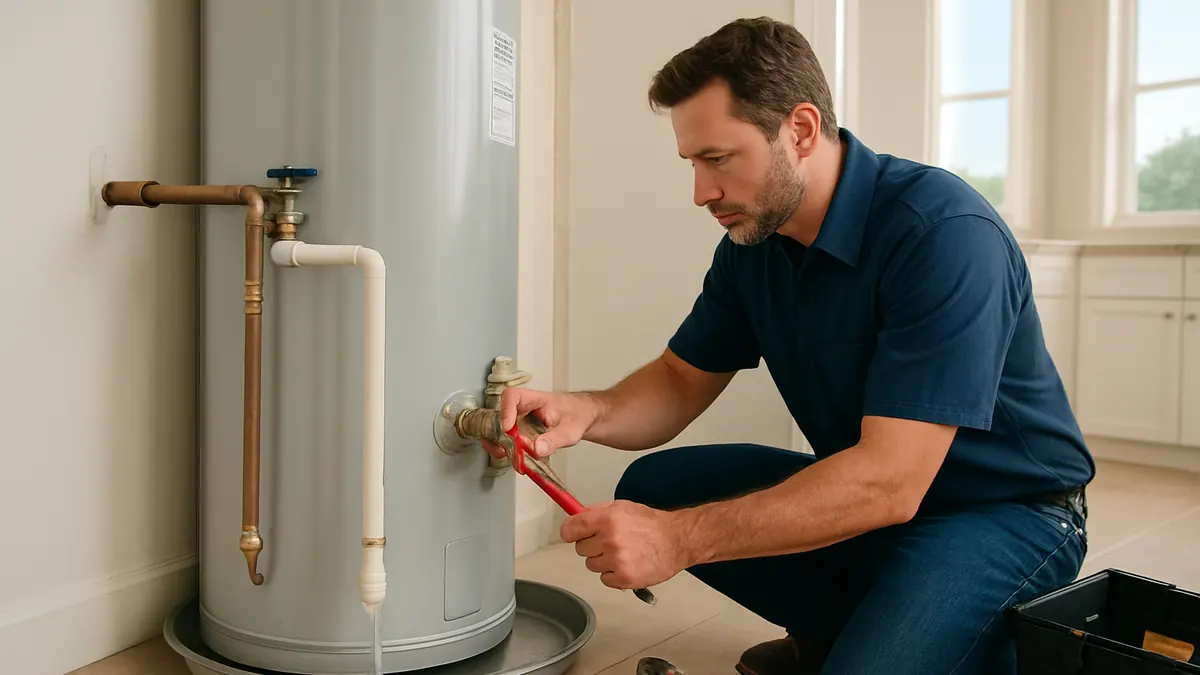
You walk into the garage, utility closet, or mechanical room and notice a small puddle near the water heater. Maybe the floor is only damp. Maybe water is running steadily from the bottom of the tank. Either way, a leaking water heater in a 30A home should not be ignored.
Keep people away from the wet area and determine whether water is actively spreading. If the leak is significant, shut off the cold-water supply valve above the heater if you can reach it safely. For an electric unit, turn off the correct breaker only if the panel and surrounding floor are dry. For a gas unit, do not handle the gas controls unless you know exactly what you are doing.
A water heater leak can come from a loose connection, a pressure-relief discharge, a drain valve, condensation, or a failing tank. The source matters because some problems are repairable while a rusted tank generally is not.
Why Is My Water Heater Leaking in 30A?
The most common causes fall into two categories: water escaping from a fitting or valve, and water escaping through the tank itself.
Loose or Deteriorated Water Connections
Water enters the heater through a cold-water line and leaves through a hot-water line. A threaded fitting, flexible connector, shutoff valve, or nearby pipe joint can begin dripping because of movement, corrosion, worn seals, or improper installation.
A small leak at the top can travel down the side of the tank and collect underneath it. This often makes the tank appear to be leaking from the bottom even when the actual source is several feet higher.
Temperature and Pressure Relief Valve Discharge
The temperature and pressure relief valve, often called the T&P valve, is a safety device. It opens if temperature or pressure inside the tank becomes unsafe.
A brief discharge may occur under certain conditions, but repeated dripping can point to excessive water pressure, thermal expansion, a faulty valve, or a temperature-control issue. The discharge pipe should never be capped or plugged.
Drain Valve Leakage
The drain valve is located near the bottom of most tank-style heaters. It is used during flushing and service. If the valve is loose, damaged, or no longer sealing, water may drip from its opening or around the valve body.
A minor drain-valve leak may be repairable, but the condition of the tank and valve connection must be evaluated before anything is tightened or removed.
Condensation
High hot-water demand can create condensation on the tank or nearby piping. A plumber can determine whether the moisture is harmless condensation or an actual leak.
Internal Tank Failure
Tank-style water heaters contain a steel storage tank protected by a lining and an anode rod. Over time, corrosion can damage that protection. Once water escapes through the tank shell, patching the outside is not a reliable repair.
Water appearing from beneath the jacket, especially when accompanied by rust staining, often indicates tank failure and the need for replacement.
Safe Checks You Can Perform
You do not need to disassemble anything to gather useful information.
First, dry the visible water if it is safe to do so. Place a dry paper towel near suspected areas and watch where moisture reappears. Check the top connections, the shutoff valve, the T&P discharge pipe, and the drain valve.
Look for rust trails, mineral buildup, wet insulation, or water running down the tank. Note whether the leak happens constantly or only after hot water is used.
If water is approaching electrical wiring, a receptacle, a gas control, or stored chemicals, stop checking and move away from the area.
What Homeowners Should Not Attempt
- Do not cap the T&P discharge pipe. That valve protects the tank from dangerous pressure and temperature.
- Do not continue tightening a corroded fitting with excessive force. Old metal connections can crack, and a slow drip can become a fast leak.
- Do not remove a heating element, gas control, drain valve, or relief valve while the tank is full and pressurized.
- Do not use epoxy, tape, or sealant on the outside of a leaking tank as a permanent repair. These products do not restore the tank's structural integrity.
- Finally, do not reset an electric water heater repeatedly if it is leaking. Water and energized components are a serious combination.
Signs the Leak Is Urgent
Treat the situation as urgent when water is flowing continuously, the puddle is expanding, the tank is making popping or rumbling sounds, or water is near electrical equipment.
You should also act quickly if the hot water is unusually hot, the T&P valve is discharging repeatedly, the tank is visibly bulging, or you smell gas near a gas-fired unit. Leave the area and contact the gas utility or emergency services if a gas odor is strong.
In a second home or short-term rental, even a small leak deserves prompt attention because the property may sit unattended between visits.
How a Licensed Plumber Diagnoses the Problem
A licensed plumber begins by identifying the exact source rather than assuming the tank has failed.
The inspection may include checking fittings, valves, water pressure, and signs of thermal expansion. Thermal expansion means water increases in volume as it heats. In a closed system, that extra volume can raise pressure unless expansion control is working properly.
The plumber may also inspect the burner or heating elements, thermostats, venting, drain pan, and surrounding piping.
Repair Options, Starting With the Least Invasive
A loose connection may only need proper tightening or resealing. A worn connector, shutoff valve, or drain valve can often be replaced if the tank is sound.
A faulty T&P valve can also be replaced, but the plumber should first determine why it was discharging. Excessive pressure may require pressure-regulating or expansion-control correction.
When the internal tank is leaking, replacement is usually the appropriate option. The homeowner can then compare a conventional tank, a high-efficiency tank, or a properly sized tankless system based on hot-water demand, available utilities, installation conditions, and future plans for the property.
What Affects the Cost?
Cost depends on the source of the leak, accessibility, the condition of nearby piping, the type and size of the heater, and whether water damage has affected the platform, drain pan, wall, or floor.
A simple connector replacement is very different from replacing a tank in a tight closet. Venting changes, electrical upgrades, gas-line work, drain-pan replacement, expansion control, and code-related corrections can also affect the scope.
The most useful estimate comes after the leak source and installation conditions are confirmed.
Preventing Future Water Heater Leaks
- Have the water heater inspected periodically, especially before long periods when the property will be unoccupied.
- Check the drain pan and confirm its drain line is open where one is installed. Look for early rust, dampness, or mineral deposits around fittings.
- Water pressure should also be checked. Excessive pressure can shorten the life of valves, connectors, fixtures, and the heater itself.
Take the Next Appropriate Step
If you are asking, "Why is my water heater leaking in 30A?" the next step is to identify the source before the leak damages surrounding materials or interrupts hot-water service. Some causes are small and repairable. Others indicate internal tank failure. A professional diagnosis helps you choose the least invasive reasonable solution.
About this guide: This resource provides general homeowner education, not a remote diagnosis. Actual conditions, code requirements, equipment, and safe repair options must be evaluated at the property.