Stop and call for qualified help when plumbing water is near electrical equipment, sewage is entering occupied space, gas or burning odors are present, or a repair would require opening pressurized piping.
You may first notice the problem when the hot water does not last as long as usual. Then you find moisture around the water heater, hear a faint hissing sound, or see water collecting in the drain pan. In another home, the first clue may be a ceiling stain below the heater or a musty smell near a utility closet.
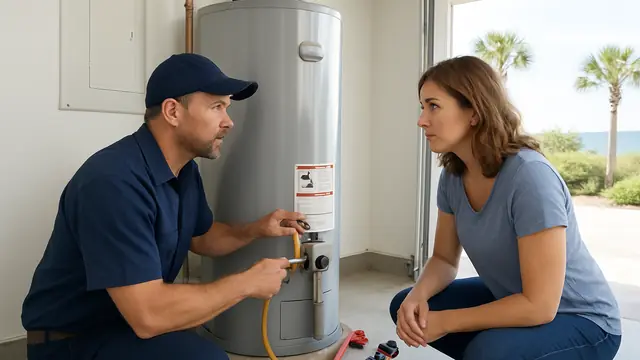
If your water heater is leaking in Blue Mountain Beach, act before trying to decide whether the unit can be repaired. Stop using hot water. Keep children, pets, and stored items away from the wet area. If water is actively flowing and the cold-water shutoff is easy to reach, close it. If the floor is wet near electrical equipment, do not enter the area to operate switches or breakers.
The leak may be minor, but it can also signal tank corrosion, excessive pressure, or a failed safety component.
Start by Identifying the Type of Leak
A useful first question is whether the water is coming from the plumbing attached to the heater or from the heater itself.
Plumbing leaks include loose connectors, worn valves, failed joints, and nearby pipes. Equipment leaks include a leaking drain valve, a discharging relief valve, or a damaged storage tank.
Common Reasons a Water Heater Leaks
Failing Supply Connections
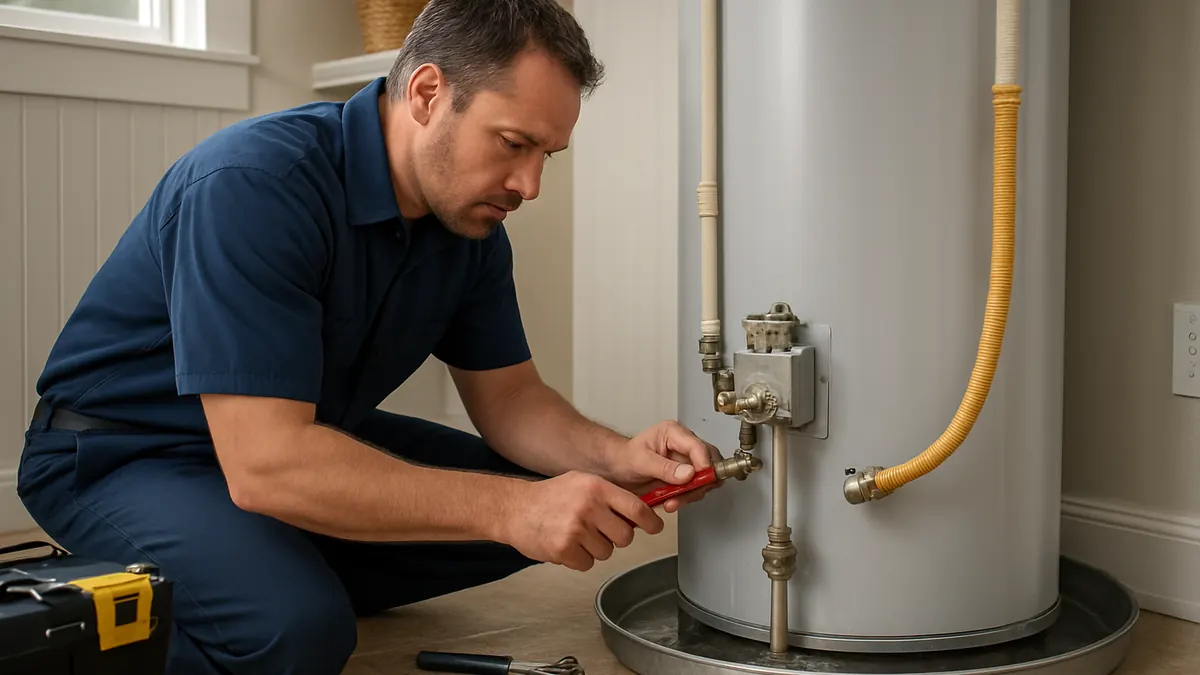
The cold inlet and hot outlet connections carry pressurized water. Gaskets, threaded joints, dielectric unions, and flexible connectors can deteriorate.
Mineral deposits around a fitting often show that a leak has existed longer than the homeowner realized.
Pressure Problems and Thermal Expansion
Water expands as it heats. In some plumbing systems, a check valve, pressure regulator, or other device prevents expanded water from moving back toward the water supply. The pressure then needs to be managed within the property's plumbing system.
If expansion control is missing, undersized, waterlogged, or otherwise not functioning, pressure can rise. That pressure may cause the T&P valve to drip or expose weak fittings.
A Worn Temperature and Pressure Relief Valve
The T&P valve protects the tank from unsafe conditions. It can leak because it is defective, but it may also be doing its job.
Replacing the valve without testing pressure and temperature can leave the true cause unresolved.
A Damaged Drain Valve
The drain valve is used to remove water and sediment during service. Plastic or metal valves can begin leaking at the stem, outlet, or tank connection.
Sediment and Internal Corrosion
Minerals and debris can settle in the bottom of a storage tank. Sediment may contribute to noise, reduced efficiency, and uneven heating.
The steel tank is protected by a lining and an anode rod, but that protection does not last forever. Once corrosion penetrates the inner tank, water may escape beneath the outer jacket.
Safe Checks Before the Plumber Arrives
- Observe the heater without touching hot or energized components.
- Use a dry towel to remove standing water if the area is safe. Then watch where the first new drop appears.
- Check the top connections, the cold-water shutoff valve, the relief discharge pipe, and the drain valve. Look for rust marks, moisture trails, or white crusty deposits.
- Note whether the heater is gas or electric, whether the leak is constant, and whether it becomes worse after showers or appliance use.
- Check nearby plumbing as well. A washing-machine hose, air-conditioning drain, water-treatment connection, or pipe above the heater can create misleading water patterns.
Repairs Homeowners Should Avoid
- Do not remove the relief valve or block its discharge.
- Do not place a screw, cap, or plug in a dripping pipe to stop water.
- Do not apply open flame to a connection. Do not use excessive force on corroded piping.
- Do not drain the heater while it remains energized. Electric elements can fail quickly if they heat without being submerged.
- Do not attempt gas-line or vent repairs without the proper qualifications.
When the Leak Requires Immediate Service
- Immediate service is appropriate when water cannot be contained, the shutoff valve does not work, or the leak is damaging walls, cabinets, flooring, or ceilings.
- Repeated hot-water discharge from the relief pipe is urgent. So are scalding water, a bulging tank, electrical arcing, burning odors, or water around wiring.
- For a gas-fired heater, a gas smell requires leaving the building and contacting the gas utility or emergency services from a safe location.
- A leak in a home that will soon be vacant also deserves quick action. A small problem can cause major damage when no one is present to notice a change.
How a Plumber Determines the Cause
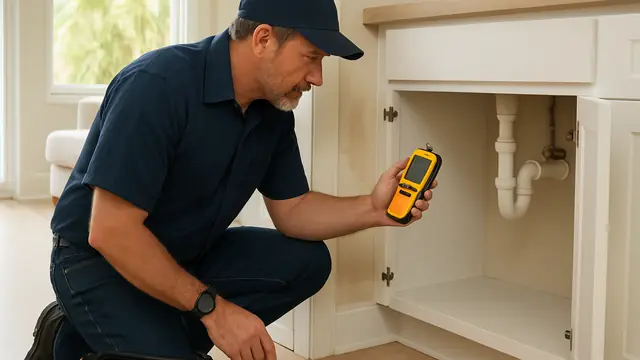
- Diagnosis starts with source tracing. The plumber checks the highest wet point because water often travels downward before pooling.
- The system pressure may be tested. The plumber may inspect the pressure regulator, expansion tank, shutoff valve, relief valve, and all visible connections.
- The drain valve is evaluated for leakage and tank condition. Rust around seams, beneath the jacket, or in the drain pan may indicate internal corrosion.
- The burner and venting or electric elements and controls may also be inspected. The plumber then compares the heater's age and condition with the likely reliability of repair.
Repair and Replacement Options
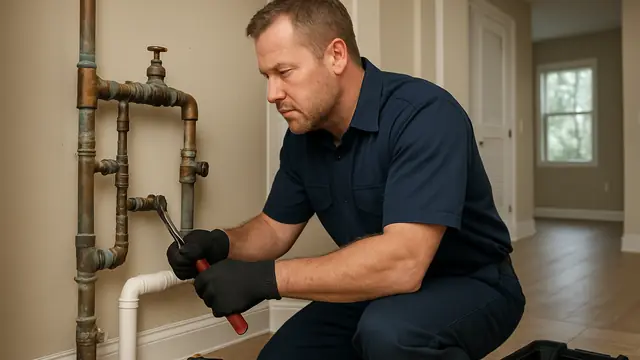
A loose fitting may be resealed. A connector, shutoff valve, or nearby section of piping may be replaced.
A faulty drain valve can sometimes be repaired or changed. A leaking relief valve can be replaced after pressure and temperature causes are addressed.
If an expansion tank has lost its air charge or failed internally, it may need service or replacement. If system pressure is too high, the pressure-regulating equipment may need adjustment or replacement.
When the storage tank has corroded through, replacement is generally necessary. The plumber can help compare a standard tank, higher-efficiency tank, heat-pump water heater where appropriate, or tankless equipment.
The decision should consider hot-water demand, utilities, space, and maintenance expectations.
What Determines the Final Cost?
- The failed part is only one factor. Access, equipment size, fuel type, venting, electrical service, drain routing, and the condition of nearby piping all influence the work.
- A simple valve or connector repair usually involves less labor and material than replacing a tank in a confined location.
- Additional costs may arise when the old shutoff does not work, the drain pan is damaged, water has affected framing or finishes, or installation components need to be corrected.
Preventive Care for Better Reliability
- Inspect the area around the heater several times a year. Do not store items against the tank or over the drain pan.
- Have the water pressure checked, particularly if supply lines, toilet valves, or faucet cartridges fail repeatedly.
- Ask whether the expansion tank is properly sized and functioning.
- Consider a leak alarm or automatic shutoff device. These devices do not replace maintenance, but they can provide warning or reduce water flow after a leak is detected.
Find the Cause, Then Choose the Right Fix
When you are wondering, "Why is my water heater leaking in Blue Mountain Beach?" do not judge the problem only by the size of the puddle. The leak's source, pressure conditions, equipment condition, and location all matter. Early diagnosis gives you the best chance to make a focused repair and avoid unnecessary water damage.
About this guide: This resource provides general homeowner education, not a remote diagnosis. Actual conditions, code requirements, equipment, and safe repair options must be evaluated at the property.