Stop and call for qualified help when plumbing water is near electrical equipment, sewage is entering occupied space, gas or burning odors are present, or a repair would require opening pressurized piping.
You flush the toilet before bed and expect the tank to become quiet within a minute or two. Instead, a soft hiss continues from behind the lid. In the morning, the sound is gone, but the toilet starts refilling again even though no one has used it. If you are asking, "Why does my toilet keep running in Niceville, FL?" the tank may be overfilling or losing water into the bowl.
The immediate safe step is to remove the tank lid carefully, place it on a towel, and observe the water level without forcing any parts. If water is continuously entering the overflow tube or leaking onto the floor, gently close the toilet shutoff valve. Do not force a valve that is stuck, corroded, or beginning to drip.
Why Does My Toilet Keep Running in Niceville?
A toilet relies on two actions after every flush. The flapper must close and seal the tank, and the fill valve must stop incoming water at the correct level. If either action fails, the toilet will hiss continuously, trickle into the bowl, or refill in short cycles.
What the Running Pattern Can Tell You
A steady stream into the overflow tube points toward the float or fill valve. A tank that slowly loses water and refills later usually points toward the flapper or flush-valve seal.
A handle that must be jiggled suggests chain or lever trouble. Water outside the toilet indicates a separate problem that may involve the supply line, tank bolts, cracked porcelain, or base seal.
Most Common Possible Causes
A Flapper That Has Lost Its Shape
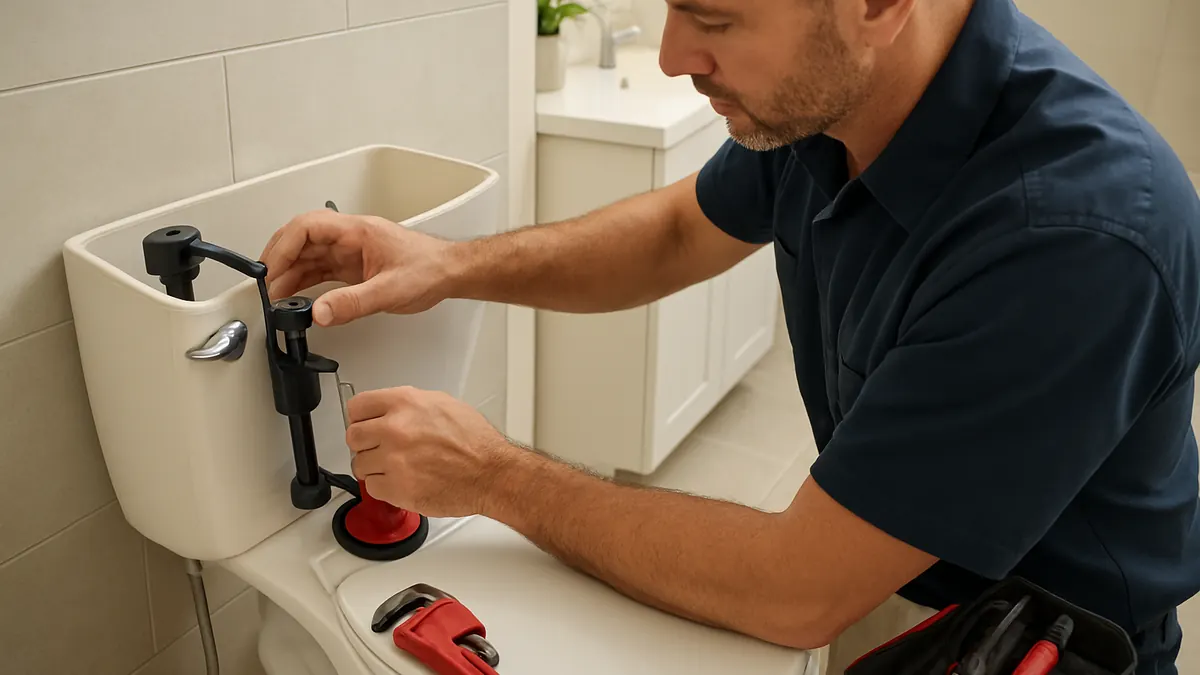
The flapper is the movable seal at the bottom of the tank. Over time, it may harden, warp, tear, or collect material that prevents it from sitting flat.
Even a small gap allows water to pass into the bowl. The tank level falls, and the fill valve turns back on.
A Chain That Pulls or Tangles
The chain needs enough slack to let the flapper close, but not so much that it becomes trapped underneath. Incorrect chain length can cause constant running or incomplete flushing.
A Fill Valve That Cannot Shut Off
The fill valve may wear internally, collect debris, or bind. The result can be continuous hissing, slow filling, or water entering the overflow tube after the tank should be full.
A Float Set Above the Correct Level
The float controls the shutoff point. If it is adjusted too high or cannot move freely, the tank may overfill.
A Sticking Handle
A loose, corroded, or misaligned handle can hold the chain under tension. The flapper may remain slightly open until the handle is moved.
A Damaged Flush-Valve Assembly
A cracked overflow tube, rough flush-valve seat, or worn tank seal may allow water to escape. These repairs can require tank removal.
Safe Checks a Homeowner Can Perform
Watch one complete flush with the tank lid removed. The flapper should lift and then settle evenly. The chain should not bind. The float should rise smoothly, and the fill valve should stop before water reaches the top of the overflow tube.
Perform a food-coloring test when the toilet refills by itself. Add several drops to the tank and wait 15 to 20 minutes without flushing. Color in the bowl confirms internal leakage.
You may gently untangle an obvious chain problem or confirm that the handle returns freely. Stop if a part feels brittle or unfamiliar.
What the Homeowner Should Not Attempt
- Do not pour drain cleaner into the toilet to stop running. The symptom is usually related to the tank, not the drain.
- Do not force the shutoff valve or overtighten supply connections, plastic nuts, or tank bolts. Excess pressure can crack porcelain, strip threads, or create a new leak.
- Do not bend plastic components aggressively or install parts without confirming the correct size and design.
- A cracked toilet tank or bowl should not be repaired with glue or sealant and returned to normal use.
Signs That Make the Problem Urgent
Prompt service is needed when water is escaping onto the floor, the tank is cracked, the supply connection is leaking, or the shutoff valve cannot control active flow.
Stop using the toilet when it moves at the floor, water appears around the base after flushing, the flooring feels soft, or sewage odor is present. These signs can indicate a failed base seal, damaged flange, or floor problem.
If the local valve will not stop active leakage, use the main water shutoff. Keep water away from electrical devices and adjoining rooms.
How a Licensed Plumber Diagnoses the Toilet
A plumber checks the water level and watches the toilet through a complete flush-and-fill cycle. The flapper, chain, handle, float, fill valve, overflow tube, flush valve, tank bolts, supply line, and shutoff valve are inspected.
A dye test or tank-level test can confirm internal leakage. The plumber also checks whether the replacement parts already installed are compatible with the toilet.
Water on the floor requires inspection of the tank-to-bowl gasket, porcelain, supply connection, base seal, mounting bolts, flange, and flooring.
Repair Options Beginning With the Least Invasive
The smallest repair may be a chain adjustment, float adjustment, or correction of a sticking handle.
A worn flapper or defective fill valve can often be replaced from inside the tank. If the flush valve, overflow tube, tank bolts, or tank-to-bowl gasket is damaged, the tank may need to be removed.
A toilet leaking at the base may need to be lifted and reset after the flange and floor are evaluated.
Replacement becomes reasonable when the porcelain is cracked, the toilet is unstable, parts are unavailable, failures are recurring, or several major repairs are required. Replacement is not the first step for one worn flapper.
Typical Factors Affecting Cost
The repair cost depends on the failed component, toilet design, parts availability, accessibility, and the condition of the shutoff valve and supply connector.
Tank removal, corroded bolts, a broken flange, damaged flooring, emergency service, or complete replacement can increase labor. Ask the plumber to explain what diagnosis, parts, testing, removal, and disposal are included.
Prevention and Maintenance Guidance
Listen for brief refill cycles and investigate them early. A toilet does not have to run continuously to waste water.
Inspect the supply tube and shutoff valve for moisture, corrosion, cracks, or bulging. Avoid harsh in-tank cleaners unless specifically approved by the manufacturer. Some products degrade rubber seals and shorten flapper life.
Do not force a sticky handle or continue using a toilet that rocks. Keep the local shutoff and main shutoff accessible.
Restore the Normal Fill-and-Stop Cycle
If you are asking, "Why does my toilet keep running in Niceville, FL?" the most useful first step is to determine whether the tank is overfilling or leaking into the bowl. That information points toward the fill valve and float or the flapper and flush valve.
A simple adjustment may be enough, but visible leakage, cracked porcelain, a failed shutoff, or movement at the floor requires faster attention. Correcting the actual cause stops unnecessary water use and protects the bathroom from avoidable damage.
About this guide: This resource provides general homeowner education, not a remote diagnosis. Actual conditions, code requirements, equipment, and safe repair options must be evaluated at the property.