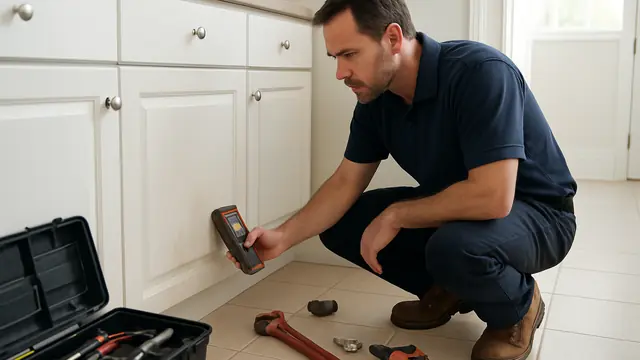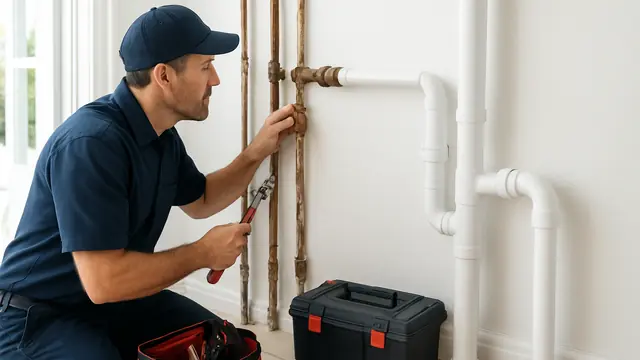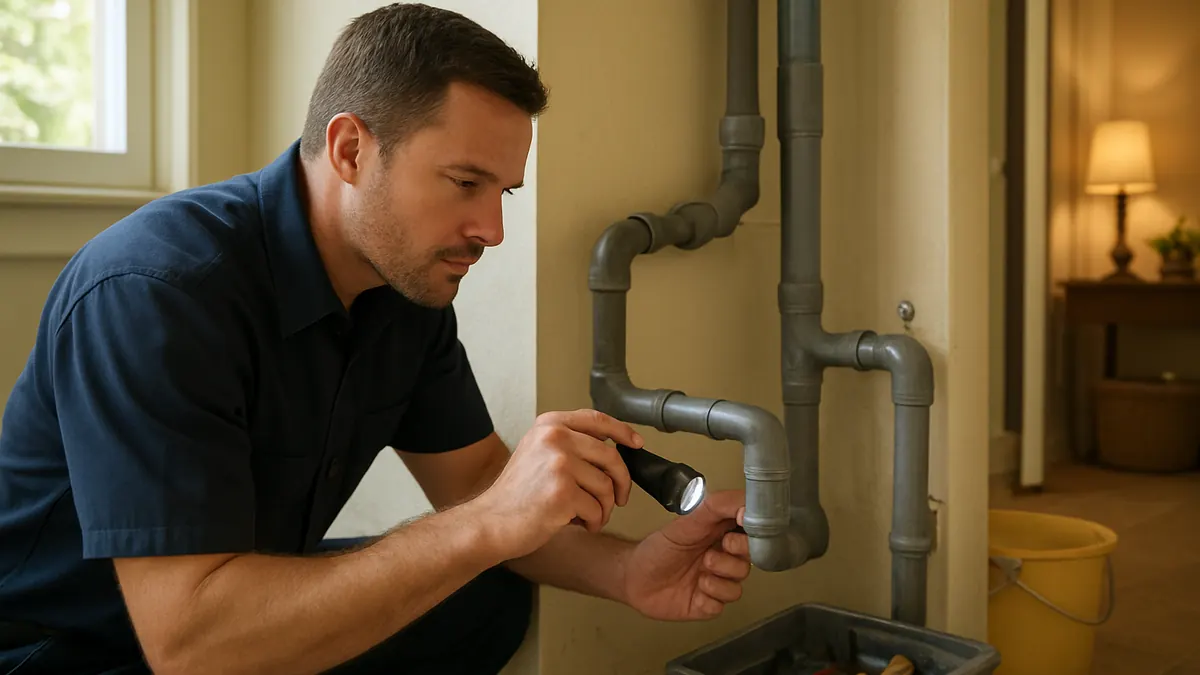
Stop and call for qualified help when plumbing water is near electrical equipment, sewage is entering occupied space, gas or burning odors are present, or a repair would require opening pressurized piping.
A plumber opens an access panel during a bathroom update in your Alys Beach property and finds flexible gray pipe connected with metal rings. You may be unsure whether it is older polybutylene, modern PEX, or simply a short repaired section. Before anyone covers the wall again, pause the project and have the piping identified. Do not bend it, cut a sample, or assume that a clean exterior means it is dependable.
Polybutylene, often called PB, is an older plastic water-supply material commonly installed from the late 1970s through the mid-1990s. It carries pressurized water to fixtures, unlike drainpipe, which carries wastewater away. Because much of it is concealed, an owner may see only a few inches.
Recognizing Polybutylene Without Guessing
The most useful clue is a printed pipe marking. Look for "PB," "PB2110," or a manufacturer name on accessible piping. The material is often gray, blue-gray, black, or silver, although some pipe may appear white. It usually feels flexible and may bend gradually between fixtures.
Do not identify it by color alone. Gray PEX and other plastic materials can be mistaken for polybutylene. A proper identification considers the markings, pipe dimensions, fittings, connection method, and installation history.
Connections may use plastic, copper, or brass fittings with metal crimp rings. Previous repairs can also create a mixture of PB, PEX, and copper.
Where an Alys Beach Homeowner Can Safely Look
Inspect only exposed areas that can be reached without removing finishes.
Under a sink, look behind the shutoff valve where the supply piping enters the wall or cabinet floor. The braided faucet connector is not the material you are trying to identify.
Also inspect visible piping near toilet valves, the water heater, laundry hookups, mechanical closets, and plumbing panels. Stay clear of hot surfaces, gas components, and electrical connections. Photograph markings and fittings, while remembering that a photograph cannot reveal the whole system.
Why Polybutylene Deserves a Complete Evaluation
Polybutylene can weaken through chemical and mechanical stress. Oxidants in treated water may affect the pipe from inside, where deterioration cannot be seen during a cabinet inspection. Stress can also develop near fittings, crimp rings, sharp changes in direction, and sections installed under tension.
The result may be a seep, a split near a connection, or a sudden pressurized leak. Systems do not fail on the same schedule, and a smooth visible section does not prove that hidden branches are sound.
Symptoms That Can Accompany Aging Supply Piping
Watch for discoloration on walls or ceilings, swollen baseboards, loose flooring, damp cabinet bottoms, musty odors, or water sounds after fixtures are turned off. An unexplained increase in metered water use can also justify investigation.
Staining and low pressure have several possible causes. The more important pattern is repeated supply leakage when gray flexible piping is already known to be present.
If water is actively dripping, contain it only when that can be done safely and shut off the main supply. Protect valuables from the area, but do not enter a wet space near electrical equipment.
Safe Checks Before the Plumber Arrives
Confirm that faucets, toilets, appliances, and irrigation are not using water. Check the meter for movement if it is accessible and you know how to read it. Meter movement suggests water is flowing somewhere, but further diagnosis is needed.
Examine cabinet floors, plumbing penetrations, the water-heater pan, and ceilings below wet areas. A dry paper towel can confirm a small seep without pulling on a fitting. Locate the main shutoff, but do not force a corroded or stuck valve during a non-emergency.
What Not to Do With Suspected Polybutylene
Do not attempt to glue it. Common household pipe cement is not an appropriate repair method. Do not use a torch, heat gun, compression patch, or improvised clamp without professional direction.
Avoid tightening crimped or threaded connections simply because moisture is nearby. The water may be traveling from another location, and movement can damage an old fitting.
Do not let a renovation conceal suspected polybutylene before its extent is documented. Closing an access opening may create added repair costs later.
When Identification Becomes Urgent
Active spraying, a ceiling that is bulging, water around electrical components, widespread flooring damage, or rapidly increasing meter movement requires urgent service. Turn off the water when it can be done safely.
Several past repairs in different rooms also raise concern. Repeated failures may show that the issue is no longer limited to one fitting.
Identification should also occur promptly before a major remodel. New cabinets, tile, wall finishes, or built-ins can make later pipe access more disruptive. Evaluating the system first helps coordinate plumbing and finish work intelligently.
How a Licensed Plumber Confirms Polybutylene
The plumber examines markings, flexibility, fitting styles, connection rings, and accessible routing. The age of the structure and records of renovations or repairs can provide context, but the material itself must be confirmed.
The inspection may include cabinets, mechanical areas, accessible cavities, and previous repair locations. Moisture meters, a small inspection opening, or a camera may help when routing is uncertain. The plumber then determines whether PB is widespread, limited, or already partially replaced.
Repair Options From Least to Most Extensive
A localized repair is the least invasive option when a single damaged area is clearly identified and the surrounding system can reasonably remain in service. The failed portion may be removed and transitioned to approved modern piping.
A planned partial repipe can replace one defined branch, bathroom group, or accessible section. This can be practical when the remaining system is different material or when the polybutylene is limited.
A complete repipe replaces the home's pressurized supply network with a modern approved material such as PEX or copper. New lines are routed through carefully selected access points. Old pipe may be disconnected and left concealed when removal would cause unnecessary damage.
Leak alarms, automatic shutoff valves, and pressure-control improvements may be recommended with any option. These protections can limit damage, but they do not make weakened pipe new again.
What Affects the Project Cost
Major factors include the amount of polybutylene present, fixture count, property layout, accessibility, routing, number of levels, material selection, permits, and finish restoration.
Finished wall, ceiling, cabinet, or tile areas may require extra planning. Ask for a written scope distinguishing pipe replacement from restoration and explaining permits, inspections, warranties, and exclusions.
Prevention and Ongoing Protection
Keep records and photographs showing what was found and replaced. Label the main shutoff and keep it accessible. Place leak sensors near vulnerable fixtures and consider a monitored automatic shutoff when the property may be vacant. Have pressure checked after recurring supply-line failures, banging, or unusually forceful flow.
Confirm the Material Before You Cover It or Ignore It
Knowing how to identify polybutylene plumbing in Alys Beach requires more than matching a pipe to a photograph. Look for PB markings, note the fittings, document every accessible area, and have a licensed plumber determine how much of the system remains. Early identification gives you time to compare a focused repair, partial repipe, complete replacement, and water-damage protection before a hidden leak dictates the schedule.
About this guide: This resource provides general homeowner education, not a remote diagnosis. Actual conditions, code requirements, equipment, and safe repair options must be evaluated at the property.