Stop and call for qualified help when plumbing water is near electrical equipment, sewage is entering occupied space, gas or burning odors are present, or a repair would require opening pressurized piping.
You are reviewing an inspection report for a Blue Mountain Beach home and see a note that says, "Possible polybutylene supply piping observed." The report may include a photograph of gray pipe under a sink but no explanation of how much is present. That finding should not be ignored, but it also does not automatically mean the property has an active leak. Your safest next step is to avoid disturbing the pipe, locate the main shutoff, and have a licensed plumber confirm the material and map the accessible system before you make repair, insurance, renovation, or purchase decisions.
Polybutylene, commonly abbreviated PB, is flexible plastic piping used mainly from the late 1970s through the mid-1990s. The concern is not the drain beneath a sink; it is the smaller pressurized piping delivering water to fixtures and appliances.
How to Identify Polybutylene Plumbing in Blue Mountain Beach
Start with markings rather than color. Polybutylene may be gray, blue-gray, silver-gray, black, or white. It often has "PB" or "PB2110" printed along the pipe. These markings are more reliable than appearance because several modern and older piping products can look similar.
PB often forms gentle curves and may connect to plastic, brass, or copper fittings with metal crimp rings. Be alert for transitions: visible PEX or copper may be a repair attached to original PB farther inside the wall. Identification must include both material and extent.
Begin With a Careful Visual Survey
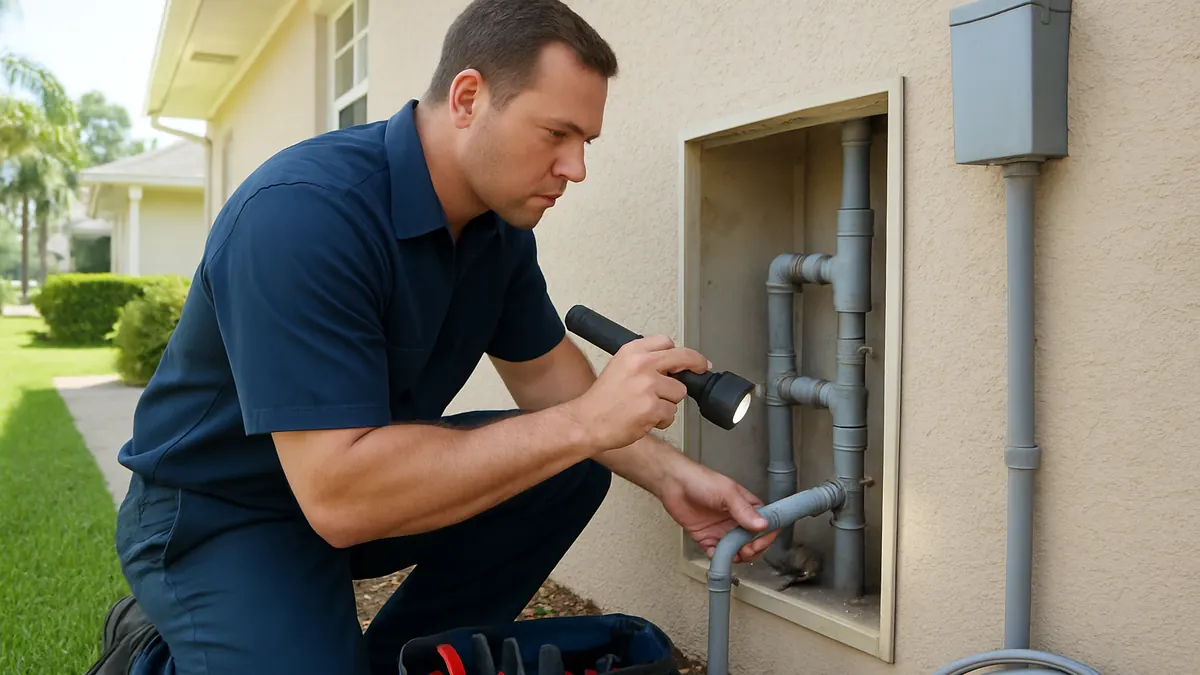
Inspect only areas that are already open and safely accessible. Use a flashlight and take photographs.
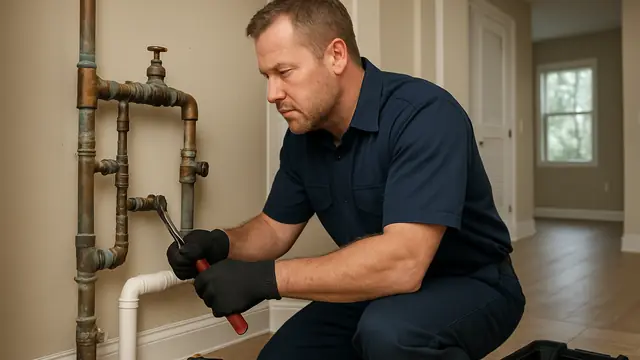
Under sinks, look past braided faucet connectors and shutoff valves to the piping that enters the wall or floor. Near toilets, inspect the pipe behind the fixture shutoff. Check visible lines near the water heater, laundry connections, utility areas, and plumbing access panels.
Compare materials in several rooms because remodeled areas may have newer piping while other branches remain older. Do not remove finishes merely to look. Review invoices, permits, photographs, and repair records; a receipt for one leak repair is not proof of a complete repipe.
Why Apparently Good Polybutylene May Still Need Attention
Polybutylene deterioration may begin on the inside surface. Chemical exposure in treated water can affect the material over time, while physical stress may develop around fittings, bends, crimped connections, and unsupported runs.
Because internal changes are hidden, a pipe can look intact during inspection. Failures range from a slow seep to a split releasing pressurized water. Damage depends on location, discovery time, and how quickly the supply is shut off.
Signs That May Indicate a Supply-Pipe Leak
Possible warning signs include a water meter that moves when all known water use is off, unexplained increases in water consumption, damp cabinet floors, ceiling stains below bathrooms, peeling paint, swollen trim, soft drywall, musty smells, or flooring that changes shape.
A hissing sound inside a wall also deserves investigation. These symptoms do not prove PB failure because toilets, connectors, showers, roofs, and drains can produce similar evidence. Repeated patches involving the same supply material may indicate a broader problem.
Safe Checks a Homeowner Can Complete
Turn off known water uses and observe the meter if it is accessible and familiar. Continued movement can indicate a leak but not its location. Check exposed fittings with a dry paper towel, inspect ceilings below bathrooms and the water-heater area, and locate the main shutoff. Avoid standing water near electrical equipment.
What You Should Not Attempt
Do not cut polybutylene to confirm its identity. Do not flex it to expose printing or tighten an old fitting with extra force. Aged pipe or connectors may break when disturbed.
Do not apply common pipe glue, heat, tape, an improvised clamp, or an incompatible push-on fitting. A temporary-looking patch can fail and may make the eventual repair more difficult.
Avoid assuming that opening a faucet will "relieve" a concealed leak while the main water remains on. It may lower pressure briefly, but water can continue escaping. Shutoff and professional diagnosis are the proper response to active leakage.
When the Problem Requires Urgent Service
Call promptly for spraying water, a rapidly spreading ceiling stain, buckling flooring, a bulging ceiling, wet electrical devices, or meter movement that continues quickly with fixtures off.
Also treat unexplained moisture in multiple locations as urgent even when each area seems minor. Hidden water can damage finishes and building materials before it becomes obvious.
If the piping is discovered during a real-estate transaction, arrange the plumbing evaluation before important decision deadlines. That allows the parties to work from a defined scope rather than a vague note in a general inspection report.
How a Licensed Plumber Diagnoses Polybutylene
A plumber verifies pipe markings, fittings, crimp rings, flexibility, size, and installation pattern. The inspection includes accessible fixture supplies, mechanical areas, service openings, and visible branch lines.
Moisture meters, thermal imaging, limited openings, or inspection cameras may help when routing is unclear. Findings should document whether PB is isolated, partially replaced, or widespread, along with leaks, repairs, shutoff condition, and pressure concerns.
Repair Choices Starting With the Least Invasive
For one clearly isolated failure, a localized repair may be appropriate. The damaged section can be removed and transitioned to an approved material with compatible fittings.
A partial repipe may be considered when PB is limited to a particular room, fixture group, or accessible branch. The proposal should explain exactly what will remain.
A complete repipe is often evaluated when polybutylene serves much of the home, especially after repeated leaks. New approved piping, commonly PEX or copper, is routed to the fixtures through planned access points. Old piping may be abandoned in place after disconnection when removing it would cause unnecessary destruction.
Leak sensors, an automatic main shutoff, and pressure regulation can be added for protection. They can reduce the severity of future water events, but they are not substitutes for replacing deteriorated piping.
Factors That Influence Cost
Pricing depends on how much piping is present, the number of fixtures, home layout, access, routing, number of levels, material choice, permits, inspections, and finish restoration.
Finished cabinets, tile, and ceilings may require added planning. A detailed proposal should state what is included, expected openings, restoration responsibility, permits, inspections, cleanup, and warranties.
Prevention and Maintenance After Identification
Keep photographs and written findings with repair, permit, and material records. Keep the main shutoff accessible. Install leak alarms at vulnerable points and consider monitored automatic shutoff protection for an intermittently occupied property. Have pressure checked after repeated connector failures, banging, or unusually forceful flow.
Replace Uncertainty With a Documented Plumbing Plan
Learning how to identify polybutylene plumbing in Blue Mountain Beach means confirming more than one gray pipe in a photograph. Verify markings, inspect multiple accessible areas, review repair records, and determine how much of the home is affected. When the scope is clear, you can choose an isolated repair, partial repipe, complete repipe, or additional leak protection based on the actual system rather than assumptions.
About this guide: This resource provides general homeowner education, not a remote diagnosis. Actual conditions, code requirements, equipment, and safe repair options must be evaluated at the property.