Stop and call for qualified help when plumbing water is near electrical equipment, sewage is entering occupied space, gas or burning odors are present, or a repair would require opening pressurized piping.
You may notice flexible gray pipe while checking a damp cabinet, replacing a shutoff valve, or preparing your Santa Rosa Beach home for sale. A plumber or inspector may say it could be polybutylene. That does not prove an active leak, but the material should be identified before it is covered or disturbed. Leave it alone, photograph visible markings, check for moisture, locate the main shutoff, and schedule a licensed plumbing inspection.
Polybutylene, commonly abbreviated PB, is an older plastic water-supply material that was widely installed from the late 1970s through the mid-1990s. It carries pressurized hot and cold water to plumbing fixtures. It is not the larger drainpipe beneath a sink, the braided connector attached to a faucet, or outdoor irrigation tubing.
How to Identify Polybutylene Plumbing in Santa Rosa Beach
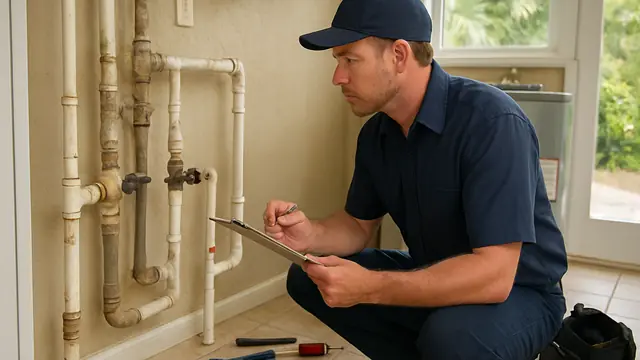
The most reliable visible clue is printed wording on the pipe. Look for "PB," "PB2110," or a manufacturer name. Polybutylene is often gray, silver-gray, blue-gray, black, or occasionally white. It is flexible and may form sweeping curves through cabinets or utility spaces.
Color by itself is not enough. Some PEX products and other plastic piping can look similar. A plumber considers the printed markings, pipe diameter, flexibility, fitting style, crimp rings, and installation pattern before confirming what the material is.
PB may connect to plastic, brass, or copper fittings. Metal crimp rings are common around those connections. Prior repairs may leave short sections of PEX or copper connected to older PB just inside a wall, so the first material you see may not represent the rest of the branch.
Where a Homeowner Can Safely Look
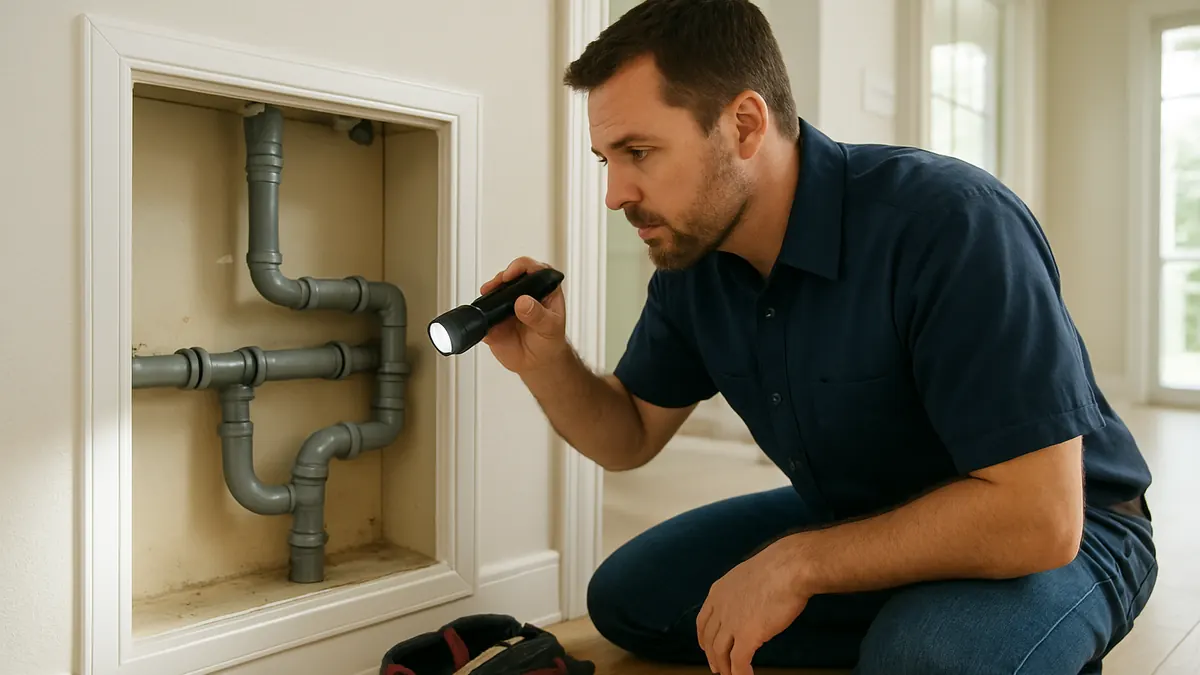
Use a flashlight and inspect only accessible areas. Under sinks, look beyond the braided connector and shutoff valve to the pipe entering the wall or cabinet floor. Also check visible piping near toilet shutoffs, the water heater, laundry hookups, utility areas, and access panels.
Photograph markings, fittings, and transitions. Check several rooms because a remodeled bathroom may contain PEX while other branches retain older pipe. One modern connection does not prove a complete repipe.
Why Polybutylene Can Develop Leaks
Polybutylene can deteriorate internally over time. Oxidants in treated water may contribute to changes in the pipe wall that are hidden. An exposed section may look smooth and dry even when hidden areas have begun to weaken.
Mechanical stress can also increase risk. Tight bends, unsupported runs, crimped fittings, and pipe installed under tension may become vulnerable points. Leakage may begin as a small seep around a fitting or develop suddenly as a split in a pressurized line.
Not every PB system fails on the same timeline. The purpose of an inspection is not to predict an exact failure date. It is to determine what material is present, how much remains, whether there is evidence of leakage, and what options are reasonable.
Symptoms That May Point to a Supply-Pipe Problem
Warning signs include damp cabinets, ceiling or wall stains, swollen trim, peeling paint, soft drywall, loose flooring, musty odors, or water sounds when fixtures are off. Unexplained water use also deserves investigation, although toilets, appliances, water heaters, and irrigation can produce similar symptoms. Repeated supply-line repairs in different rooms are more concerning than one isolated fitting leak.
Safe Checks You Can Perform
Turn off known water uses and observe the meter if it is safely accessible and you understand it. Continued movement shows water is flowing but does not identify the source.
Use a dry paper towel around exposed fittings without pulling or twisting them. Inspect cabinet bases, ceilings below bathrooms, the water-heater area, and nearby flooring. Keep the main shutoff accessible. During an active leak, close it only when safe, and stay away from water near electrical equipment.
What You Should Not Attempt
Do not bend the pipe to reveal printing, cut out a sample, scrape the surface aggressively, or tighten an old fitting with extra force. Disturbing aged pipe may turn a slow seep into a larger leak.
Do not apply household glue, tape, heat, sealant, or an improvised clamp to a pressurized water line. Polybutylene repairs require approved materials and compatible transition fittings.
Do not assume that a short section of newer pipe means the entire home was repiped. Ask for invoices, permits, photographs, or a written scope showing exactly what was replaced.
Signs That Make the Situation Urgent
Active spraying, rapidly spreading stains, a sagging or bulging ceiling, buckled flooring, or moisture near electrical components requires immediate attention. Shut off the water when safe and request urgent plumbing service.
Fast meter movement after all known water use has stopped can indicate a significant hidden leak. Multiple damp areas, repeated line failures, or a main shutoff that will not operate also require prompt evaluation.
If suspected PB is discovered during a renovation, have it inspected before new drywall, cabinets, tile, or flooring are installed.
How a Licensed Plumber Diagnoses the System
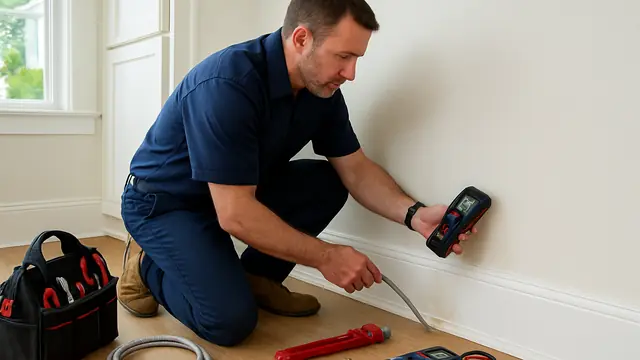
A licensed plumber examines markings, pipe size, flexibility, fittings, crimp rings, and transition points in several accessible areas. Moisture meters, thermal imaging, inspection cameras, or selected openings may help locate dampness or trace routing. The plumber may also evaluate water pressure, shutoff operation, and prior leaks. The assessment should state what was found, where it was observed, and whether PB appears isolated or widespread.
Repair Options Beginning With the Least Invasive
A localized repair may be reasonable when one fitting or short section has failed and nearby piping can remain in service. The damaged portion is removed and transitioned to approved modern pipe.
A partial repipe may replace one bathroom group, kitchen branch, laundry branch, or another defined section. This option may make sense when PB is limited or when prior renovations already replaced much of the system.
A complete repipe replaces the pressurized hot- and cold-water distribution piping with an approved material, PEX or copper depending on the property and project requirements. New routes and access points are planned to limit unnecessary disruption. Old PB may sometimes be disconnected and left concealed when removal would create unnecessary damage.
Leak sensors, automatic shutoff devices, and pressure regulation can add protection, but they do not restore aging pipe.
Factors That Affect Cost
Cost depends on the amount of PB present, fixture count, property layout, number of levels, accessibility, routing, selected replacement material, permits, inspections, and finish restoration.
Cabinetry, tile, drywall, ceilings, and flooring may affect access. A written proposal should explain the plumbing scope, expected openings, restoration responsibilities, warranties, cleanup, and exclusions.
Prevention and Maintenance Guidance
Keep the main shutoff labeled and accessible, and make sure responsible occupants know how to respond. Place leak sensors near the water heater, washing machine, dishwasher, and sink cabinets. Consider monitored detection or an automatic shutoff for an unoccupied property. Have pressure checked after banging pipes, unusually strong flow, or repeated connector failures, and retain all inspection and repair records.
Confirm the Material Before a Hidden Leak Makes the Decision
Learning how to identify polybutylene plumbing in Santa Rosa Beach requires more than finding one gray pipe under a sink. Confirm the markings, inspect several accessible locations, review previous work, and determine how much of the system remains. A licensed plumber can explain whether a focused repair, partial repipe, complete replacement, or added leak protection is appropriate. A documented plan gives you more control than waiting for concealed pressurized piping to fail.
About this guide: This resource provides general homeowner education, not a remote diagnosis. Actual conditions, code requirements, equipment, and safe repair options must be evaluated at the property.