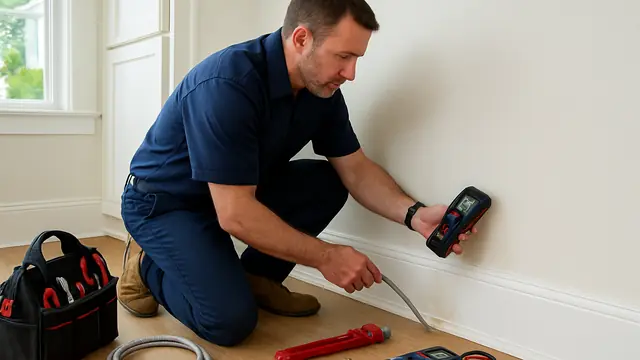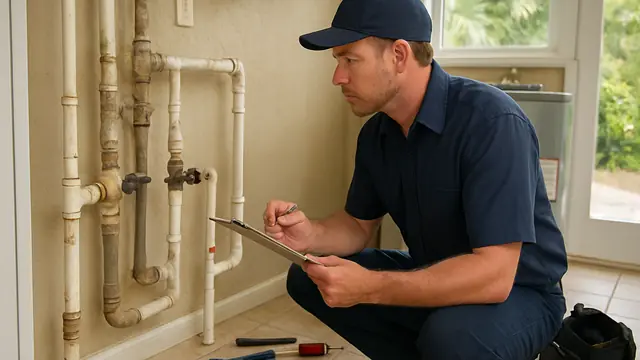
Stop and call for qualified help when plumbing water is near electrical equipment, sewage is entering occupied space, gas or burning odors are present, or a repair would require opening pressurized piping.
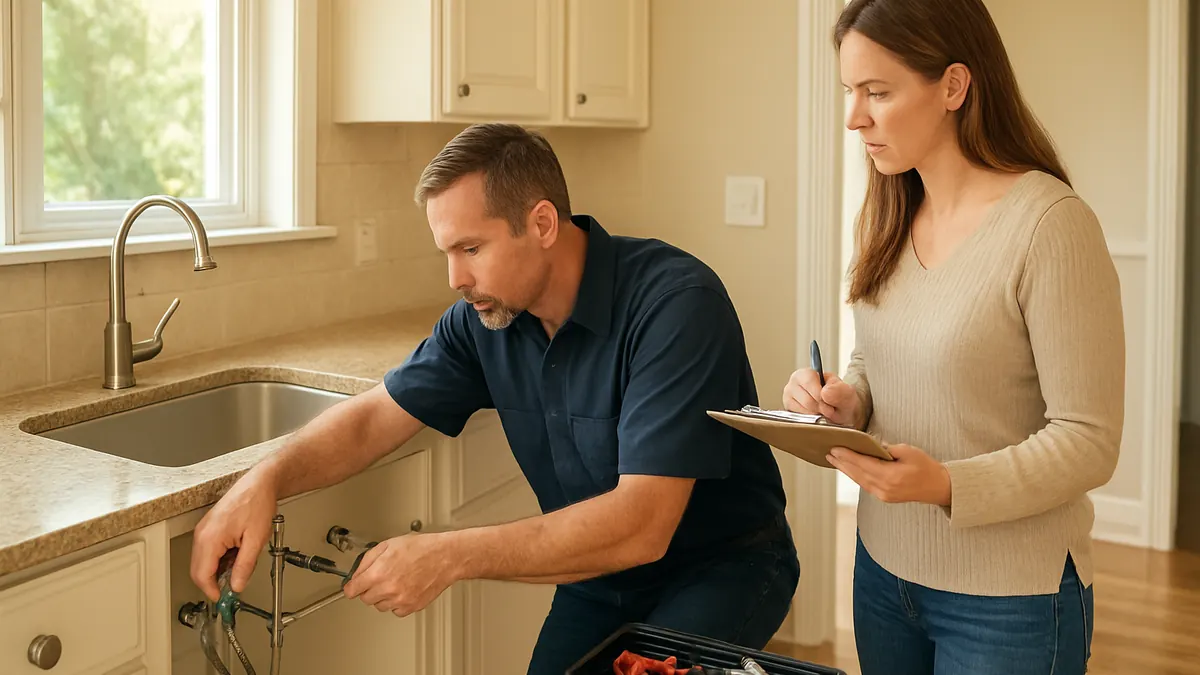
You are touring a home in Santa Rosa Beach when you notice a slow bathroom sink, a toilet that rocks slightly, and a pale stain beneath the kitchen cabinet. The fixtures still work, so it is tempting to treat each item as minor. However, those symptoms can point to a local clog, a damaged toilet seal, an intermittent supply leak, or a repair that did not fully correct the original problem.
Document what you found and stop using any fixture that is actively leaking or backing up. Do not tighten old fittings, force a shutoff valve, remove a toilet, or pour chemical cleaner into a slow drain. Ask for a licensed plumbing inspection before the purchase deadline.
A plumbing inspection checklist before buying a Northwest Florida home in Santa Rosa Beach should evaluate the water service, pressure, visible piping, fixtures, appliance connections, water heater, drains, shutoff valves, and wastewater connection.
Common Plumbing Problems and Repair History
Ask the seller for available repair invoices, remodeling records, water-heater documents, warranties, drain-cleaning receipts, and disclosures involving leaks or water damage. You want to know what symptom occurred, what was repaired, and whether the issue returned.
Locate the Main Water Shutoff
Every buyer should know where the main shutoff is located and whether it can be reached quickly. A plumber can inspect the valve and determine whether it is safe to operate.
Do not force a valve that appears corroded, stiff, damaged, or partly concealed. A neglected valve may begin leaking when turned. Accessible fixture shutoffs should also be reviewed because a failed local valve can turn a simple repair into a whole-house shutdown.
Measure Water Pressure and Observe Flow
A plumber may check static pressure while no water is running and flowing pressure while several fixtures operate.
Excessive pressure can shorten the life of faucet cartridges, toilet fill valves, flexible connectors, appliance hoses, and water-heater components. Low or unstable pressure may result from a partially closed valve, regulator problem, clogged filter, restricted piping, or another supply condition.
If only one fixture has weak flow, the cause may be a clogged aerator or worn cartridge. If pressure drops throughout the home, the problem is likely farther upstream.
Inspect Sinks, Toilets, Showers, and Tubs
Run hot and cold water at every sink. Inspect the faucet base, supply connectors, shutoff valves, trap, disposal connection, cabinet floor, and nearby wall penetrations while water runs and while the basin drains.
Flush every toilet and watch the complete cycle. The bowl should clear, the tank should refill, and the water should stop. The fixture should remain stable. A rocking toilet can damage the seal between the toilet and drain, allowing water or sewer odor to escape.
Run showers and tubs long enough to evaluate drainage, temperature consistency, and nearby surfaces. Water outside a shower can come from a plumbing connection, drain, enclosure, overflow, splash pattern, or waterproofing concern. The source should be identified before a repair is recommended.
Check Laundry and Appliance Connections
Inspect washing-machine hoses, valve boxes, drain connections, dishwasher lines, refrigerator tubing, and accessible ice-maker connections. Look for corrosion, mineral deposits, staining, swollen flooring, or previous patching.
Evaluate the Water Heater
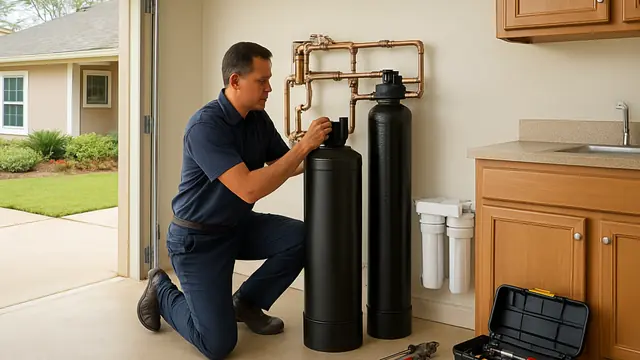
Identify the heater type, approximate age, capacity, energy source, shutoff, relief valve, discharge piping, visible condition, and service access.
A heater can still produce hot water while showing corrosion, leakage, damaged wiring, venting concerns, or control problems. Moisture at the base of a tank-style heater requires prompt evaluation because a leaking tank usually worsens.
Run hot water at several fixtures and note delivery time, temperature changes, unusual sounds, or hot water that runs out too quickly.
Test the Drainage System as a Connected Network
One slow sink often has local buildup. Several slow fixtures, gurgling, toilet bubbling, or wastewater entering a lower shower may indicate a restriction in a shared branch or main line.
When symptoms or repair history justify it, a plumber may recommend drain cleaning and a sewer-camera inspection through a suitable access point. A camera can reveal visible buildup, roots, offsets, damaged sections, standing water, or prior repairs.
Safe Checks a Buyer Can Perform
With permission, you can:
- Run faucets and inspect the cabinets below.
- Flush every toilet and wait for refilling to stop.
- Compare water flow and drainage at several fixtures.
- Look for staining, swelling, or soft flooring.
- Listen for dripping, hammering, hissing, or gurgling.
- Locate the main shutoff and request repair records.
What the Buyer Should Not Attempt
Do not lift toilets, disconnect appliance hoses, open sewer cleanouts, remove water-heater panels, or enter unsafe spaces.
Do not use chemical drain cleaner. It may damage piping, create a service hazard, and move a blockage without explaining why it formed. Fresh paint, caulk, or flooring also does not prove that a leak was corrected.
Signs That Make the Inspection Urgent
Prompt evaluation is needed for active leakage, sewage backup, persistent sewer odor, water near electrical equipment, a leaking water heater, soft flooring around a toilet, sagging ceilings, or unexplained water-meter movement.
Several backed-up fixtures at the same time also require quick attention because they may indicate a main-line restriction.
How a Licensed Plumber Diagnoses the Plumbing
The plumber begins with the symptoms and a visual review. Depending on the evidence, testing may include pressure measurement, meter observation, moisture readings, fixture isolation, pressure testing, drain-flow testing, cleaning, or sewer-camera inspection.
A useful report should separate confirmed defects, likely causes, recommended additional testing, immediate repairs, maintenance items, and optional improvements.
Repair Options From Least Invasive to More Extensive
A minor repair may involve replacing a supply connector, faucet cartridge, toilet fill valve, toilet seal, shutoff valve, trap, appliance hose, pressure regulator, or short accessible pipe section. A localized blockage may only require cleaning.
More involved work may include targeted wall access, branch-line replacement, water-heater repair, recirculation correction, sewer spot repair, or rerouting.
Water-heater replacement, partial repiping, whole-home repiping, or larger drain and sewer work may be appropriate when testing shows broad deterioration, repeated failures, or defects that cannot be repaired reliably.
Factors That Affect Repair Cost
Cost depends on access, pipe material, defect location, diagnostic testing, equipment type, number of affected fixtures, permit requirements, excavation, and restoration.
An exposed connector differs from a leak behind tile, inside a ceiling, or underground. Written estimates should identify whether finish restoration requires another contractor.
Prevention and Maintenance After Closing
Label the main shutoff and important fixture valves. Repair drips promptly, replace deteriorated appliance hoses, and keep grease, wipes, and foreign objects out of drains.
Follow manufacturer guidance for the water heater and any recirculation, filtration, pump, or leak-control equipment. Keep inspection reports, invoices, model numbers, and warranties together.
If the property will sit vacant, arrange regular checks and make sure a trusted person can reach the main shutoff.
Make the Purchase With Better Plumbing Information
A plumbing inspection checklist before buying a Northwest Florida home in Santa Rosa Beach helps separate routine maintenance from active defects and long-term replacement planning. Understanding the pressure, shutoffs, supply lines, fixtures, appliance connections, water heater, drains, and wastewater connection gives you a clearer basis for making a purchase decision.
About this guide: This resource provides general homeowner education, not a remote diagnosis. Actual conditions, code requirements, equipment, and safe repair options must be evaluated at the property.