Stop and call for qualified help when plumbing water is near electrical equipment, sewage is entering occupied space, gas or burning odors are present, or a repair would require opening pressurized piping.
You are finishing hurricane preparations at a Seagrove Beach home when you notice a toilet that runs every few minutes, dampness beneath the water heater, and a shower that drains slowly. None automatically means a major failure, but each can become more damaging if the property is left unattended during a storm.
Stop using any fixture that is leaking or backing up. Close the nearest shutoff only if it turns smoothly. If water continues, locate the main water shutoff. Do not force a corroded valve, pour chemical cleaner into a drain, or enter standing water near electrical equipment.
This Northwest Florida hurricane plumbing checklist in Seagrove Beach explains what to inspect, which warning signs are urgent, and how to restore plumbing safely afterward.
Locate and Check the Main Water Shutoff
The main shutoff controls water entering the home. Closing it before evacuation may reduce damage if a supply line, appliance hose, or fixture connector fails.
Find the valve and clear access. A lever-style ball valve usually closes with a quarter turn; a round gate valve may require several turns.
Test the valve only if it moves normally. If it is rusted, leaking, bent, partly buried, or extremely difficult to turn, stop. Extra leverage can break the valve or connected piping.
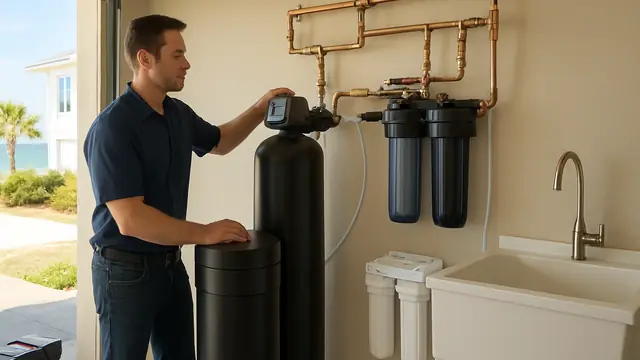
Before closing the main, consider equipment that may depend on water. Irrigation, filtration, recirculation, and fire-protection systems may require a specific shutdown procedure.
Inspect Every Water-Using Area
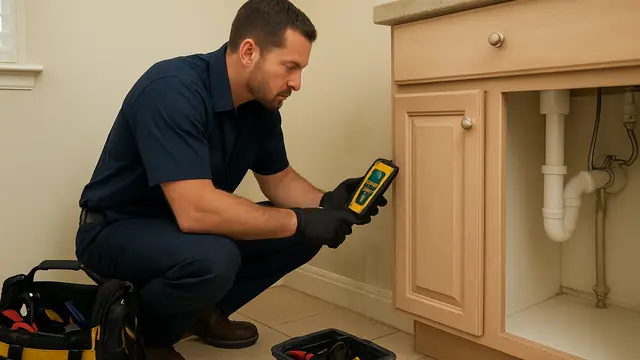
- Walk through the kitchen, bathrooms, laundry area, utility space, and exterior plumbing. Look beneath sinks, around toilets, near appliances, and around the water heater.
- Warning signs include droplets, rust, mineral deposits, swollen cabinets, soft drywall, stains, or a musty odor.
- Water can travel along piping, flooring, or framing before becoming visible.
Check Toilets and Appliance Connections
- Flush each toilet once and wait for the tank to stop filling. If it begins filling again without being used, water is probably leaking from the tank into the bowl.
- Common causes include a worn flapper, faulty fill valve, tangled chain, or incorrect water level.
- Inspect the supply line, shutoff, tank bolts, and floor. Moisture may come from the connection, condensation, hardware, or toilet seal.
Check washing-machine hoses, refrigerator lines, and accessible dishwasher connections for bulges, rust, cracks, kinks, fraying, or dampness. Close washing-machine valves only if they operate smoothly.
Evaluate the Water Heater
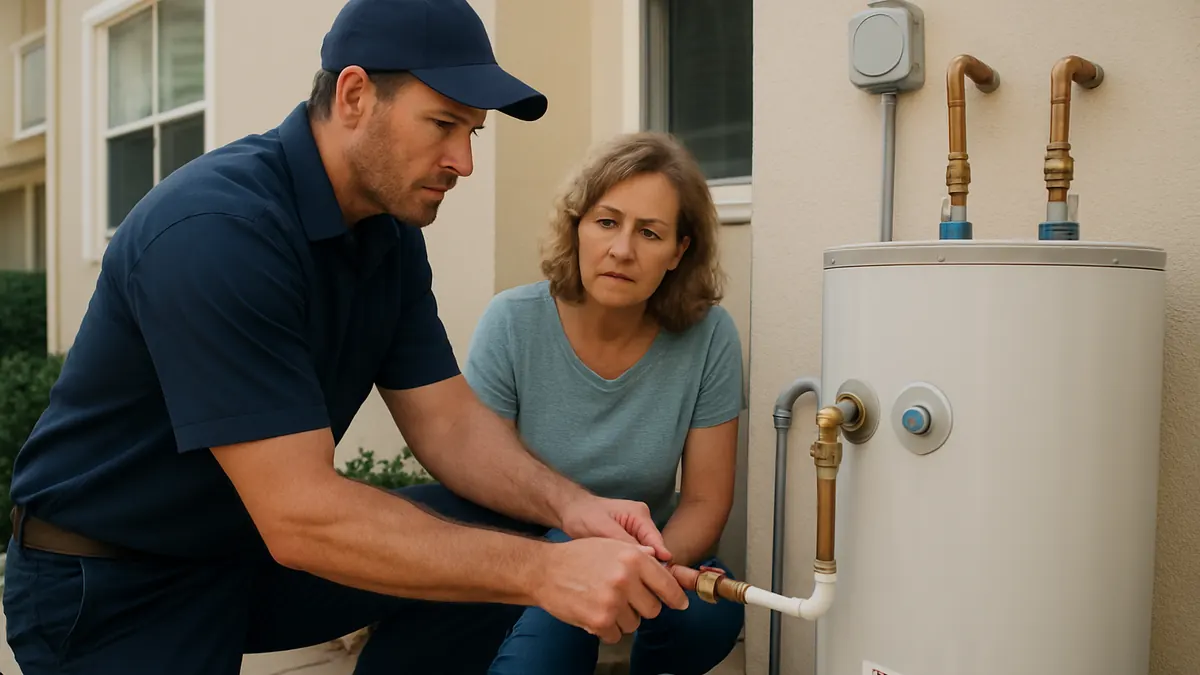
Inspect the top connections, valves, tank surface, drain valve, drain pan, and nearby floor.
Water beneath the heater may come from a connector, valve, condensation, nearby pipe, or tank failure. A component leak may be repairable, but water through the tank body usually means replacement.
Never cap the temperature and pressure relief valve discharge pipe. It is a safety device that releases excessive pressure or temperature.
Do not drain the heater simply because a hurricane is approaching. Improper draining can create a burn hazard, and an electric unit can be damaged if power returns while the tank is empty.
Test Drains Without Causing a Backup
- Run a moderate amount of water through sinks, tubs, and showers. Flush each toilet once. Watch for slow drainage, gurgling, sewage odor, or water appearing in another fixture.
- One slow shower may have local buildup. Several slow fixtures, a bubbling toilet, or wastewater rising elsewhere can indicate a larger obstruction.
- If sewage backs up, stop all water use. Do not run the dishwasher, washing machine, shower, or additional toilets.
Avoid chemical drain cleaners. They may not clear a larger blockage and can leave hazardous liquid in the pipe. Do not remove a sewer cleanout cap during an active backup because wastewater may be under pressure.
Include Exterior Plumbing
Disconnect garden hoses and inspect exterior faucets, showers, sinks, and visible piping. If a faucet drips or moves in the wall, do not twist it harder. Movement may indicate loose or damaged concealed piping.
What Homeowners Should Not Attempt
Do not force shutoff valves, adjust pressure regulators, modify backflow devices, alter gas controls, or change water-heater wiring.
Do not climb onto a wet roof to inspect a plumbing vent. Do not cut into walls or ceilings based only on a stain. Tape, putty, and improvised clamps are not dependable permanent repairs for pressurized plumbing.
Signs That Make the Problem Urgent
Seek prompt help when a leak cannot be isolated, sewage enters the home, water reaches electrical equipment, or a gas odor is present.
A main shutoff that will not stop water, a bulging water heater, a rapidly spreading ceiling stain, sudden whole-house pressure loss, or unexplained outdoor water flow also requires prompt attention.
How a Licensed Plumber Diagnoses the Problem
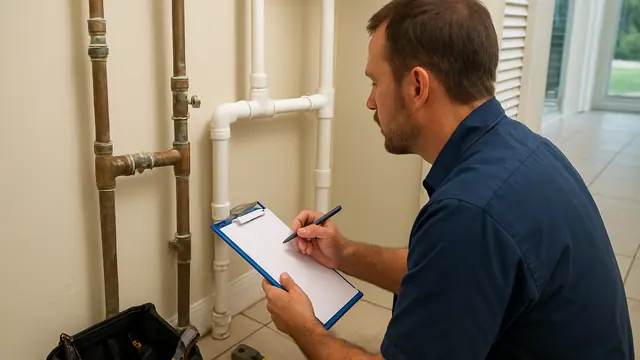
A licensed plumber determines whether the issue involves the water supply, a fixture, appliance connection, water heater, or drainage system.
Supply diagnosis may include pressure readings, meter observation, fixture isolation, moisture detection, and valve inspection.
Drain diagnosis may begin with mechanical cleaning. If symptoms recur or damage is suspected, a sewer camera can reveal buildup, roots, separated joints, foreign objects, or damaged pipe without immediate excavation.
Repair Options From Least to Most Invasive
A running toilet may need a flapper, fill valve, seal, or adjustment. A dripping faucet may need a cartridge or washer. A damaged appliance connector can often be replaced individually.
A leaking shutoff may be serviced or replaced. A localized pipe failure may allow targeted repair. Broader repiping is considered when failures are widespread or recurring.
Drain work generally begins with mechanical clearing. Camera findings may support additional cleaning, spot repair, or replacement of one damaged section rather than the entire line.
Water-heater repairs may involve a connector, valve, thermostat, heating element, or control. A tank leaking through its body generally requires replacement.
Typical Factors That Affect Cost
Cost depends on access, pipe and valve material, equipment type, failure location, diagnostic time, permits, and emergency scheduling.
A visible connector is generally easier to repair than concealed piping. Drain work varies with access, blockage depth, pipe condition, and excavation.
Prevention and Safe Post-Storm Restoration
Inspect shutoff valves, supply lines, toilets, drains, exterior fixtures, and water-heater connections throughout the year. Address recurring toilet cycling, slow drainage, pressure changes, and unexplained moisture before hurricane preparations begin.
After the storm, wait until the property is safe to enter. Look for broken piping, shifted equipment, ceiling stains, standing water, and electrical damage.
If the main valve was closed, reopen it slowly while another person watches plumbing areas. Listen for water movement when fixtures are off. Follow official water-use or boil-water guidance, and never energize an empty electric water heater.
Complete Your Northwest Florida Hurricane Plumbing Checklist in Seagrove Beach
A reliable storm plan includes a working main shutoff, sound appliance connections, toilets that stop running, a safe water heater, properly draining fixtures, and a careful process for restoring water.
Complete this Northwest Florida hurricane plumbing checklist in Seagrove Beach before conditions worsen. A weak supply line, running toilet, slow shower, water-heater leak, or unreliable valve is easier to correct before the property is vacant and normal service is disrupted.
About this guide: This resource provides general homeowner education, not a remote diagnosis. Actual conditions, code requirements, equipment, and safe repair options must be evaluated at the property.