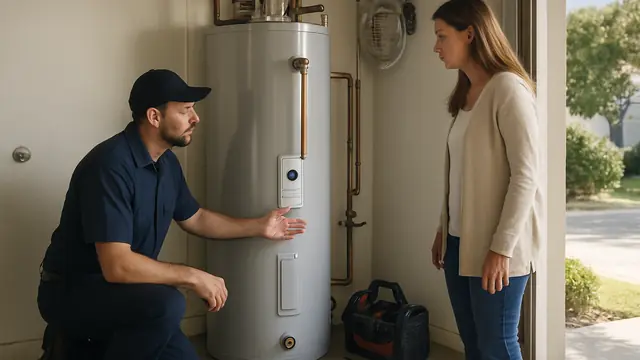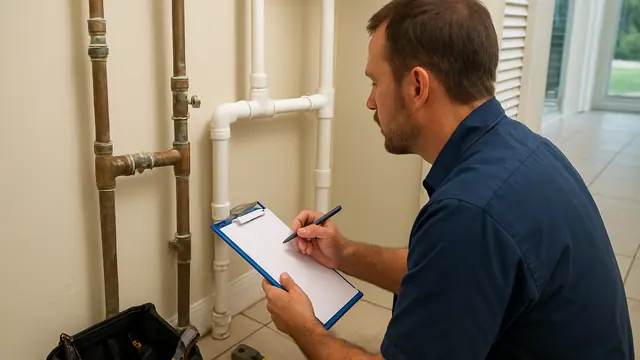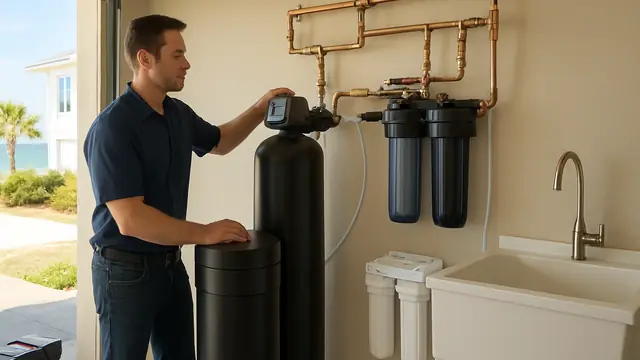
Stop and call for qualified help when plumbing water is near electrical equipment, sewage is entering occupied space, gas or burning odors are present, or a repair would require opening pressurized piping.
You walk into a guest bedroom and notice that one corner smells damp, even though the carpet feels dry. The bathroom on the other side of the wall looks normal, and no faucet is dripping. Later, you see discoloration along the baseboard that seems darker after the shower is used. This pattern may point to a hidden plumbing leak in a Seagrove Beach home.
A hidden plumbing leak is water escaping from a pipe, valve, fixture, drain, seal, or appliance connection where it is difficult to see. Stop using the fixture closest to the symptom and document what changes. If water is spreading, a ceiling is sagging, or moisture is close to electrical equipment, keep away and shut off the main water supply when safe.
Seven Warning Signs of a Hidden Plumbing Leak in Seagrove Beach
1. A Musty Odor Returns in the Same Room
A damp or earthy smell that keeps returning can mean moisture is trapped inside drywall, insulation, cabinetry, carpet padding, or flooring. The odor may grow stronger after a nearby shower, sink, toilet, or appliance is used.
Condensation, roofing, or exterior moisture can cause similar symptoms, so timing and location matter.
2. Baseboards, Flooring, or Cabinets Begin to Change
Hidden moisture can cause baseboards to swell, flooring to lift, cabinet bottoms to bow, grout to darken, or trim to separate from the wall. These changes may appear before a puddle develops.
Water can travel along framing, so damage may appear away from the failed pipe.
3. You Hear Dripping, Hissing, or Running Water
A faint hiss while every fixture is off may indicate pressurized water escaping from a supply line. A drip that begins after a shower, sink, toilet, or appliance is used may involve a drain or connection.
Record when the sound begins and what water use occurred beforehand.
4. A Ceiling or Wall Stain Changes After Fixture Use
A mark that darkens after a shower, bath, sink use, toilet flush, or appliance cycle can help narrow the source. Possible causes include a drain fitting, overflow, concealed valve, supply connection, toilet seal, or appliance hose.
Water may follow framing before reaching the visible surface. Stop testing if dripping begins, and never press on a sagging ceiling.
5. The Water Meter Moves During a No-Use Test
Turn off faucets, toilets, appliances, irrigation, outdoor spigots, and water-treatment equipment. Wait until every toilet has finished refilling, then observe the meter.
Continued movement may indicate unwanted flow. A running toilet or automatic appliance can produce the same result, so confirm that everything is off. A drain leak may not move the meter because it occurs after water has passed through a fixture.
6. Water Use Increases Without a Clear Explanation
An unexplained rise in water use may be the first evidence of a supply leak. Compare it with occupancy and normal household routines.
A small opening in a pressurized pipe can release water continuously without creating an immediate puddle. If usage remains elevated while routines stay the same, arrange an inspection.
7. Water Pressure Changes at Several Fixtures
A sudden pressure drop throughout the home may involve a supply leak, pressure regulator, partially closed valve, utility condition, or simultaneous demand.
A change at one faucet may be a clogged aerator. Whole-home pressure loss is more concerning when paired with meter movement or moisture.
What Commonly Causes Hidden Plumbing Leaks?
Hidden leaks often begin at supply tubes, shutoff valves, toilet seals, shower valves, sink traps, drain fittings, appliance hoses, water-heater connections, or pipe joints.
Wear, corrosion, pressure, movement, installation problems, and damage can contribute. Supply leaks may continue while fixtures are off. Drain leaks usually appear only when water passes through the affected connection.
Safe Checks a Homeowner Can Perform
- Dry and photograph the area. Record which fixture was used and whether the symptom changes.
- Inspect accessible plumbing with a flashlight. A dry paper towel beneath a fitting can reveal slow seepage.
- Perform a meter test only after every water-using device is off. Locate the main shutoff, but do not force a corroded or stuck valve.
What the Homeowner Should Not Attempt
- Do not cut into drywall, tile, flooring, or cabinetry because wiring and other utilities may be concealed.
- Do not use chemical drain cleaner to treat a leak. It cannot repair a cracked pipe, failed seal, or loose connection.
- Avoid household glue, tape, improvised clamps, unapproved sealants, or open-flame work. A temporary patch can fail suddenly.
Signs That Make the Problem Urgent
Treat the situation as urgent when water spreads rapidly, the meter shows substantial continuous flow, a ceiling sags, flooring becomes unstable, or pressure drops sharply.
Moisture near an outlet, switch, light fixture, electrical panel, water heater, or powered appliance creates an electrical concern. Do not touch wet equipment.
Sewage odor, discolored wastewater, or leakage after a toilet is flushed may indicate a sanitary drain problem. Stop using the fixture, keep people and pets away, and avoid contact.
How a Licensed Plumber Diagnoses the Leak
A plumber reviews the timing of fixture use, appliance cycles, meter movement, pressure changes, and visible moisture. This helps separate supply leaks from drain, fixture, appliance, or non-plumbing moisture.
Testing may include fixture isolation, pressure measurement, moisture scanning, acoustic listening, thermal imaging where useful, a small inspection camera, or controlled drain testing.
The plumber combines the results with the likely plumbing route to confirm the failed component and select the smallest practical access point.
Repair Options Beginning With the Least Invasive
An accessible supply tube, valve, trap, hose, toilet component, or fixture connection may only need adjustment or replacement.
A failed toilet seal, shower connection, appliance line, or localized pipe section may require focused repair through one targeted opening.
If direct access would damage extensive flooring, tile, or cabinetry, rerouting a short section may be less disruptive. Broader replacement may be appropriate when testing reveals repeated failures or widespread deterioration, but it should not be assumed from one leak.
Factors That Affect Repair Cost
Cost depends on the source, accessibility, pipe material, diagnostic work, and finished surfaces surrounding the leak.
An exposed connection is easier to reach than piping behind tile or flooring. Emergency response, drying, and restoration can also affect the scope.
Prevention and Maintenance Guidance
Inspect visible supply lines, shutoff valves, toilet connections, appliance hoses, sink traps, and water-heater fittings regularly. Replace components showing corrosion, cracking, swelling, or recurring moisture.
Review water use, keep the main shutoff accessible, and consider leak alarms for an unoccupied property.
After a repair, verify that damp materials are dried before the area is closed or refinished.
Homeowner FAQs
Can a hidden leak occur without increasing the water bill?
Yes. A drain leak may occur only during normal fixture use and may not create extra metered consumption.
Does a moving water meter prove that a pipe has broken?
No. A running toilet, irrigation system, appliance, or automatic treatment cycle can also move the meter.
Why does the stain appear away from the bathroom fixture?
Water can travel along joists, pipes, seams, and sloped surfaces before reaching a visible wall or ceiling.
Should I keep using the fixture if the leak happens occasionally?
No. Stop using the fixture once a repeatable connection is identified. Intermittent leakage can still damage concealed materials.
Does one hidden leak mean the entire home needs repiping?
No. Many leaks involve one failed valve, hose, seal, fitting, or short pipe section. Broader replacement should be based on documented system condition and repeated failures.
Take Action on Seven Warning Signs of a Hidden Plumbing Leak in Seagrove Beach
The seven warning signs of a hidden plumbing leak in Seagrove Beach include recurring musty odors, changing finishes, concealed water sounds, stains tied to fixture use, meter movement, unexplained water consumption, and pressure changes.
Stop using the likely fixture or appliance, document when the symptom appears, and shut off the supply when active leakage threatens the property. A licensed plumber can determine whether the least invasive solution is an accessible component repair, a targeted concealed repair, a short reroute, or a broader correction.
About this guide: This resource provides general homeowner education, not a remote diagnosis. Actual conditions, code requirements, equipment, and safe repair options must be evaluated at the property.