Stop and call for qualified help when plumbing water is near electrical equipment, sewage is entering occupied space, gas or burning odors are present, or a repair would require opening pressurized piping.
You may be replacing a vanity, checking a utility closet, or investigating a faint stain in your Seagrove Beach home when you notice flexible gray piping disappearing into the wall. A contractor may call it polybutylene while someone else calls it PEX. Because the materials can look similar, do not cut, bend, scrape, or tighten the pipe to identify it. Photograph visible markings, check for active moisture, locate the main water shutoff, and arrange for a licensed plumber to confirm the material and determine how much of the system it serves.
Polybutylene, often abbreviated PB, is plastic water-supply piping installed from the late 1970s through the mid-1990s. It carries pressurized hot and cold water to fixtures and appliances. It is not the larger drainpipe beneath a sink, a braided faucet connector, or outdoor irrigation tubing.
How to Identify Polybutylene Plumbing in Seagrove Beach
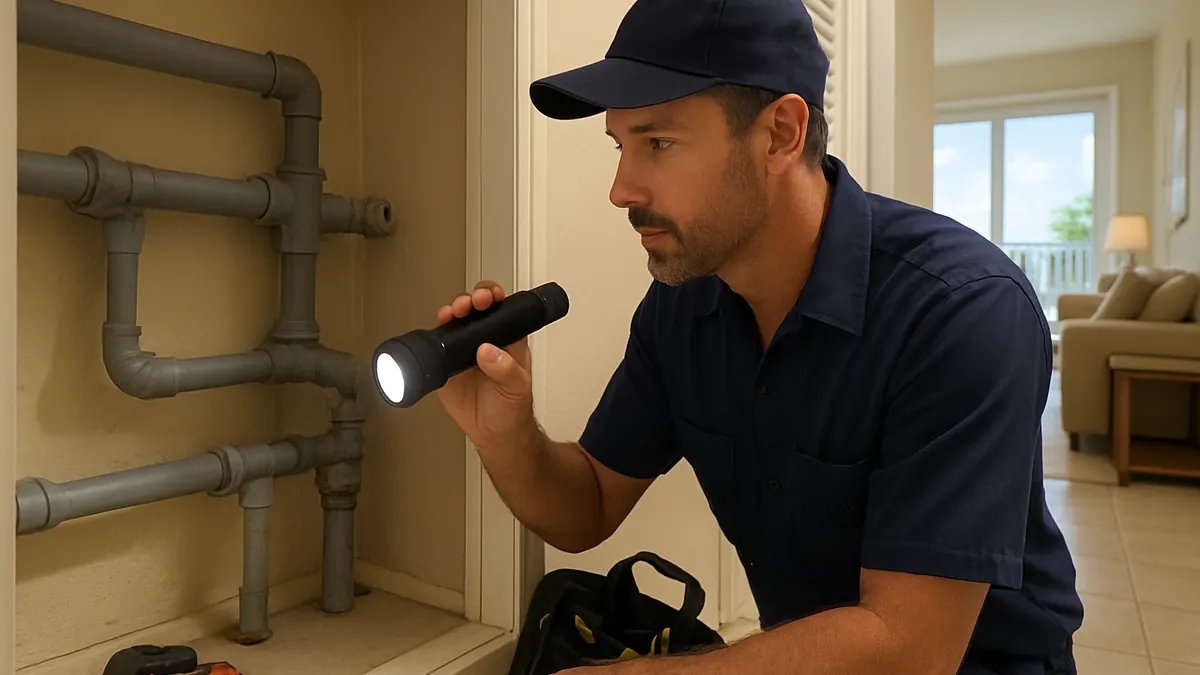
The strongest clue is pipe printing. Look for "PB," "PB2110," or a manufacturer name. Polybutylene is often gray, blue-gray, silver-gray, black, or occasionally white. It is flexible and may curve gradually instead of using rigid elbows at every turn.
Color alone does not prove the pipe is polybutylene. Some PEX and other plastic pipes look similar. Reliable identification considers the printed designation, pipe size, flexibility, connection style, fittings, and crimp rings.
Polybutylene may connect to plastic, brass, or copper fittings secured with metal crimp rings. Previous repairs can leave newer pipe connected to older PB inside a wall, so one modern-looking section does not prove the entire home was repiped.
Safe Areas a Homeowner Can Inspect
Inspect only piping that is already visible and easy to reach. Under sinks, look beyond the braided connector and shutoff valve to the pipe entering the wall or cabinet floor.
Check visible piping near toilet shutoffs, the water heater, washing-machine connections, utility spaces, and existing access panels. Avoid hot surfaces, electrical components, and unsafe attic or crawl areas.
Photograph markings and transitions without moving the pipe. Inspect several rooms because a remodeled area may contain PEX while another branch still contains polybutylene.
Why Polybutylene Can Become a Concern
Polybutylene can deteriorate internally. Oxidants in treated water may contribute to changes within the pipe wall that are not visible from outside. A section can appear dry and smooth while concealed portions are weakening.
Mechanical stress can also contribute. Tight bends, unsupported runs, crimped fittings, and piping installed under tension may become vulnerable. Failure may begin as seepage around a connection or appear suddenly as a split in a pressurized line.
Finding PB does not mean a leak is immediate, but exterior appearance cannot confirm concealed pipe condition.
Signs of a Possible Hidden Supply Leak
Warning signs include damp cabinet bottoms, stains on walls or ceilings, peeling paint, swollen trim, soft drywall, loose flooring, musty odors, or water sounds when no fixture is being used.
Unexpected meter movement also justifies investigation, although toilets, irrigation, water heaters, and appliance connections can create similar symptoms.
One leak does not prove systemwide failure. Repeated supply leaks in different areas are more concerning because aging material may remain on several branches.
Safe Checks You Can Perform
Turn off faucets, appliances, irrigation, and other known water uses. If the meter is safely accessible and you understand its display, observe whether it continues moving. Ongoing movement suggests water is flowing somewhere but does not identify the source.
Use a dry paper towel around exposed fittings to check for moisture without twisting or pulling the pipe. Inspect cabinet bases, ceilings below bathrooms, the water-heater area, and flooring near fixtures.
Keep the main shutoff accessible. If water is actively escaping, shut off the supply only when the valve can be reached safely. Stay away from standing water near electrical panels, outlets, or energized appliances.
What a Homeowner Should Not Attempt
Do not bend the pipe to expose markings, cut out a sample, or scrape the surface aggressively. Aging pipe or fittings can crack when disturbed.
Do not apply household glue, heat, tape, sealant, an improvised clamp, or an unverified fitting. Polybutylene repairs require approved materials and compatible transition methods.
Do not assume replacing one visible section solves the whole problem. Evaluate the connected branch before deciding the scope, and do not conceal suspected PB behind new finishes until it has been documented.
Signs That Make the Situation Urgent
Active spraying, rapidly spreading stains, a bulging ceiling, buckled flooring, or water near electrical components requires immediate service. Shut off the main supply when safe and request urgent plumbing help.
Fast meter movement after all known water use has stopped can indicate a significant hidden leak. Multiple damp areas, repeated failures, or a main shutoff that will not operate also require prompt attention.
Before leaving the property unoccupied, investigate moisture alerts or unexplained meter movement.
How a Licensed Plumber Diagnoses Polybutylene
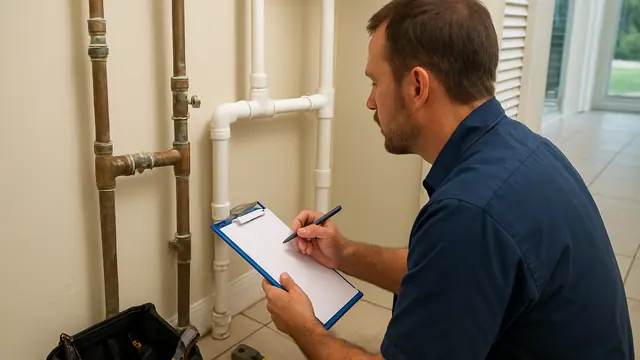
A licensed plumber examines markings, pipe size, fittings, crimp rings, and material transitions. Several accessible locations are compared to determine whether PB is isolated, partially replaced, or widespread.
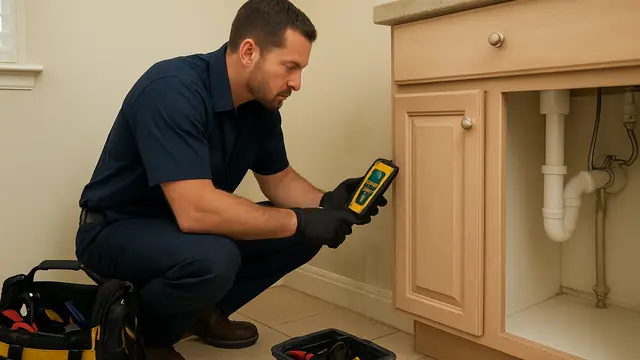
Moisture meters, thermal imaging, cameras, or selected openings may help locate dampness and trace routing. The plumber may also evaluate pressure, shutoff operation, and previous repairs.
The assessment should explain what material was confirmed, where it was observed, how much may remain, and whether there is evidence of active leakage.
Repair Options Beginning With the Least Invasive
A localized repair may be reasonable when one fitting or short section has failed and nearby piping can remain in service. The damaged section is removed and transitioned to approved modern material using compatible fittings.
A partial repipe may replace one bathroom group, kitchen branch, laundry branch, or another defined section. This option may be practical when PB is limited or earlier renovations replaced other parts of the system.
A complete repipe replaces the pressurized hot- and cold-water distribution piping with approved material, commonly PEX or copper depending on the project. New routes and access points are planned to reduce disruption. Old piping may sometimes be disconnected and left concealed when removal would cause unnecessary damage.
Leak sensors, automatic shutoff valves, and pressure regulation can provide additional protection. They may reduce damage from a future leak, but they do not restore weakened pipe.
Factors That Affect Cost
Cost depends on the amount of PB, number of fixtures, property layout, number of levels, accessibility, routing, replacement material, permits, inspections, and finish restoration.
Finished surfaces may affect access. A written proposal should identify the plumbing scope, expected openings, restoration responsibilities, warranties, and exclusions.
Prevention and Maintenance Guidance
Keep the main shutoff accessible. Place leak sensors near the water heater, washing machine, dishwasher, and sinks. Consider monitored leak detection or an automatic shutoff when the home may be vacant.
Have water pressure checked if you notice banging pipes, unusually forceful flow, or repeated valve and connector failures. Keep photographs, inspection reports, repair invoices, permits, and warranties together.
Confirm the Material Before a Hidden Leak Sets the Schedule
Learning how to identify polybutylene plumbing in Seagrove Beach requires more than matching gray pipe to a photograph. Confirm the markings, inspect multiple accessible areas, review repair records, and determine how much of the system remains. A licensed plumber can explain whether a localized repair, partial repipe, complete replacement, or added leak protection is appropriate. Making a documented plan now gives you more control than waiting for a concealed pressurized line to fail.
About this guide: This resource provides general homeowner education, not a remote diagnosis. Actual conditions, code requirements, equipment, and safe repair options must be evaluated at the property.