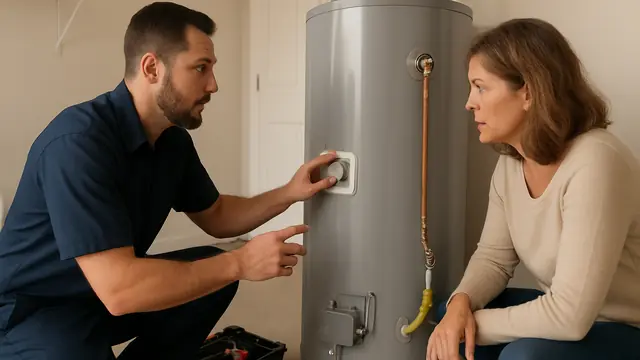
Stop and call for qualified help when plumbing water is near electrical equipment, sewage is entering occupied space, gas or burning odors are present, or a repair would require opening pressurized piping.
Understand What Your Drinking-Water System Does
An under-sink reverse osmosis system treats water at a specific outlet, usually a dedicated kitchen drinking-water faucet. It does not treat every fixture in the house. For homeowners and property managers in Upper Grand Lagoon, Florida, understanding that limited role helps set realistic expectations about drinking-water production, maintenance, and service. A system that fills a glass slowly may be operating normally, but a noticeable change from its usual performance deserves attention.
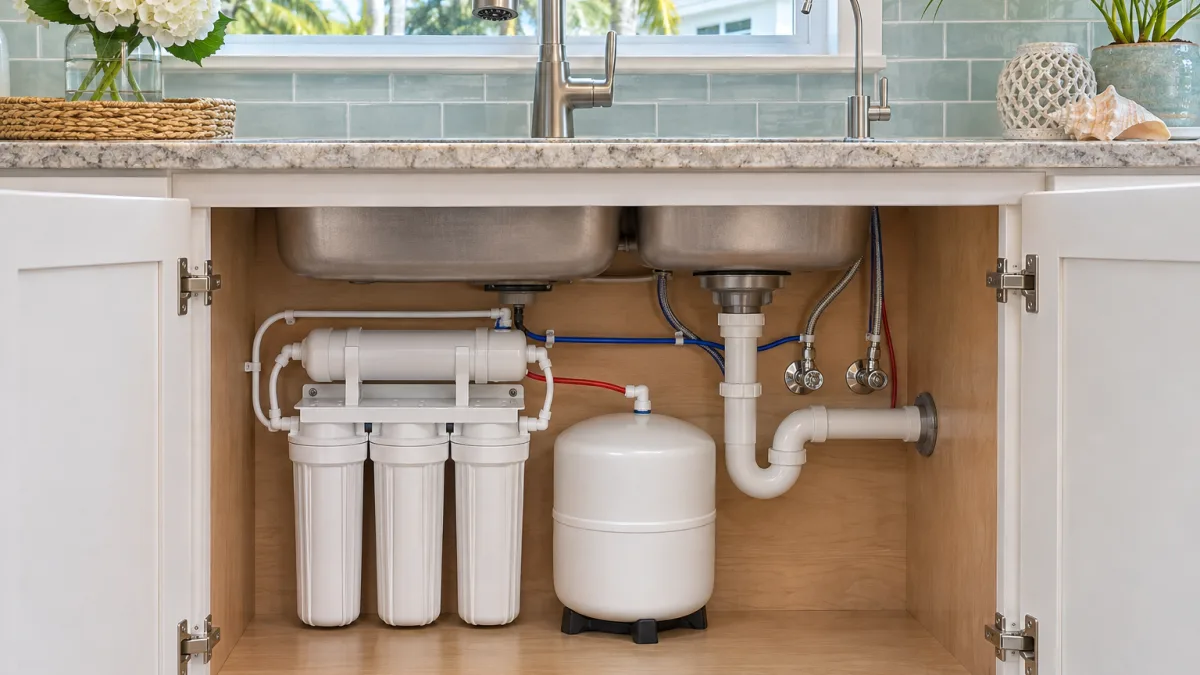
Most conventional systems combine sediment and carbon filtration, a reverse osmosis membrane, a pressurized storage tank, and a final polishing filter. Tankless models use a different arrangement and may require electrical power. The membrane separates treated water from a reject-water stream that carries concentrated dissolved substances to the drain. Each component has its own job, so replacing one filter will not necessarily correct every taste, flow, or water-quality concern.
Build a Service Record Before Problems Start
Start with the model number, installation date if known, owner's manual, and exact replacement cartridge information. Keep a record of filter changes, membrane replacements, sanitizing service, and repairs. Similar-looking cartridges may have different capacities, flow directions, or treatment functions. A cartridge that physically fits is not automatically appropriate. Proprietary connections and different membrane specifications also make shopping by appearance unreliable.
Follow the manufacturer's replacement intervals and any capacity limits, with adjustments recommended for actual water use and incoming water conditions. A lightly occupied property does not necessarily qualify for indefinitely extended intervals because calendar-based requirements still matter. In a Bay County vacation property, record both service dates and periods of vacancy. Leave the information somewhere accessible to the person arranging maintenance rather than relying on a reminder light that guests or cleaners may reset without completing service.
- Record the complete system model and cartridge part numbers.
- Save service dates, test results, and photographs of the installed layout.
- Note whether the system also supplies a refrigerator or ice maker.
- Keep manufacturer shutdown and restart instructions with the service record.
Know Why Filters and Membranes Need Different Care
Prefilters protect downstream components. A sediment filter captures particles, while carbon stages address specific substances such as chlorine when designed for that purpose. Many residential reverse osmosis membranes can be damaged by oxidants if the appropriate protective filtration is exhausted or bypassed. The final carbon filter commonly improves taste after storage. These stages are not interchangeable, and their replacement schedules may differ substantially.
The membrane's condition should be assessed using the manufacturer's guidance, production performance, and appropriate measurements rather than age alone. Incoming water chemistry, operating pressure, temperature, and pretreatment all influence its service life. Reduced output does not automatically mean the membrane has failed. A loaded prefilter, restricted supply, or storage-tank problem can produce similar symptoms. Ask the service professional to identify the cause before approving a membrane replacement, especially when the problem appeared suddenly after otherwise normal operation.
Separate Normal Refill Time From Weak-Flow Problems
A tank-style system stores treated water because membrane production is slower than the rate at which a faucet can dispense it. After filling several pitchers or serving a busy household, the stored supply may run low and faucet flow can diminish. Refill time varies by system and operating conditions. Compare performance with the manufacturer's specifications and the system's own established behavior, not an advertised capacity measured under different conditions.
If flow stays weak after an undisturbed refill period, note whether it starts strong and quickly fades or remains weak from the first moment. Also note whether ordinary kitchen faucet pressure has changed. Those observations help a plumber distinguish a system-specific restriction from an incoming supply issue. Avoid turning adjustment screws, adding a booster pump, or changing tank pressure as a trial fix. Each can affect other components and requires model-specific evaluation.
Have Storage-Tank Problems Diagnosed Correctly
A conventional reverse osmosis storage tank uses an internal air charge and flexible bladder or diaphragm to deliver water to the faucet. An incorrect air charge or damaged internal barrier can reduce the usable water volume. A tank may feel heavy yet deliver very little water, but that observation alone does not establish the cause. Restrictions in tubing, valves, or filters can also interfere with delivery.
A professional checks the tank using the manufacturer's procedure, which generally requires isolating it and evaluating air pressure with the water side emptied. A reading taken while the tank contains pressurized water can be misleading. Do not use a generic pressure target found online or add air to a full tank. If the internal barrier has failed, replacement is usually the appropriate repair. Tankless equipment requires a different diagnostic approach, including checks of its controls and pump where fitted.
Watch the Cabinet, Tubing, and Drain Connection
Make a visual check beneath the sink part of routine kitchen care. Look for moisture around housings, fittings, the tank, and the dedicated faucet connection. Keep stored supplies from pressing against tubing or knocking cartridges out of alignment. Cleaning products can obscure small leaks and may damage materials if spilled. Northwest Florida humidity can make moisture harder to interpret, but recurring wetness should not be dismissed as condensation without identifying its source.
The reject-water connection also needs attention. Some systems use an air-gap faucet that may make occasional drainage sounds. New gurgling, water emerging from an air-gap opening, or apparent continuous draining after the system should be full warrants service. Possible causes include a restricted drain connection or a malfunction in shutoff or check-valve components. Do not plug an air-gap opening or reroute drain tubing to silence it. The connection must follow the equipment instructions and applicable plumbing requirements.
- Stop using the system if a housing cracks or a fitting actively leaks.
- Use its designated supply shutoff only if it is accessible and operates normally.
- Keep clear of wet outlets or electrical components and arrange professional help.
Treat Taste Changes and Test Results Carefully
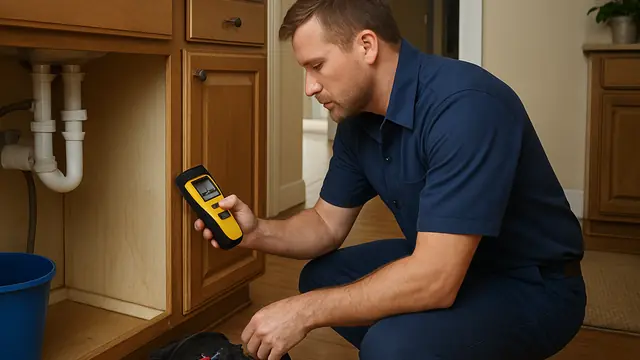
A change in taste can come from an overdue polishing filter, prolonged storage, a newly installed cartridge, or another system issue. Taste is not a reliable safety test. Likewise, a handheld total dissolved solids meter provides a broad conductivity-based estimate, not a complete water-quality analysis. It cannot identify individual contaminants or establish that water is free of harmful microorganisms. Clear water and a low reading do not prove that a system is sanitary.
A qualified service professional may compare incoming and treated-water readings to evaluate membrane rejection under suitable conditions. That comparison helps assess performance but does not replace contaminant-specific testing. If you are concerned about a particular substance, use an appropriate laboratory test and verify that the exact system has a relevant certified reduction claim. Certification to NSF/ANSI 58 can be useful, but it does not mean every certified model reduces every contaminant. Check the listed claims for the actual equipment.
Plan Filter Changes and Sanitation as One Service
Replacing cartridges does not automatically clean the housings, storage tank, faucet, or connecting tubing. Follow the manufacturer's sanitation procedure and required service intervals. Professional service is especially useful when the equipment history is unknown, the system has sat unused, or contamination is suspected. A thorough visit can combine correct cartridge replacement with inspection of seals, housings, connections, and treatment performance.
Do not pour household disinfectant into the system or improvise a chemical concentration. Some sanitizers can damage membranes, seals, or other components, and procedures may require removing certain parts first. New filters and membranes also need the specified flushing before the water is used. Ask the technician how much water must be discarded, when the system can return to service, and whether a connected ice maker needs attention. Confirm that leak checks are completed before the cabinet is restocked.
Prepare for Vacancy and Water-Service Interruptions
Seasonal occupancy creates a different maintenance pattern from daily household use. Before leaving an Upper Grand Lagoon property vacant, consult the equipment's shutdown instructions rather than assuming that closing the supply valve completes the process. Depending on the system and length of vacancy, storage, sanitation, or cartridge replacement steps may be necessary. Warm conditions make it particularly important not to leave an undocumented restart procedure for the next guest or property manager.
After an interruption, follow utility notices and manufacturer guidance before returning the system to service. A typical residential reverse osmosis unit should not be assumed to make water safe during a boil-water advisory unless public health authorities specifically approve its use for that purpose. Use bottled or properly boiled water as directed. If floodwater reached the equipment, stop using it and obtain professional guidance about replacement and sanitation. Flushing alone may not restore affected components to a suitable condition.
Choose Repairs or Replacement Based on the Whole System
Many performance problems can be corrected with proper servicing, a compatible tank, or a specific valve or fitting repair. Replacement becomes more reasonable when housings are damaged, parts are unavailable, the equipment history is uncertain, or recurring failures involve several components. Age is useful context, but it should not be the only deciding factor. Ask for a written explanation of the diagnosed fault and what the proposed work includes.
If replacing the system, review available cabinet space, cartridge access, expected drinking-water demand, certified treatment claims, and ongoing maintenance needs. A refrigerator connection may require additional evaluation because long tubing runs and appliance pressure requirements affect performance. Tankless equipment may need suitable electrical provisions. Have the installer confirm drain-connection requirements and whether permits apply. Before accepting the work, obtain the maintenance schedule, flushing instructions, shutdown procedure, and baseline performance information so future changes are easier to recognize.
About this guide: This resource provides general homeowner education, not a remote diagnosis. Actual conditions, code requirements, equipment, and safe repair options must be evaluated at the property.