Stop and call for qualified help when plumbing water is near electrical equipment, sewage is entering occupied space, gas or burning odors are present, or a repair would require opening pressurized piping.
You are preparing to leave an Upper Grand Lagoon property before a hurricane when the water heater makes a popping sound and the drain pan contains fresh water. In another room, a sink drains slowly after the faucet is turned off. The water near the heater could come from a loose connection, relief-valve discharge, condensation, or a leaking tank. The slow sink may be a separate local clog or part of a larger drainage problem. The safest immediate action is to stop using the affected fixtures, keep water away from electrical equipment, and locate the main water shutoff. Do not attempt to open the heater or plug any discharge pipe.
A Northwest Florida hurricane plumbing checklist in Upper Grand Lagoon should prepare the property for wind, rain, power loss, interrupted water service, and time without immediate access to repairs.
Start With the Water Heater
Inspect the floor, drain pan, visible piping, and connections around the heater. Look for rust trails, mineral deposits, corrosion, damp insulation, or water returning after the area is dried.
Never cap the temperature-and-pressure relief discharge pipe. This safety outlet releases excessive pressure or temperature. Water coming from it may indicate a condition that requires diagnosis.
Know which breaker controls an electric heater. For gas equipment, do not adjust the gas valve, burner, or venting. A unit that has shifted, become submerged, or has wet controls should remain off until inspected.
Locate the Main Shutoff and Clear the Area
Find the valve that controls water entering the property. Remove storage or other obstacles that could delay access in an emergency.
A valve should move without extreme effort. Do not use a long wrench or other leverage on a seized or corroded valve. Breaking the stem or nearby pipe can release water under full pressure.
Inspect Toilets, Faucets, and Appliance Connections
Flush each toilet and wait until the tank finishes filling. A toilet that continues running or refills periodically may have a worn flapper, faulty fill valve, or incorrect tank adjustment.
Inspect flexible connectors beneath sinks, behind toilets, and at accessible washing machines, dishwashers, refrigerators, and ice makers. Look for bulges, fraying, corrosion, kinks, and moisture at the fittings.
Test the Drainage System Carefully
- Run a small amount of water through every sink, tub, and shower. Flush toilets separately. Watch for slow drainage, gurgling, sewage odor, or water appearing in another fixture.
- One slow sink may have a local trap or branch-line blockage. Several affected fixtures suggest a restriction farther down the drainage system.
- Stop unnecessary water use if a toilet bubbles when another fixture drains or water rises in a shower. Continued use can push sewage into the lowest fixture.
- Avoid chemical drain cleaners. They may not reach a deeper obstruction and can leave hazardous liquid in standing wastewater.
Disconnect Hoses and Check Accessible Exterior Plumbing
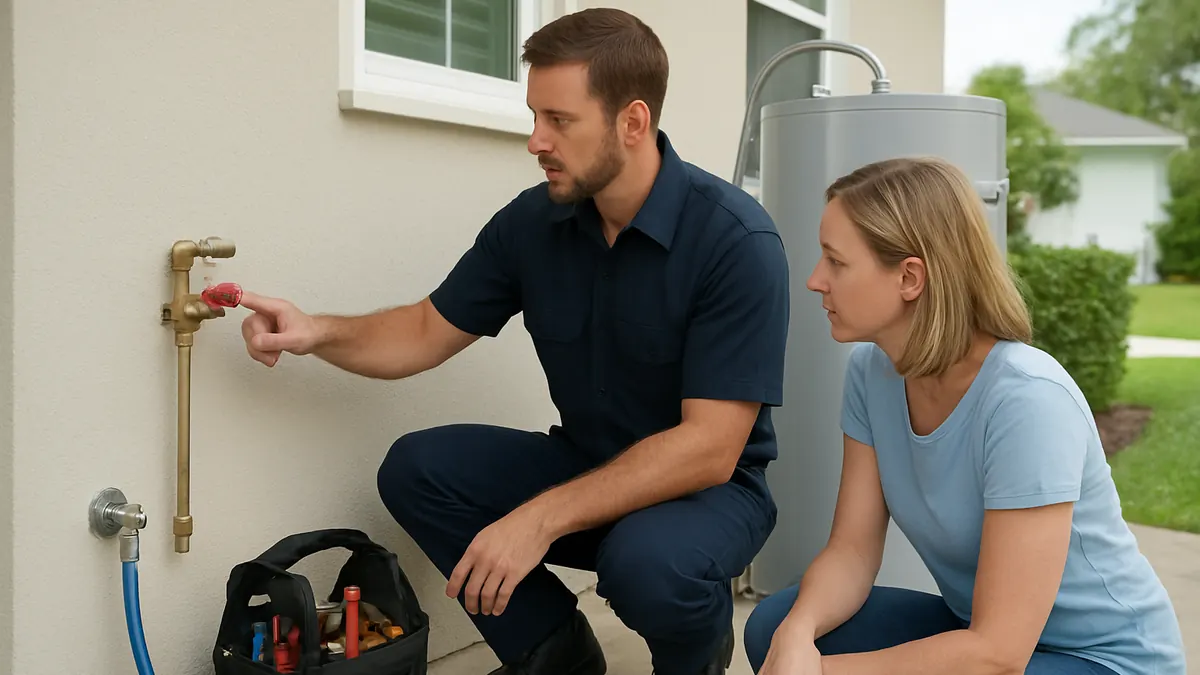
- Remove garden hoses from exterior faucets and store them. A hose pulled by moving debris can damage the faucet or piping behind the wall.
- Look for existing leaks at hose bibs and visible exterior connections. Do not cover or block vents, drains, relief outlets, or combustion-air openings.
- Complete these checks before lightning, high wind, or flooding begins.
Prepare Water for Drinking and Sanitation
Store drinking water in clean, food-safe containers according to official emergency guidance. Keep drinking water separate from water reserved for cleaning or toilet flushing.
Water stored in a bathtub or bucket should not be considered safe to drink. If a boil-water notice is issued after the storm, follow the instructions from the responsible authority.
Safe Checks Homeowners Can Perform
You can inspect visible piping, dry and monitor questionable areas, listen for running toilets, observe the water meter, disconnect outdoor hoses, and clear access to valves.
What Homeowners Should Not Attempt
Do not climb onto the roof to inspect a plumbing vent. Do not enter flooded rooms, garages, crawlspaces, or yards where electricity may be present.
Do not open a sewer cleanout during a backup. Wastewater can escape rapidly and expose you to contamination.
Signs That Make a Plumbing Problem Urgent
- A burst supply line, rapidly spreading stain, sagging ceiling, or water flowing from a wall requires immediate action. Close the main valve only if it is safely accessible.
- Stop using all plumbing fixtures if sewage enters a toilet, shower, tub, or floor drain. Keep occupants and pets away from contaminated water.
- Leave the property and contact the appropriate emergency or utility service if you smell gas, hear hissing near gas equipment, or see damaged venting.
How a Licensed Plumber Diagnoses the Problem
A plumber first determines whether the issue involves the pressurized supply, drainage system, water heater, or another component.
For suspected leaks, diagnosis may include meter observation, pressure testing, fixture isolation, valve inspection, and moisture detection.
For drainage symptoms, the plumber may test fixtures, access a cleanout, clear the line mechanically, and use a sewer camera. The camera can reveal buildup, physical damage, displaced joints, or another obstruction.
Repair Options From the Least Invasive Forward
A running toilet may need a flapper or fill valve. A dripping faucet, leaking connector, or defective fixture shutoff can often be repaired individually.
A local drain clog may be cleared through the fixture or branch line. A deeper restriction may require mechanical cleaning, camera inspection, or hydro jetting when the line is suitable.
- A localized pipe failure may be repaired by replacing only the damaged section. A failed main shutoff can often be replaced without repiping the entire property.
- A water heater may be repairable when a valve, thermostat, element, or connection fails. A leaking tank, submerged controls, or serious corrosion may require replacement.
- Repiping or major sewer replacement should be based on documented widespread deterioration, repeated failures, or extensive storm damage.
Factors That Affect Cost
Cost depends on accessibility, pipe material, problem location, equipment type, diagnostic testing, and the extent of damage.
A written diagnosis should explain what must be addressed immediately and what can be planned after the storm.
Prevention and Maintenance Guidance
Repair slow drains, running toilets, leaking connectors, and unreliable shutoffs before hurricane season. Keep the main valve, sewer cleanout, and water-heater area accessible.
After severe weather, inspect the property before restoring normal water use. Look for broken exterior piping, shifted equipment, sewage odor, wet ceilings, and unexpected meter movement.
Follow official water-safety guidance, and leave flood-exposed plumbing equipment off until a qualified professional evaluates it.
Complete Your Upper Grand Lagoon Hurricane Plumbing Checklist Before Leaving
A Northwest Florida hurricane plumbing checklist in Upper Grand Lagoon should confirm that the water heater is dry and stable, drains are flowing, supply connectors are sound, and shutoffs are accessible. Correcting a leak, blockage, or equipment problem before the property is occupied or left vacant can prevent a manageable issue from becoming extensive damage.
About this guide: This resource provides general homeowner education, not a remote diagnosis. Actual conditions, code requirements, equipment, and safe repair options must be evaluated at the property.