Stop and call for qualified help when plumbing water is near electrical equipment, sewage is entering occupied space, gas or burning odors are present, or a repair would require opening pressurized piping.
You are preparing to leave the property for several days when you notice gray plastic tubing beneath a sink. Nothing is dripping, but you are concerned about leaving the plumbing system unattended if the pipe is polybutylene.
Polybutylene, abbreviated PB, was installed in many residential water systems from the late 1970s through the mid-1990s. Gray tubing is an important clue, but it is not proof because newer materials and fixture connectors may look similar.
Do not twist, scrape, squeeze, or cut the pipe. Photograph the tubing and markings, check nearby surfaces for moisture, and locate the main shutoff. If you discover active leaking, shut off the fixture valve or main supply when safe and call a licensed plumber.
How to Identify Polybutylene Plumbing in Upper Grand Lagoon
PB is flexible supply pipe that may be gray, blue-gray, silver, black, or white. It carries pressurized hot and cold water to fixtures, appliances, and water heaters.
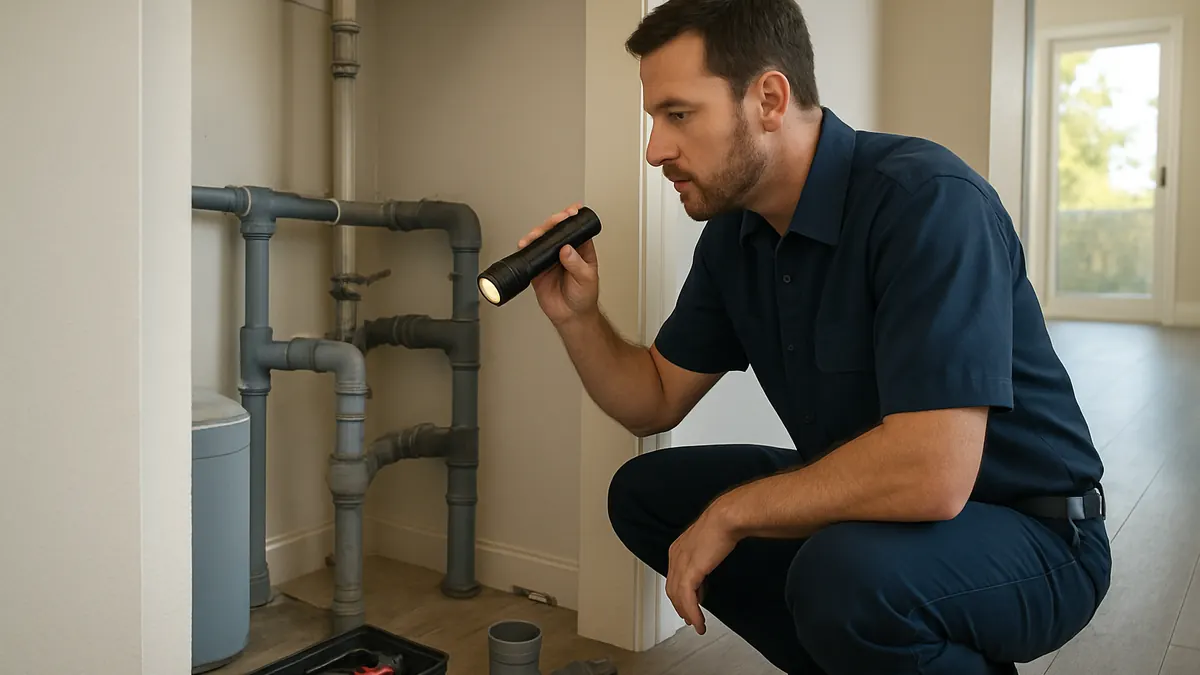
Look for printed markings such as "PB," "PB2110," a manufacturer's name, or size information. Printing may be faded or positioned against a wall. Use a flashlight and mirror rather than rotating the line.
Many PB systems use plastic or metal fittings held by copper-colored or aluminum crimp rings. A plumber evaluates the markings, fittings, rings, and installation pattern together.
Do Not Confuse Fixture Connectors With Permanent Pipe
- A braided line from a shutoff valve to a faucet or toilet is a replaceable connector. Appliance and water-heater connectors are also separate components.
- The permanent supply line is the pipe entering the back of the shutoff valve or emerging from a wall, floor, or ceiling. The larger pipe beneath a sink is normally the drain.
- A newer connector or valve can attach to older PB behind the wall, so checking only the visible part can produce the wrong conclusion.
Inspect Several Accessible Locations
Look beneath all accessible sinks, behind toilets, at the washing-machine box, and around the water heater. Check visible lines in utility rooms, garages, crawlspaces, or safely accessible attic spaces.
Do not remove drywall, pull appliances, move wiring, or disturb insulation merely to find more pipe. Avoid stepping between attic framing members.
Photograph markings, fittings, and locations. Check several fixture groups because previous repairs may have created a partially repiped system.
Why a Dry PB Pipe Still Deserves Evaluation
Polybutylene can deteriorate internally while appearing normal outside. Age, heat, movement, installation stress, and crimping quality may contribute to weakening.
Leaks can develop at fittings, sharp bends, stressed areas, or along the tubing. Some begin as slow seepage that damages a cabinet or wall; others release water rapidly because the system remains under pressure.
Finding PB does not mean failure is certain. It means you should learn how much is present and consider precautions rather than relying on a dry appearance.
Safe Checks Before Leaving the Property
Use a clean, dry paper towel around accessible fittings without moving the pipe. Moisture on the towel warrants prompt evaluation.
Inspect nearby surfaces for staining, swelling, peeling finishes, musty odors, softness, corrosion, or dried residue.
With every faucet and water-using device off, observe the water meter. Confirm that toilets, irrigation, ice makers, appliances, and filtration equipment are not operating. Continued movement may indicate leakage, but it will not identify the source.
Keep the shutoff accessible. Do not force a damaged valve. Ask a plumber whether shutting off the water is appropriate for the home's equipment.
What You Should Not Attempt
- Do not bend the pipe to expose lettering or squeeze it to test strength. Do not scrape the surface, drill nearby, or cut out a sample.
- Do not tighten crimp rings or install tape, glue, epoxy, clamps, or incompatible fittings. An improvised patch can fail and create greater damage.
- Do not assume that closing one fixture valve protects the entire home. A leak can occur on another branch that remains pressurized.
Signs That Make the Problem Urgent
- Active spraying, steady dripping, wet flooring, rapidly spreading stains, unexplained pressure loss, or repeated supply-line leaks requires prompt service.
- A sagging or bulging ceiling may contain water and damaged material. Keep people away, shut off the water if safe, and do not stand underneath it.
- Water near outlets, light fixtures, electrical panels, or appliances creates an additional hazard. Do not touch wet electrical equipment.
- An unoccupied property deserves faster attention when there is meter movement, a recent leak, or staining. A small problem can continue unnoticed.
How a Licensed Plumber Diagnoses the System
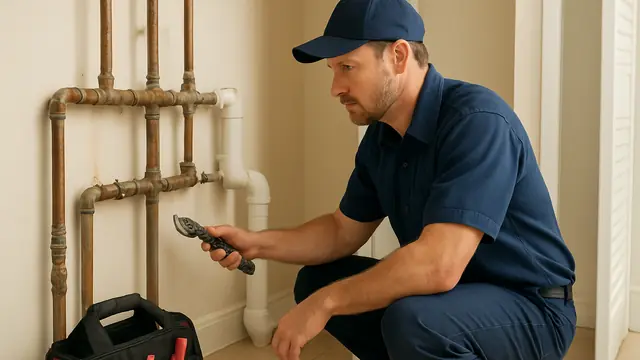
A plumber checks exposed supply lines, reads markings, examines fittings, traces branches, and identifies transitions from previous repairs.
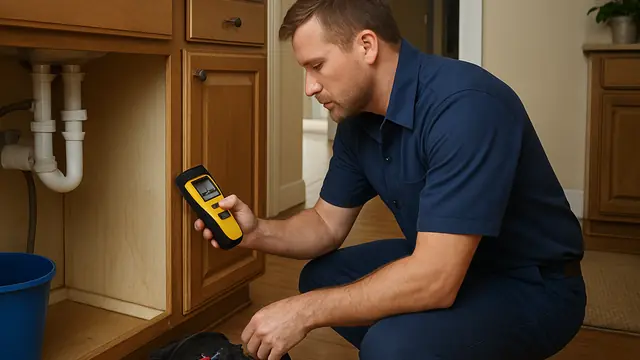
If hidden moisture is suspected, the plumber may use a moisture meter or suitable leak-detection method. The evaluation should determine whether PB is present, how much remains, whether a leak is active, and whether the shutoff works.
The plumber can also explain precautions for periods when the home is unoccupied.
Repair Options From Least Invasive to Most Comprehensive
If the suspicious pipe is another material and no defect exists, no PB-specific repair is required.
If a connector, shutoff valve, or fixture is faulty, replacing that component may solve the problem without changing permanent piping.
For one accessible PB failure, a localized repair may remove the damaged section and install compatible replacement pipe using an approved transition. This addresses the failed section but leaves other PB in service.
A partial repipe replaces a defined branch or fixture group. A whole-home repipe replaces remaining PB and may be appropriate when the material is extensive, leaks have repeated, or future absences increase concern.
An automatic shutoff does not replace deteriorated pipe, but it may support a broader protection plan.
Typical Factors That Affect Cost
- Cost depends on the amount of PB, number of fixtures, home layout, pipe accessibility, chosen replacement material, and number of openings.
- Cabinets, tile, ceilings, mixed piping, shutoff upgrades, permits when required, and finish repairs affect scope. Water removal and drying may be separate.
- Request a written estimate explaining what will be replaced, what will remain, how transitions will be completed, and who handles restoration.
Prevention and Maintenance Guidance
Label the main shutoff and keep the route to it clear. Make sure an authorized local contact knows where it is and how to respond during an emergency.
Install leak alarms beneath sinks, near the washing machine, and around the water heater. Discuss an automatic shutoff if the property is regularly unattended.
Inspect visible supply piping before leaving and after returning. Investigate stains, odors, and meter movement promptly. Maintain appliance hoses and fixture connectors, remembering that these parts are separate from concealed PB.
If PB is confirmed, retain photographs and repair records and develop a replacement timeline instead of waiting for repeated emergency failures.
Homeowner FAQs
Is all gray plastic water pipe polybutylene?
No. PEX and other products may also be gray. Markings and fitting details are needed for reliable identification.
Should I shut off the main water before leaving?
That depends on the home's equipment and plumbing configuration. A plumber can explain whether manual shutoff or an automatic system is appropriate.
Can a water alarm prevent a PB leak?
No. An alarm does not strengthen pipe, but it may provide earlier warning.
Can only one part of the property contain PB?
Yes. Previous repairs and renovations can create a mixed system. Several areas should be inspected.
Does one repaired leak mean the rest of the PB is safe?
No. The repair corrects that location but does not establish the condition of other PB lines.
Can an automatic shutoff replace a repipe?
No. It is a damage-reduction device, not a replacement for aging or defective piping.
Confirm the System Before the Property Is Left Unattended
How to identify polybutylene plumbing in an Upper Grand Lagoon home begins with checking supply lines for PB or PB2110 markings, crimped fittings, and similar tubing in several rooms. Do not disturb the pipe or assume dryness guarantees its condition. A licensed plumber can confirm remaining PB, identify leaks, test the shutoff strategy, and explain repair or repiping options before the property is left unoccupied.
About this guide: This resource provides general homeowner education, not a remote diagnosis. Actual conditions, code requirements, equipment, and safe repair options must be evaluated at the property.