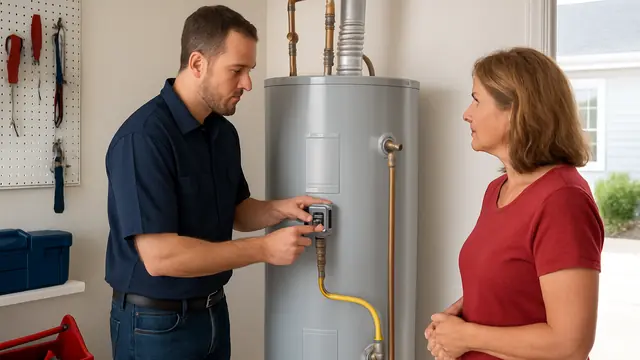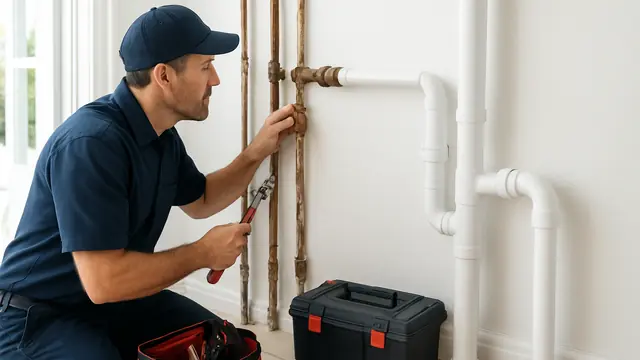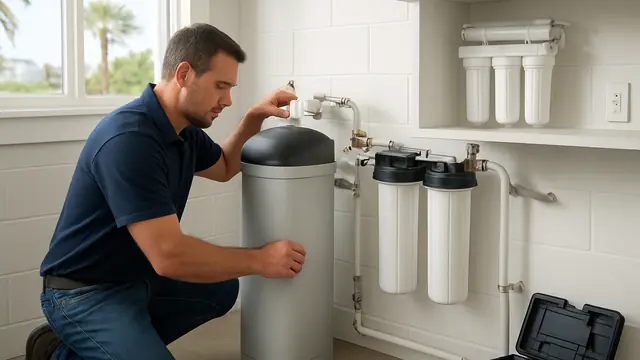
Stop and call for qualified help when plumbing water is near electrical equipment, sewage is entering occupied space, gas or burning odors are present, or a repair would require opening pressurized piping.
You open a guest-room closet and notice that the baseboard feels swollen. A bathroom on the other side of the wall looks normal, and no faucet is dripping. Later, the room smells damp again even though the air-conditioning is running. This is the kind of subtle pattern that can point to a hidden plumbing leak in an Alys Beach home.
Water often travels before it becomes visible, so the wet mark may appear away from the failed pipe, valve, drain, or connection. Stop using nearby fixtures. If the stain grows, water drips steadily, or materials sag, turn off the main supply when safe and call a plumber.
What Are the Seven Warning Signs of a Hidden Plumbing Leak in Alys Beach?
1. A Cabinet, Wall, or Baseboard Changes Shape
Cabinet bottoms may bow, baseboards may swell, and drywall may soften before a puddle appears. Inspect around sinks, appliances, and walls containing bathroom plumbing. Damage on the opposite side of a plumbing wall also matters.
2. The Home Smells Damp After the Area Is Cleaned
A persistent musty odor may mean moisture is trapped in drywall, cabinetry, insulation, or flooring. Condensation and exterior water intrusion can create similar symptoms, so the source must be tested rather than assumed.
3. A Ceiling Mark Appears Below a Bathroom
A stain below a bathroom may come from a toilet seal, shower drain, overflow, supply connection, or concealed valve. Note whether it changes after fixture use, but do not keep testing once active dripping begins. Never touch a sagging ceiling.
4. The Meter Shows Water Use in a Quiet House
With every fixture, appliance, irrigation zone, and treatment cycle off, continued meter movement may indicate a supply leak or overlooked water use. Wait for toilets to finish refilling and record what you see.
5. One Area of Flooring Feels Warm, Cool, Soft, or Loose
A localized temperature or texture change can signal moisture beneath flooring. Tile may sound different, flooring may lift, or transitions may loosen. Temperature alone proves nothing, but it matters when accompanied by odor, staining, or meter movement.
6. Toilets Refill or Plumbing Sounds Continue
A toilet that refills without use may be leaking from tank to bowl. Hissing behind a wall or dripping above a ceiling also deserves investigation. Sound travels through framing, so the loudest point may not be the source.
7. The Water Bill or Usage Report No Longer Makes Sense
An unexplained usage increase may be the only early evidence of a small pressurized leak. Compare it with occupancy, irrigation, cleaning, and appliance use. A continuing increase alongside another warning sign deserves investigation.
Why Hidden Plumbing Leaks Happen
Connectors, valves, joints, toilet seals, drain fittings, appliance hoses, and water-heater connections can loosen or deteriorate. Pressure, corrosion, movement, damage, installation problems, and wear may contribute.
Supply leaks may continue because the line stays pressurized. Drain leaks usually appear only during fixture use. That timing helps the plumber choose the right test and avoid unnecessary openings.
Safe Checks Before the Plumber Arrives
Use a flashlight to inspect accessible valves, supply lines, traps, toilet connections, appliance hoses, and cabinet floors. A dry tissue can reveal slight moisture.
Dry and photograph the area. If there is no active dripping, use one nearby fixture briefly while another adult watches. Stop if the mark grows. Test the meter only after every water-using device is off, and locate the main shutoff.
What Not to Do
Do not open drywall, tile, flooring, or cabinetry just to search for wet pipes; wiring and other utilities may be concealed. Do not use chemical drain cleaner, which cannot seal a failed fitting. Do not paint over stains or add random caulk before the source is corrected.
Signs That Require Urgent Attention
Call promptly when water is actively spreading, the ceiling is bowed, flooring is slippery, pressure drops throughout the home, or the meter continues moving rapidly. Moisture near electrical outlets, lighting, panels, or powered equipment requires extra caution.
Sewage odor, discolored wastewater, or leakage that appears when a toilet is flushed may involve a sanitary drain. Keep people away from the affected area and avoid contact with the water.
How a Licensed Plumber Finds a Concealed Leak
Diagnosis starts with the history of the symptom: when it began, which fixtures were used, whether the meter moved, and how quickly the area changed. The plumber then inspects visible plumbing and compares the moisture pattern with the likely pipe route.
Testing may include isolating fixtures, checking static water pressure, monitoring pressure loss, scanning materials with moisture instruments, listening for pressurized leakage, using thermal information where useful, or placing a small camera into an accessible cavity. Drain systems may be tested separately with controlled water use or other appropriate methods.
No single tool identifies every leak. The plumber combines test results with the plumbing layout to select the smallest practical access point.
Repair Choices Starting With the Least Invasive
An exposed hose, valve, trap, supply connector, toilet component, or appliance line may be replaced without opening a finished surface. If the problem is a localized seal or fitting, correcting that component may be sufficient.
A concealed pipe repair may require one targeted opening. When direct access would damage a large finished area, a plumber may be able to reroute a limited section from a more practical location.
Broader pipe replacement is considered when testing reveals repeated failures, widespread deterioration, or a system condition that makes spot repairs unreliable. It should not be the first recommendation without supporting evidence.
Factors That Affect Cost
The major cost factors are diagnostic time, accessibility, the failed material, and the amount of finish work surrounding the leak. Work inside an open cabinet is less disruptive than access behind tile, built-in cabinetry, or multiple layers of finished material.
Cost can also be affected by emergency scheduling, water isolation, drying needs, applicable permits, and repairs to drywall, flooring, insulation, or paint. Plumbing repair and property restoration may be separate scopes of work.
Preventing Future Hidden Leaks
Check visible plumbing connections several times a year and after long periods when the property has been unoccupied. Replace hoses or connectors that show corrosion, cracking, bulging, or seepage. Exercise accessible shutoff valves carefully so you know whether they operate.
Monitor water use and investigate unexplained changes. A properly selected leak alarm or automatic shutoff system can provide additional protection, particularly when a home is sometimes vacant.
Keep cabinets dry and uncluttered enough that connections remain visible. After a leak, confirm that concealed materials have dried before closing the access area.
Responding to Seven Warning Signs of a Hidden Plumbing Leak in Alys Beach
The seven warning signs of a hidden plumbing leak in Alys Beach include changing building materials, recurring odors, ceiling stains, meter movement, unusual flooring, unexplained plumbing sounds, and higher water use. These clues do not all prove the same failure, but they show that the moisture source should be identified.
Stop using the likely fixture, document when the symptom occurs, and shut off the water when active leakage threatens the property. A targeted professional diagnosis can separate a minor accessible repair from a concealed pipe or drain problem.
About this guide: This resource provides general homeowner education, not a remote diagnosis. Actual conditions, code requirements, equipment, and safe repair options must be evaluated at the property.