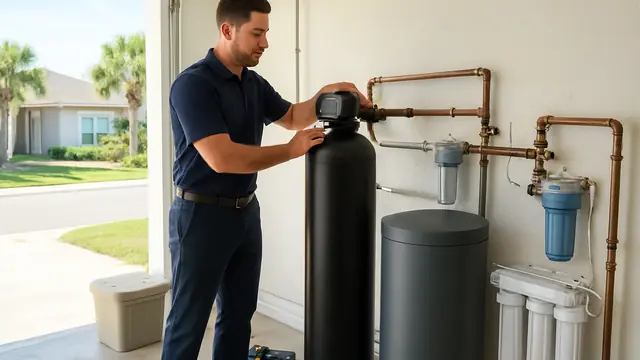
Stop and call for qualified help when plumbing water is near electrical equipment, sewage is entering occupied space, gas or burning odors are present, or a repair would require opening pressurized piping.
A homeowner returns to a Blue Mountain Beach property and finds one corner of the kitchen floor slightly raised. There is no standing water, the sink cabinet looks dry, and the refrigerator appears normal. After running the dishwasher, however, a faint damp odor becomes stronger. That combination may indicate a hidden plumbing leak rather than a simple surface spill.
Hidden leaks may escape slowly from a supply line, drain, seal, or appliance hose and spread beneath finishes. Stop using the connected fixture or appliance. If water is spreading, close the nearest valve or main supply when safe.
Seven Warning Signs of a Hidden Plumbing Leak in Blue Mountain Beach
1. Flooring Begins to Lift, Cup, or Feel Soft
Moisture beneath flooring can loosen adhesive, swell materials, darken grout, or soften the subfloor. The change may begin beside a cabinet, wall, doorway, or appliance. Water follows seams and low points, so mark the boundary and watch whether it expands.
2. A Water Stain Changes After a Fixture Is Used
A stain that darkens after a shower, flush, dishwasher cycle, or sink use may involve that fixture's drain, seal, valve, or supply. Test one fixture only when there is no active dripping or sagging, and stop when moisture appears.
3. You Hear Dripping or Hissing Behind a Surface
Hissing may come from pressurized water, while intermittent dripping may come from a drain used only occasionally. Framing carries sound, so the loudest point is not necessarily the repair location.
4. Water Usage Increases Without Added Demand
If occupancy, irrigation, cleaning, and appliance use have not increased, higher consumption deserves review. Compare multiple billing periods when possible; changing occupancy may explain variation, but a continuing pattern should not be dismissed.
5. Paint, Drywall, or Trim Deteriorates
Bubbling paint, soft drywall, swollen trim, or peeling coverings can result from repeated moisture. The source may be above, beside, or behind the damage. Painting first can hide a useful diagnostic pattern.
6. A Musty Odor Develops in an Enclosed Area
Cabinets, closets, and utility spaces may develop an odor before visible damage. Moisture can come from plumbing, condensation, or exterior intrusion, so verify the source rather than assuming pipe replacement is needed.
7. The Water Meter Moves With Everything Turned Off
Turn off fixtures, appliances, outdoor faucets, irrigation, and treatment cycles. After toilets stop refilling, observe the meter. Continued movement may indicate a supply-side leak, but usually not a drain leak.
Common Causes Behind These Warning Signs
Leaks can develop at supplies, toilet connections, shower valves, drains, traps, appliance hoses, water-heater fittings, or pipe joints because of wear, corrosion, pressure, movement, damage, or installation problems.
Continuous meter movement suggests pressurized loss. Moisture appearing only after a tub drains, dishwasher runs, or toilet flushes points toward that fixture. Roof leaks, exterior openings, and condensation can imitate plumbing leaks.
Safe Checks for Homeowners
Inspect beneath sinks, around toilets, behind accessible appliances, near the water heater, and around valves. Use a dry paper towel to find slight seepage.
Dry and photograph the surface. Note fixture use and when the symptom returns. Check the meter only after every water-using device is off. Locate the main shutoff, but do not force a stuck valve.
What a Homeowner Should Not Attempt
Do not drill, cut, or pry into a wall or floor to follow a stain. Electrical wiring, plumbing, and structural members may be hidden behind the finish.
Do not use a torch, pipe-freezing method, improvised clamp, or unapproved sealant on concealed plumbing. Temporary products may fail under pressure and make the final repair more difficult.
Avoid chemical drain cleaners when leakage is suspected. They do not repair a cracked drain and can leave hazardous liquid inside the piping.
Urgent Signs That Should Not Wait
Shut off water and seek help promptly when a ceiling sags, water flows through a light fixture, flooring becomes unsafe, or a wall cavity is filling. Rapid meter movement with all fixtures off also indicates significant ongoing water use.
Do not touch wet electrical equipment, outlets, switches, or fixtures. If wastewater or sewage odor is present, keep people and pets away from the area and avoid direct contact.
A small stain without active dripping may not require emergency service, but it should still be scheduled before the source causes broader damage.
How a Licensed Plumber Diagnoses a Hidden Leak
The plumber first reviews the pattern: continuous or intermittent, connected to fixture use or not, and accompanied by meter movement or pressure changes. Visible valves, hoses, fixtures, and access points are inspected.
The next step may involve isolating a fixture, measuring water pressure, watching for pressure loss, scanning damp materials, listening for pressurized leakage, using a small camera through an existing opening, or testing a drain with controlled water flow. Different tests answer different questions.
After locating the likely source, the plumber confirms the failed component before recommending repair. This process helps keep access openings as limited as practical.
Repair Options Beginning With the Least Invasive
An accessible supply tube, valve, trap, hose, toilet part, or appliance connection may only require replacement of that component. A loose or failed fixture connection may be corrected without disturbing walls or flooring.
When piping is concealed, a targeted access opening may allow a spot repair. Another option can be rerouting a short section through a more accessible path when direct repair would require excessive damage.
Larger-scale replacement may be reasonable if testing shows repeated failures or deterioration across multiple sections. It should be based on the condition of the system, not merely on one visible stain.
Factors That Influence Repair Cost
Cost changes with access, leak location, pipe type, diagnostic difficulty, and the finish materials surrounding the repair. A connection under an open sink is easier to reach than piping under built-ins, tile, or multiple finished layers.
The total project may also include drying, removal of damaged materials, drywall or flooring restoration, after-hours response, and permits when applicable. Ask the plumber to separate the plumbing scope from restoration work so the next steps are clear.
Prevention and Ongoing Maintenance
Inspect accessible hoses, valves, and connections periodically. Replace components showing corrosion, cracking, swelling, or dampness. Pay special attention after moving an appliance or having work performed near plumbing.
Review water use regularly and investigate changes early. For a property that may sit unoccupied, consider periodic walkthroughs and an appropriate leak alarm or automatic shutoff device.
Keep sink cabinets organized enough to see the plumbing. After a repair, allow affected materials to dry properly before they are enclosed or refinished.
Homeowner FAQs
Can a hidden leak cause damage without raising the water bill?
Yes. A drain leak may only occur during fixture use and may not increase metered consumption beyond the water already used normally.
Why does a stain appear several feet from the bathroom?
Water can travel along framing, pipes, seams, and sloped surfaces before reaching a visible finish.
Is low water pressure always evidence of a leak?
No. A valve, regulator, clogged fixture, utility issue, or simultaneous demand can also reduce pressure. Testing is needed.
Can I leave the water off until the appointment?
Yes, when practical. If the home needs limited water use, ask the plumber whether a fixture can be safely isolated instead of restoring the entire system.
Will drying the area solve the problem?
Drying limits damage but does not repair the source. The failed pipe, seal, drain, valve, or connection still requires correction.
What to Do About Seven Warning Signs of a Hidden Plumbing Leak in Blue Mountain Beach
Seven warning signs of a hidden plumbing leak in Blue Mountain Beach include damaged flooring, stains tied to fixture use, concealed water sounds, unexplained consumption, deteriorating finishes, musty odors, and meter movement. The safest response is to stop the suspected water use, document the pattern, and prevent active leakage from continuing.
Do not wait for a small concealed leak to become visible flooding. Professional testing can identify whether the solution is an accessible component replacement, a targeted pipe repair, or a more involved correction.
About this guide: This resource provides general homeowner education, not a remote diagnosis. Actual conditions, code requirements, equipment, and safe repair options must be evaluated at the property.