Stop and call for qualified help when plumbing water is near electrical equipment, sewage is entering occupied space, gas or burning odors are present, or a repair would require opening pressurized piping.
Recognize a Laundry Drain Overflow
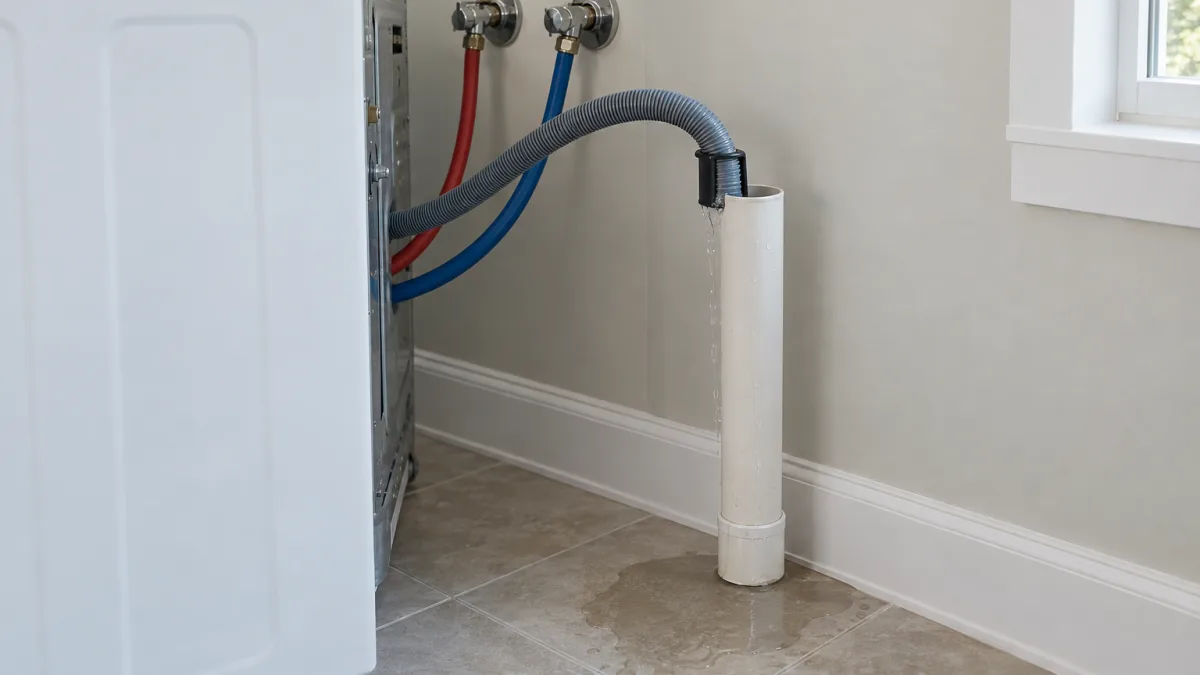
A washing machine can fill and wash normally, then spill water onto the floor when its pump empties the tub. If water rises out of the open drain pipe behind the machine, called a standpipe, the drainage system is not accepting the discharge fast enough. That differs from a leaking supply hose, a door seal leak, or water escaping from inside the appliance. Identifying when and where water appears helps determine the right service call.
For homeowners and property managers in Wright, a useful first observation is whether the spill happens during filling, washing, or draining. Observe only from a dry, safe location without moving the washer. Water at a hose connection during filling suggests a supply-side problem. Water climbing out of the standpipe during pump-out points toward drainage. Suds or water beneath the cabinet may require an appliance technician, a plumber, or both.
Stop the Cycle and Protect the Area Safely
Stop using the washer as soon as an overflow becomes apparent. Use its controls only if you can reach them from a dry location without contacting wet surfaces or electrical components. Do not unplug a cord while standing in water, reach behind wet equipment, or move a heavy washer to investigate. If water has reached a receptacle, cord connection, or appliance electrical components, stay clear and arrange professional help before using the equipment again.
Keep children and pets away from the spill. If water continues flowing after the appliance stops, a supply-side leak may also be present. Close accessible supply valves only if they are dry, safe to reach, and turn without force. For a small spill on a safe, de-energized surface, remove standing water promptly. Northwest Florida humidity can slow drying, so soaked baseboards, drywall, or flooring may need professional drying rather than surface wiping alone.
Why a Washer Can Overwhelm a Partially Restricted Drain
Unlike a slowly draining sink, a washing machine releases water in a concentrated, pumped discharge. A drain with a partial obstruction may pass a small amount of water but fail when the washer empties. This explains why an apparently normal laundry setup can overflow only during certain cycles. The standpipe briefly holds rising water, but it is not a substitute for adequate drainage capacity farther downstream.
A problem that starts after replacing a washer does not automatically mean the new appliance is defective. Different models can have different discharge characteristics and installation requirements. The replacement may expose a restriction or an older drain arrangement that was already marginal. A plumber should evaluate the existing piping, while the appliance installer or technician verifies the washer setup. Reducing load size may change the symptoms, but it does not establish that the drain is safe to use.
Check the Drain Hose Arrangement Without Altering It
The drain hose must discharge into an approved drainage connection and remain secured according to the washer manufacturer's instructions. Hose insertion depth, drain height, and the space around the hose matter. A hose pushed too far into a standpipe can contribute to siphoning or interfere with proper operation. A poorly secured hose can jump out during discharge and create a spill even when the building drain is clear.
From a safe position, note whether the hose appears displaced, sharply kinked, or sealed tightly into the pipe with tape or improvised fittings. Do not pull the machine out or change the installation just to investigate. An airtight seal is not a repair for an overflowing standpipe and can interfere with the intended drainage arrangement. Give the plumber the washer model information so the actual installation can be compared with manufacturer requirements and applicable plumbing rules.
Understand What Can Restrict a Laundry Drain
Laundry wastewater carries lint, hair, soil, and detergent residue. Over time, this material can collect at an existing rough spot, fitting, or other restriction. Aging pipe interiors or a poorly arranged branch drain may make buildup more likely. The obstruction may be close to the washer or farther along the shared branch. The location matters because cleaning only the visible standpipe may leave the underlying problem untouched.
Avoid pouring chemical drain openers into the washer standpipe. Standing chemicals can splash during service, damage some materials, and create exposure risks without correcting a piping defect. Also avoid improvised pressure devices or feeding a household cable into concealed laundry piping. Tell the plumber if any chemical has already been added, including the product and approximate time. Never mix products or add another cleaner in an attempt to neutralize the first.
Separate Blockages From Trap, Vent, and Pipe Problems
A laundry drain relies on more than an open pipe. Its trap maintains a water seal, and its venting helps air move appropriately as wastewater flows. Pipe size, routing, slope, and connections also affect performance. An improvised laundry relocation or an older installation may contain defects that repeated cleaning cannot solve. Simply extending the standpipe upward can conceal a symptom while leaving the restriction or installation problem in place.
Gurgling nearby may provide a useful clue, but it does not prove that a vent is blocked. Likewise, an overflow does not automatically justify vent replacement. A licensed plumber should evaluate the whole drainage arrangement before recommending alterations. If the washer discharge also causes water to rise in a shower, toilet, or another fixture, stop testing and limit water use. That pattern suggests a shared downstream problem rather than an isolated laundry connection.
What a Professional Diagnosis Should Include
A useful service visit begins with the history: when the overflow started, whether the washer was recently replaced, which cycles trigger it, and whether other fixtures react. Photos of the dry installation and an existing video of the event can help, but do not recreate an overflow for documentation. The plumber should inspect accessible piping, the hose arrangement, connection condition, and any available cleanout access before selecting a testing or cleaning method.
When conditions allow, the plumber may conduct a controlled flow test while watching how quickly water rises and recedes. Testing should stop before another damaging spill. If a restriction is found, the cleaning approach should suit the pipe material, condition, and access. Afterward, verifying drainage under an appropriate washer discharge is important. A small amount of poured water passing through the pipe is not always enough to demonstrate that the original problem has been resolved.
Choose Repairs Based on the Confirmed Cause
If buildup is the main issue and the piping is otherwise suitable, professional drain cleaning may restore performance. A displaced or incorrectly installed hose may instead need a corrected connection and secure support. A damaged trap, unsuitable pipe arrangement, or defective branch line requires a different repair. Ask the plumber to explain which finding supports the recommendation and how the proposed work addresses the overflow rather than merely increasing the space available for backed-up water.
Repeated trouble deserves a closer look. Keep records of cleaning dates and how long each improvement lasted. A drain that fails again soon after service may have remaining buildup, a structural defect, or an installation limitation. For work behind walls, ask what access is needed, who handles wall repairs, and whether permits or inspections apply. Property managers should also establish who authorizes additional work if opening the wall reveals a different condition.
Maintain the Laundry Area Without Risky Drain Treatments
Use detergent intended for the washer and follow both the appliance and detergent directions for dosing. More soap does not necessarily improve cleaning, and excessive suds can complicate troubleshooting. Follow the washer's maintenance instructions, including cleaning any user-serviceable filter only as directed. Shake heavy sand and loose debris from washable items outdoors before laundering when practical. These habits reduce unnecessary material entering the system, but they will not correct a restricted or defective building drain.
Periodically inspect the visible laundry connections for moisture, hose damage, corrosion, or movement without shifting the appliance. Keep the area accessible so a small problem is easier to notice and service. After a long period of vacancy, remain nearby during the first load rather than starting the washer and leaving. For managed properties, give occupants one clear instruction: report water at the drain immediately and do not keep running cycles to see whether it clears.
Plan Drain Access and Water Protection Before Upgrading
Before buying a replacement washer or relocating laundry equipment, confirm that the proposed location has a suitable drain, vent, supply connections, and service access. Share the exact model's installation requirements with the plumber. A larger appliance can make previously reachable connections difficult to service, especially in a closet or stacked arrangement. Planning access before installation is usually more practical than discovering that the machine must be removed for every plumbing inspection.
Consider a water alarm near the laundry area and discuss whether a properly installed drain pan is appropriate for the location. A pan needs an approved drainage arrangement to carry water away and may not capture a standpipe overflow behind the washer. Likewise, a supply-side automatic shutoff is not a complete answer to wastewater already being pumped from the tub. Ask what each protective measure detects, what it controls, and what risks remain before choosing equipment.
About this guide: This resource provides general homeowner education, not a remote diagnosis. Actual conditions, code requirements, equipment, and safe repair options must be evaluated at the property.