Stop and call for qualified help when plumbing water is near electrical equipment, sewage is entering occupied space, gas or burning odors are present, or a repair would require opening pressurized piping.
You are reviewing the final paperwork for a Wright home when one last walkthrough raises questions. The kitchen faucet briefly sputters, a bathroom cabinet has swollen material near the back, and a toilet makes a bubbling sound when the nearby tub drains. The symptoms may be simple, but together they justify professional evaluation before closing. The safest step is to avoid taking anything apart, document what happens, and arrange a licensed plumbing inspection before your inspection rights expire.
A plumbing inspection checklist before buying a Northwest Florida home in Wright evaluates the property as a connected system and shows whether the findings are isolated or part of a larger pattern.
Begin With the Symptoms Instead of Assumptions
Write down exactly what you observed. Did the faucet sputter only when first opened, or did the flow remain irregular? Did the toilet bubble while the tub drained, or after it stopped? Does the cabinet feel damp, or is the material only stained and swollen?
Specific observations help the plumber reproduce the condition. Request records for leaks, drain cleaning, sewer work, water-heater replacement, remodeling, or repiping.
Plumbing Inspection Checklist Before Buying a Northwest Florida Home in Wright: Trace the Supply System
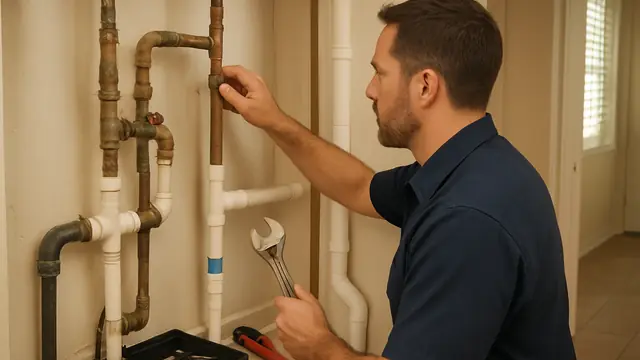
A licensed plumber should locate the main shutoff and inspect accessible piping from the service entry through the home. The plumber looks for leakage, corrosion, damaged fittings, temporary patches, and repeated repairs.
Do not force an older shutoff valve; it may leak or fail. A plumber can evaluate whether it is serviceable.
Compare pressure and flow at several fixtures. One weak faucet may have a local problem, while whole-home low flow may involve the main valve, regulator, service line, or supply piping.
Investigate Faucet Sputtering Carefully
- Brief sputtering may follow interrupted service, but persistent sputtering or irregular flow should be evaluated.
- The plumber compares hot and cold flow, operates other fixtures, and inspects the aerator and connections.
- The goal is to determine whether the symptom is temporary, local, or systemwide.
Examine Damaged Cabinets and Hidden-Leak Clues
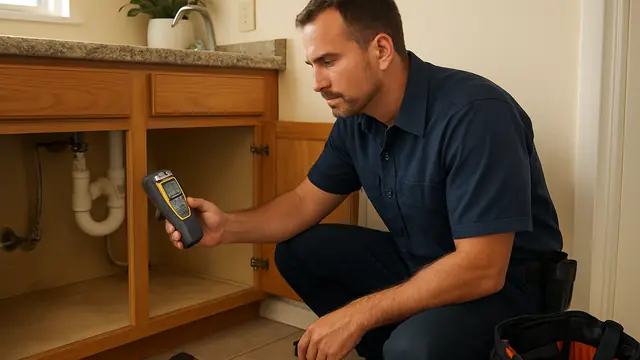
Swollen cabinet material usually means it has been exposed to moisture at some point. The source may be a faucet connection, supply line, shutoff valve, drain assembly, trap, disposal, dishwasher hose, or spilled water.
A plumber can test each component and take moisture readings. A dry surface does not prove the original cause was corrected.
Other clues include stains, warped trim, loose flooring, odors, or repeated patches.
Test Toilets and Drains as a Connected System
Every toilet should flush completely, refill normally, stop running, and remain stable. A rocking toilet can damage the floor seal, while moisture at the base may come from the seal, connector, tank hardware, condensation, or nearby plumbing.
A bubbling toilet when a tub drains may indicate a restriction in a shared drain or farther downstream. It does not prove sewer-line damage, but it deserves testing.
The plumber may operate fixtures in sequence and observe whether water rises, drains slowly, gurgles, or produces sewer odor.
Decide Whether a Sewer Camera Inspection Is Appropriate
A camera inspection is not required for every purchase. It becomes more useful when several drains are slow, backups have occurred, toilets gurgle, sewer odor is present, prior sewer repairs are reported, or the buried line's condition is uncertain.
A camera inserted through an accessible opening can reveal buildup, standing water, offsets, obstructions, cracks, or damage. The plumber should explain the next step.
Inspect the Kitchen, Laundry Area, and Appliance Connections
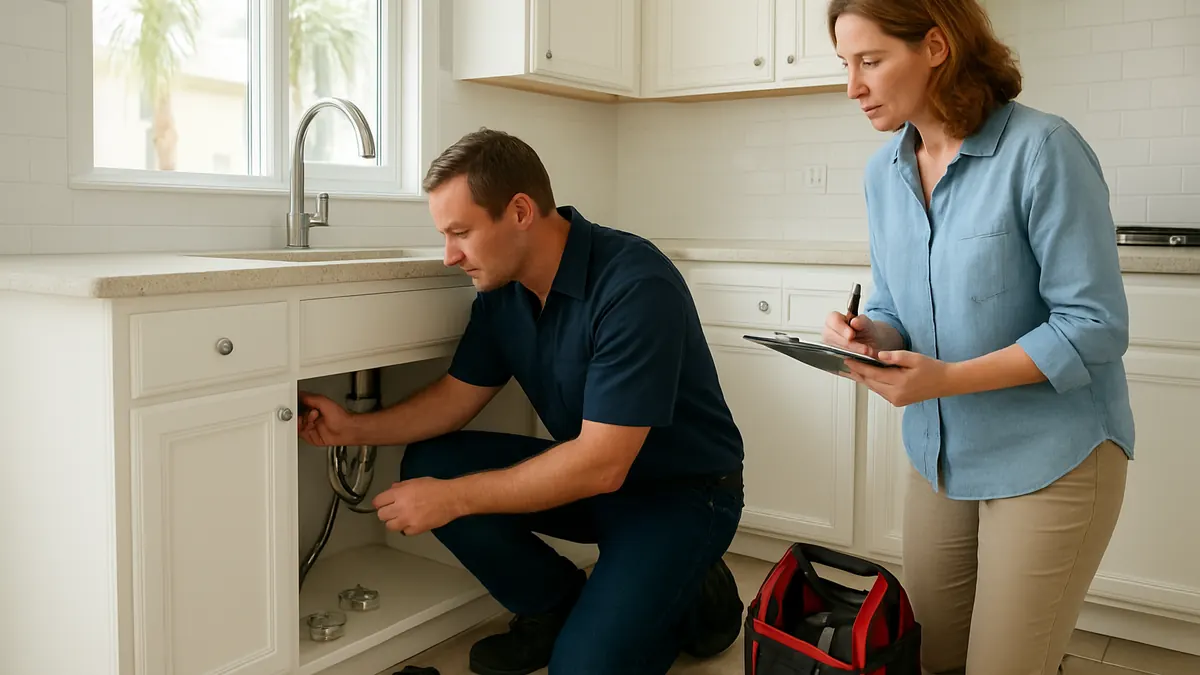
- The kitchen inspection should include the faucet, sink drain, disposal where present, dishwasher hose, refrigerator line, and shutoff valves.
- Laundry hoses remain pressurized, and the drain handles rapid discharge. Brittle hoses, corrosion, or overflow evidence may require attention.
- Exterior faucets should also be checked for dripping, looseness, or leakage at the wall connection.
Evaluate the Water Heater and Visible Safety Features
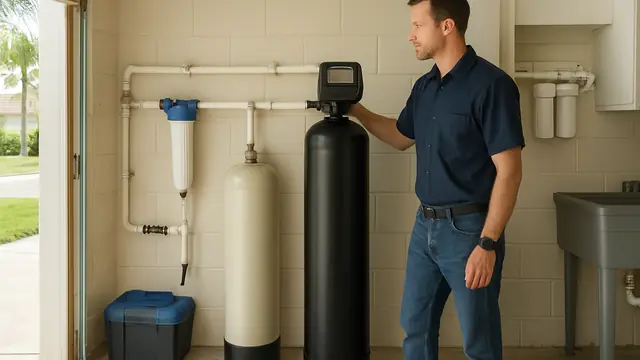
Inspect the water heater, connections, shutoff, drain pan, relief valve, discharge piping, and visible gas or electrical components.
The temperature-and-pressure relief valve protects the unit if temperature or pressure becomes unsafe. Buyers should not test it themselves because an older valve may fail to reseal.
Water near the base, rust streaks, damaged venting, exposed wiring, scorch marks, or inconsistent temperature should be investigated before closing.
Safe Checks the Buyer Can Perform
- Run hot and cold water at each accessible faucet. Compare flow between rooms and note whether sputtering affects one fixture or several.
- Flush every toilet and wait for the tank to stop filling. Watch how sinks, tubs, and showers drain. Look beneath cabinets without moving plumbing.
- Check flooring around toilets and appliances, ceilings below bathrooms, and the water-heater area. Record when noises, odors, or moisture appear.
What the Buyer Should Not Attempt
- Do not force shutoff valves, remove cleanout caps, disassemble traps, open water-heater electrical covers, adjust gas components, or operate the relief valve.
- Do not use chemical drain cleaner before inspection. It can create a hazard for technicians, affect some plumbing components, and temporarily hide a restriction.
- Do not accept cosmetic repairs as proof that the plumbing source was corrected. Ask for records or testing.
Signs That Make the Condition Urgent
Active leakage, wastewater backup, strong sewer odor, wet ceilings, water near electrical components, unstable toilets, or moisture around the water heater require prompt evaluation.
Several slow drains, repeated bubbling, unexplained meter movement, sudden pressure loss, or repeated repairs in the same area also deserve timely diagnosis.
If the water is shut off or important plumbing areas cannot be accessed, the system remains incompletely evaluated.
How a Licensed Plumber Diagnoses the Findings
A plumber combines the buyer's observations, visual inspection, fixture testing, moisture readings, drain testing, and specialized tools.
The plumber may remove and inspect a faucet aerator, test hot and cold flow separately, operate the tub while observing the toilet, or isolate the sink, dishwasher, and disposal to trace cabinet moisture.
A useful report should identify defects, causes, limitations, and next steps.
Repair Options Beginning With the Least Invasive
Minor repairs may include cleaning or replacing an aerator, replacing a faucet cartridge, toilet component, supply connector, drain seal, trap part, appliance hose, or shutoff valve.
Moderate work may include professional drain clearing, fixture replacement, localized pipe repair, water-heater component correction, or adding an accessible cleanout.
More extensive work may involve water-heater replacement, sewer-line repair, partial repiping, or whole-home repiping. Large replacement projects should follow verified evidence of widespread deterioration, repeated failure, or impractical repair access.
Typical Factors Affecting Cost
Cost depends on the defect, access, materials, labor, testing, permits, and restoration.
An exposed sink connection is generally easier to repair than piping behind cabinetry, tile, or a finished wall. Sewer work varies with depth, access, length, and defect type. Water-heater work depends on equipment, capacity, energy source, and installation corrections.
Prevention and Maintenance After Closing
Locate and label the main shutoff and individual fixture valves. Replace worn appliance hoses, repair leaks promptly, and keep grease, wipes, and unsuitable items out of drains.
Follow manufacturer recommendations for water-heater maintenance. Save repair records and watch for changes in pressure, drainage, fixture sounds, odors, or water usage.
Finish the Purchase With Clear Answers
A plumbing inspection checklist before buying a Northwest Florida home in Wright helps you understand whether the observed symptoms require a small repair, additional drain testing, leak diagnosis, or larger planning. Verified information helps you decide what belongs before or after closing.
About this guide: This resource provides general homeowner education, not a remote diagnosis. Actual conditions, code requirements, equipment, and safe repair options must be evaluated at the property.