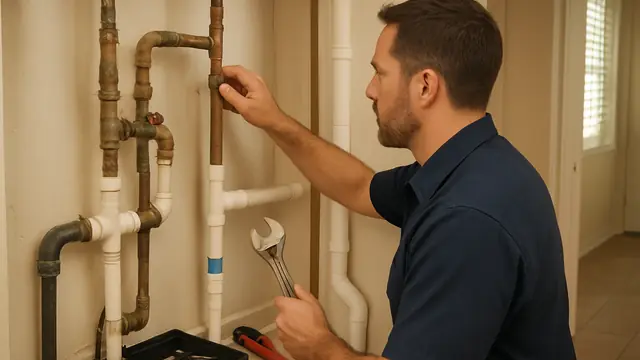
Stop and call for qualified help when plumbing water is near electrical equipment, sewage is entering occupied space, gas or burning odors are present, or a repair would require opening pressurized piping.
You return home and find a faint damp line along the baseboard behind a bathroom wall. The floor is not flooded, but the toilet has refilled twice without being flushed. These may be among the seven warning signs of a hidden plumbing leak in Wright, FL.
Stop using the nearby bathroom or fixture until you determine whether the moisture is active. If water is spreading, close the closest working shutoff valve. Use the main water shutoff when the source cannot be isolated. Stay away from wet electrical equipment and do not disturb softened ceilings or walls.
A Hidden Leak Can Be Continuous or Intermittent
A pressurized supply pipe may release water even when no fixture is operating. A drain leak may appear only during a shower, flush, sink use, or appliance discharge. Timing helps separate these possibilities.
Seven Warning Signs of a Hidden Plumbing Leak in Wright
1. A Toilet Refills Without Being Used
Unexpected refilling often means water is escaping from the tank into the bowl. Listen for short refill cycles. You can add a few drops of food coloring to the tank and wait without flushing. Color appearing in the bowl suggests tank-to-bowl leakage. Do not add cleaners or other chemicals during the test.
2. The Water Meter Moves During a No-Use Period
Turn off faucets, irrigation, appliances, ice makers, and automatic water-using equipment. Make sure toilets have stopped filling. Photograph the meter, avoid all water use for 15 to 30 minutes, and compare the reading.
3. Water Use Increases Without a Change in Routine
Compare recent bills with similar billing periods. Consider visitors, irrigation, pool filling, additional laundry, or occupancy changes. When those factors do not explain the increase, investigate toilets, appliance connections, concealed supply piping, and the underground service line.
4. A Wall, Ceiling, or Baseboard Begins to Change
Hidden moisture may create stains, bubbling paint, soft drywall, swollen trim, or loose texture. Do not puncture a ceiling bulge or push on weakened drywall. Saturated materials can fall, and electrical wiring may be concealed nearby.
5. Flooring or Cabinet Materials Swell or Shift
Laminate may lift, wood can cup, tile may loosen, grout can darken, and cabinet bottoms may sag when moisture remains underneath.
Use a dry paper towel around exposed valves, faucet supply tubes, drain fittings, and appliance hoses. If a fixture or appliance makes the area wetter, leave it off until inspection.
6. A Damp Odor or Water Sound Keeps Returning
A musty smell may indicate trapped moisture, while hissing, dripping, or trickling can reveal active water movement. First rule out normal sounds from toilets, the refrigerator, irrigation, appliances, and the water heater.
7. Pressure Changes at More Than One Fixture
A weak stream at one faucet may be caused by an aerator, cartridge, or local valve. A sudden pressure change throughout the home may involve the main valve, regulator, utility supply, or a significant leak.
Check several cold-water fixtures. When pressure falls while the meter shows continued use, close the main shutoff and call a licensed plumber.
Most Common Possible Causes
Hidden leaks often begin at toilet components, fixture supply tubes, appliance hoses, shutoff valves, shower connections, drain joints, and water-heater fittings. Concealed supply pipes, drain lines, and underground water service can also fail.
Corrosion, high pressure, vibration, movement, age, accidental damage, poor support, and installation stress may contribute.
Safe Checks the Homeowner Can Perform
Perform the no-use meter test. Check toilets for unexpected refilling and use the food-coloring test when appropriate. Inspect exposed plumbing with a flashlight and dry paper towel.
Note whether hot water, cold water, drainage, or one appliance cycle triggers the symptom. Locate the main shutoff before an emergency. If a fixture valve safely stops the leak, leave the fixture unused.
What the Homeowner Should Not Attempt
Do not cut walls, remove flooring, break tile, open ceilings, or excavate before testing narrows the source. Avoid chemical leak sealers and improvised repairs.
Do not force a stuck shutoff valve or repeatedly tighten a leaking fitting. A brittle component can crack, and hidden piping can twist. Never handle electrical devices in a damp area. Do not continue using a fixture or appliance when each use worsens the damage.
Signs That Make the Problem Urgent
Act immediately when water is near electrical components, a ceiling sags, flooring feels unstable, sewage appears, pressure drops sharply, or the meter moves rapidly. Use the main shutoff when active leakage cannot be controlled at a fixture.
How a Licensed Plumber Diagnoses a Hidden Leak
A plumber reviews the timing of the symptom and checks visible plumbing. Meter testing may confirm continuing use. Pressure measurements and isolation tests can distinguish hot-water, cold-water, fixture, appliance, and underground sources.
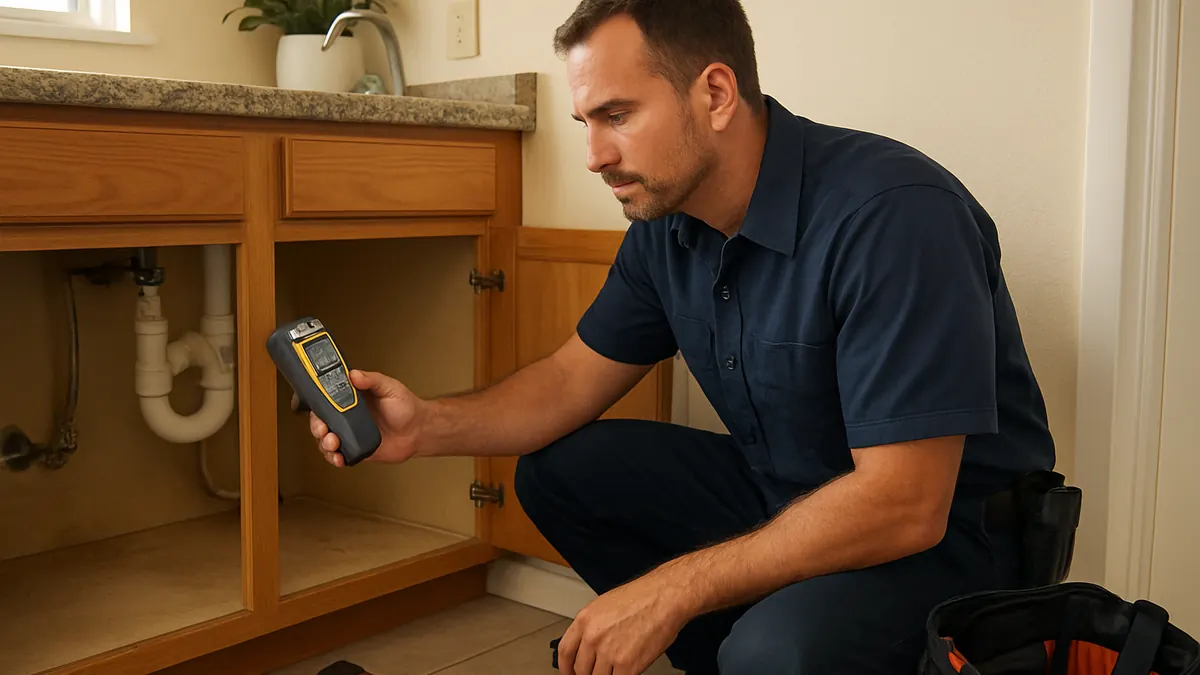
Moisture meters help define affected materials. Acoustic equipment may help locate pressurized water, while thermal imaging can reveal unusual temperature patterns. Individual drains, pressure tests, tracer methods, or a sewer camera may also be used when appropriate.
Repair Options Beginning With the Least Invasive
A running toilet may need a new flapper, fill valve, seal, or another internal component. Other accessible leaks may require replacement of a supply tube, appliance hose, shutoff valve, faucet cartridge, drain fitting, or water-heater connector.
A localized concealed pipe failure may be repaired through one controlled opening. Partial or whole-home repiping may be considered when testing documents repeated failures, widespread deterioration, or multiple weak sections. It should not be the automatic recommendation for one isolated leak.
Typical Factors Affecting Cost
Cost depends on diagnostic time, the source and location of the leak, pipe material and size, accessibility, and the finishes between the plumber and the failed component. Tile, concrete, cabinetry, excavation, and tight spaces can increase labor.
Ask whether the estimate includes diagnosis, access, repair, testing, and closure of openings.
Prevention and Maintenance Guidance
Repair toilets that run, refill unexpectedly, or move at the floor. Inspect supply tubes, appliance hoses, shutoff valves, drain fittings, and water-heater connections for corrosion, cracking, bulging, or moisture.
Keep the main shutoff reachable. Review water bills and meter behavior when usage changes. Arrange periodic inspections when the property will be unoccupied.
Follow the Pattern and Protect the Property
The seven warning signs of a hidden plumbing leak in Wright, FL include unexpected toilet refilling, meter movement, higher usage, damaged finishes, recurring odors or sounds, and pressure changes. Even one repeated warning can justify professional evaluation.
Stop using the likely source, shut off uncontrolled water, record when symptoms appear, and avoid random demolition. A licensed plumber can identify whether the problem is a toilet component, accessible connection, concealed pipe, drain, or underground line and recommend the least invasive reliable repair.
About this guide: This resource provides general homeowner education, not a remote diagnosis. Actual conditions, code requirements, equipment, and safe repair options must be evaluated at the property.