Wright, FL homeowners know how quickly weather can shift from routine to disruptive. Summer storms, coastal humidity, and sudden outages can put real stress on a home’s electrical system, especially if the panel is older, the wiring has been patched over time, or the property has added new appliances without a matching electrical upgrade. A backup generator can keep the lights on, but it also needs to work safely with the rest of the system. That is where careful planning and licensed electrical service make the difference.
If you are comparing options for power backup generators in Wright, FL, it helps to think beyond the generator itself. The transfer switch, panel capacity, grounding, surge protection, dedicated circuits, and load management all affect how well the system performs when the power goes out. A poorly matched setup can do more than fail during an outage. It can damage outlets, breakers, appliances, and sensitive electronics.
Why backup power matters more in Wright than many homeowners expect
Wright sits in a part of Okaloosa County where storms, salt air, and high demand on electrical systems are part of daily life. Homes near the coast often deal with corrosion on outdoor equipment, moisture intrusion around meter bases, and wear on breakers and connections. Older homes may still have panels that were never designed for modern loads like EV chargers, high-efficiency appliances, multiple TVs, and home office equipment. Newer homes and remodels can have the opposite problem: too many added circuits and devices without enough panel space or proper load balancing.
That is why local electrical service matters. A licensed electrician who works in Wright and throughout Okaloosa County understands how local weather and building styles affect generator installation, grounding, and code compliance. A generator that is sized and connected correctly can protect refrigerators, lighting, internet equipment, garage door openers, security systems, and essential medical devices without overloading the home.
What a safe generator setup should include
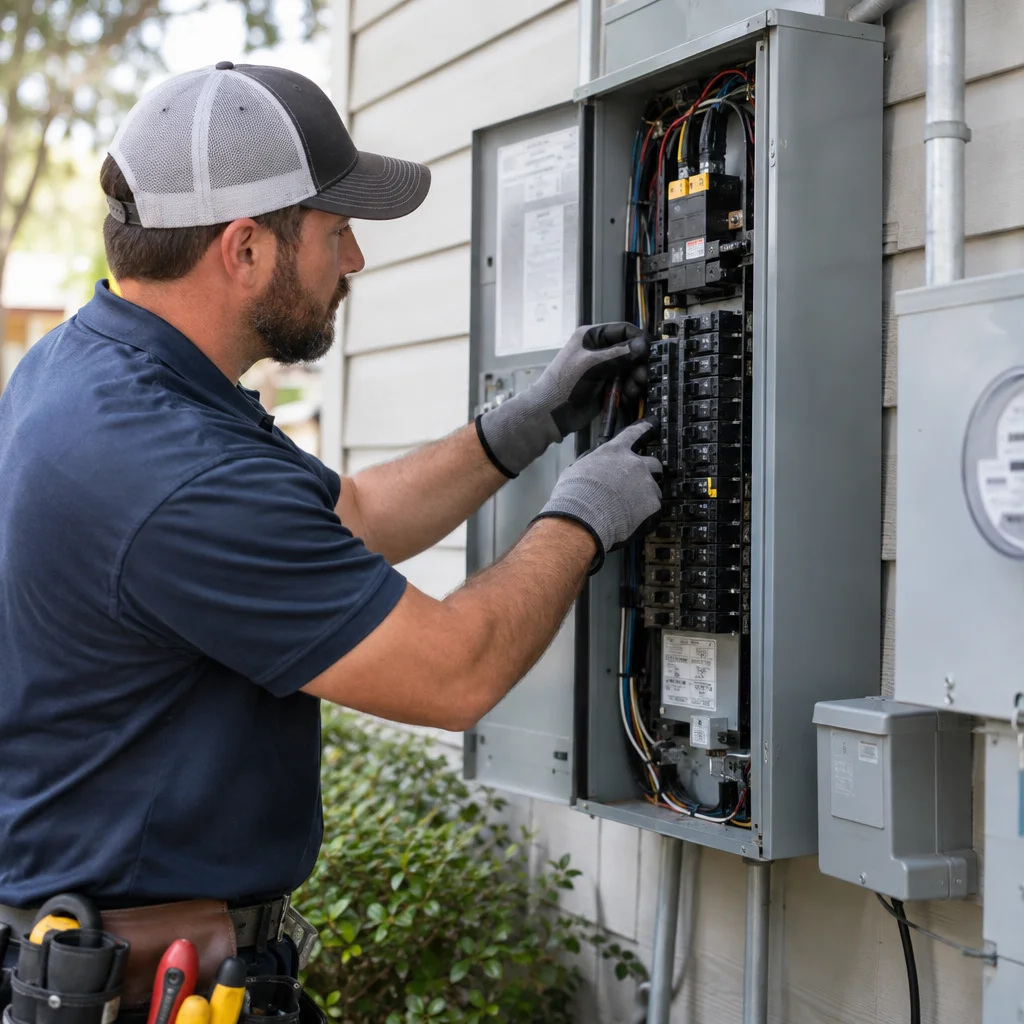
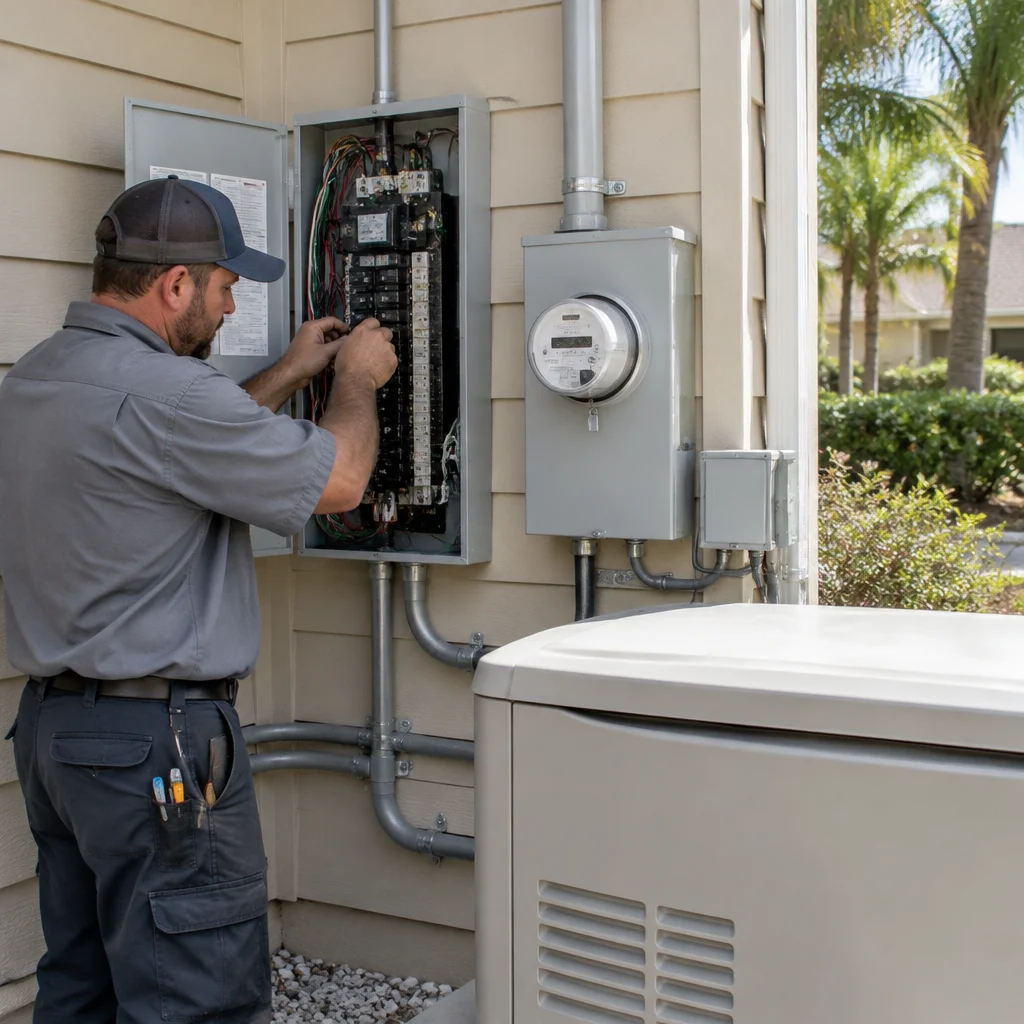
A backup generator is only one part of the system. The electrical work around it matters just as much. Most homes need a properly installed transfer switch or interlock, a clear understanding of which circuits are backed up, and a panel that can handle the added load. In many cases, a homeowner searching for an electrical panel upgrade near me is really dealing with a bigger issue: the panel may be too small, too old, or too worn to support safe generator integration.
Transfer switches and load management
A transfer switch prevents dangerous backfeed into utility lines and keeps the generator from being connected in an unsafe way. It also helps homeowners decide which circuits matter most during an outage. That may include refrigeration, a few lighting circuits, a sump or well pump if applicable, internet service, and certain outlets. For larger homes or properties with additions, the electrician may recommend dedicated backup circuits so the generator is not trying to support everything at once.
Grounding, bonding, and code compliance
Generator systems must be grounded and bonded correctly. That protects both the equipment and the people using it. In coastal Florida, corrosion and moisture can make weak connections worse over time. A code compliant installation also helps avoid problems with inspections, insurance claims, and future repairs. If a property has older service equipment, the electrician may recommend related corrections such as meter base repair, breaker panel repair, or even targeted rewiring before the generator is installed.
Surge protection and sensitive electronics
Storms and utility fluctuations can create voltage spikes that damage computers, televisions, smart home systems, and appliances. Whole home surge protection is one of the simplest ways to reduce repair bills after an outage or generator transfer. It is especially useful in homes that already rely on modern electronics, USB outlets, smart thermostats, and hardwired security devices. Many homeowners also pair generator service with battery backup systems for routers, alarms, or other small loads that need instant support before the generator starts.
Electrical warning signs that should not be ignored before installing a generator
Generator installation should never be treated as a fix for a struggling electrical system. If the panel is already showing stress, the backup system may only reveal bigger problems faster. Common warning signs include breakers that trip repeatedly, outlets that feel warm, flickering lights, buzzing switches, rust or discoloration around the panel, and a burning smell near electrical equipment. A homeowner searching for breaker panel repair near me after a storm is often dealing with damage that needs immediate attention before any generator work begins.
Other concerns include loose outlets, dead receptacles, tripping GFCI devices, and lights that dim when major appliances start. These issues can point to overloaded circuits, aging wiring, or poor connections. In older Wright homes, knob and tube wiring or partial rewires may still exist in some sections of the house. In that case, a generator project can become an opportunity to address safety issues that have been hidden for years.
How storms and outages damage electrical systems
Storms do not just turn the lights off. They can create surges, partial power loss, and repeated on and off cycling that wears out breakers and electronics. A lightning strike nearby can send a spike through utility lines. High winds can damage service drops, meter equipment, and outdoor connections. Even a short outage can stress refrigerators, HVAC controls, garage door openers, and other motor driven equipment when power returns.
That is why homeowners looking for generator installation near me should also ask about surge protection, grounding, and routine maintenance. A generator that starts reliably but feeds a weak or damaged electrical system can still leave the home vulnerable to expensive repairs. If storm damage affects more than the generator, a same day electrician near me search may lead to needed inspection, outage troubleshooting, or temporary repairs.
Generator sizing should match the home, not guesswork
One of the most common mistakes is choosing a generator based on price alone. A small unit may run a few lights and a refrigerator, but it may not handle the startup load of a well pump, central air components, or multiple kitchen appliances. An oversized generator can also be a poor fit if the panel, transfer equipment, or fuel system is not designed for it. The right size depends on the property’s actual electrical demand.
That is where a licensed electrician can review the panel, identify critical circuits, and recommend whether the home needs a full standby generator, a smaller backup system, or a combination of generator and battery support. For homes with electric dryers, ranges, or EV charging, the service may also include dedicated circuits for appliances so the generator is not forced to support unnecessary loads. If your project includes a future charger, it may also make sense to plan for dedicated circuit installation near me before the next outage season.
Local homes often need more than one electrical improvement at a time
In Wright, generator projects often overlap with other electrical work. A homeowner may need outlet installation, switch repair, lighting installation, or wiring repair around the same time the backup system is installed. Remodels and additions can create uneven electrical loads if new rooms were added without a full panel review. In those cases, a generator project is a good time to check for code corrections, GFCI protection, and proper circuit labeling.
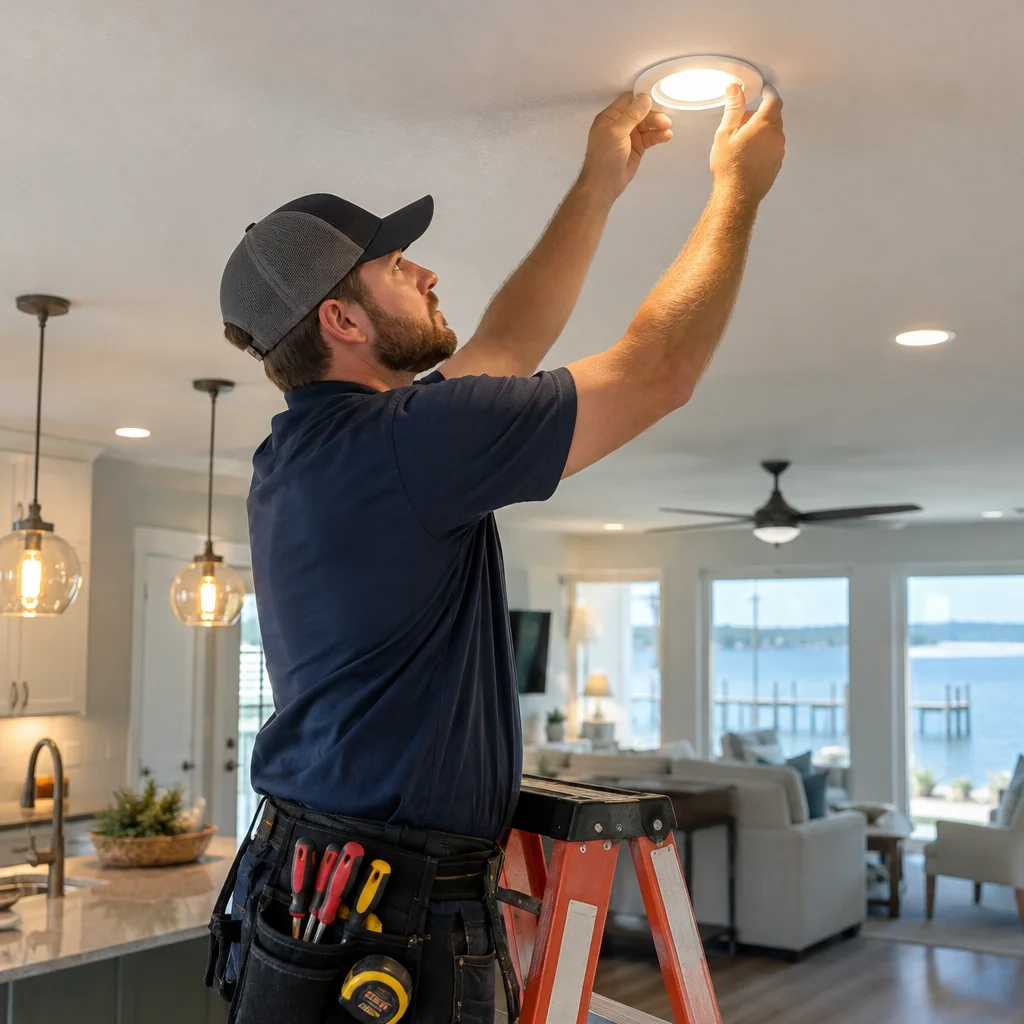
It is also common for families to ask about power generator installation and maintenance while also planning for recessed lighting installation near me, kitchen lighting installation near me, or ceiling fan wiring in a renovated room. These projects all depend on the same foundation: a safe, well organized electrical system with enough capacity to handle modern use.
Maintenance habits that help generators and electrical systems last longer
Routine maintenance keeps backup power ready when it matters. That includes testing the generator under load, checking fuel supply, inspecting battery condition, cleaning corrosion from terminals, and making sure the transfer switch operates correctly. It also means looking at the rest of the electrical system. Loose lugs, worn breakers, damaged conduits, and moisture intrusion can all interfere with performance during an outage.
Homeowners in coastal Florida should also watch outdoor equipment closely. Salt air can shorten the life of exposed electrical parts, including disconnects, exterior outlets, and generator connections. If a property has a pool, outdoor kitchen, workshop, or detached structure, the electrician should verify that all exterior circuits have proper GFCI protection and weather rated covers. A pool electrical repair near me search after a storm often points to broader outdoor wiring concerns that should be inspected before the next weather event.
When a generator project should include a panel upgrade or rewiring
Some homes can add backup power without major electrical changes. Others need more work first. If the panel is full, if breakers are mismatched, if the service equipment shows heat damage, or if the home still relies on outdated wiring methods, the safest path may be a panel upgrade or partial rewiring. That is especially true in older properties where an outlet repair near me search keeps turning up the same problem in different rooms.
Homeowners who are also planning EV charger installation, dryer outlet installation near me, range outlet installation near me, or usb outlet installation near me may discover that the panel simply needs more capacity. In those cases, a generator project becomes part of a larger electrical improvement plan rather than a stand alone install. Local electricians can evaluate whether the home needs house rewiring near me support, a service upgrade, or targeted corrections to bring the system up to current standards.
Why local electrical inspections save money after storms
After an outage or surge, it is smart to have the system checked even if everything appears to be working. Hidden damage can show up later as nuisance tripping, dead outlets, failed GFCIs, or equipment that wears out early. A professional inspection can catch loose connections, damaged breakers, grounding problems, and issues around the meter base or service entrance before they become expensive repairs.
For Wright property owners, that kind of local support matters because storm patterns and humidity create wear that out of town contractors may miss. A local electrician near me search should lead to someone who understands how to protect homes from repeated outages, moisture, and the demands of modern living. If the property needs emergency electrical concerns addressed quickly, the goal is not just to restore power. It is to restore it safely, with the panel, circuits, and backup system all working together.
Planning a generator installation the right way
Before installing a backup generator, walk through the home room by room and list the circuits that truly matter. Decide whether the priority is refrigeration, lighting, internet, medical equipment, security, or a few key outlets. Then have a licensed electrician review the panel, grounding, transfer equipment, and any existing electrical issues. That approach helps prevent overloads and avoids costly surprises during the first outage.
If your property is older, recently remodeled, or already showing signs of electrical wear, it may be wise to combine generator planning with a broader inspection or maintenance visit. That could include lighting installation, switch repair, outlet installation, code corrections, or dedicated circuits for appliances. A well planned system does more than keep the power on. It protects the home’s electrical backbone from avoidable damage and gives Wright homeowners a safer way to ride out storm season.
For property owners ready to move forward, A Superior Mechanical provides local generator service designed for Wright homes, rentals, and businesses that need dependable backup power and careful electrical work.
Find Power Backup Generators in Wright, FL
If you need Power Backup Generators in Wright, FL, visit our local service page or contact A Superior Mechanical today.
Map of Wright, FL
Frequently Asked Questions
Do I need a transfer switch for a backup generator in Wright, FL?
Yes. A transfer switch or approved interlock is a key safety component because it prevents backfeed into utility lines and helps the generator connect properly to the home’s circuits.
Can a generator be installed on an older electrical panel?
Sometimes, but not always. If the panel is full, outdated, damaged, or not grounded correctly, the electrician may recommend a panel upgrade or rewiring before installation.
What electrical problems should be fixed before adding backup power?
Repeated breaker trips, warm outlets, flickering lights, corrosion at outdoor equipment, loose wiring, and GFCI issues should be addressed first so the generator can support a safe system.
How often should a standby generator be maintained?
It should be tested and inspected regularly, especially before storm season. Maintenance usually includes battery checks, load testing, corrosion inspection, and transfer switch verification.
Related Articles
- Smart Electrical Planning for Wright Homes: Panels, Wiring, Outlets, and Prevention
- How Electrical Wear and Tear Shapes Commercial New Construction in Wright, FL
- Keeping Wright Homes Powered Safely With Dedicated Appliance Circuits
- A Practical Guide to Smarter Commercial Plumbing Maintenance in Wright, FL
Photo Gallery