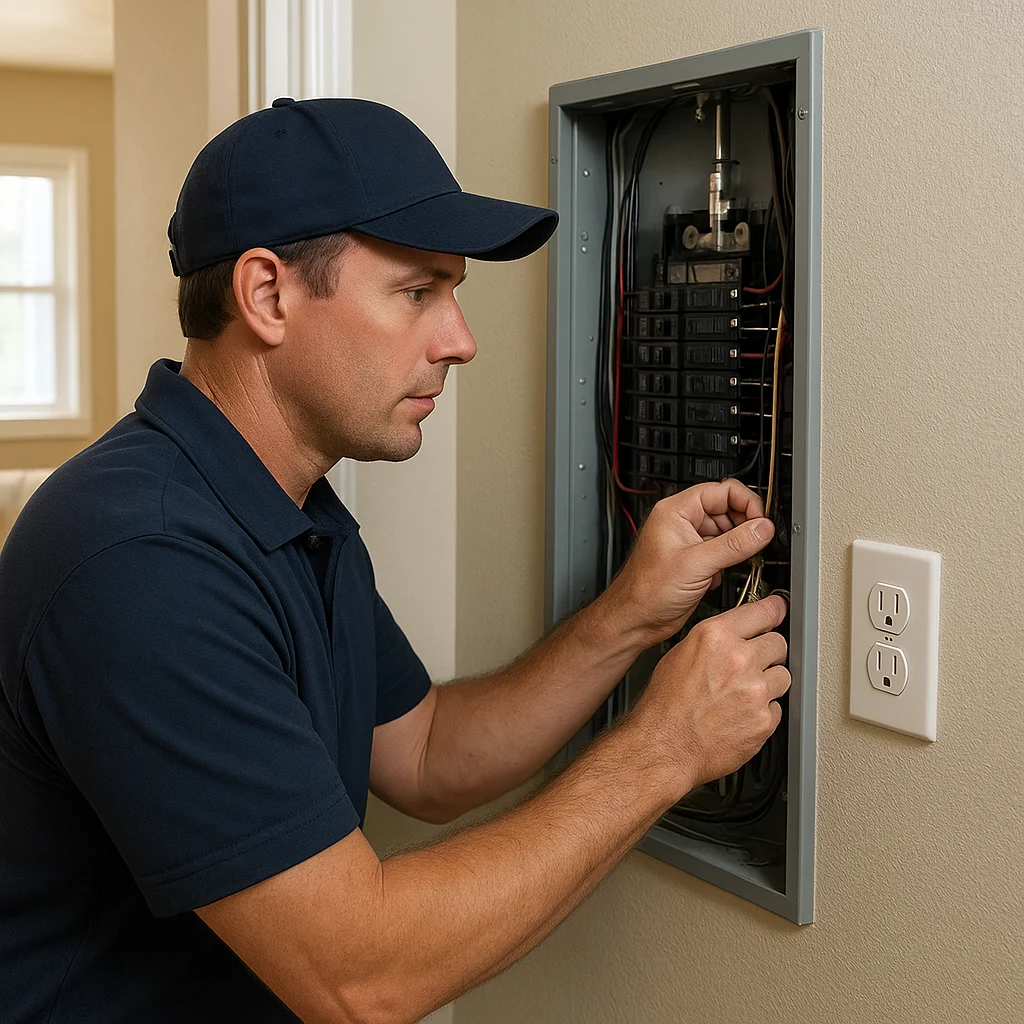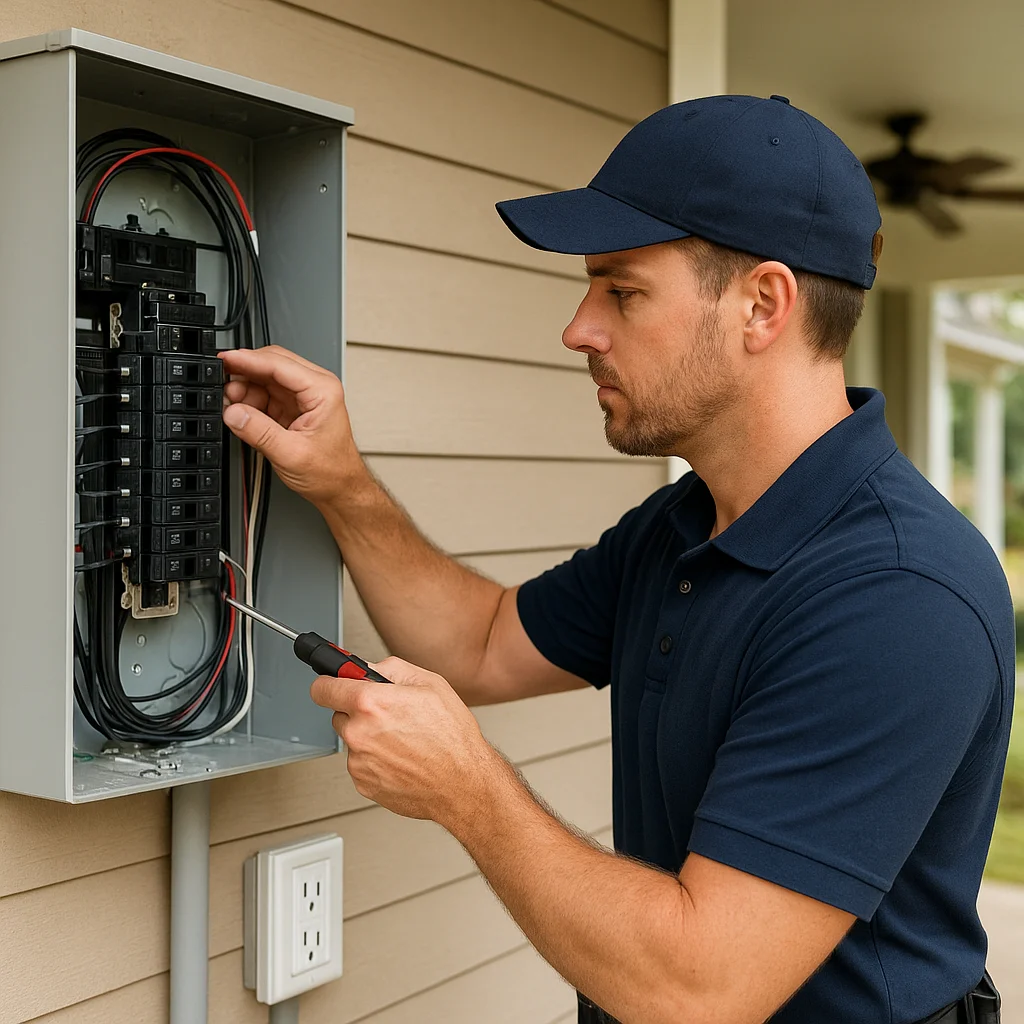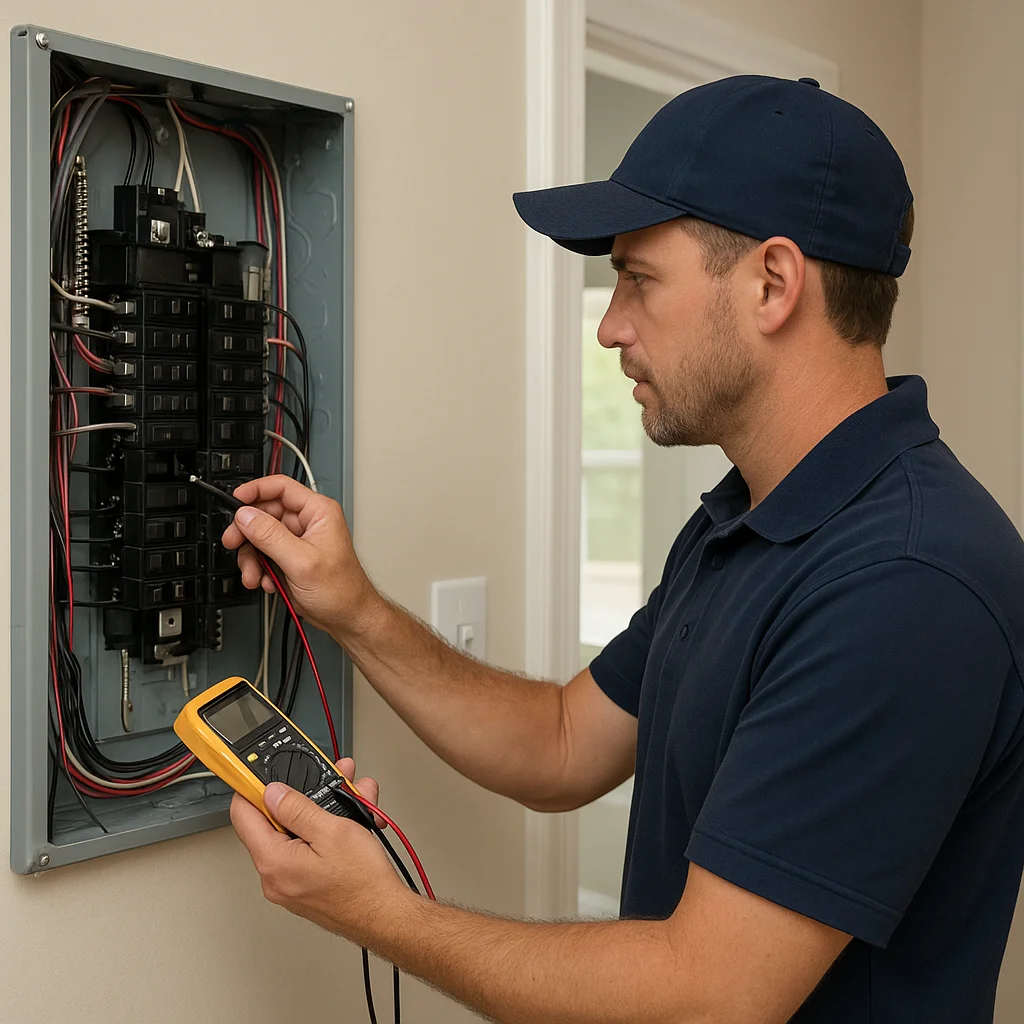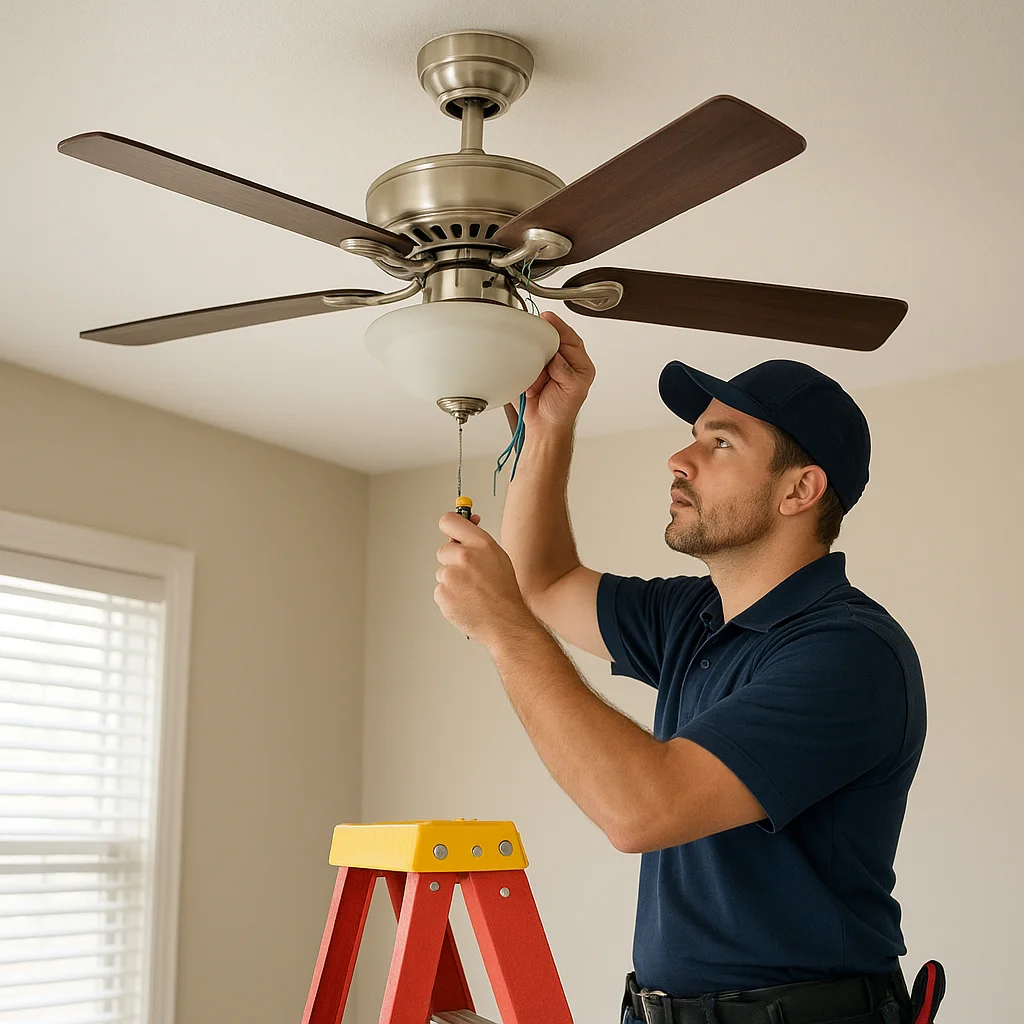
Ceiling fans do a lot of work in Wright, FL homes. They help rooms feel cooler in humid weather, move air through older floor plans, and give added comfort in homes, rentals, and remodels across Okaloosa County. When a fan starts wobbling, humming, or tripping a breaker, the issue is often more than the fan itself. In many cases, the real problem is electrical.
That is why ceiling fan services in Wright, FL should be handled with the same care as any other electrical repair. A loose mounting box, undersized circuit, worn switch, or aging wiring can turn a simple fixture into an expensive service call. If you are searching for a ceiling fan service in Wright, it helps to understand what causes the most common problems and how to prevent them before they damage the fan, the ceiling, or the circuit.
Why ceiling fan issues are often electrical, not just mechanical
Many homeowners assume a noisy or shaky fan needs replacement blades or a new remote. Sometimes that is true, but electrical conditions are often the reason the fan fails early. A fan that is not wired correctly can pull uneven power, run too hot, or overload a switch that was never meant to handle it.
In Wright, where coastal weather, storms, and humidity can affect homes year after year, electrical components age in ways that are not always obvious. Older homes may still have original wiring, outdated boxes, or switches that were installed before modern fans and lighting controls became common. Newer homes and additions can have different issues, especially if a remodel added a fan to a circuit that is already carrying lighting, outlets, or other loads.
If you are looking for a local electrician near me, it is worth choosing someone who can check the full electrical setup, not just the fixture itself.
Common causes of ceiling fan problems in Wright homes
Improper mounting or an unsupported electrical box
One of the biggest causes of fan trouble is a box that was not rated for ceiling fan use. A standard light fixture box may hold a small fixture, but a spinning fan puts constant movement and vibration on the connection. Over time, that can loosen screws, stress the ceiling, and create a safety issue.
In homes with older drywall, attic access, or past remodels, the box may also be attached to framing that is not strong enough for the fan’s weight. The result can be wobbling, noise, or visible movement at the ceiling. This is not just annoying. It can damage the wiring and create a drop hazard.
Loose wiring connections
Loose wire nuts, worn conductors, or poor splices can cause flickering, intermittent operation, or a fan that only works on certain speeds. Heat, vibration, and age can all make the problem worse. In coastal areas like Wright, moisture and corrosion can also affect connections over time.
If a fan starts cutting out after a storm or after a breaker trip, the issue may be deeper than the fixture. A licensed electrician can inspect the fan wiring, the switch leg, and the junction box to make sure the circuit is secure.
Worn wall switches and fan controls
Many fan problems come from the control side. A standard light switch may not be designed for fan speed control, and an older dimmer can overheat if it is used on the wrong type of fixture. Remote receivers and smart controls can also fail if they are not matched correctly to the fan and the circuit.
Homeowners searching for electrical services near me often discover the fan itself is fine, but the switch, control module, or wiring path needs attention. Replacing a failing control early can prevent damage to the motor and reduce the chance of breaker issues.
Overloaded circuits and breaker problems
Ceiling fans do not usually draw a lot of power, but they still need the right circuit. In homes where a fan shares a circuit with lighting, outlets, or other appliances, nuisance trips can happen. That is especially true in older homes that were not built for today’s power demand.
When a breaker trips repeatedly, do not ignore it. The breaker may be protecting wiring that is overloaded, damaged, or connected to a fan that is installed incorrectly. If the same room also has flickering lights or warm switches, the circuit should be checked before the problem spreads.
For homeowners comparing ceiling fan work with broader upgrades, it may also make sense to review Smart Electrical Planning for Wright Homes: Panels, Wiring, Outlets, and Prevention and Keeping Wright Homes Powered Safely With Dedicated Appliance Circuits.
Age of the home and older wiring
Wright has a mix of older homes, updated properties, and newer construction. That variety matters because fan installation needs can change depending on the wiring age and panel condition. Older wiring may not have grounding where it should, and some homes still have aluminum wiring or other legacy components that need special handling.
If a ceiling fan is being added during a remodel, it is smart to ask whether the circuit, grounding, and box are actually ready for it. A fan can expose hidden issues that were easy to miss when only a light fixture was in place.
Safety tips that can prevent expensive repairs
Match the fan to the box and the circuit
Before installing or replacing a fan, the box should be rated for ceiling fan support and the circuit should be able to handle the load. This is especially important in rooms with recessed lighting, multiple switches, or added outlets. A proper installation reduces vibration and lowers the risk of loose wiring later.
If the project also involves new lighting, it may be a good time to ask about specialty and smart electrical services, especially if you want integrated controls or updated switches.
Use the right switch for the right fan
Not every switch is fan friendly. A fan speed control, smart switch, or combined light and fan control must be installed correctly to avoid overheating. If the fan hums, runs slowly, or behaves differently after a switch replacement, the control may be mismatched.
This is a common reason homeowners end up searching for a code correction electrician near me after a DIY upgrade. The fix is often simple for a licensed electrician, but ignoring it can shorten the life of the fan and the switch.
Keep an eye on vibration and ceiling movement
A fan should not shake the ceiling, rattle the trim, or wobble enough to make the light kit buzz. Small movement can loosen fasteners over time, and that can lead to damaged drywall, cracked plaster, or failed electrical connections.
If the fan has always wobbled, the blades may need balancing. If it suddenly starts shaking after a storm, power outage, or repair, the mounting box or wiring may have shifted. That is a good time to schedule an inspection before the problem becomes a ceiling repair.
Protect the home from storm related electrical damage
Wright weather can bring heavy rain, wind, and power interruptions. After storms, ceiling fans may show symptoms of electrical stress such as flickering, slow starts, or dead remote receivers. Surges can also affect controls and circuit boards.
Whole home protection matters here. Homeowners often pair fan service with generator installation and maintenance, battery backup systems, or smoke detectors and carbon monoxide detectors for added safety. A properly installed surge protector installation near me search often points to a larger conversation about panel protection and grounded circuits.
Where ceiling fan service fits into broader electrical maintenance
Ceiling fans are part of the home’s electrical system, so they should be considered alongside other maintenance items like outlets, switches, lighting, and panel condition. If a fan problem comes with hot outlets, buzzing lights, or a breaker that will not stay reset, the issue may involve a larger electrical fault.
That is why homeowners in Wright often benefit from a full inspection during fan service, especially in homes with additions, detached garages, porches, or vacation rental upgrades. A good electrician can evaluate whether the room needs GFCI protection, a dedicated circuit, better grounding, or a panel upgrade. In some cases, a 200 amp panel upgrade near me search is not about the fan at all, but about a home that has outgrown its original electrical system.
For properties adding more devices, it may also be smart to review future needs such as electric car charger installation near me, generator transfer switch installation near me, or sub panel installation near me. Those upgrades can affect how much capacity is available for fans, lighting, and other loads in the same home.
Ceiling fan issues that deserve prompt attention
Some fan problems can wait a day or two. Others should be checked right away. Call an electrician if you notice burning smells, scorch marks on the switch, repeated breaker trips, sparking, buzzing from the ceiling box, or a fan that feels hot to the touch. Those are signs of a wiring or control issue, not just normal wear.
It is also wise to get help if the fan is installed in a bathroom, covered porch, or other area where moisture can affect the wiring. Coastal humidity, salt air, and storm exposure can all shorten the life of electrical parts if they are not selected and installed correctly.
If the problem happens outside normal business hours and affects safety or power, some homeowners begin with a 24 hour electrician near me search. The important part is not waiting until a small issue becomes a damaged fan motor, burned switch, or ceiling repair.
How local electrical service helps Wright property owners
Local electrical service matters because Wright homes do not all face the same conditions. A beach-adjacent rental, an older family home, and a newer addition may all need a different ceiling fan solution. A local electrician understands the area’s weather, common wiring setups, and the way property owners use fans for comfort and efficiency.
That local knowledge also helps when a ceiling fan project overlaps with other electrical work such as lighting installation near me, outdoor lighting installation near me, light switch installation near me, or outlet repair near me searches that point to a larger wiring issue. The same homeowner may need a fan replacement, a safer switch, and a check on the panel all in one visit.
For property owners in Okaloosa County, professional ceiling fan work is often part of a bigger plan to keep the electrical system safe, efficient, and ready for storms, guests, and everyday use. If your fan is noisy, unstable, or tied to a circuit that keeps acting up, the safest fix is usually a licensed inspection and a proper repair. A Superior Mechanical provides the kind of ceiling fan services in Wright, FL that help prevent repeat problems and protect the rest of the electrical system too.
Find Ceiling Fan Services in Wright, FL
If you need Ceiling Fan Services in Wright, FL, visit our local service page or contact A Superior Mechanical today.
Map of Wright, FL
Frequently Asked Questions
Why does my ceiling fan wobble even after I tightened the blades?
A wobble can come from loose blades, but it can also mean the electrical box is not rated for a fan, the mounting bracket is loose, or the ceiling structure has shifted. If tightening the blades does not fix it, the box and wiring should be inspected.
Can a ceiling fan trip a breaker?
Yes. A fan can trip a breaker if the circuit is overloaded, the switch or control is failing, or the wiring has a short or loose connection. If the breaker trips more than once, the circuit should be checked before the fan is used again.
Do I need a special box for a ceiling fan?
Usually, yes. A ceiling fan should be mounted to a box that is rated for fan support. A standard light fixture box may not handle the vibration and weight of a fan safely over time.
Is it worth checking the panel when I replace a ceiling fan?
It can be. If the fan problem comes with flickering lights, breaker trips, or warm switches, the issue may involve the panel, circuit, or grounding. A full electrical inspection can catch problems that a simple fixture swap would miss.
Related Articles
- Smart Electrical Planning for Wright Homes: Panels, Wiring, Outlets, and Prevention
- How Electrical Wear and Tear Shapes Commercial New Construction in Wright, FL
- Keeping Wright Homes Powered Safely With Dedicated Appliance Circuits
- A Practical Guide to Smarter Commercial Plumbing Maintenance in Wright, FL
Photo Gallery