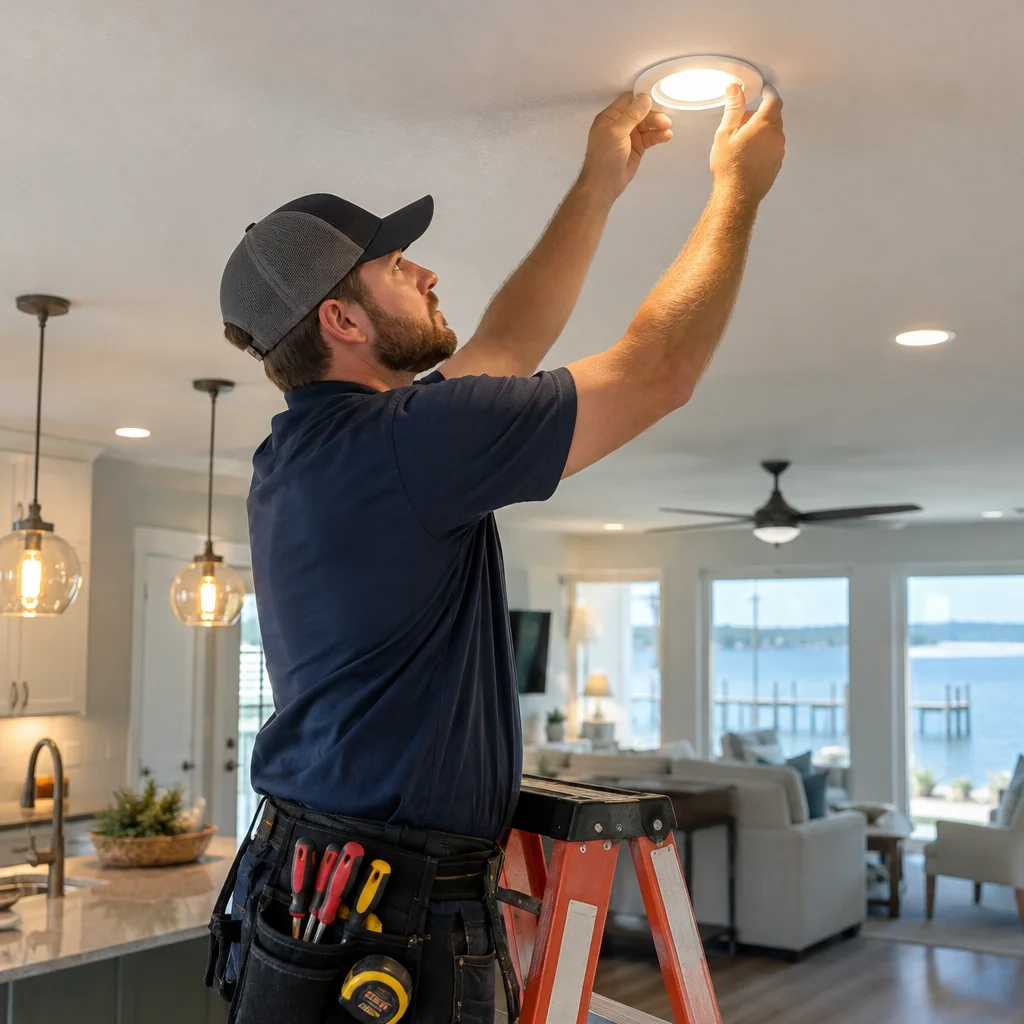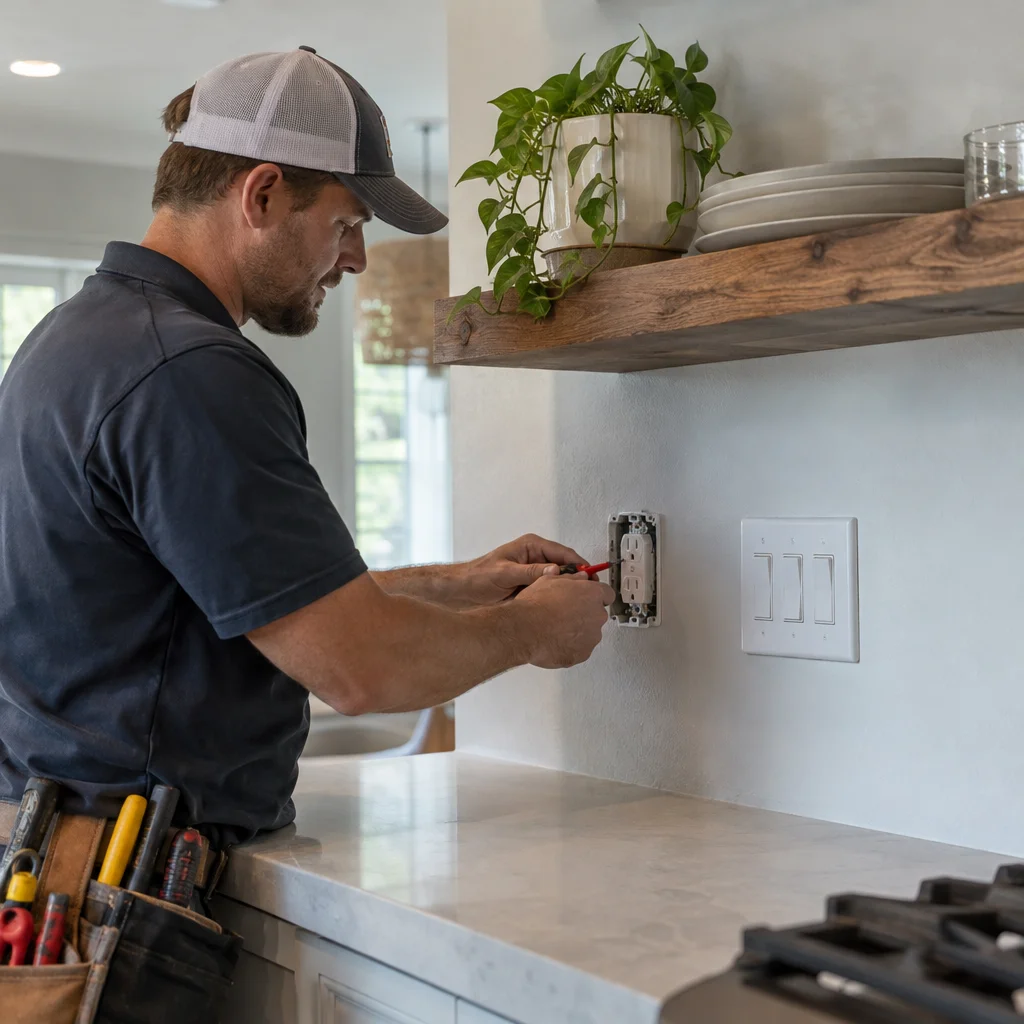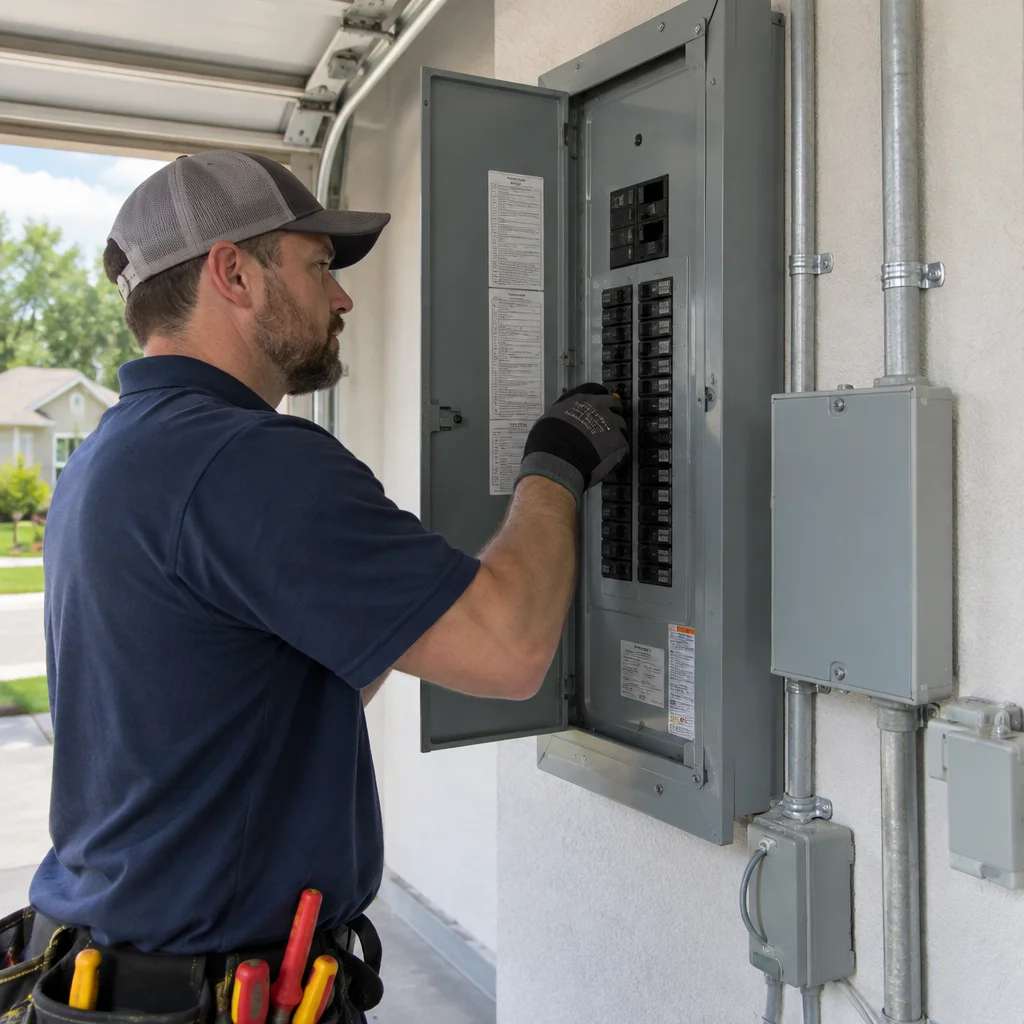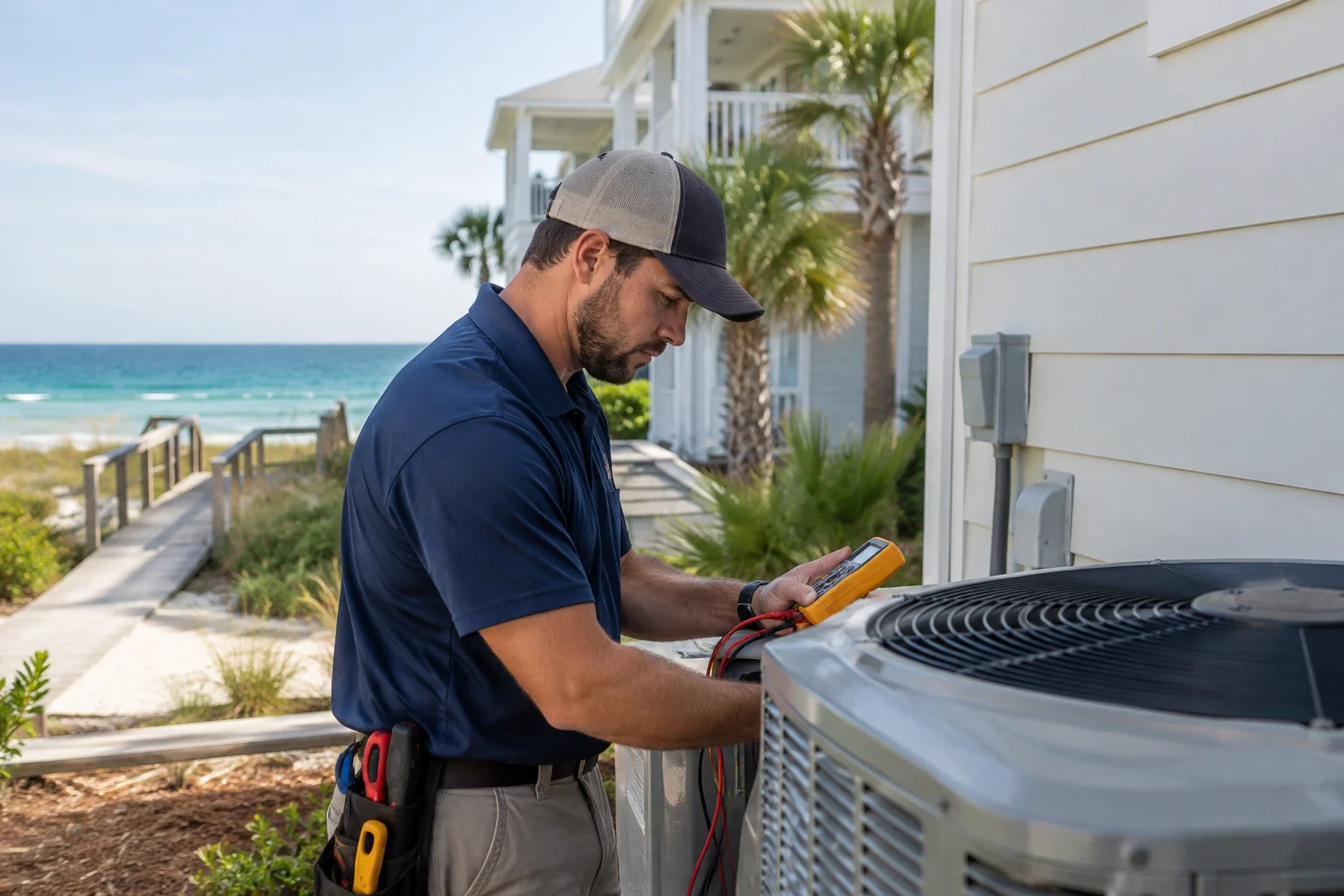
Ceiling fans do a lot of work in Springfield homes. They help rooms feel cooler, move air through older floor plans, and make Florida heat a little easier to live with. But when a fan starts wobbling, humming, or tripping a breaker, it is no longer just a comfort issue. It can point to loose wiring, an overloaded circuit, or a mounting problem that should be handled by a licensed electrician.
For homeowners in Springfield and across Bay County, ceiling fan installation and repair is one of those electrical jobs that looks simple until you get into the details. The right box, the right support, the right wiring, and the right switch control all matter. If you are comparing options for ceiling fan installation and repair in Springfield, FL, it helps to know what safe work should look like before a small issue turns into a safety concern.
Why ceiling fans matter more in Springfield homes
Springfield weather puts steady demand on electrical systems. Warm months, coastal humidity, and storm season all affect how homes use power. Fans are often used daily in bedrooms, living rooms, porches, and enclosed patios, which means wiring and switches get a lot of use. In older homes, that can expose weak points in the electrical system, especially if the fan was added years after the house was built.
In newer homes and remodels, the issue is often not age but load. A ceiling fan may share a circuit with recessed lighting, outlets, or other fixtures. If the circuit was not planned properly, a homeowner may notice flickering lights, a breaker that trips, or a fan that runs fine on low speed but struggles when the light kit is on. Those are all signs the electrical setup deserves a closer look.
What safe ceiling fan installation actually involves
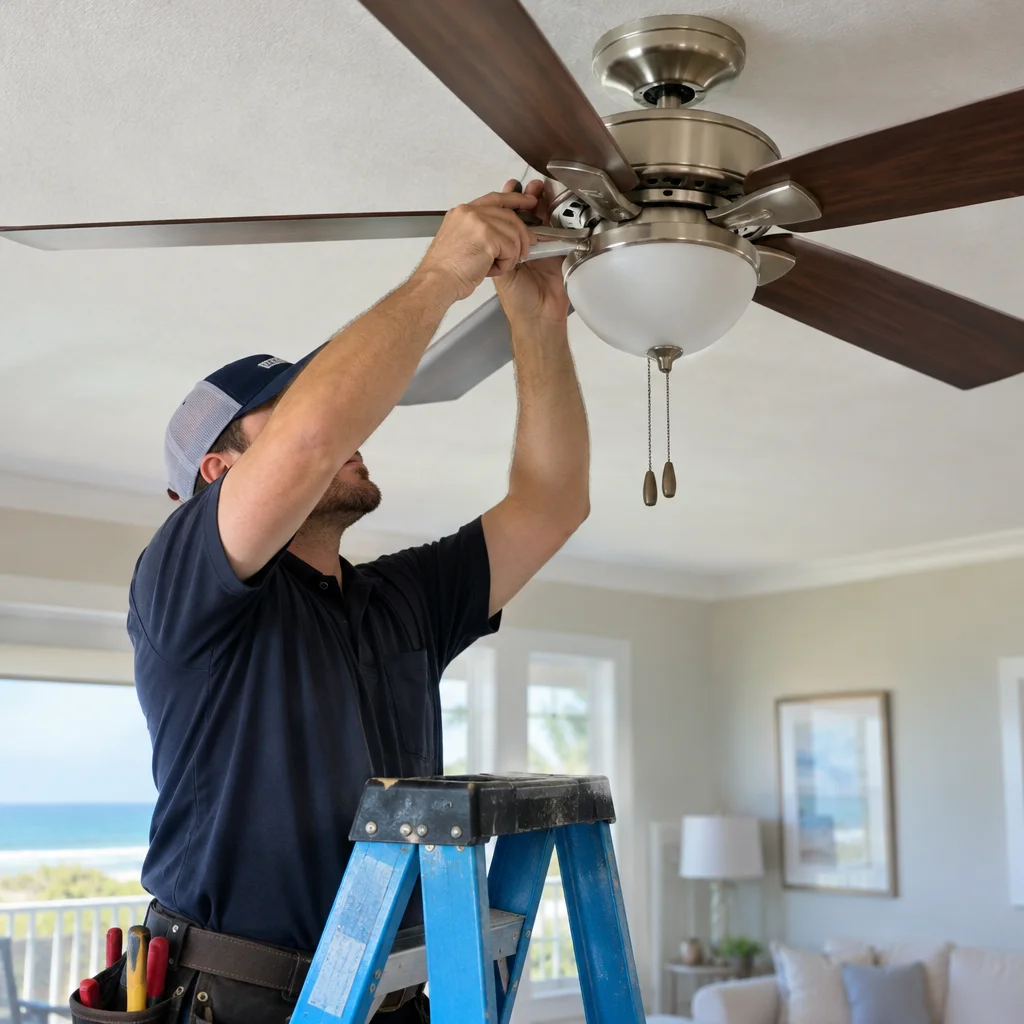
A ceiling fan is heavier and more dynamic than a standard light fixture. It needs a fan-rated electrical box, secure mounting, proper grounding, and wiring that matches the fan and switch setup. A box designed only for a light fixture may not support the movement and weight of a fan, especially over time.
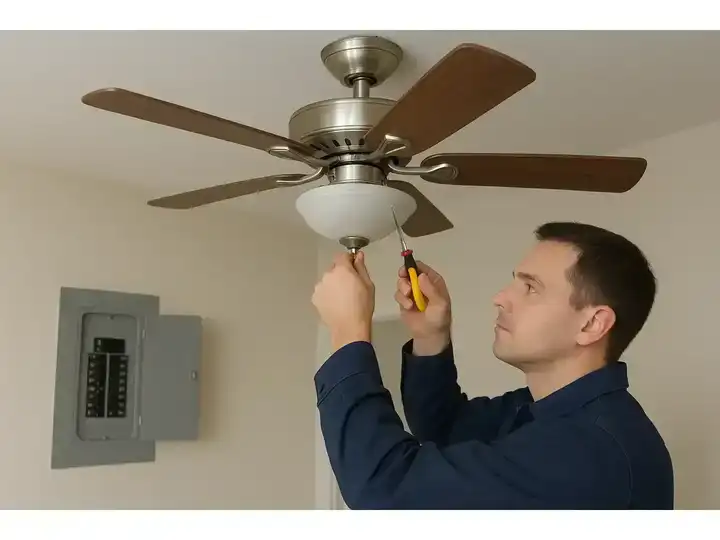
During a proper installation, an electrician checks the ceiling structure, verifies the box rating, confirms circuit capacity, and wires the fan so it operates safely with the correct wall switch or remote. If the home needs a new switch leg, a dedicated circuit, or a better fan control, those details are addressed before the fan is mounted. That is especially important in homes that also need circuit breaker panels and rewiring work or other electrical corrections.
Common installation mistakes homeowners run into
One of the most common problems is using an existing light box that was never made for fan support. Another is connecting the fan to old or damaged wiring without checking insulation or grounding. In some Springfield homes, especially those with past remodels or additions, the ceiling fan may be tied into a circuit that already carries too much load.
Homeowners sometimes notice the fan shakes at higher speeds, the light flickers when the fan starts, or the wall switch feels warm. Those are not normal. They can point to loose connections, a poor splice, or an overloaded circuit. A local electrician can inspect the setup and determine whether the issue is with the fan itself, the box, the switch, or the wiring behind the wall.
Repair issues that should not be ignored
Ceiling fan repair often starts with a few familiar complaints. The fan may wobble, make a clicking sound, stop responding to the remote, or hum loudly. Sometimes the problem is mechanical, like a blade imbalance or worn capacitor. Other times it is electrical, such as a failing switch, loose neutral, damaged wire, or a poor connection in the ceiling box.
If a fan trips the breaker, sparks at the switch, or produces a burning smell, shut it off right away. A burning smell electrical repair near me search might bring up a lot of results, but this is one of the times to stop searching and call an electrician. Heat at the switch or ceiling box can mean the circuit is carrying more current than it should, or that a connection is failing under load.
A fan that has worked for years can still develop problems after a storm, a power surge, or a remodel. In Bay County, storm-related outages and surges can affect fan controls, remotes, and wall switches. If other fixtures in the room also start acting up, the issue may extend beyond the fan and into the branch circuit or panel.
How ceiling fan work connects to the rest of the electrical system
Ceiling fan installation and repair is often tied to other electrical needs in the home. If the panel has limited space, the circuit is already crowded, or the home has outdated wiring, the fan may be part of a bigger conversation about safety and capacity. Homeowners searching for electrical panel upgrade near me often discover that the real issue started with a few small symptoms, like a fan that dimmed lights or a breaker that kept tripping.
That same logic applies to outlets, switches, and lighting. If a fan is tied to a switch that also controls other fixtures, the wiring should be checked for compatibility. If the room needs new lighting, it may be a good time to coordinate lighting fixture safety and storm readiness with ceiling fan work so the entire room is updated cleanly and safely.
For homes with many electronics, surge protection can also help protect fan controls and related devices. A surge protector installation near me search is often a smart next step after storm season, especially when the home has sensitive electronics, updated lighting, or remote-controlled ceiling fans.
Springfield homes, coastal weather, and electrical wear
Springfield and the surrounding Bay County area deal with humidity, salt air, and seasonal storms that can be hard on electrical components. Corrosion can affect connections, fasteners, switch plates, and even ceiling fan hardware over time. Older homes may also have legacy wiring or ungrounded circuits that make fan installation more complicated.
That is why local service matters. An electrician familiar with Springfield homes knows how to spot the difference between a simple fan replacement and a larger issue involving grounding, circuit capacity, or code compliance. If your home has had additions, enclosed porches, or room conversions, the electrical work may need a closer inspection before a new fan is installed.
This is also where a broader maintenance mindset helps. A home that needs fan repair may also benefit from an electrical inspection, smoke detector installation, or code corrections. If you are already planning other upgrades, such as EV charger installation or power generator installation and maintenance, it can make sense to review the whole electrical system at the same time.
Signs the problem may be electrical, not just mechanical
A fan that is off balance is annoying. A fan that causes lights to dim, breakers to trip, or switches to buzz is different. Those symptoms often mean the problem is in the wiring or circuit, not just the blades or motor. If the fan only works on certain settings, the speed control may be failing. If the light kit flickers, there may be a loose connection at the fixture or switch.
In some cases, a homeowner searching for outlet repair near me or light switch installation near me is actually dealing with a room circuit that has several weak points at once. A ceiling fan can reveal those issues because it draws power while also being sensitive to loose neutrals, bad splices, and poor grounding. If the home has aluminum wiring, older devices, or signs of heat damage, the repair should be handled by someone who understands residential electrical systems in older Florida homes.
When to stop using the fan
Turn the fan off and leave it off if you notice a burning smell, visible sparking, a hot switch plate, repeated breaker trips, or a ceiling box that moves when the fan runs. Those are not cosmetic issues. They can be early warnings of a connection problem, a loose mount, or a circuit that needs repair.
It is also wise to stop using the fan if it was installed in a box that was never rated for fan support. Even if it seems stable now, repeated vibration can loosen the hardware over time. That is the kind of issue that a professional inspection can catch before it becomes a ceiling damage or safety problem.
Other electrical upgrades that often pair well with fan work
Many Springfield homeowners schedule ceiling fan service alongside other electrical projects. A room update may include lighting installation, security system wiring, or new outlets for a home office or media space. Outdoor living areas often benefit from landscape lighting installation near me searches, especially when fans are being added to porches, patios, or covered entries.
Kitchen remodels, laundry room updates, and garage conversions can also change power demand. If a ceiling fan is part of a larger project, the electrician should look at the panel, breaker sizing, outlet placement, and grounding before the work is completed. That is especially useful for homeowners searching for residential electrician near me help because they want one contractor who can handle the fan, the wiring, and the rest of the room safely.
For more on how wear and tear affects electrical systems in local homes, see how electrical wear and tear shapes inspections and code updates in Springfield homes. If you are planning broader improvements, it can also help to read about keeping Springfield lighting fixtures safe, efficient, and storm ready.
Why local electrical service is the safer choice
Ceiling fan work may seem small, but it touches the parts of the electrical system that matter most: the box, the wiring, the switch, the breaker, and the support behind the ceiling. A local electrician understands how Springfield homes are built, how storm season affects electrical equipment, and how to keep repairs aligned with current code.
That is important whether you need a single fan replaced, a room rewired, or a larger upgrade such as breaker panel repair near me, meter base repair near me, or an electrical wiring installation near me project. It is also useful for property owners comparing commercial electrician near me options for offices, rental buildings, or shared spaces where ceiling fans and lighting must hold up to frequent use.
A Superior Mechanical provides ceiling fan installation and repair in Springfield, FL with attention to safe wiring, secure mounting, and practical electrical solutions for local homes and businesses. From fan replacements to troubleshooting, the goal is the same: keep the room comfortable without creating a hidden hazard in the ceiling.
Find Ceiling Fan Installation & Repair in Springfield, FL
If you need Ceiling Fan Installation & Repair in Springfield, FL, visit our local service page or contact A Superior Mechanical today.
Map of Springfield, FL
Frequently Asked Questions
Do ceiling fans need a special electrical box?
Yes. A ceiling fan should be mounted to a fan-rated box that is designed to support the weight and movement of the fixture. A standard light box may not be safe for fan use.
Why does my ceiling fan trip the breaker?
A tripping breaker can point to an overloaded circuit, a short, a failing fan motor, or loose wiring in the box or switch. An electrician should inspect the circuit before the fan is used again.
Can a ceiling fan be installed on an older home circuit?
Sometimes, but the wiring, grounding, box support, and breaker capacity need to be checked first. Older Springfield homes may need updates before a new fan can be installed safely.
Is it safe to keep using a wobbling ceiling fan?
Not for long. Minor imbalance can happen, but a fan that shakes, clicks, or pulls away from the ceiling should be turned off until it is inspected. Loose mounting can become a safety issue.
Related Articles
- How Electrical Wear and Tear Shapes Inspections and Code Updates in Springfield Homes
- Why Clean Water Services Matter Before Small Plumbing Problems Turn Costly in Springfield, FL
- Staying Ahead of Pipe Problems in Springfield Homes Starts with the Right Replacement Plan
- Keeping Springfield Lighting Fixtures Safe, Efficient, and Storm Ready
Photo Gallery