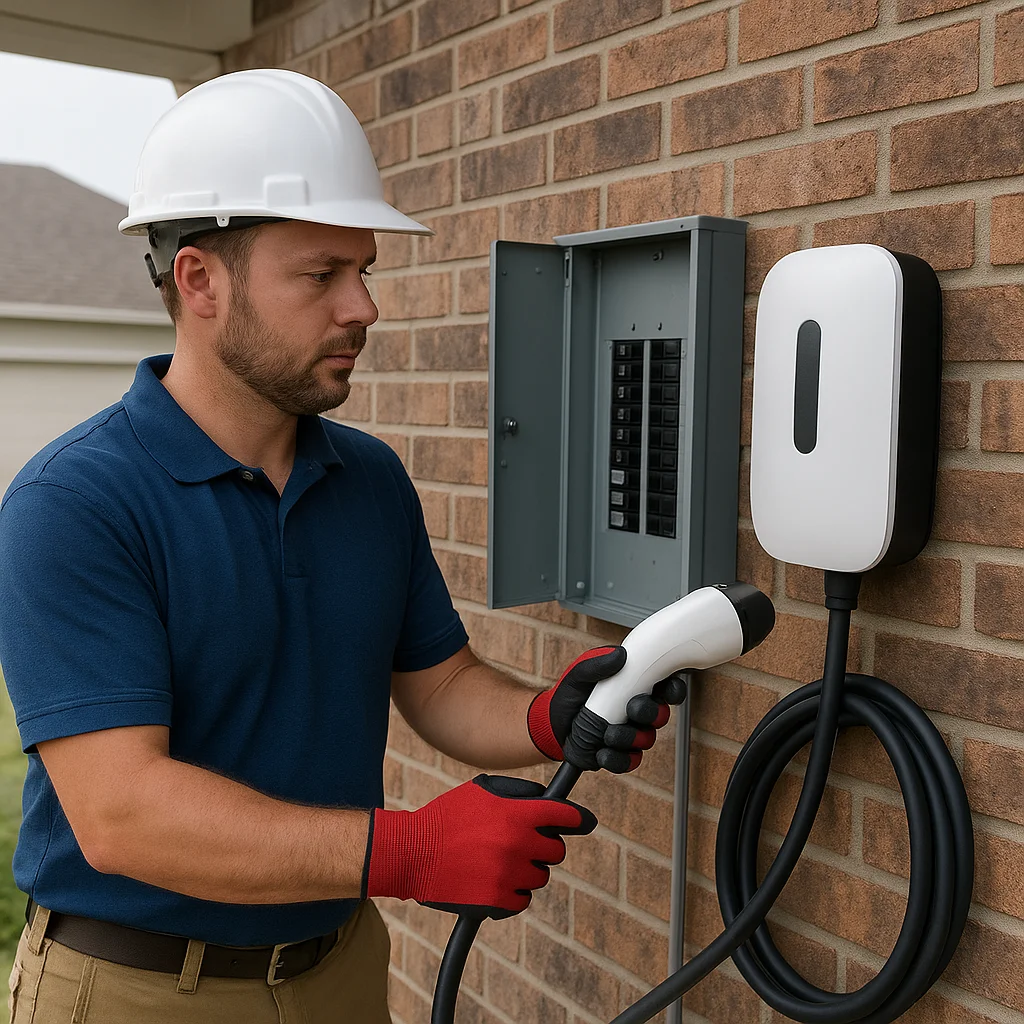
Parker homeowners are adding electric vehicles, and that usually means planning for a charger at home before the first plug-in becomes a problem. A rushed install can overload a panel, expose weak wiring, or trigger breaker trips that turn a simple upgrade into an emergency call. The good news is that most of those issues are preventable with the right electrical review, the right circuit, and a local electrician who knows how homes in Bay County are built.
If you are looking into EV Charger Installation in Parker, FL, the safest approach is to treat it like a real electrical project, not just a new outlet. A charger draws steady demand for hours at a time, which is very different from a lamp, a phone charger, or even many appliances. That is why panel capacity, grounding, breaker sizing, and code compliance matter so much in Parker homes.
Why EV charger installs create emergency calls when they are rushed
An EV charger can expose problems that were already hiding in the home. Older panels may be close to full before the charger is added. Homes that have had additions, garage conversions, or remodels may have circuits that were never balanced properly. In coastal weather, humidity and storm activity can also wear on outdoor equipment, meter bases, and service equipment over time. When the charger is added without checking the full system, the result can be nuisance tripping, overheated connections, or a breaker that will not hold.
That is when homeowners start searching for an electrician near me or calling for emergency electrical help after hours. A better plan is to inspect the panel first, then decide whether the charger can be supported safely or whether a panel upgrade, sub panel installation, or circuit correction is needed before the charger goes in.
Start with the panel, not the charger
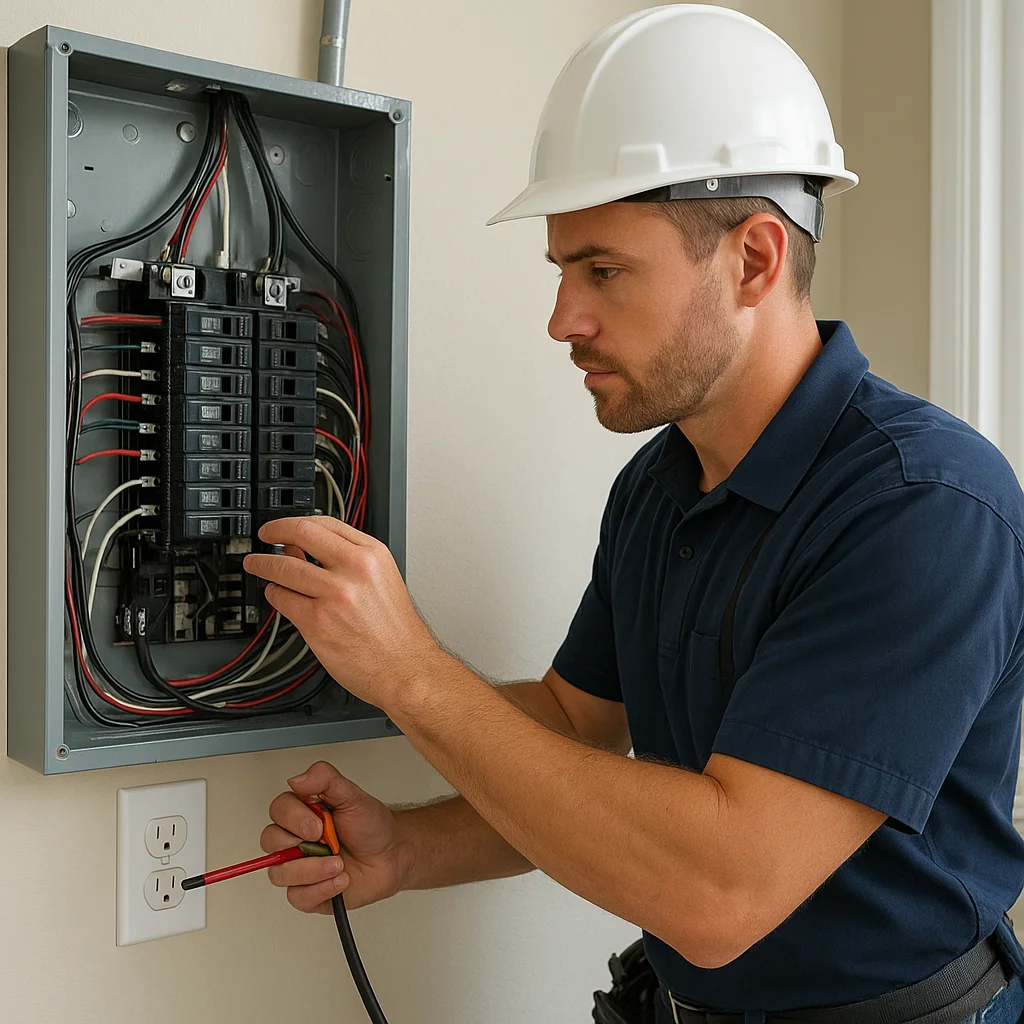
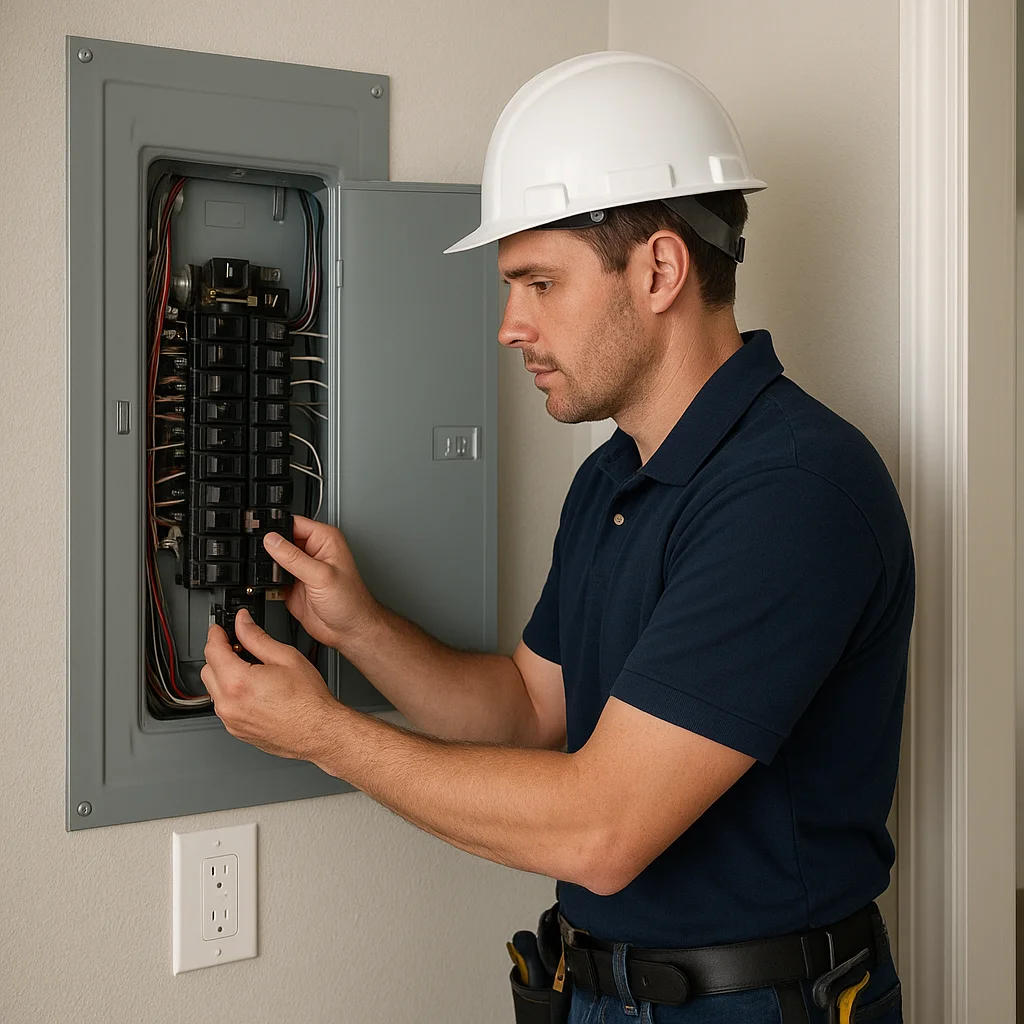
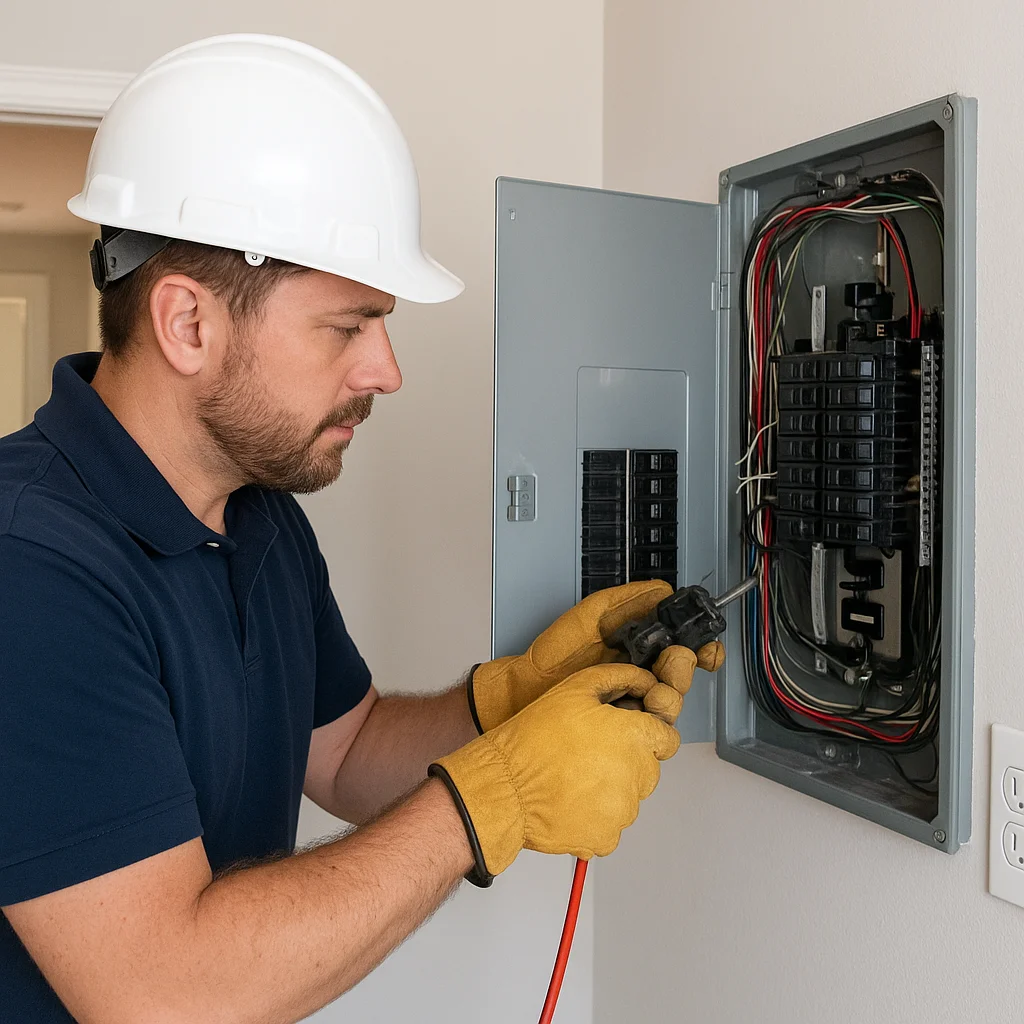
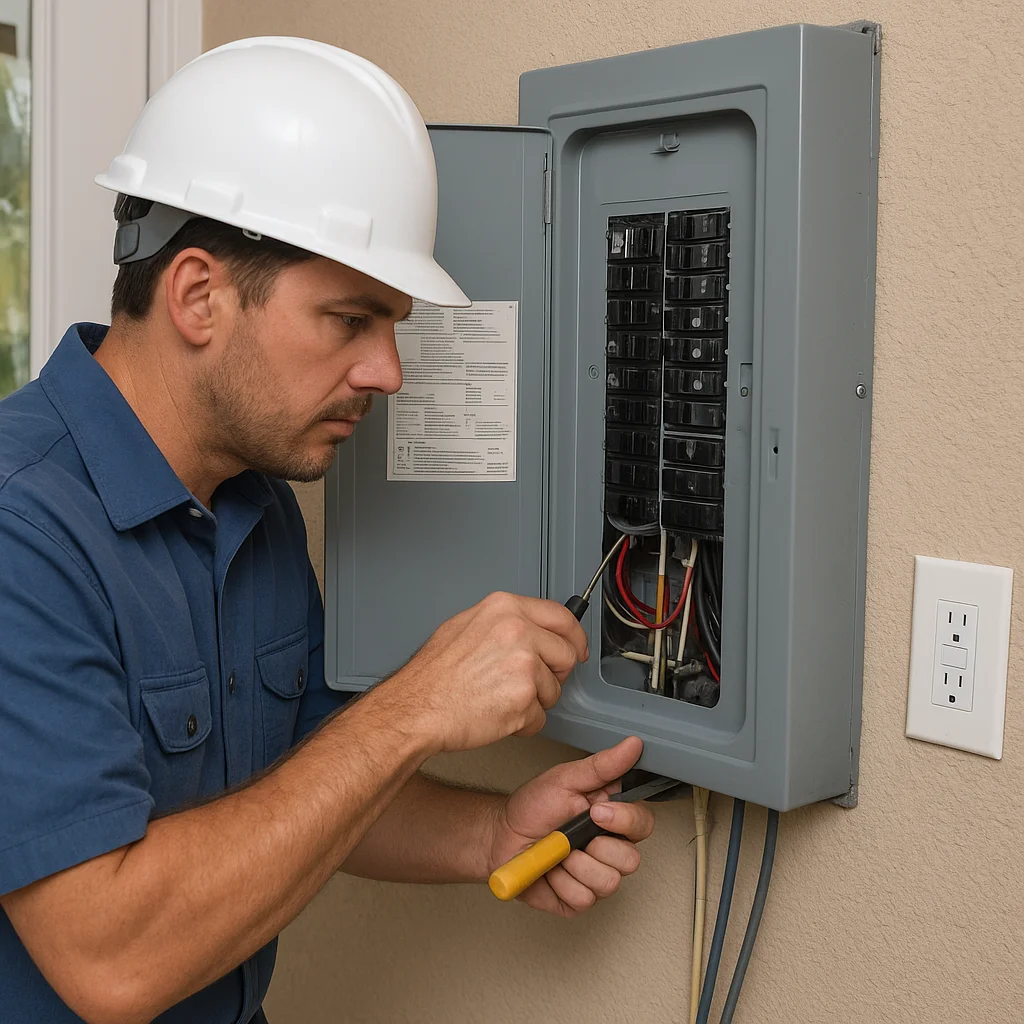
The panel is the heart of the decision. A proper EV charger installation begins with load calculations, not with drilling into the wall. Many homes in Parker were built before today’s power demand became normal. Even newer homes can be tight once you add an EV charger, a heat pump water heater, kitchen upgrades, lighting changes, and outlets for a garage fridge or workshop tools.
If the panel is already crowded or the home is running near capacity, a panel replacement or electrical replacement may be the cleanest solution. Homeowners searching for electrical panel upgrade near me or breaker box replacement near me are often dealing with the same issue: the home needs more usable capacity before a charger can be added safely.
Common warning signs in the panel
Frequent breaker trips, warm breaker handles, buzzing sounds, corrosion near the enclosure, or a panel that has no spare space are all reasons to slow down and inspect the system. In some cases, the issue is not the charger at all. It may be an undersized feeder, a loose neutral, a damaged breaker, or a service problem that should be addressed before any new load is added.
For homes with aging electrical systems, a professional inspection can also reveal whether older branch wiring, aluminum connections, or outdated protection devices need attention first. If you have been putting off electrical repair in Parker, an EV charger project is a smart time to deal with it.
Dedicated circuits prevent most charger problems
EV chargers should not share a circuit with garage outlets, freezers, tools, or lighting. A dedicated circuit gives the charger the amperage it needs without competing with other loads. This is especially important for Level 2 charging, which is usually the preferred choice for homeowners who want faster charging and more predictable performance.
When a charger is tied into an overloaded circuit, the system may trip during long charging sessions or on hot afternoons when the home is already using more power. That is why homeowners looking into level 2 ev charger installation near me should also ask about breaker sizing, conductor size, and whether the run from the panel to the garage is the best route for the home.
Why circuit planning matters in Parker homes
In older homes, the path to the garage or driveway may involve longer wire runs, cramped attics, or exterior walls exposed to moisture and heat. In newer homes, the garage may have room for a charger, but the panel may still need a dedicated breaker and a load calculation. Either way, the circuit should be designed for continuous demand, not just a quick test during installation.
If the home already has a dedicated appliance circuit, a garage workshop circuit, or a pool equipment circuit, those loads need to be accounted for separately. A charger should never be added in a way that creates hidden strain on the rest of the house.
Wiring, grounding, and GFCI protection deserve attention
Charger safety depends on more than the breaker. The wiring must be sized correctly, connections must be tight, and the installation must be grounded properly. In a humid coastal area like Parker, weak connections can become a bigger issue faster than homeowners expect. Moisture, salt air, and storm related wear can all affect outdoor receptacles, junction boxes, and equipment mounted near garages or exterior walls.
Depending on the charger and installation location, GFCI protection may also be part of the setup. That matters for garages, unfinished spaces, and outdoor charging locations where shock protection is important. If the installation involves a receptacle instead of hardwiring, a GFCI outlet installation near me search usually points to a broader need for code aware electrical planning, not just a quick outlet swap.
For older properties, wiring concerns can run deeper. Some homes need old wiring replacement near me level work before new equipment is added. If there is any question about heat damage, brittle insulation, or outdated branch circuits, the charger project should pause until the wiring is evaluated.
Permits and code compliance help avoid expensive do overs
EV charger installation is one of those projects where doing it correctly the first time saves money later. Permits, inspections, and code compliance protect the homeowner, the equipment, and the resale value of the home. Local electrical service matters because Parker homes face a mix of older construction, storm exposure, and changing power demand that cannot be handled with a one size fits all approach.
A professional electrician will check whether the charger location meets clearance rules, whether the breaker and conductors match the load, and whether the installation complies with current code requirements. That matters for homeowners, vacation rentals, and small businesses that rely on dependable charging. It also reduces the chance of a future emergency call for overheating, tripped breakers, or failed equipment.
Storms, surge protection, and backup planning
Bay County weather can be hard on electrical systems. Thunderstorms, lightning, and utility interruptions can damage electronics and chargers, especially if the home does not have whole home surge protection. If you are adding an EV charger, it is a good time to look at the rest of the electrical system too.
Many homeowners pair charger planning with battery backup systems or generator planning for added peace of mind. If you already have a standby system or are considering one, read what Parker homeowners should know about Kohler power backup generators to understand how backup power fits into a modern electrical setup. For homes that experience frequent outages, surge protection and backup planning can help protect the charger, panel, and sensitive electronics from storm related damage.
If a storm has already caused trouble, a storm electrical repair near me search often leads to issues with breakers, service equipment, or damaged outlets that should be corrected before a charger is installed.
How local home layout affects charger placement
In Parker, the best charger location is not always the most obvious one. Garages, carports, detached structures, and driveway parking all create different wiring needs. Some homes need a new outlet near the parking space. Others need hardwired equipment. In a remodel or addition, the charger may be easiest to add while the walls are open, which can reduce labor and improve the final result.
For properties with pools, spas, or outdoor living areas, the electrical system may already be carrying a lot of demand. In those homes, charger planning should be coordinated with pool, spa, and hot tub wiring, outdoor receptacles, and exterior lighting. A charger should not be added in a way that compromises safety around wet areas or creates confusion in the panel.
Some homeowners also use the charger project as a chance to improve outdoor landscape lighting, replace worn switches, or update garage lighting for better visibility. Those upgrades are easier when the electrical plan is coordinated instead of handled piecemeal.
Small electrical issues often point to bigger ones
Before a charger is added, it is worth paying attention to the little things. A warm outlet, a flickering garage light, a switch that crackles, or a breaker that trips when the garage door opener and vacuum run together can all point to a system that needs attention. Homeowners searching for gfci outlet repair near me, electrical panel replacement near me, or 200 amp panel upgrade near me are often dealing with those early clues.
That same mindset applies to smoke alarms and carbon monoxide protection. If the home has not had a recent safety check, a charger project is a practical time to review smoke detector installation and carbon monoxide detector installation near me needs, especially in homes with attached garages or backup generators.
Why Parker homeowners benefit from a local electrician
Local experience matters because Parker homes are not all built the same, and the weather is not gentle on electrical systems. A local electrician near me search should lead to someone who understands coastal corrosion, storm recovery, older service equipment, and the load demands of modern EV charging. That knowledge helps prevent unnecessary emergency calls and avoids the common mistake of under sizing the circuit or overlooking a weak panel.
If your home has older wiring, a remodel, or a service issue that has never been fully corrected, it may be smart to schedule an electrical inspection near me before the charger is installed. That inspection can catch loose connections, grounding issues, outdated breakers, or hidden damage that would otherwise show up later as a service call.
For homeowners who are comparing options, A Superior Mechanical can help with charger planning, panel upgrades, dedicated circuits, and code compliant installation across Parker and greater Bay County. If the project also involves older wiring, a panel issue, or a broader electrical refresh, it may be worth reviewing Electrical Repair in Parker, FL: A Homeowner’s Guide to Panels, Wiring, and Safer Power so the whole system is ready for the added demand.
A practical checklist before the charger goes in
Before scheduling installation, make sure the home has enough panel capacity, a safe route for the new circuit, proper grounding, and the right protection for the charger location. Ask whether the project needs a dedicated breaker, a load calculation, a panel upgrade, or a sub panel installation. If the garage or exterior wall has signs of heat, corrosion, or old repairs, address those issues first. If the home has experienced outages or lightning damage, consider surge protection and backup planning at the same time.
That approach keeps the project organized and reduces the chance of emergency electrical calls after the charger is in use. It also gives the homeowner a safer, cleaner installation that supports daily charging without stressing the rest of the home.
When the electrical system is planned correctly, EV charging becomes a convenience instead of a headache. For Parker homeowners, that usually means checking the panel, respecting the load, and using a local electrician who understands both the house and the climate.
Find EV Charger Installation in Parker, FL
If you need EV Charger Installation in Parker, FL, visit our local service page or contact A Superior Mechanical today.
Map of Parker, FL
Frequently Asked Questions
Do I need a panel upgrade for EV charger installation in Parker, FL?
Not always, but many homes need one. The answer depends on your current panel capacity, existing loads, and whether the charger is Level 1 or Level 2. A load calculation can confirm whether a panel upgrade is needed before installation.
Can an EV charger share a circuit with garage outlets or lighting?
No. A charger should have its own dedicated circuit so it does not compete with outlets, lights, or other equipment. Sharing a circuit can cause breaker trips, overheating, and unreliable charging.
Why does local weather matter for charger installation in Parker?
Parker’s humidity, storms, and coastal conditions can affect outdoor electrical equipment, connections, and surge sensitive electronics. Local installation practices help protect the charger and reduce future repair issues.
How do I know if my older home is ready for an EV charger?
Older homes often need an inspection first. A licensed electrician can check the panel, grounding, wiring condition, breaker space, and any signs of outdated or damaged electrical components before the charger is installed.
Related Articles
Photo Gallery