Sewer problems rarely start with a dramatic backup. More often, they begin with small warning signs that are easy to dismiss: a drain that keeps slowing down, a toilet that gurgles, a patch of lawn that stays wet after the rest of the yard dries out. In Bluewater Bay, those early signs matter. Acting quickly can help you avoid interior water damage, expensive excavation, and the disruption of a major sewer line failure.
For homeowners in Bluewater Bay, sewer issues are influenced by local conditions. Heavy Florida rain, sandy soil movement, mature landscaping, aging plumbing components, and the wear that comes with full-time residences and rental properties can all affect underground lines. If you are searching for dependable sewer repair and maintenance in Bluewater Bay, FL, it helps to know what to watch for and why local service makes a difference.
Why sewer problems are common in Bluewater Bay homes
Bluewater Bay properties range from established homes with older plumbing systems to newer residences and managed rental properties. That variety means sewer concerns do not all look the same. Some homes may have aging drain lines with years of buildup. Others may deal with root intrusion from established trees and shrubs. In low-lying or moisture-prone areas, periods of intense rain can also place extra stress on underground piping and reveal weak points that were already developing.
Florida's climate plays a role too. High humidity, frequent storms, and seasonal downpours can affect the ground around your sewer line. Soil can shift, settle, or become oversaturated, which may contribute to cracked joints, misaligned sections, or bellied pipe areas where wastewater and debris collect. Even if your plumbing inside the house seems mostly normal, the sewer line outside may be showing signs of trouble.
That is one reason local experience matters in Okaloosa County. A plumber familiar with the area is more likely to recognize how local soil conditions, weather patterns, and property layouts affect sewer diagnostics and repair planning.
Common signs you may need sewer repair and maintenance
1. Multiple drains are slow at the same time
A single slow sink may point to a localized clog near that fixture. But when several drains around the house start draining slowly together, the problem may be deeper in the main sewer line. You might notice the shower, tub, and toilets all acting differently within the same week. That pattern often means wastewater is struggling to move through the line the way it should.
Homeowners sometimes try repeated store-bought drain cleaners when this happens, but that usually does not solve a main line issue. It can also damage certain pipes over time. A professional inspection can determine whether the problem is grease buildup, scale, roots, or line damage.
2. Gurgling sounds from toilets or drains
Gurgling is not just an odd plumbing sound. It can be a pressure warning. If air is trapped because wastewater cannot flow properly through the sewer system, you may hear bubbling or gurgling from toilets, tubs, or nearby drains. In some homes, flushing one toilet may cause another fixture to react. That is a strong sign the system needs attention.
These sounds are often overlooked in the early stages of a blockage. Catching them early may allow for cleaning or targeted repair before a full backup develops.
3. Sewer odors inside or outside the home
A healthy plumbing system should not make your home or yard smell like sewage. If you notice persistent sewer odors coming from drains, around the foundation, or in one section of the yard, there may be a break, blockage, or venting issue. Outdoor odors are especially important to pay attention to when they are concentrated in one area rather than spread generally after heavy rain.
In Bluewater Bay's warm climate, odors can become more noticeable quickly. Heat and humidity tend to make sewer gas smells harder to ignore, especially near patios, landscaped beds, and side yards where lines often run.
4. Wet spots or extra-green patches in the yard
If one part of your lawn stays soggy, soft, or unusually green, your sewer line may be leaking underground. Wastewater escaping from a damaged pipe can feed grass growth while also creating muddy areas or foul smells. This can happen even when there has not been much rain.
Because Florida storms are common, homeowners sometimes assume a wet yard is just drainage from recent weather. But if the area remains damp longer than the surrounding ground or keeps returning in the same spot, it is worth having the sewer line checked.
5. Frequent backups or recurring clogs
One isolated clog is normal from time to time. A clog that keeps coming back is not. If you have had to plunge toilets repeatedly or clear drains over and over, there may be a deeper issue in the line. Recurring backups often point to buildup, root intrusion, pipe damage, or a belly in the line that catches waste and paper.
This is especially important in homes with busy bathrooms, larger households, or rental turnover. If your property is used by guests or tenants, preventive care through property management plumbing services can help identify sewer concerns before they become an emergency.
6. Water backing up in unexpected places
One of the clearest warning signs of a main sewer issue is water appearing in a lower fixture when another one is used. For example, flushing a toilet may cause water to rise in a tub, or running the washing machine may back up a floor drain. These cross-fixture symptoms often mean the main line cannot handle normal flow.
When this starts happening, it is best not to wait. Continued use of the plumbing system can lead to wastewater entering the home.
7. Foundation-area moisture or slab concerns
In some homes, sewer line leaks can contribute to moisture around the foundation or beneath slab areas. While not every moisture issue is sewer-related, unexplained dampness, musty smells, or rising water bills can justify a sewer inspection. Underground leaks are not always visible until secondary damage starts to appear.
What causes sewer line problems in Bluewater Bay?
Tree and shrub root intrusion
Roots naturally seek moisture. Even a small crack or loose joint in a sewer line can attract roots over time. Once they enter the pipe, they can trap paper and waste, narrowing the passage and increasing the chance of backups. Bluewater Bay's established neighborhoods often have mature landscaping, which makes root intrusion a common issue in older sewer systems.
Pipe age and material deterioration
Older sewer lines may corrode, crack, or develop failing joints. Different pipe materials age differently, and some are more vulnerable to intrusion or collapse than others. Even if a line has not fully failed, years of wear can reduce flow and make clogs more common.
Grease, wipes, and non-flushable buildup
Many sewer calls begin with everyday habits. Grease poured down the kitchen drain can cool and harden inside the line. So-called flushable wipes do not break down like toilet paper and often contribute to stubborn blockages. Paper towels, hygiene products, and excessive food waste can all add to the problem.
Routine care and plumbing maintenance can help catch buildup before it turns into a major sewer obstruction.
Ground shifting and storm-related stress
Bluewater Bay's weather can be hard on underground systems. Heavy rain can saturate the soil, and changing moisture levels can lead to movement around buried pipes. Over time, that movement may create separated joints, low spots, or cracked sections that interfere with flow.
Scale and debris inside the line
Some sewer lines develop heavy internal buildup from grease, soap residue, mineral scale, and debris. The opening inside the pipe gets smaller, and normal household waste has less room to pass through. This often causes slow drains long before a full blockage happens.
How sewer repair and maintenance problems are diagnosed
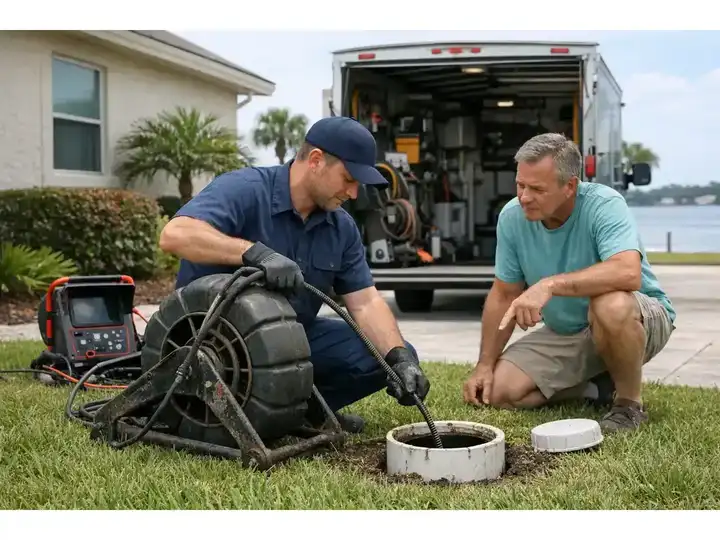
The best repair starts with the right diagnosis. Professional sewer service usually begins with testing and inspection rather than guesswork. Camera inspections can show whether the line has roots, a break, a sag, heavy buildup, or another issue. That matters because the right solution for one problem may be the wrong one for another.
For example, a line packed with grease and debris may respond well to hydro jetting, while a cracked or collapsed line may require repair or replacement. If roots are the issue, root removal and follow-up maintenance may be recommended to restore flow and reduce repeat problems.
Homeowners often appreciate having a clear picture of what is happening underground before work begins. It helps you understand whether the problem is urgent, how extensive it is, and what repair options make the most sense for your property.
Solutions for sewer line problems
Hydro jetting for heavy buildup
Hydro jetting uses high-pressure water to clear grease, sludge, scale, and debris from the inside of a pipe. It can be an effective option when the line is structurally sound but restricted by buildup. This is often a strong maintenance choice for homes with recurring drain issues or years of accumulated residue.
Root removal and line clearing
If roots have entered the sewer line, professional removal can restore flow. However, clearing roots is only part of the solution. The reason they got in, such as a cracked joint or damaged pipe section, may still need to be addressed to prevent repeat intrusion.
Spot repairs for damaged sections
Some sewer issues are limited to one area of the line. If diagnostics show a specific crack, offset joint, or broken section, a targeted repair may be enough. This can be less disruptive than replacing the entire line and may solve the issue efficiently when the rest of the pipe is in good condition.
Trenchless repair options
Depending on the condition and location of the sewer line, trenchless methods may be available. These approaches can reduce digging and help protect landscaping, driveways, or hardscaped areas. For homeowners who want to minimize disruption, trenchless repair is worth discussing after the inspection.
Sewer line replacement
When a line has widespread deterioration, major collapse, or repeated failures, replacement may be the most reliable long-term answer. While replacement is a bigger project, it can eliminate recurring problems and restore confidence in the plumbing system.
How to reduce the risk of sewer trouble
Not every sewer problem can be prevented, but good habits and regular service can lower the odds of a major issue.
Be careful about what goes down the drain
Avoid flushing wipes, paper towels, hygiene products, and other non-flushable items. In the kitchen, keep grease and oil out of the sink. These simple steps reduce buildup in both your household drains and the main sewer line.
Schedule routine inspections if your home is older
If your home has an aging sewer line or a history of recurring drain issues, periodic inspection can catch trouble early. This is especially useful before buying or selling a home, after a backup, or if you have mature trees near the line path.
Address small plumbing problems early
Small leaks, fixture issues, and poor drainage habits can all contribute to bigger sewer stress over time. Keeping indoor plumbing in good shape supports the whole system. If older fixtures are causing performance problems, plumbing fixture replacement may help improve efficiency and reliability throughout the home.
Think about overall water quality and plumbing health
While water treatment does not repair a sewer line, overall plumbing condition matters. Mineral content and scale can affect pipes and fixtures throughout the home. Some homeowners in the area also explore water purification systems as part of a broader plumbing care plan.
When to call a professional right away
Some sewer issues can wait a day or two for a planned appointment. Others need prompt attention. Call a professional as soon as possible if:
You have sewage backing up into tubs, showers, or floor drains.
You notice multiple fixtures clogging or gurgling at once.
Your yard has a strong sewage odor or a persistent wet area.
A toilet overflow or backup keeps returning after plunging.
You suspect a broken sewer line after storm-related ground movement.
Waiting too long can turn a manageable repair into a much larger cleanup. Wastewater exposure can also create health concerns inside the home.
Why local service matters in Bluewater Bay
Sewer work is never one-size-fits-all. A local provider understands the kinds of homes found in Bluewater Bay, the impact of Florida rain and humidity, and the practical challenges of diagnosing underground plumbing in this part of the county. That local familiarity can help speed up troubleshooting and lead to solutions that fit the property, not just the symptom.
A Superior Mechanical serves homeowners, rental properties, and commercial clients with sewer diagnostics, maintenance, hydro jetting, root removal, repair, and replacement options tailored to local needs. If you are already thinking about other plumbing upgrades, it can also be helpful to review nearby service resources and related topics, such as tankless water heater installation benefits in Destin, especially if you are planning broader plumbing improvements across the property.
If your drains are slowing down, your yard smells off, or your plumbing system is giving you repeated warning signs, getting the sewer line checked now can save time, money, and stress later. For homeowners searching for sewer repair and maintenance near them in Bluewater Bay, a local inspection is often the fastest way to get clear answers and a practical plan.
Find Sewer Repair and Maintenance in Bluewater Bay, FL
If you need Sewer Repair and Maintenance in Bluewater Bay, FL, visit our local service page or contact A Superior Mechanical today.
Map of Bluewater Bay, FL
Frequently Asked Questions
What are the first signs of a sewer line problem in Bluewater Bay, FL?
Early signs often include multiple slow drains, gurgling toilets, sewer odors, recurring clogs, or wet spots in the yard. If more than one fixture is acting up at the same time, the issue may be in the main sewer line rather than a single drain.
Can heavy rain in Bluewater Bay affect my sewer line?
Yes. Heavy Florida rain can saturate the soil around underground pipes, which may expose weak joints, shift damaged sections, or make existing sewer problems more noticeable. If symptoms show up after storms, a professional inspection is a smart next step.
How do plumbers find out what is wrong with a sewer line?
Plumbers typically use sewer camera inspections and other diagnostics to locate buildup, roots, cracks, sagging sections, or collapsed pipe areas. This helps determine whether cleaning, repair, trenchless work, or replacement is the right solution.
Is hydro jetting a good option for sewer maintenance?
Hydro jetting can be a very effective maintenance and clearing method when the line is structurally sound but clogged with grease, sludge, or debris. It is often recommended for recurring buildup, but a camera inspection should confirm the pipe can handle it safely.